
Find the right electric fireplace for your Jo Daviess County home.
From Galena's 19th-century brick homes to farmhouses outside Elizabeth and Stockton, electric fireplaces bring zone heat and real ambiance without a chimney, gas line, or historic-district headache. Find the right unit and connect with a trusted local dealer.
Every Project Starts From One of These Five Situations
Ambiance and zone heat, no chimney required.
Jo Daviess County sits in Illinois' Driftless Area—the hilly, unglaciated bluff country along the Mississippi River near East Dubuque, a landscape unlike the flat prairie most of the state is known for. Winters here run cold: an average low near 10°F and a winter heating load on par with Madison, Wisconsin, for sustained winter chill. Galena, the county seat, is a former lead-mining boomtown whose downtown and surrounding hillsides are packed with 19th-century Italianate and Greek Revival brick homes, many protected by local historic-preservation review. Narrow original flues, non-existent chimneys, or a preservation board that isn't eager to see new masonry penetrations all make wood or vented gas installs harder than they'd be in a newer subdivision.
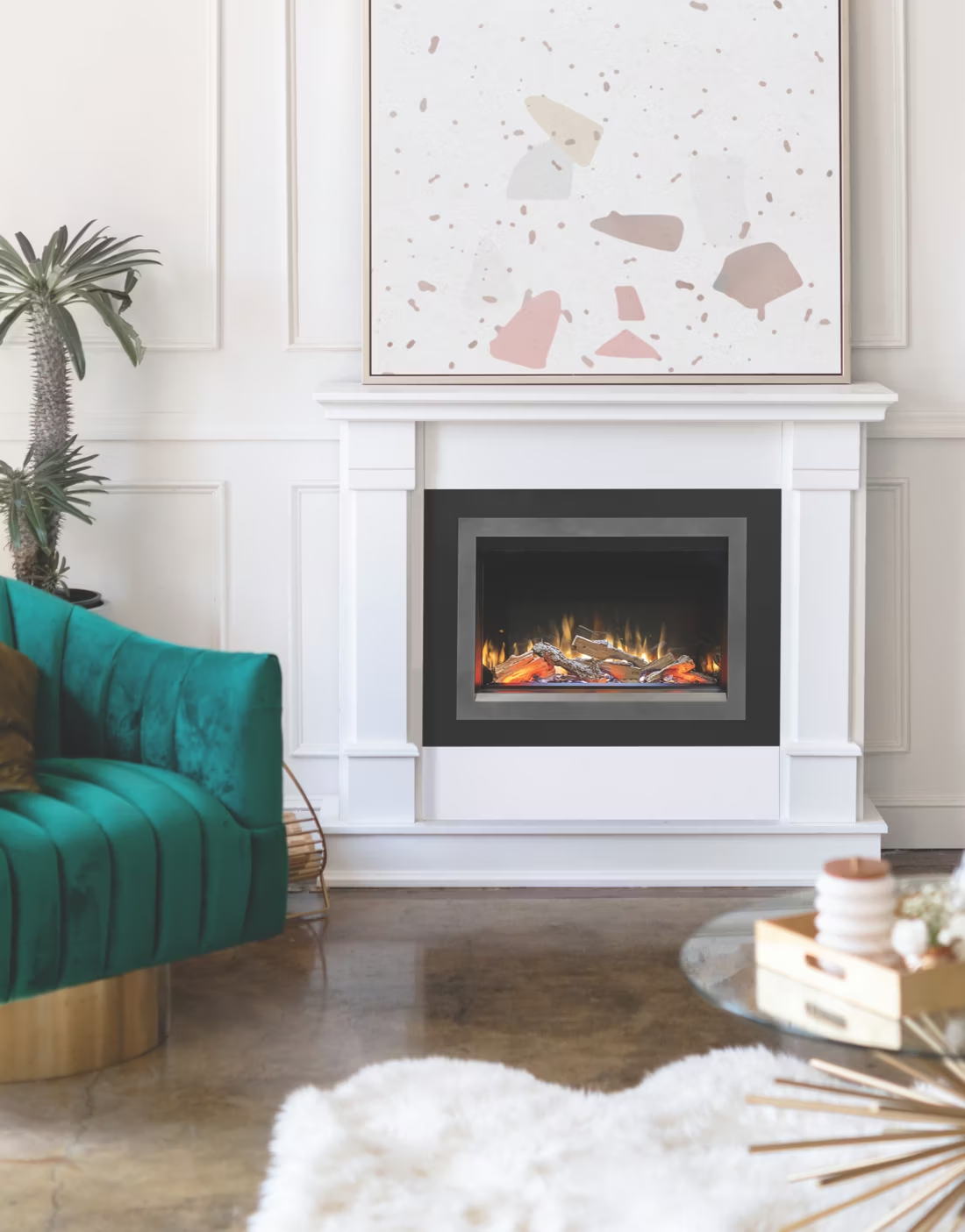
That's where electric earns its place. An electric insert can go into an existing masonry opening in a Galena rowhouse without altering the exterior brick or the facade a preservation review would scrutinize. A built-in electric unit needs a dedicated circuit, not a flue. Jo-Carroll Energy, the electric cooperative serving most of the county, keeps the lights on for these installs—though in a rural, hilly service territory, winter ice storms do knock out power occasionally, which is worth factoring in if you're weighing electric as anything more than supplemental heat. For Jo Daviess County's many B&Bs, vacation rentals, and second homes around Galena's tourist economy, electric fireplaces deliver reliable ambiance with none of the upkeep a wood or gas unit demands between guest turnovers.
Three steps. No salesperson until you're ready.
Tell us about your project
Your zip code, your situation, and the fuel you're leaning toward—or let the answers point you to one.
See what's actually available
The brands dealers within 100 miles genuinely carry—real options, never a catalog mirage.
Get your dealer & Project Guide
A trusted local dealer, plus the free Project Guide & Parts List that names every component of the job.
Frequently Asked Questions
How much does an electric fireplace installation cost in Jo Daviess County?
A plug-in electric insert or freestanding stove that uses an existing outlet typically runs $300 to $1,500 for the unit itself, with little to no installation cost beyond mounting it in a masonry opening or against a wall. A built-in electric fireplace that requires a dedicated 20-amp circuit, in-wall wiring, and possibly a licensed electrician runs $1,200 to $4,000 depending on how far the unit sits from your panel and whether drywall or trim work is involved. Historic Galena homes with older knob-and-tube or limited-capacity wiring sometimes need panel or circuit upgrades first, which adds to the electrician's bill—ask about your home's wiring before committing to a built-in unit.
Can I put an electric insert into my old fireplace in a Galena historic home?
Yes, and it's one of the more common projects local dealers handle in the county. Because an electric insert doesn't vent, cutting a new hole through a chimney, roof, or exterior brick wall isn't necessary—a real concern in Galena's historic district, where exterior changes can draw scrutiny from local preservation review. The insert simply sits in your existing masonry opening and plugs into a nearby outlet or a new circuit run behind the surround. Many owners of 19th-century brick homes in Galena use this route specifically to keep a working hearth feature without touching the facade or the original chimney structure.
Will an electric fireplace actually heat my home, or is it just for looks?
Most electric fireplaces put out 4,000 to 9,000 BTU of resistance heat—enough to comfortably warm a single room, but not enough to serve as primary heat once outdoor temperatures drop into the single digits, which happens regularly across Jo Daviess County in a normal winter. Think of electric as zone heat for a den, sunroom, or bedroom while your furnace handles the rest of the house, or as a way to take the edge off a chilly living room during shoulder-season cold snaps without running the whole heating system. If you're hoping to heat a drafty older farmhouse near Stockton or Hanover as a primary source, an electric unit alone won't get there—pair it with your existing furnace rather than replacing it.
Do I need a permit to install an electric fireplace in Jo Daviess County?
A plug-in unit that uses an existing outlet generally doesn't require a permit anywhere in the county. A built-in electric fireplace that needs a new dedicated circuit typically does require an electrical permit through your local building department, since it involves adding wiring to the home. Inside Galena's historic district specifically, any change visible from the exterior—even something as minor as a new vent grille or surround—can trigger a review by the local historic preservation commission, so it's worth checking before you finalize a design. Most licensed electricians and local hearth dealers can tell you quickly whether your specific project crosses that line.
What's the difference between an electric fireplace, insert, and stove?
An electric fireplace is typically a built-in unit designed to sit in a wall opening or custom mantel surround, often used in new construction or remodels. An electric insert is sized to slide into an existing masonry fireplace opening, which is common in Jo Daviess County's older brick homes where the original hearth is still intact. An electric stove is a freestanding cabinet-style unit that mimics a wood stove's look and can go almost anywhere there's an outlet—no fireplace opening needed at all, which makes it a popular choice for county homes without an existing hearth.
Will my electric fireplace still work if the power goes out?
No—electric fireplaces are entirely dependent on power, and in a rural, hilly county served by an electric cooperative, winter ice storms and downed lines do cause outages from time to time, particularly outside Galena's town limits. If backup heat during an outage matters to you, an electric fireplace shouldn't be your only hearth appliance; a wood stove or propane unit that doesn't rely on grid power is the more resilient choice for that specific job. Many Jo Daviess County homeowners use electric for everyday ambiance and convenience in the main living space while keeping a wood-burning option elsewhere in the house for real emergency heat.
Electric vs. gas fireplace—which makes more sense for my home?
Gas fireplaces put out real heat—typically 20,000 to 40,000 BTU—and can serve as legitimate supplemental or even primary zone heat during Jo Daviess County's cold winters, but they require either a natural gas line or a propane tank plus proper venting, which is a bigger project in an older Galena home. Electric fireplaces skip the fuel line and venting entirely, install in an afternoon, and cost far less up front, but they max out around 9,000 BTU and won't meaningfully offset a furnace on a 10-degree night. If your priority is genuine heat output and you already have gas or propane service, gas wins. If your priority is a fast, low-disruption install in a historic structure or rental property, electric is the practical choice.
Electric vs. wood-burning fireplace—which is right for me?
Jo Daviess County has plenty of oak, hickory, and walnut available locally for wood burners, and a wood stove or insert can genuinely carry a home through a power outage or a stretch of single-digit nights. But wood means chimney maintenance, ash cleanup, and—in a historic Galena property—often a harder conversation with preservation review about venting through original masonry. Electric skips all of that: no wood to split or store, no creosote, no chimney sweep, and no impact on a historic facade. For full-time residences that want backup heat capability, wood still has real advantages. For vacation rentals, B&Bs, and secondary living spaces where low-maintenance ambiance matters more than emergency heat, electric is usually the simpler call.
What should I look for in an electric fireplace for a cold-climate home like this?
Prioritize a unit with a real 1,500-watt heater and a built-in thermostat, since Jo Daviess County sees enough genuinely cold stretches that a supplemental heat boost is worth having rather than a flame-only decorative model. A flame-only mode (heat off, visual on) is also worth having for the shoulder seasons and summer months when you want the look without adding warmth to the room. If you're installing into an older masonry opening in a Galena home, measure carefully—original 19th-century fireplace openings vary widely in size, and a local dealer can match an insert to your specific opening rather than forcing a big-box unit to fit.
Does an electric fireplace need a vent or chimney?
No—that's its superpower. An electric fireplace needs a wall and an outlet, period. No vent pipe, no gas line, no clearances to design around, which is why it works in bedrooms, offices, apartments, and walls where venting a gas or wood unit would be impractical or impossible. Installation is typically the simplest and least expensive of any fireplace type.
Can I put a TV above my fireplace?
Yes—with an asterisk. Fireplaces are hot and TVs don't like heat. Either put a mantel between them to deflect rising warmth, or choose a fireplace with heat-management technology that creates a cool zone on the wall above—the wall stays around 125 degrees, barely warm, while the room still gets full heat. If you like clean lines and don't want a mantel, heat management is the answer.
Does a fireplace add value to my home?
On average, a fireplace adds back to the home about the same amount you spent installing it. Add the monthly savings from heating the rooms you actually use instead of the whole house—often hundreds of dollars a year—and the value case is strong before you even count what a fire does for how your family uses the room.
How much should I budget for a fireplace?
For an average home—covering the fireplace, the vent pipe, and basic installation—a budget between $3,900 and $5,500 gives you a lot of options across wood, gas, and pellet. By the time you add finish work, gas line, and electrical, the average complete installation lands between $5,000 and $12,000 all-in. In a remodel or new build, a good rule is to put about 2.5% of the total project cost toward the fireplace.
Find your electric fireplace in Jo Daviess County.
Tell us a bit about your home—whether it's a historic Galena property, a farmhouse outside Elizabeth, or a rental near the river—and we'll put together a free Project Guide & Parts List with the right electric unit, the parts you'll need, and a trusted local dealer to install it.
Find Your Fireplace →