
Electric Warmth for Highland Park's Historic Homes.
No chimney, no gas line, no smoke—just real supplemental heat for the long Lake County winters, installed into the fireplace you already have.
Every Project Starts From One of These Five Situations
Zone heat that fits North Shore homes.
Highland Park sits in climate zone 5A with a heating season with a severity similar to Madison, WI and winter lows that average around 16°F. Much of the housing stock here is early-to-mid-20th-century Tudor, Colonial Revival, and center-hall Colonial, often with a decorative masonry fireplace that was never a serious heat source and, in a lot of cases, hasn't been used in years. Wood burning is essentially absent in Highland Park—small urban lots, HOA and municipal restrictions in many neighborhoods, and the simple fact that natural gas is the default heating fuel have made cordwood a non-factor here. Electric inserts have become the practical way to bring that old firebox back to life without a chimney rebuild or a gas line.
Commonwealth Edison serves Highland Park at a residential rate of about 13.39 cents per kWh, which makes electric fireplaces an efficient choice for zone heating a den, primary bedroom, or finished basement rather than running the whole-house furnace harder. Most units plug into a standard 120V outlet and need no permit at all; larger hardwired linear or built-in units typically require an electrical permit and inspection through the City of Highland Park's Building & Code Enforcement Division. Either way, there's no venting, no combustion byproducts, and no clearance-to-combustibles calculation—which is part of why electric inserts are such a common retrofit for the decorative masonry fireplaces found throughout the city's older housing stock.
Three steps. No salesperson until you're ready.
Tell us about your project
Your zip code, your situation, and the fuel you're leaning toward—or let the answers point you to one.
See what's actually available
The brands dealers within 100 miles genuinely carry—real options, never a catalog mirage.
Get your dealer & Project Guide
A trusted local dealer, plus the free Project Guide & Parts List that names every component of the job.
Frequently Asked Questions
How much does an electric fireplace installation cost in Highland Park?
Most electric fireplace projects in Highland Park run $500 to $3,000. A plug-in insert that slides into an existing masonry firebox sits at the low end, since there's no venting or gas line to run—just fitting the unit and trimming it out. Larger hardwired linear fireplaces or custom built-ins with surrounding millwork run toward the higher end once electrical work and finish carpentry are included. Because there's no chimney or flue involved, electric installs are consistently the least expensive hearth project a local dealer will quote, whether the fuel comparison is gas or, in rare cases outside the area, wood.
Is an electric fireplace enough heat for a Highland Park winter?
As a whole-house solution, no—with winters as demanding as Madison, WI, Highland Park homes need a furnace sized for real cold. But as supplemental zone heat, a quality electric insert with a 4,600–5,000 BTU heater can comfortably take the chill off a den, sunroom, or finished basement and let you turn the thermostat down elsewhere in the house. Most units also let you run the flame effect with the heater off, which is common in shoulder seasons (October, April) when you want ambiance without needing supplemental heat at all.
Can I put an electric insert into my home's existing fireplace?
Yes, and it's the single most common electric fireplace project in Highland Park. Many of the city's Tudor and Colonial Revival homes have a masonry firebox that was built as a wood fireplace decades ago and hasn't been fired in years—often because the chimney needs relining work that few homeowners want to pay for. An electric insert sized to the firebox opening solves that: no chimney work, no gas line, just a trim kit and a nearby outlet or a short electrical run. It's a same-day project for most local installers.
Do I need a permit for an electric fireplace in Highland Park?
Plug-in electric inserts and freestanding units generally don't require a permit since no new wiring is involved. Hardwired linear fireplaces, in-wall units, and built-ins that require a dedicated circuit do need an electrical permit through the City of Highland Park's Building & Code Enforcement Division. Most hearth dealers who sell hardwired units either hold the electrical license themselves or coordinate directly with a licensed electrician and pull the permit as part of the job, so you're not left managing the inspection yourself.
What does it cost to run an electric fireplace in Highland Park?
At ComEd's residential rate of about 13.39 cents per kWh, a typical 1,500-watt electric fireplace heater costs roughly 20 cents an hour to run on full heat—about $1.60 for an 8-hour evening of use. Running the flame effect alone without the heater draws only 20–30 watts, which costs a fraction of a cent per hour. For a room you're heating regularly through a Highland Park winter, that's meaningfully cheaper than running electric baseboard or a portable space heater of similar output, since most modern inserts are more efficient at converting that wattage into felt warmth.
Electric vs. gas fireplace—which is right for my Highland Park home?
Gas is standard throughout Highland Park and delivers more heat output for whole-room or supplemental heating, plus the look of a real flame—but it requires venting (direct-vent or existing chimney) and, in most cases, a gas line, which adds cost and complexity, especially in condos or homes without existing gas service to the room. Electric skips all of that: no venting, no gas line, and a fraction of the installation cost, though it produces less usable heat per hour of run time and the flame is an LED effect rather than a real fire. For older masonry fireplaces where relining the flue for gas would be expensive, or for condo and rental situations where venting isn't an option, electric is usually the more practical fit.
Why don't more Highland Park homes have wood-burning fireplaces?
Wood heat is essentially not part of the picture in Highland Park. The city's lots are small relative to rural or exurban Lake County, many neighborhoods have ordinance or association restrictions on wood smoke, and natural gas has long been the default heating fuel here. Homeowners who want the look and ambiance of a wood fire without the smoke, chimney maintenance, or storage of cordwood typically choose an electric insert with a realistic flame effect instead—it delivers the visual without any of the practical downsides of burning wood in a dense suburban setting.
What's a good electric fireplace brand for a cold-climate home like mine?
For Highland Park's winters, look at units with a real heater rated for continuous use rather than a budget model meant for occasional ambiance. Dimplex and Napoleon both make inserts and linear units with 4,600–5,000 BTU heaters and multi-speed fan control, which hold up well as daily supplemental heat through a long Illinois heating season. Touchstone's Sideline series is a common choice for smaller rooms or built-in cabinetry projects. A local dealer can match wattage and firebox size to the room you're heating rather than just picking a model off a showroom floor.
What size electric fireplace do I need for my room?
For supplemental heat in a Highland Park home, a unit rated around 4,600–5,000 BTU (roughly 1,500 watts) will comfortably heat a room up to about 400 square feet, which covers most dens, bedrooms, and finished basement spaces. Larger open-concept living areas may need a wider linear unit or a secondary source of heat, since electric fireplaces are built as zone heaters rather than whole-room furnaces. If you're retrofitting into an existing masonry firebox, the opening dimensions will also drive which insert sizes actually fit—a local dealer will measure the firebox before recommending a specific model.
Can I put a TV above my fireplace?
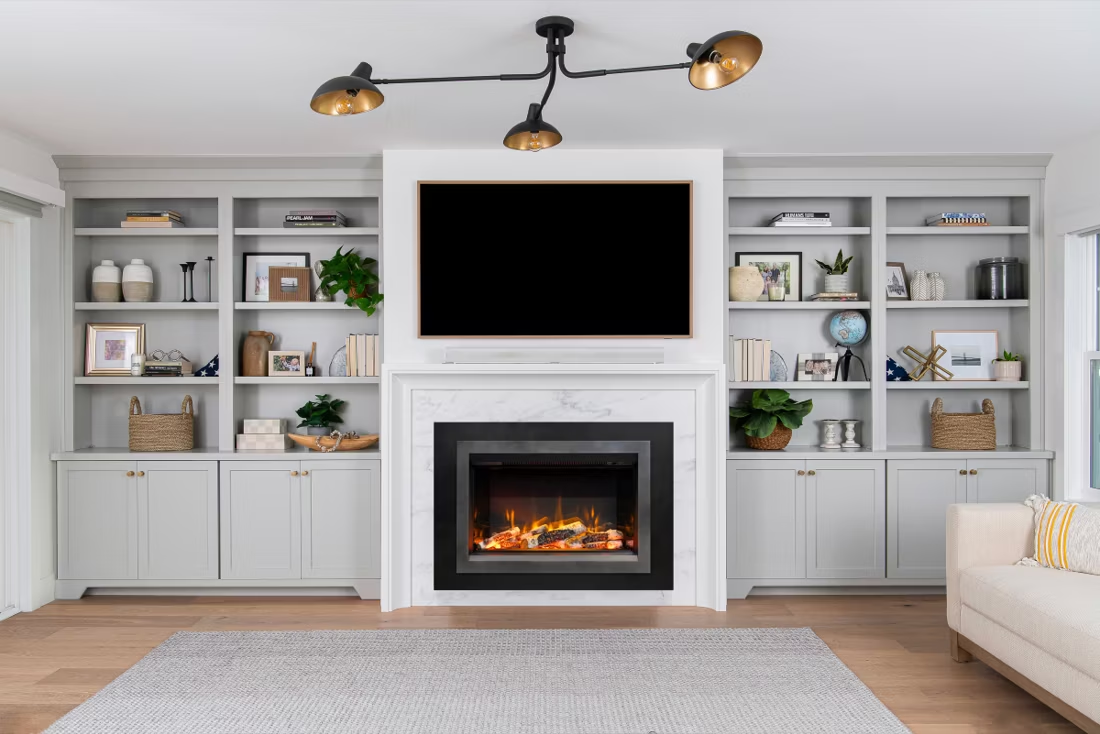
Yes—with an asterisk. Fireplaces are hot and TVs don't like heat. Either put a mantel between them to deflect rising warmth, or choose a fireplace with heat-management technology that creates a cool zone on the wall above—the wall stays around 125 degrees, barely warm, while the room still gets full heat. If you like clean lines and don't want a mantel, heat management is the answer.
Does an electric fireplace need a vent or chimney?
No—that's its superpower. An electric fireplace needs a wall and an outlet, period. No vent pipe, no gas line, no clearances to design around, which is why it works in bedrooms, offices, apartments, and walls where venting a gas or wood unit would be impractical or impossible. Installation is typically the simplest and least expensive of any fireplace type.
Can a fireplace actually lower my heating bill?
Yes—by creating a comfort zone. A furnace heats every square foot of the house just to warm the one room you're in; a gas fireplace on low burns roughly a sixth of the gas a typical furnace does. Set the furnace around 55–60 degrees as a baseline, then heat the rooms your family actually uses. Families who heat this way commonly save $20–$60 a month.
Does a fireplace add value to my home?
On average, a fireplace adds back to the home about the same amount you spent installing it. Add the monthly savings from heating the rooms you actually use instead of the whole house—often hundreds of dollars a year—and the value case is strong before you even count what a fire does for how your family uses the room.
Nearby Dealers
Hearth shops serving Highland Park and the surrounding area. Every listing shows whether it is a WhyFire partner, a dealer we have verified as authorized for the brands we recommend, or a local business carrying hearth products. No manufacturer pays for placement. How we verify dealers →
General Masonry Supply
Fireplaces Plus
Smokin' Deal Bbq
Urban Rooftops
Ember Glow
Fireplace And Patio
Electric Service in Highland Park
An electric fireplace's heater draws about 1,500 watts—pennies per hour at local rates.
Commonwealth Edison Co
Find your electric fireplace in Highland Park.
Tell us a bit about your home and firebox, and we'll match you with a trusted local dealer and send over a free Project Guide & Parts List—the exact parts, including the right insert size, for your Highland Park project.
Find Your Fireplace →