
Zone heat and fireplace ambiance, wired into Henry County homes.
With winter lows averaging 14°F and a long, heavy heating season across Henry County, an electric fireplace won't replace your furnace—but it adds real flame-look warmth to a bonus room, basement, or bedroom in Kewanee, Geneseo, Cambridge, or Bishop Hill without a chimney or gas line. Find the right unit and connect with a trusted local dealer.
Every Project Starts From One of These Five Situations
The no-chimney option for a cold Illinois winter.
Henry County's roughly 35,000 residents are spread across flat northwestern Illinois farmland and a string of small towns—Kewanee, Geneseo, Orion, Colona, Cambridge as the county seat, and the historic Bishop Hill Swedish colony. Winters here run long and genuinely cold, with average lows around 14°F and a long, heavy heating season—in the same range as Buffalo, NY. Plenty of local homes still burn oak, hickory, walnut, and maple in wood stoves and fireplaces, but a lot of the county's housing stock—ranch homes without masonry chimneys, additions, finished basements, and apartments above Main Street storefronts in Geneseo or Kewanee—simply isn't set up for a vented appliance.
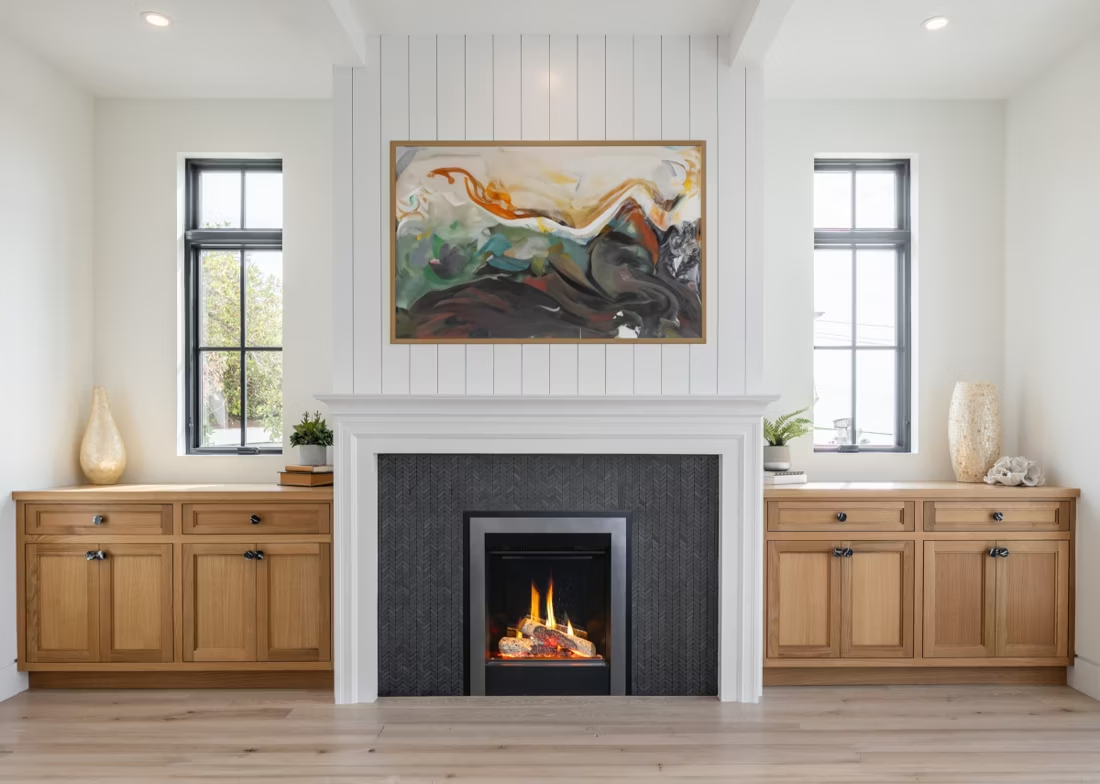
That's where electric fireplaces fit in. There's no flue to run, no combustion air to worry about, and no restriction from the county building department the way a masonry chimney or gas line permit involves. A small plug-in unit runs on a standard 120-volt outlet; a larger built-in insert or linear unit usually needs a dedicated 240-volt circuit from a licensed electrician. Either way, Ameren Illinois service covers most of the county, and installation is measured in hours, not days—a real advantage for older Bishop Hill-area homes where altering the exterior masonry isn't an option, or for renters and second homes where a permanent chimney doesn't make sense.
Three steps. No salesperson until you're ready.
Tell us about your project
Your zip code, your situation, and the fuel you're leaning toward—or let the answers point you to one.
See what's actually available
The brands dealers within 100 miles genuinely carry—real options, never a catalog mirage.
Get your dealer & Project Guide
A trusted local dealer, plus the free Project Guide & Parts List that names every component of the job.
Frequently Asked Questions
How much does an electric fireplace installation cost in Henry County?
A plug-in freestanding electric fireplace or a wall-mounted unit that uses an existing outlet can run as little as $500 to $1,200 installed, since there's no venting or gas line involved. A built-in electric insert or linear fireplace with a mantel surround, framing, and a new dedicated 240-volt circuit typically lands between $1,500 and $3,500 in Henry County, with the electrician's circuit work usually making up a third of that. Retrofitting an old masonry fireplace in a farmhouse near Cambridge or Orion with an electric insert tends to fall in the same range, since the existing opening does most of the work.
Do I need a permit to install an electric fireplace in Henry County?
A small plug-in unit that runs off an existing wall outlet generally doesn't require a permit anywhere in Henry County. If your installer is adding a new dedicated circuit for a larger built-in unit—common with linear or wall-recessed models—that work requires an electrical permit, pulled through the local municipal building department in Kewanee, Geneseo, or Cambridge, or through the county for unincorporated areas. Any licensed electrician doing the circuit work will typically handle that paperwork as part of the job.
Will an electric fireplace actually heat my house through a Henry County winter?
No—and this is worth being direct about. Most electric fireplaces put out 5,000 to 9,000 BTU from a 1,500-watt heater element, which is enough to comfortably warm a single room but nowhere near enough to carry a whole house through a winter that averages 14°F lows and a long, heavy heating season. Think of it as zone heat for a den, bedroom, or finished basement—supplementing your furnace, not replacing it. If you want a real primary or backup heat source for a cold outage in Henry County, a wood or gas appliance is a better fit; electric is about ambiance and comfortable supplemental warmth in a specific room.
Will my electric fireplace work if the power goes out?
No. Every electric fireplace, from a small plug-in unit to a large built-in insert, requires household electricity to run both the heater and the flame effect. Ameren Illinois service in Henry County is generally reliable, but ice storms and summer derechos do knock out power in this part of Illinois, and an electric fireplace goes dark right along with everything else. If backup heat during an outage matters to you, pair the electric unit with a wood stove or a battery-backed gas appliance elsewhere in the house rather than relying on electric alone.
What's the difference between an electric insert, a built-in fireplace, and a freestanding electric stove?
An electric insert is sized to slide into an existing fireplace opening—a natural fit for older farmhouses around Cambridge, Kewanee, or Bishop Hill that have a masonry fireplace no longer used for wood. A built-in electric fireplace is designed to be framed into a wall during a remodel or new build, with a mantel and surround finished around it. A freestanding electric stove or cabinet-style unit needs no installation beyond an outlet and can be moved between rooms, which makes it popular in rentals and rural homes where a permanent install doesn't make sense.
How much does an electric fireplace add to my electric bill?
Most electric fireplace heaters draw around 1,500 watts on the heat setting, which costs roughly 15 to 20 cents an hour to run on typical Ameren Illinois residential rates—a few dollars for an evening's use. Running the flame effect alone, without the heater, draws only a fraction of that, since it's just LED lighting. Households in Henry County using an electric fireplace as supplemental zone heat in one room, rather than running the furnace to cover the whole house, often see a net savings rather than an increase.
What size electric fireplace do I need for my room?
For a bedroom or den up to about 150 square feet, a compact 26–33 inch unit is usually plenty. Living rooms and larger family rooms up to 400 square feet typically call for a 40–50 inch linear model, and open-concept spaces in newer Geneseo or Colona builds may want a 60-inch-plus unit or two smaller units in different zones. Because the heater output tops out around 1,500 watts regardless of the fireplace's width, sizing up mostly buys you a bigger visual flame—not more actual heat. A local dealer can walk through your room dimensions and layout before you buy.
Can I convert my old wood-burning fireplace to electric?
Yes, and it's a common project in Henry County's older housing stock—farmhouses and century homes near Bishop Hill, Orion, and Cambridge often have a masonry fireplace that hasn't been used for wood in years due to a damaged flue or chimney maintenance costs. An electric insert slides into the existing opening, usually with a simple surround kit to finish the look, and needs only a nearby outlet or a new circuit if you're stepping up to a larger unit. It's typically the fastest and least expensive way to bring a dead fireplace back to life without chimney repair or a masonry inspection.
Electric vs. wood or gas—which fits my Henry County home?
Wood remains a strong option here given the local oak, hickory, walnut, and maple, and it keeps working during a power outage—a real consideration on the open farmland stretches of the county. Gas offers instant, consistent heat if you have or can run a line. Electric wins when there's no chimney, no gas service, or when the goal is simply ambiance and supplemental warmth in a specific room—a converted rental unit above a Kewanee storefront, a finished basement, or a historic home in Bishop Hill where altering the exterior isn't practical. Many Henry County households end up with a primary wood or gas appliance for real heat and an electric unit elsewhere in the house for convenience.
Can I put a TV above my fireplace?
Yes—with an asterisk. Fireplaces are hot and TVs don't like heat. Either put a mantel between them to deflect rising warmth, or choose a fireplace with heat-management technology that creates a cool zone on the wall above—the wall stays around 125 degrees, barely warm, while the room still gets full heat. If you like clean lines and don't want a mantel, heat management is the answer.
Do electric fireplaces actually produce heat?
Yes—most put out around 4,800–5,000 BTUs from a standard outlet, which comfortably warms a bedroom, office, or den as a comfort-zone heater. What they won't do is carry a whole house the way wood, gas, or pellet can. Think of electric as ambiance-first with honest supplemental heat: flames on with no heat in July, flames plus warmth in January.
Can I install a fireplace myself?
If you're putting a fire in your house on purpose, it's best to work with an expert. Unless you're genuinely experienced in framing, gas line, vent pipe, and the national code on clearances to combustibles, have a professional do it—and ideally the same company that sells you the fireplace, so warranty, service, and liability all live under one roof.
Can a fireplace actually lower my heating bill?
Yes—by creating a comfort zone. A furnace heats every square foot of the house just to warm the one room you're in; a gas fireplace on low burns roughly a sixth of the gas a typical furnace does. Set the furnace around 55–60 degrees as a baseline, then heat the rooms your family actually uses. Families who heat this way commonly save $20–$60 a month.
Find your electric fireplace in Henry County.
Tell us a bit about your home and room, and we'll put together a free Project Guide & Parts List—the right unit, the circuit requirements if you need one, and a recommended local dealer in Henry County to handle the install.
Find Your Fireplace →