
Trade the woodpile for a flip of a switch in Greene County.
With a solid winter heating season and winter lows averaging 18°F, Greene County homes need heat that shows up reliably—from Carrollton to White Hall to Roodhouse. Find the right gas fireplace, insert, or stove, and get matched with a trusted local dealer.
Every Project Starts From One of These Five Situations
Reliable heat without tending a fire.
Greene County sits in the rolling farmland of west-central Illinois along the Illinois River, home to roughly 8,300 people spread across Carrollton, White Hall, Roodhouse, Greenfield, Kane, and the unincorporated stretches between them. At climate zone 5A with a solid winter heating season, winters here are meaningfully colder than St. Louis just up the road, though nowhere near what a place like Madison, WI or Minneapolis, MN sees. Oak, hickory, walnut, and maple are the hardwoods that have kept local wood stoves burning for generations, but a lot of Greene County's older farmhouses and ranch homes have a masonry fireplace that rarely gets used—and that's exactly the situation where a gas conversion makes sense.
Natural gas service tends to run out inside town limits—Carrollton, White Hall, and Roodhouse have it available in most areas—while rural properties outside those towns typically rely on propane delivered by regional suppliers. Either fuel works fine for a direct-vent gas fireplace or insert. Greene County has no non-attainment designation and no seasonal burn restrictions, so unlike some regions, the appeal of gas here isn't about dodging an air-quality rule. It's about instant heat on a cold January evening, a backup option during a power outage if you pick the right ignition system, and skipping the ash cleanup and annual chimney sweep that come with a wood-burning setup.
Three steps. No salesperson until you're ready.
Tell us about your project
Your zip code, your situation, and the fuel you're leaning toward—or let the answers point you to one.
See what's actually available
The brands dealers within 100 miles genuinely carry—real options, never a catalog mirage.
Get your dealer & Project Guide
A trusted local dealer, plus the free Project Guide & Parts List that names every component of the job.
Frequently Asked Questions
How much does a gas fireplace installation cost in Greene County?
For Greene County, a gas fireplace or insert installation typically runs $3,500 to $9,000, with the low end covering a direct-vent insert going into an existing masonry fireplace where gas or propane is already nearby, and the high end covering new construction or a remodel that needs framing, venting, and a fresh gas line run. If your property is outside town limits and doesn't have natural gas, expect an added cost for a propane tank installation or hookup through a regional propane supplier—that's the norm for most rural addresses in the county. A local dealer will give you a firm number after seeing the space in person.
Can I convert my existing wood fireplace to gas?
Yes, and it's a common project for Greene County's older farmhouses with a masonry fireplace that's mostly decorative at this point. A gas insert goes into the existing opening and vents up through the same chimney using a stainless liner, so you keep the look of the fireplace while gaining real, adjustable heat output. Whether you're on natural gas in Carrollton or White Hall, or running propane out in the county, the insert itself is largely the same—your dealer just configures the orifice and regulator for the fuel you have.
Do I need natural gas, or does propane work for a gas fireplace?
Propane works just as well as natural gas for a gas fireplace or insert, and it's the more common option once you're outside Carrollton, White Hall, or Roodhouse city limits. Most gas fireplace models are available in either configuration—your installer sets up the right orifice sizing for whichever fuel you're running. If you're on a propane tank already for your furnace or water heater, adding a fireplace to that same supply is usually straightforward. If you don't have a tank yet, a regional propane supplier can typically get one installed alongside your fireplace project.
Will my gas fireplace still work if the power goes out?
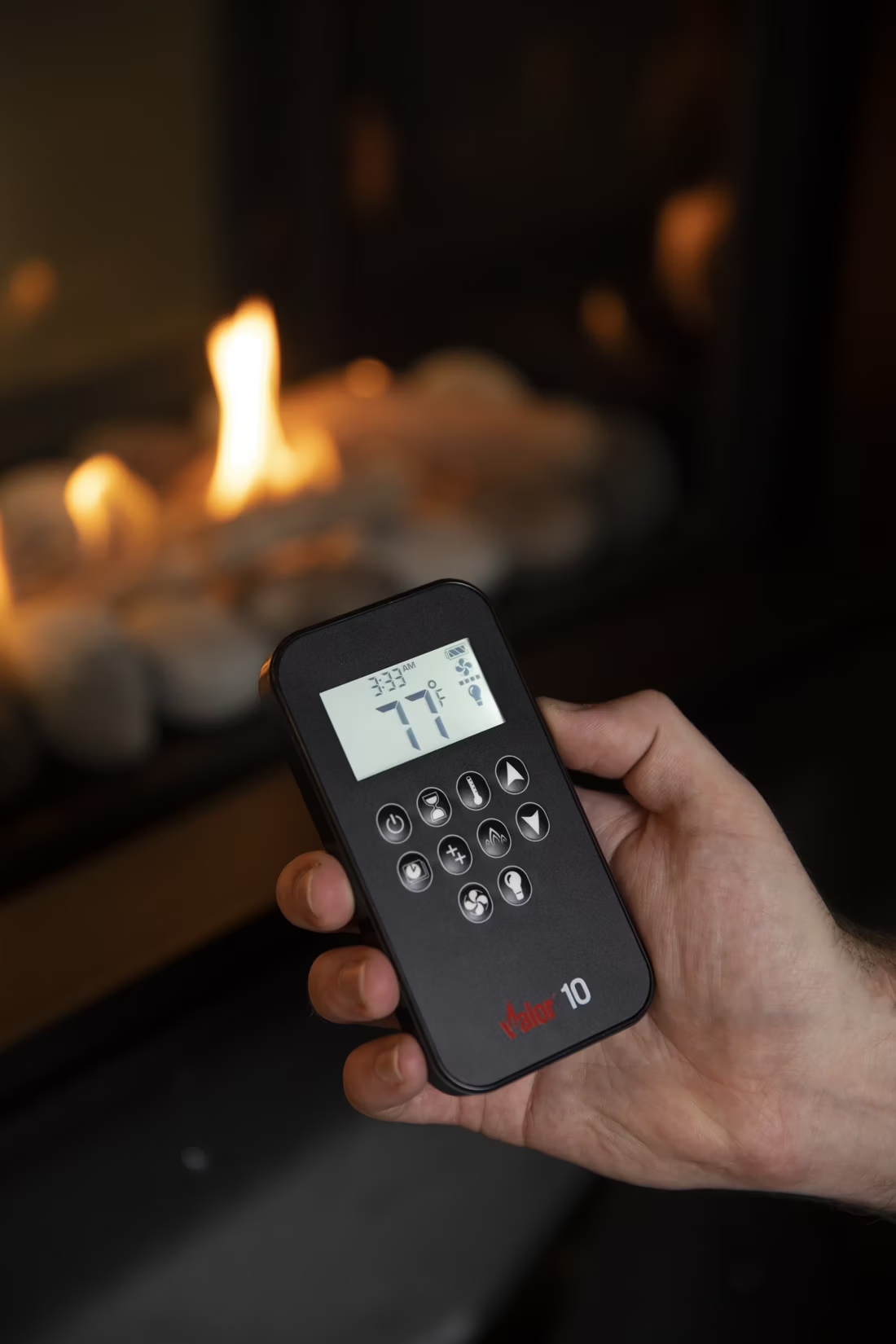
Most gas fireplaces with intermittent pilot ignition (IPI) include a battery backup that keeps the unit operational when the power drops—you just need to remember to keep fresh batteries in the unit. That matters in Greene County, where rural outages during winter storms can stretch longer than in town. Valor fireplaces take a different approach: their pilot generates its own electricity through the thermocouple, so there's no battery to maintain at all. Worth asking your local dealer about if backup heat during an outage is a priority for your household.
What's the difference between a gas fireplace, gas insert, and gas stove?
A gas fireplace is a fully built-in unit framed into a wall, typically used in new construction or a remodel. A gas insert slides into an existing masonry fireplace opening, converting an old wood-burning hearth into a sealed, efficient gas unit using the same chimney as its vent. A gas stove is a freestanding cast-iron or steel unit that sits on a hearth pad rather than inside a fireplace opening. For the older farmhouses common throughout Greene County, an insert is usually the right fit since it works with the fireplace you already have.
Do I need a permit to install a gas fireplace in Greene County?
Yes—gas line work requires a permit and needs to be done by a licensed gas-fitter, and the fireplace installation itself typically needs a building permit as well. If your property is inside Carrollton, White Hall, Roodhouse, or one of the other incorporated towns, permitting runs through that town's office; unincorporated county properties go through Greene County's building and zoning office. Most local hearth dealers coordinate the permitting and inspections as part of the install, so this usually isn't something you have to manage yourself.
What's the difference between vented and vent-free gas fireplaces?
Vented (direct-vent) gas fireplaces pull combustion air from outside and exhaust the byproducts back outside through a sealed pipe—they're the cleanest and most universally recommended option. Vent-free units burn directly into the room without external venting; they're legal in Illinois but come with strict room-sizing requirements and release some moisture and combustion byproducts indoors. For Greene County's older, often drafty farmhouses, that added humidity from a vent-free unit isn't usually a problem, but a direct-vent model still delivers more heat and gives you more flexibility on where it can be installed. Most dealers in the area lean toward direct-vent for that reason.
How often should my gas fireplace be serviced?
Plan on an annual inspection—a technician checks the burner, pilot assembly, venting, and any gas connections, and cleans the glass and interior. It's a lighter job than sweeping a wood chimney, but it matters just as much for safe operation. Expect to pay somewhere in the $150 to $250 range for a standard annual service call in this part of Illinois.
Gas vs. wood—which makes more sense for a Greene County home?
Wood has real advantages here—Greene County has plenty of oak, hickory, walnut, and maple available, self-cut or purchased firewood keeps fuel costs low, and a wood stove keeps working with no power at all. Gas trades that self-sufficiency for convenience: instant on-off operation, no ash or creosote to manage, and steadier heat output without tending a fire. A lot of Greene County households end up with both—gas in the main living area for daily use, and a wood stove or fireplace kept in reserve for backup heat when winter storms take out the power.
Can I put a TV above my fireplace?
Yes—with an asterisk. Fireplaces are hot and TVs don't like heat. Either put a mantel between them to deflect rising warmth, or choose a fireplace with heat-management technology that creates a cool zone on the wall above—the wall stays around 125 degrees, barely warm, while the room still gets full heat. If you like clean lines and don't want a mantel, heat management is the answer.
Why is my open fireplace making my house colder?
Open fireplaces suck—literally. As the fire burns, it consumes air your furnace already paid to heat and pulls it out through the chimney, so the house is actually colder after the fire goes out than before you lit it. An insert fixes this: it seals the chimney, puts fixed glass across the front, and turns that hole in your house into a real heat source.
Can I install a fireplace myself?
If you're putting a fire in your house on purpose, it's best to work with an expert. Unless you're genuinely experienced in framing, gas line, vent pipe, and the national code on clearances to combustibles, have a professional do it—and ideally the same company that sells you the fireplace, so warranty, service, and liability all live under one roof.
How much should I budget for a fireplace?
For an average home—covering the fireplace, the vent pipe, and basic installation—a budget between $3,900 and $5,500 gives you a lot of options across wood, gas, and pellet. By the time you add finish work, gas line, and electrical, the average complete installation lands between $5,000 and $12,000 all-in. In a remodel or new build, a good rule is to put about 2.5% of the total project cost toward the fireplace.
Find your gas fireplace in Greene County.
Tell us a bit about your home and we'll put together a free Project Guide & Parts List—the exact parts, including the vent kit, and a recommended local dealer to get it installed right.
Find Your Fireplace →