
Real flame-look heat, no chimney needed, anywhere in Effingham County.
Zone heat and ambiance for homes across Effingham County—from the city itself out to Teutopolis, Altamont, Shumway, and Dieterich. Find the right electric unit and connect with a trusted local dealer.
Every Project Starts From One of These Five Situations
The easiest fireplace to add to a home you already have.
Effingham County sits at the crossroads of Interstates 57 and 70 in south-central Illinois—Climate Zone 4A, with winter lows averaging around 20°F and a solid, sustained winter heating season. That's a real Midwest winter, colder than St. Louis but milder than Madison, Wisconsin, and cold enough that most county homes run a furnace as primary heat with a fireplace, insert, or stove for backup warmth or ambiance. Wood heat has deep roots here—oak, hickory, walnut, and maple are all common firewood species split from local timber—but electric fireplaces have carved out a real niche of their own, especially in rooms where running a chimney or gas line just doesn't make sense.
Ameren Illinois serves electric accounts in and around the city of Effingham, with Tri-County Electric Cooperative covering much of the surrounding rural county. Because electric fireplaces need neither a flue nor a gas connection, they've become the go-to option for finished basements, home additions, bedrooms, and older farmhouses around Teutopolis, Altamont, Shumway, and Dieterich where retrofitting venting would be impractical or costly. A plug-in insert or mantel unit can go from delivery box to lit flame in an afternoon; a hardwired built-in takes a licensed electrician and a dedicated circuit, but still skips the permitting headaches, chimney inspections, and combustion safety concerns that come with wood or gas.
Three steps. No salesperson until you're ready.
Tell us about your project
Your zip code, your situation, and the fuel you're leaning toward—or let the answers point you to one.
See what's actually available
The brands dealers within 100 miles genuinely carry—real options, never a catalog mirage.
Get your dealer & Project Guide
A trusted local dealer, plus the free Project Guide & Parts List that names every component of the job.
Frequently Asked Questions
How much does an electric fireplace installation cost in Effingham County?
For Effingham County, plug-in electric fireplace inserts and mantel units typically run $400 to $1,800 installed, while a built-in, hardwired unit set into a wall or existing masonry opening runs higher—often $1,500 to $3,000 once an electrician runs a dedicated 240-volt circuit. Straightforward drop-in inserts into an existing fireplace opening in town (Effingham, Teutopolis) tend toward the low end since cord-and-plug models need no new wiring. Homes farther out—toward Altamont or Shumway—may see a modest travel charge added by area electricians and hearth dealers.
Do I need an electrician, or can I just plug it in?
It depends on the unit. Most standard electric fireplace inserts and mantel packages run on a normal 120-volt household outlet—no electrician required, just plug it in like any large appliance. Larger built-in units, wide linear fireplaces, and higher-output models often require a dedicated 240-volt circuit, which means hiring a licensed electrician to run new wiring. A local hearth dealer serving Effingham County will tell you upfront which category your chosen model falls into before you buy.
Can an electric fireplace actually heat a room in Effingham County's winters?
Electric fireplaces are built for supplemental zone heat, not whole-house heating—an important distinction given Effingham County's solid, sustained winter heating season and winter lows averaging near 20°F. Most units put out 4,000 to 5,000 BTUs, enough to comfortably warm a single room—a bedroom, den, or finished basement—but not a whole house on a cold January night the way a furnace or a wood stove burning local oak and hickory would. Think of it as the fireplace for the room you're actually sitting in, paired with your existing furnace for the rest of the house.
Do I need a permit to install an electric fireplace in Effingham County?
Plug-in electric fireplaces generally don't require a permit since there's no new wiring, gas line, or venting involved. If you're having a hardwired 240-volt unit installed, or building a new wall enclosure or mantel surround, that electrical work typically does require a permit—the licensed electrician doing the wiring usually pulls it as part of the job. Because electric units involve zero combustion and no venting, the permitting process is far simpler than a comparable wood or gas installation.
Can I put an electric insert into my existing wood fireplace?
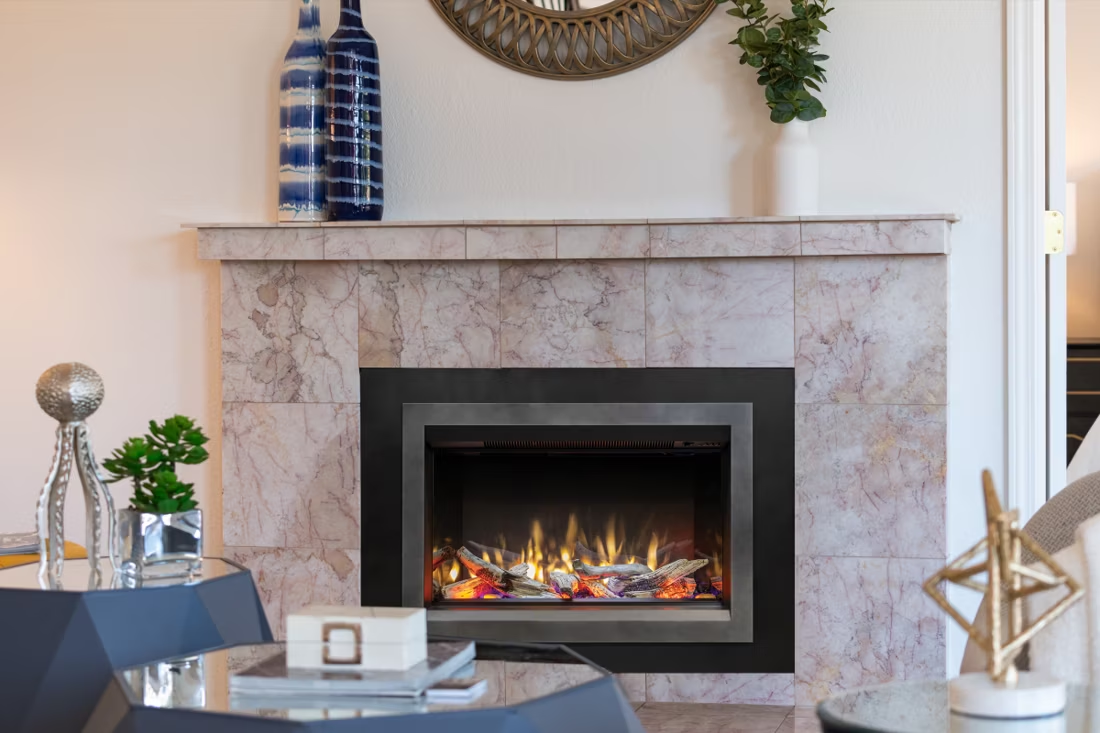
Yes, and it's one of the more common projects for older Effingham County homes with a masonry fireplace they no longer want to use for wood burning. An electric insert slides into the existing opening, plugs into a nearby outlet (or is wired to a dedicated circuit for larger units), and gives you flame-effect ambiance and supplemental heat without cleaning ash, splitting oak or hickory, or worrying about creosote buildup. It's a popular retrofit for older farmhouses around Teutopolis and Dieterich where the original fireplace has become more decorative than functional.
Electric vs. gas fireplace—which is right for my Effingham County home?
Gas delivers more heat output and a more authentic-looking flame, but requires a gas line and venting, along with a larger upfront installation. Electric requires none of that—no gas line, no flue, no chimney—which makes it the simpler and cheaper option for rooms without existing gas service, like bedrooms, basements, and additions. For a primary living room where real heat output matters most on cold nights, gas is often the better fit; for a supplemental space, electric is usually the practical choice for Effingham County homeowners.
Electric vs. wood—which makes more sense here?
Wood heat has deep roots in Effingham County, where oak, hickory, walnut, and maple are all locally available and plenty of homes still run a wood stove for real heat output and backup warmth during outages. Electric fireplaces can't function without power and won't help during a winter storm-driven outage, but they also require no chimney, no wood splitting, no ash cleanup, and no annual sweep—which is why they've become popular for secondary rooms and additions where running a flue isn't practical. Plenty of county households run both: wood for the main living space and emergency heat, electric for ambiance in a bedroom or basement.
How much does it cost to run an electric fireplace?
At typical Ameren Illinois residential rates, running a standard 1,500-watt electric fireplace on its heat setting costs somewhere around 15 to 20 cents per hour, depending on your specific rate plan—noticeably cheaper per hour than propane and comparable to or less than natural gas in many cases. Running it on flame-only mode, with no heat, draws a fraction of that since the LED flame effect uses very little power. For occasional evening use in a den or bedroom, most homeowners see only a modest bump on their monthly electric bill.
What features should I look for in an electric fireplace?
Look for realistic flame technology—newer LED and mirror-reflection designs from brands like Dimplex, Napoleon, and Amantii look far more convincing than older units—along with a heat setting that runs independently of the flame effect, so you can enjoy the look without the heat in warmer months. If you're installing into an existing fireplace opening, get accurate measurements first, since inserts are sized to specific opening dimensions. A local hearth dealer serving Effingham County can walk you through models in person and confirm what will actually fit your space before you buy.
Can I put a TV above my fireplace?
Yes—with an asterisk. Fireplaces are hot and TVs don't like heat. Either put a mantel between them to deflect rising warmth, or choose a fireplace with heat-management technology that creates a cool zone on the wall above—the wall stays around 125 degrees, barely warm, while the room still gets full heat. If you like clean lines and don't want a mantel, heat management is the answer.
Does an electric fireplace need a vent or chimney?
No—that's its superpower. An electric fireplace needs a wall and an outlet, period. No vent pipe, no gas line, no clearances to design around, which is why it works in bedrooms, offices, apartments, and walls where venting a gas or wood unit would be impractical or impossible. Installation is typically the simplest and least expensive of any fireplace type.
Does a fireplace add value to my home?
On average, a fireplace adds back to the home about the same amount you spent installing it. Add the monthly savings from heating the rooms you actually use instead of the whole house—often hundreds of dollars a year—and the value case is strong before you even count what a fire does for how your family uses the room.
Can a fireplace actually lower my heating bill?
Yes—by creating a comfort zone. A furnace heats every square foot of the house just to warm the one room you're in; a gas fireplace on low burns roughly a sixth of the gas a typical furnace does. Set the furnace around 55–60 degrees as a baseline, then heat the rooms your family actually uses. Families who heat this way commonly save $20–$60 a month.
Stove and Fireplace Dealers in Effingham County
Find your electric fireplace in Effingham County.
Tell us a bit about your home and we'll match you with the right electric fireplace or insert—and connect you with a trusted local dealer who can walk you through installation, whether that's a simple plug-in unit or a hardwired built-in.
Find Your Fireplace →