
Zone heat and real ambiance for a long Edgar County winter.
With 5,853 heating degree days and winter lows averaging 17°F—a season on par with Madison, WI—Edgar County homes need more than one way to stay warm. Electric fireplaces won't replace your furnace, but they add fast, no-venting heat to a sunroom, finished basement, or bedroom. I'll match you with a trusted local dealer who knows what actually works in a Paris-area farmhouse or a newer build out toward Kansas or Chrisman.
Every Project Starts From One of These Five Situations
No flue, no fuel storage, no ash—just warmth in the room that needs it.
Edgar County sits on the Illinois-Indiana line in the state's east-central farm belt, with Paris as the county seat and a population of just under 12,000 spread across small towns like Kansas, Chrisman, and Vermilion, and a lot of open township road between them. Climate zone 5A and 5,853 heating degree days mean a real winter here—closer to Madison, WI in duration than to anything you'd call mild—with average lows around 17°F from December through February. Many homes are older farmhouses with additions or converted porches that never got full ductwork, plus a fair number of manufactured and modular homes on the outskirts of Paris and along Route 1, where a central furnace often can't reach every room evenly.
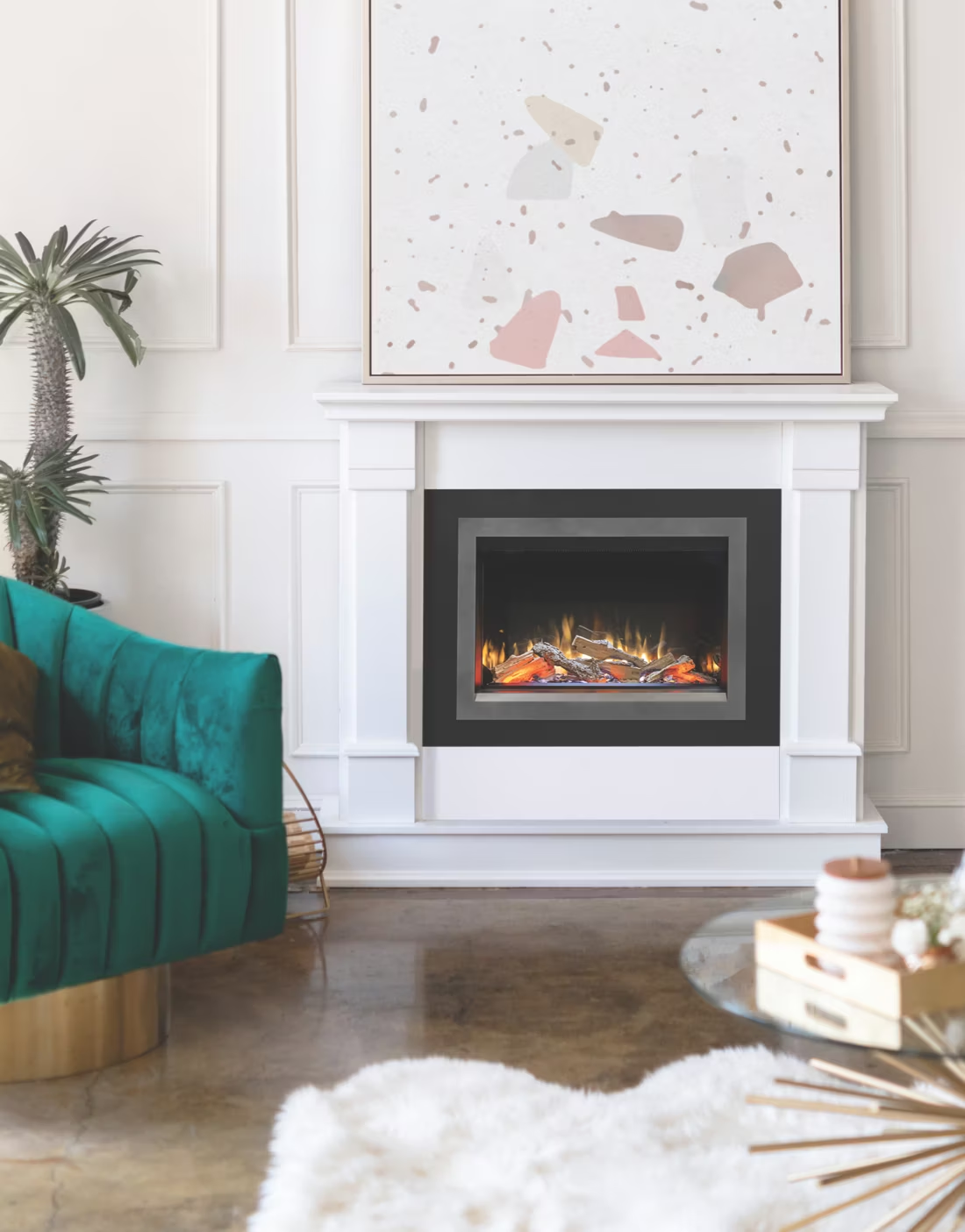
That's the gap electric fireplaces fill. A plug-in insert or a built-in unit on its own circuit adds heat to a specific room without a chimney, a gas line, or a wood supply to manage—useful in a sunroom, a finished basement, or a bedroom that always runs cold. The tradeoff is real: electric resistance heat isn't cost-effective as a whole-house solution in a 5,853-HDD county, and it goes dark in a power outage, which matters here given the ice storms that periodically take out rural lines served by Ameren Illinois. Most Edgar County homeowners who add an electric unit are supplementing a propane, fuel oil, or wood-burning primary heat source, not replacing it—and that's exactly how a local dealer will size and place it.
Three steps. No salesperson until you're ready.
Tell us about your project
Your zip code, your situation, and the fuel you're leaning toward—or let the answers point you to one.
See what's actually available
The brands dealers within 100 miles genuinely carry—real options, never a catalog mirage.
Get your dealer & Project Guide
A trusted local dealer, plus the free Project Guide & Parts List that names every component of the job.
Frequently Asked Questions
How much does an electric fireplace installation cost in Edgar County?
A basic plug-in insert or mantel unit that runs on a standard 120-volt outlet typically costs $300 to $800 installed, since there's no venting, gas line, or masonry work involved. A built-in wall unit or a larger linear model usually needs a dedicated 20-amp circuit, which means bringing in a licensed electrician—that pushes the total closer to $1,200 to $2,000 depending on how far the panel run has to travel, which can add up in an older Paris farmhouse with a panel on the far side of the house from where you want the fireplace.
Do I need a permit for an electric fireplace in Edgar County?
A simple plug-in unit generally doesn't require a permit since it's no different from any other appliance you'd plug into an outlet. If you're adding a built-in unit that requires new wiring or a dedicated circuit, that electrical work typically does need a permit through the Edgar County Planning & Zoning office, and it should be pulled by whoever does the wiring. A local dealer who regularly installs built-ins in the county will usually coordinate this as part of the job rather than leaving you to sort it out separately.
What size electric fireplace do I actually need?
Most electric fireplaces put out 5,000 to 9,000 BTUs, which is enough to noticeably warm a single room—a 200 to 400 square foot space, roughly—but not a whole floor plan, especially in a county running 5,853 heating degree days a season. Think in terms of the specific room: a converted sunroom or an addition off the back of a Paris ranch home is a good match; expecting one unit to carry an open-concept living and dining area through a January cold snap is asking too much of the fuel type. A dealer walking the actual space will tell you honestly if electric is the right call or if you're better served by a gas or wood option for that room instead.
Should I get electric heat instead of a wood stove or propane, or in addition to one?
In Edgar County, electric is almost always the addition, not the replacement. Plenty of rural households here still keep a wood stove going as backup heat—burning local oak, hickory, walnut, or maple—because it works without power during an ice-storm outage, which electric heat simply can't do. Propane fills the gap for whole-house heating on properties outside any natural gas footprint. Electric fireplaces are best thought of as the low-effort layer on top of whatever's already heating the house: instant warmth in one room, no fuel to haul, no flue to maintain.
What does it cost to run an electric fireplace day to day?
Most units draw around 1,500 watts on the heat setting. At Ameren Illinois's typical residential rate, that works out to roughly 15 to 22 cents an hour of continuous heating use—inexpensive for occasional evening use in a bedroom or sunroom, but it adds up quickly if you're trying to lean on it as all-day primary heat during a stretch of 17°F mornings. That math is part of why most Edgar County homeowners use electric fireplaces for supplemental warmth and ambiance rather than as their main heat source through the full winter.
Will my electric fireplace still work if the power goes out?
No—and that's worth planning around in Edgar County, where winter ice storms can knock out rural electric service for hours or occasionally longer. Unlike a wood stove, an electric fireplace is entirely dependent on grid power. If backup heat during an outage is a real concern for your household, it's worth pairing an electric unit with a wood-burning appliance or at minimum a generator plan, rather than treating electric as your only cold-weather fallback.
Where do electric fireplaces make the most sense in an Edgar County home?
The best fits are rooms that are hard or expensive to extend ductwork to: finished basements, three-season porches converted to year-round space, additions built onto older Paris and Kansas-area farmhouses, and bedrooms in manufactured or modular homes where a central system runs unevenly. Electric fireplaces are also popular in rental properties and lake or cabin properties around the county where a full wood or gas installation isn't practical but some visual warmth and supplemental heat still adds real value.
How much maintenance does an electric fireplace need?
Very little compared to wood or gas. There's no chimney to sweep and no gas line to inspect—mostly it's dusting the unit, occasionally cleaning the glass front, and checking that the heating element and fan are running quietly. Most manufacturers rate the flame-effect LED components to last well over a decade of regular use, so the main service call you'll ever need is if the heating element itself fails, which a local dealer can usually swap without a full replacement.
How realistic do modern electric fireplaces actually look?
Flame technology has come a long way from the older orange-light rotating drums—current LED and mirror-based flame effects from brands available through local Illinois hearth dealers look convincing enough that most guests won't clock it as electric from across the room, and many let you run the flame effect with the heat switched off, which is popular in Edgar County homes for shoulder-season ambiance in September or April when heat isn't needed but the look still is. A dealer showroom visit is the best way to compare flame quality side by side before deciding.
Do electric fireplaces actually produce heat?
Yes—most put out around 4,800–5,000 BTUs from a standard outlet, which comfortably warms a bedroom, office, or den as a comfort-zone heater. What they won't do is carry a whole house the way wood, gas, or pellet can. Think of electric as ambiance-first with honest supplemental heat: flames on with no heat in July, flames plus warmth in January.
Can I put a TV above my fireplace?
Yes—with an asterisk. Fireplaces are hot and TVs don't like heat. Either put a mantel between them to deflect rising warmth, or choose a fireplace with heat-management technology that creates a cool zone on the wall above—the wall stays around 125 degrees, barely warm, while the room still gets full heat. If you like clean lines and don't want a mantel, heat management is the answer.
Can I install a fireplace myself?
If you're putting a fire in your house on purpose, it's best to work with an expert. Unless you're genuinely experienced in framing, gas line, vent pipe, and the national code on clearances to combustibles, have a professional do it—and ideally the same company that sells you the fireplace, so warranty, service, and liability all live under one roof.
Can a fireplace actually lower my heating bill?
Yes—by creating a comfort zone. A furnace heats every square foot of the house just to warm the one room you're in; a gas fireplace on low burns roughly a sixth of the gas a typical furnace does. Set the furnace around 55–60 degrees as a baseline, then heat the rooms your family actually uses. Families who heat this way commonly save $20–$60 a month.
Get your free Project Guide & Parts List for an electric fireplace in Edgar County.
Tell me about the room you're heating and how you plan to use it, and I'll match you with a trusted local Edgar County dealer and send over a free Project Guide & Parts List—the right unit, the circuit requirements, and a recommended installer for your electric fireplace project.
Find Your Fireplace →