
Real Heat Without a Chimney in Sight.
Durand winters push lows near 10°F and bring a long, demanding heating season—on par with Madison, WI. An electric fireplace adds instant zone heat to any room with no venting, no gas line, and no wood to haul.
Every Project Starts From One of These Five Situations
Zone heat, no gas line required.
Durand is a small Winnebago County town of under 1,500 people, tucked near the Wisconsin border where winter lows average 10°F and the heating season runs long—Durand sees winters as cold and long as Madison, Wisconsin. Homes here are split between Commonwealth Edison service in town and Rock Energy Cooperative out in the surrounding farmland, and many rely on propane furnaces or electric heat pumps rather than piped natural gas, since there's no municipal gas utility serving the area.
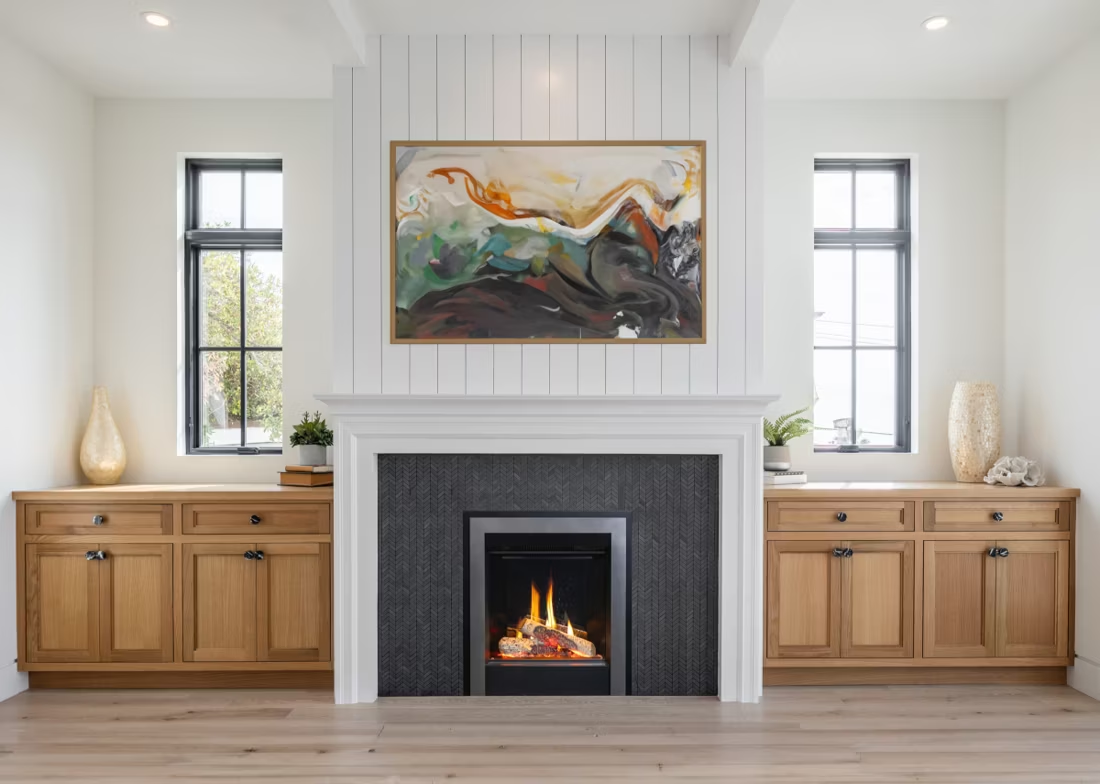
That's exactly the situation where an electric fireplace earns its keep. It plugs into a standard outlet or a dedicated 120V/240V circuit, needs no chimney or venting, and delivers real supplemental warmth to a bedroom, sunroom, or finished basement without touching your propane bill. For renters, manufactured homes, and additions where running new gas line isn't practical, electric is often the only realistic upgrade—and it installs in an afternoon instead of a multi-day project.
Three steps. No salesperson until you're ready.
Tell us about your project
Your zip code, your situation, and the fuel you're leaning toward—or let the answers point you to one.
See what's actually available
The brands dealers within 100 miles genuinely carry—real options, never a catalog mirage.
Get your dealer & Project Guide
A trusted local dealer, plus the free Project Guide & Parts List that names every component of the job.
Frequently Asked Questions
How much does an electric fireplace installation cost in Durand?
Most electric fireplace projects in and around Durand run $250 to $2,500. A plug-in insert or mantel package that drops into an existing opening sits at the low end. A built-in wall unit that requires a framed niche and a dedicated 240V circuit run by an electrician lands in the middle to upper end. Because there's no chimney, gas line, or venting to install, electric is consistently the least expensive fireplace fuel to add to a Durand home—local dealers can usually walk you through options in a single visit.
What does it actually cost to run an electric fireplace here?
Most electric fireplace heaters draw about 1,500 watts on the heat setting. At Commonwealth Edison's residential rate of roughly $0.1339 per kWh, that's about 20 cents an hour to run. On Rock Energy Cooperative's rural rate of about $0.1447 per kWh, it's closer to 22 cents an hour. Compare that to running a whole-home propane furnace to heat a single room, and it's easy to see why electric fireplaces are popular as zone heaters in Durand's older, harder-to-insulate farmhouses—you heat the room you're in without cranking the furnace for the whole house.
Do I need a permit to install an electric fireplace in Durand?
A plug-in electric fireplace or insert that uses an existing outlet typically doesn't require a permit. If you're adding a built-in unit that needs a new dedicated circuit, the electrical work itself may require a permit through the Winnebago County Building Division, since Durand is unincorporated in parts and relies on county building oversight for electrical work outside city limits. Any licensed electrician doing the circuit run will know whether your specific address falls under county or municipal jurisdiction—worth confirming before work starts.
Can an electric fireplace actually heat a room in a Durand winter?
It can heat a single room, but it's not a primary heat source for a whole house—not with winter lows averaging 10°F and a long, demanding heating season. Most electric fireplace heaters are rated for 400-1,000 square feet under good conditions. In Durand, they work best as supplemental heat: warming a bedroom, home office, or finished basement so you can turn down the thermostat on the rest of the house, or as backup warmth for a three-season room that your furnace doesn't reach well.
What's the difference between an electric insert, a wall-mount unit, and a mantel package?
An electric insert is built to slide into an existing fireplace opening—a good option if you have an old masonry fireplace you want to retire without demolishing it. A wall-mount unit hangs flush on the wall like a TV, popular in newer builds or additions where floor space is tight. A mantel package pairs an electric firebox with a surrounding cabinet or mantel shelf, giving you the look of a traditional fireplace with none of the venting. For Durand's mix of older farmhouses and newer ranch-style homes, all three show up regularly—the right pick usually comes down to whether you're retrofitting an existing opening or starting from a bare wall.
Does it matter whether I'm on ComEd or Rock Energy Cooperative?
It affects your running cost, though not dramatically. Commonwealth Edison's residential rate runs about $0.1339 per kWh, while Rock Energy Cooperative, which serves much of rural Winnebago County outside town, runs slightly higher at about $0.1447 per kWh. Over a heating season of regular use, that's a modest difference—a few dollars a month at most—but it's worth checking your utility bill to see which provider serves your specific address before budgeting for daily use.
Are electric fireplaces safe for older homes and rentals in Durand?
Yes, and that's a big part of their appeal here. With no open flame, no combustion byproducts, and no chimney to maintain, electric fireplaces are a low-risk option for older Durand farmhouses with aging masonry chimneys, for manufactured homes, and for rental properties where a landlord doesn't want the liability or maintenance of a wood or gas unit. The main thing to check is that the circuit can handle the draw—a licensed electrician can confirm your panel has capacity before installing a higher-wattage built-in model.
Electric vs. wood—which makes more sense for my Durand home?
Wood has deep roots in this part of northern Illinois, with plenty of oak, hickory, walnut, and maple available locally, and it keeps working during a power outage—a real consideration given how exposed rural Winnebago County power lines can be in an ice storm. Electric can't run without power, but it costs far less to install, needs zero maintenance, and produces heat instantly with a remote or app. For a primary heat source or storm backup, wood wins. For low-cost, low-hassle supplemental warmth in a bedroom or den, electric is usually the better fit—and plenty of Durand homes end up with both.
What should I look for in an electric fireplace for a cold climate like Durand's?
Look for a model with a true 1,500-watt heater rated for the square footage of the room you're heating, not just the visual size of the unit—flame effects vary but heat output is what matters here. Brands like Dimplex, Napoleon, and Touchstone make units with realistic LED flame technology and thermostatic controls that cycle the heater on and off to hold a set temperature, which keeps your electric bill in check during Durand's long heating season. A local dealer can match wattage and unit size to your specific room.
Can I put a TV above my fireplace?
Yes—with an asterisk. Fireplaces are hot and TVs don't like heat. Either put a mantel between them to deflect rising warmth, or choose a fireplace with heat-management technology that creates a cool zone on the wall above—the wall stays around 125 degrees, barely warm, while the room still gets full heat. If you like clean lines and don't want a mantel, heat management is the answer.
How much does an electric fireplace cost to run?
With the heater on, a typical unit draws about 1,500 watts—at average electric rates that's roughly 20 cents an hour. Run the flame effect alone and it costs pennies; the flames are LED-driven and use about as much power as a light bulb. There's no pilot light, no fuel delivery, and essentially no maintenance.
How much should I budget for a fireplace?
For an average home—covering the fireplace, the vent pipe, and basic installation—a budget between $3,900 and $5,500 gives you a lot of options across wood, gas, and pellet. By the time you add finish work, gas line, and electrical, the average complete installation lands between $5,000 and $12,000 all-in. In a remodel or new build, a good rule is to put about 2.5% of the total project cost toward the fireplace.
Can a fireplace actually lower my heating bill?
Yes—by creating a comfort zone. A furnace heats every square foot of the house just to warm the one room you're in; a gas fireplace on low burns roughly a sixth of the gas a typical furnace does. Set the furnace around 55–60 degrees as a baseline, then heat the rooms your family actually uses. Families who heat this way commonly save $20–$60 a month.
Nearby Dealers
Hearth shops serving Durand and the surrounding area. Every listing shows whether it is a WhyFire partner, a dealer we have verified as authorized for the brands we recommend, or a local business carrying hearth products. No manufacturer pays for placement. How we verify dealers →
Loescher Heating & Ac
The Fireworks Store
Lanz Furnace And Fireplace
Advanced Chimney Systems
Janesville Brick & Tile
Electric Service in Durand
An electric fireplace's heater draws about 1,500 watts—pennies per hour at local rates.
Commonwealth Edison Co
Rock Energy Cooperative
Find your electric fireplace in Durand.
Tell us about your room and heating goals, and we'll put together a free Project Guide & Parts List for your Durand home—the right unit, the electrical requirements, and a trusted local dealer who can install it right.
Find Your Fireplace →