
Electric heat that fits any room in Decatur.
No chimney, no gas line, no venting—just plug-in or hardwired warmth for Decatur homes, apartments, and additions. Find the right unit and connect with a trusted local dealer.
Every Project Starts From One of These Five Situations
Heat and ambiance, no chimney required.
Decatur sits in central Illinois farm country at 674 feet elevation, in climate zone 5A, with a solid five-month heating season and average winter lows around 20 degrees. That's a real winter—colder and longer than the Gulf South, though not in the same league as Madison, Wisconsin's much longer, colder winters further north. It's enough cold to justify supplemental heat in a bedroom, sunroom, or finished basement for a solid five months, but not the kind of climate where a household needs a wood-fired backup for survival heat.
Macon County's flat farmland and lack of nearby national forest land are part of why wood and pellet stoves are uncommon here—there's little local cutting-permit culture and no regional wood-heat tradition the way you'd find in the Cascades or the Rockies. What Decatur homes do have is reliable electric service through Ameren Illinois and, in outlying areas, Shelby Electric Cooperative, at a residential rate around 11.76 cents per kWh—inexpensive enough that a zone-heating electric fireplace or insert is a genuinely practical choice for a spare room, a rental unit, or a condo where a gas line or masonry chimney simply isn't an option.
Three steps. No salesperson until you're ready.
Tell us about your project
Your zip code, your situation, and the fuel you're leaning toward—or let the answers point you to one.
See what's actually available
The brands dealers within 100 miles genuinely carry—real options, never a catalog mirage.
Get your dealer & Project Guide
A trusted local dealer, plus the free Project Guide & Parts List that names every component of the job.
Frequently Asked Questions
How much does an electric fireplace installation cost in Decatur?
Plug-in electric inserts that slide into an existing fireplace opening or media console run as little as $300 to $800 installed, since they typically just need an outlet already in place. Built-in wall units—the kind framed in like a flat-screen TV, often with a dedicated 120V or 240V circuit—run higher, generally $1,200 to $2,500 once an electrician is involved. Homes in older Decatur neighborhoods with knob-and-tube or aluminum wiring sometimes need panel or circuit upgrades first, which adds to the cost. A local dealer can tell you which category your project falls into after seeing the room.
Do I need a permit to install an electric fireplace in Decatur?
A simple plug-in insert or freestanding electric stove generally doesn't require a permit—it's treated like any other appliance you plug into an existing outlet. A built-in unit that requires a new dedicated circuit or panel work does typically need an electrical permit, either through the City of Decatur Building & Inspections office or the Macon County Building Department if you're outside city limits. Any licensed electrician doing the wiring should pull that permit as part of the job, so it's worth confirming before work starts.
How much does it cost to run an electric fireplace in Decatur?
At Ameren Illinois's residential rate of about 11.76 cents per kWh, a typical 1,500-watt electric fireplace running on high heat costs roughly 18 cents an hour. Used a few hours a day as supplemental heat in a bedroom or den through a Decatur winter—with its solid five-month heating season—that usually lands somewhere between $15 and $40 a month depending on how often it runs. Most units let you run the flame effect alone with the heater off, which draws only a few watts, so you can keep the ambiance going without the heating cost.
What's the difference between an electric fireplace insert and a built-in electric fireplace?
An insert is designed to drop into an existing fireplace opening, entertainment center cutout, or a simple wall recess—most just need a standard outlet within reach, no rewiring required. A built-in unit is framed into the wall like a window, often flush-mounted with a custom surround, and usually needs a dedicated circuit run by an electrician. For a lot of Decatur homes with an old, unused masonry fireplace, an insert is the fastest and least invasive upgrade. For new construction or a remodel where you're building the wall around it, a built-in gives a cleaner, more custom look.
Will an electric fireplace actually heat my room, or is it just for looks?
Most residential electric fireplaces put out around 4,600 to 5,000 BTU, enough to noticeably warm a 400- to 1,000-square-foot space depending on insulation and ceiling height. That's real, usable heat for a bedroom, home office, or finished basement—but it's not sized to replace a furnace for a whole Decatur home through a solid five-month heating season. Think of it as zone heating: it lets you turn the thermostat down in the rooms you're actually using and warm the one you're sitting in. For homes that want the unit purely for the flame effect, most models let you run the visual without the heater engaged.
Can I use an electric fireplace during a power outage?
No—an electric fireplace requires household power to run, so it goes dark the moment the electricity does. That's a real consideration in Macon County, where ice storms and summer derechos occasionally knock out Ameren Illinois or Shelby Electric Cooperative service for hours or longer. If backup heat during outages is a priority, an electric fireplace should be a supplement to, not a replacement for, another heat source—a generator-backed furnace or, for some households, a propane or gas unit that can run without grid power.
Electric vs. gas fireplace—which is right for my Decatur home?
Gas is the more common choice for primary supplemental heat in Decatur, since natural gas service through Ameren Illinois reaches most of the city and a gas insert or fireplace can put out real, sustained BTU output—including during a power outage, if it has a standing pilot. Electric wins on installation simplicity and flexibility: no gas line, no venting, and it works in a rental, an apartment, a condo, or a room where running gas line isn't practical or allowed. A lot of Decatur homeowners end up with gas in the main living area and an electric unit in a bedroom, basement, or add-on room where a gas line doesn't reach.
Where can I find someone to install an electric fireplace near me in Decatur?
For a plug-in insert, most hearth and furniture retailers in the Decatur area can deliver and set it in place—there's no licensed trade required. For a built-in unit needing new wiring, you'll want a licensed electrician, ideally one who's done fireplace installs before and knows to size the circuit correctly for the unit's wattage. A trusted local dealer can typically handle both the unit selection and the electrical referral in one visit, which saves you from coordinating multiple trades yourself.
What size electric fireplace do I need for my Decatur home?
Sizing comes down to the room, not the whole house. A 30- to 40-inch insert or wall unit suits a typical bedroom or den in one of Decatur's ranch or split-level homes common around Macon County. Larger great rooms or open-concept living areas in newer construction can call for a 50-inch-plus unit or even two smaller units in different zones. Older homes near downtown Decatur with existing masonry fireplaces should measure the firebox opening carefully before choosing an insert, since fit varies more than with a from-scratch built-in. A local retailer will walk your space and confirm sizing before you buy.
Do electric fireplaces actually produce heat?
Yes—most put out around 4,800–5,000 BTUs from a standard outlet, which comfortably warms a bedroom, office, or den as a comfort-zone heater. What they won't do is carry a whole house the way wood, gas, or pellet can. Think of electric as ambiance-first with honest supplemental heat: flames on with no heat in July, flames plus warmth in January.
Can I put a TV above my fireplace?
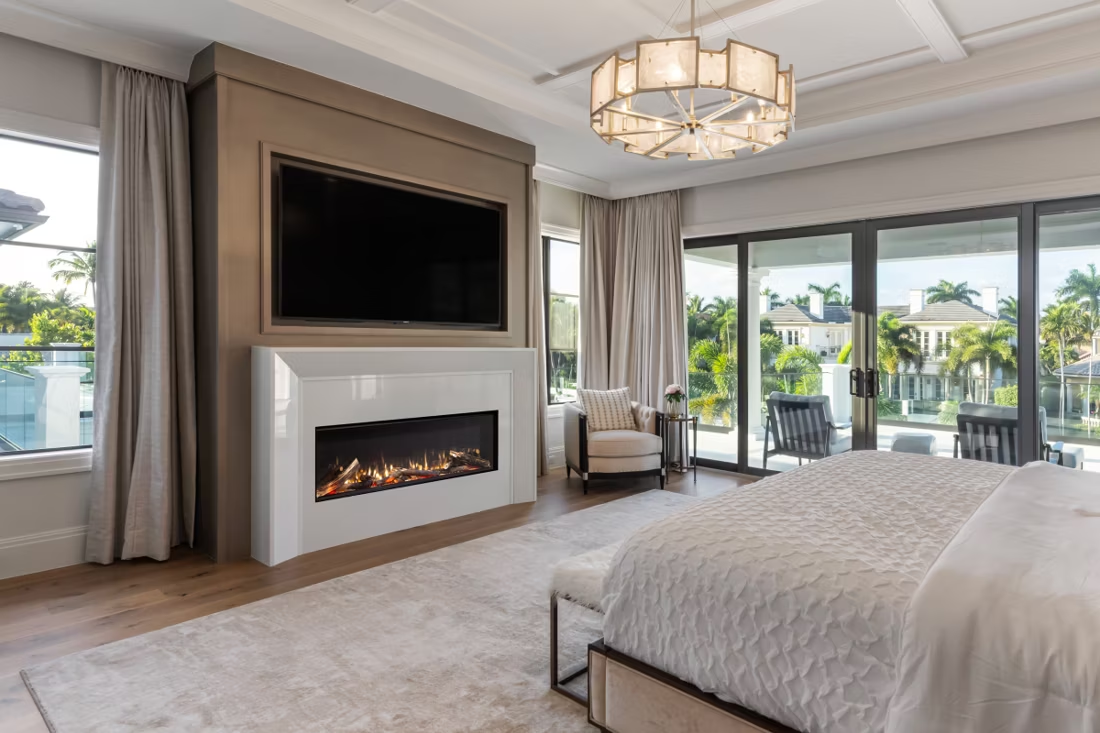
Yes—with an asterisk. Fireplaces are hot and TVs don't like heat. Either put a mantel between them to deflect rising warmth, or choose a fireplace with heat-management technology that creates a cool zone on the wall above—the wall stays around 125 degrees, barely warm, while the room still gets full heat. If you like clean lines and don't want a mantel, heat management is the answer.
What is an in-home preview and do I need one?
It's a visit where a hearth professional measures your space, confirms the model you picked actually works in your home, and walks the specs—framing, gas line, venting, finish work—before anything is ordered. Some details you just can't know until you see the house. Never make a down payment without one; it's the single most-skipped step that burns buyers.
Does a fireplace add value to my home?
On average, a fireplace adds back to the home about the same amount you spent installing it. Add the monthly savings from heating the rooms you actually use instead of the whole house—often hundreds of dollars a year—and the value case is strong before you even count what a fire does for how your family uses the room.
Nearby Dealers
Hearth shops serving Decatur and the surrounding area.
Electric Service in Decatur
An electric fireplace's heater draws about 1,500 watts—pennies per hour at local rates.
Ameren Illinois Company
Shelby Electric Coop, Inc
Find your electric fireplace in Decatur.
Tell us a bit about your home and we'll match you with the right electric fireplace or insert, plus a free Project Guide & Parts List—the exact parts and a recommended local Decatur dealer for your project.
Find Your Fireplace →