
Warm up any room in Clinton County without a chimney or gas line.
From Carlyle to Breese, Trenton, and Aviston, electric fireplaces plug into existing wiring and add real zone heat to a family room, basement, or bedroom in an afternoon. Find the right unit and connect with a trusted local dealer.
Every Project Starts From One of These Five Situations
Electric fireplaces fit Clinton County's mix of new builds and older farmhouses.
Clinton County sits in climate zone 4A with a winter heating season on the moderate-to-longer side and winter lows averaging around 22 degrees—colder than a Nashville winter, but noticeably milder than what homeowners deal with in Bismarck ND or Fargo ND. That moderate cold means most Clinton County homes don't need a whole-house wood or gas retrofit just to stay comfortable; they need targeted heat in the rooms people actually live in, which is exactly the gap an electric fireplace fills. With no air quality restrictions on the books here, there's also no burn-ban complication to plan around—electric is simply a clean, low-hassle option on its own merits.
In Carlyle and the incorporated towns, Ameren Illinois supplies the power; out in the rural stretches of the county, Southwestern Electric Cooperative covers a lot of the territory. Either way, an electric fireplace draws on a standard 120V or 240V circuit, so there's no gas line to run and no masonry chimney to maintain. That makes it a practical fit for finished basements in older Clinton County farmhouses, additions on newer builds around New Baden and Albers, and rental units where landlords want visual warmth and supplemental heat without venting work.
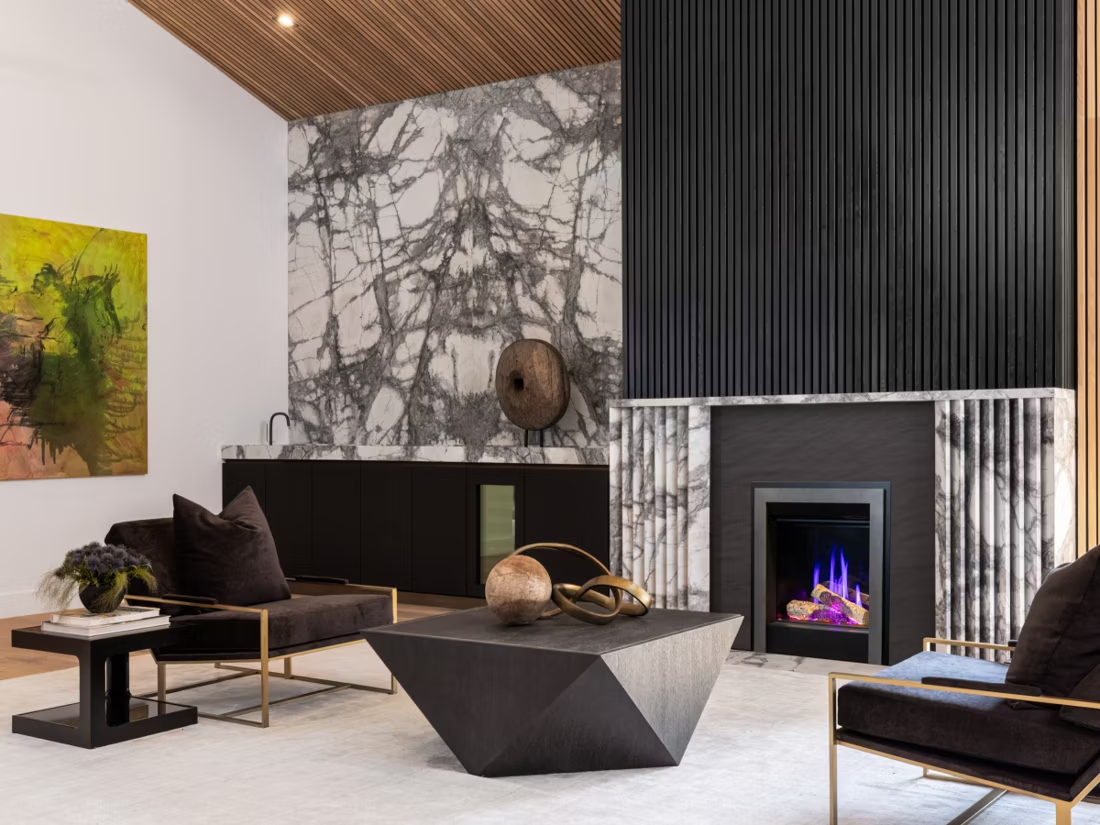
Three steps. No salesperson until you're ready.
Tell us about your project
Your zip code, your situation, and the fuel you're leaning toward—or let the answers point you to one.
See what's actually available
The brands dealers within 100 miles genuinely carry—real options, never a catalog mirage.
Get your dealer & Project Guide
A trusted local dealer, plus the free Project Guide & Parts List that names every component of the job.
Frequently Asked Questions
How much does an electric fireplace installation cost in Clinton County?
Most electric fireplace projects in Clinton County run between $300 and $1,200 installed. A plug-in wall-mount or a freestanding electric stove sits at the low end since it just needs an outlet and a mounting bracket. A built-in electric insert set into an existing masonry fireplace opening, or a unit that requires a new dedicated 240V circuit for a larger heater, lands toward the higher end. Because there's no venting or gas line involved, labor costs stay modest compared to wood or gas installs—most local dealers can complete a standard install in a few hours.
Do I need a permit to install an electric fireplace in Clinton County?
In most cases, no. Because electric fireplaces don't require venting, a chimney, or a gas line, they typically fall outside the building permit process that applies to wood stoves and gas inserts in Clinton County. The one exception is if your installer needs to add a new dedicated electrical circuit or breaker for a higher-draw unit—that portion of the work should be done by a licensed electrician and may involve an electrical permit depending on the scope. A local dealer can tell you upfront whether your specific installation triggers that step.
Will an electric fireplace actually heat a room in Clinton County's winters?
Yes, for zone heating—but it's worth being honest about the limits. A typical electric fireplace insert or wall-mount puts out around 4,600–5,000 BTUs and is rated to comfortably heat a room up to roughly 400 square feet, which covers most family rooms, bedrooms, and finished basement spaces in Clinton County. Given the county's moderate-to-longer winter heating season and winter lows around 22 degrees, electric units work best as supplemental heat layered on top of a home's furnace, or as the primary heat source for a single well-insulated room. They're not designed to replace whole-house heating on their own.
What's the difference between an electric insert, a wall-mount, and a freestanding electric stove?
An electric insert is built to slide into an existing masonry fireplace opening or a factory-built firebox, giving an old fireplace a working heat source and a realistic flame effect without any wood or gas. A wall-mount is a flatter unit that hangs on a wall like a piece of art, popular in Clinton County living rooms and finished basements where there's no existing fireplace to work with. A freestanding electric stove looks like a traditional wood stove but plugs into a standard outlet, which works well in a cabin, garage, or room where running new wiring isn't practical. All three heat the same way—resistance heating with a fan—the difference is really about fitting your existing space.
How much does it cost to run an electric fireplace in Clinton County?
A typical 1,500-watt electric fireplace running on the heat setting for a few hours a night adds a modest amount to a monthly bill—generally in the range of $10 to $25 a month for regular evening use, depending on your rate through Ameren Illinois in town or Southwestern Electric Cooperative in the rural parts of the county. Running the unit on flame-only mode (no heat) costs only a few cents an hour since it's just powering the LED light effect and fan. Compared to running a furnace to heat an entire house, using an electric fireplace to zone-heat one room you're actually using can lower overall energy costs.
Electric vs. gas fireplace—which is right for my Clinton County home?
Gas fireplaces put out substantially more heat—often 20,000 to 30,000 BTUs versus an electric unit's roughly 5,000—and can genuinely offset furnace use during Clinton County's coldest stretches. But gas requires a gas line or propane tank, venting in most configurations, and a higher installation cost. Electric skips all of that: no gas line, no venting, and a much lower up-front cost, but it heats a single room rather than serving as meaningful supplemental heat for a whole house. For homeowners who want ambiance and light supplemental warmth in a bedroom, basement, or den without construction work, electric is usually the simpler answer. For anyone trying to meaningfully cut furnace runtime in a larger living area, gas is worth the extra investment.
Will my electric fireplace work during a power outage?
No—this is the one honest tradeoff with electric heat. Since the unit runs entirely on household electricity, it shuts off the moment the power does, unlike a wood stove that keeps producing heat regardless of the grid. In Clinton County, where rural stretches served by Southwestern Electric Cooperative can see longer outage restoration times after ice storms than in-town Ameren Illinois service areas, that's worth factoring in if you're relying on the fireplace for backup heat. Homeowners who want heat during outages typically pair an electric fireplace for daily convenience with a wood stove or generator-backed system as the actual emergency plan.
What are good electric fireplace brands for Clinton County homes?
Dimplex, Napoleon, and Amantii all make widely available electric inserts and wall-mount units that local hearth dealers in the region carry and can service. Dimplex's Multi-Fire flame technology and Napoleon's Allure series are common choices for a realistic flame at a mid-range price point, while Amantii's deeper insert options work well for homeowners converting an existing masonry fireplace opening. The right pick for a Clinton County home usually comes down to the size of the opening or wall space you're working with—a local dealer can measure your space and walk you through which models will actually fit rather than guessing from an online listing.
Electric vs. wood fireplace—which makes more sense for my Clinton County home?
Wood remains a strong option in Clinton County given the abundance of local oak, hickory, walnut, and maple, and it keeps producing heat during a power outage—a real advantage in a county with a mix of in-town and rural electric service. But wood means chimney maintenance, ash cleanup, and a real building permit process for new installs. Electric skips all of that: no venting, no permit in most cases, and a flip-of-a-switch flame—but no heat at all if the power's out, and only enough output for a single room. Homeowners who already have an unused masonry fireplace often lean wood or a wood insert for real heat; those adding warmth to a basement, bedroom, or rental unit with no existing chimney usually find electric the more practical fit.
Can I put a TV above my fireplace?
Yes—with an asterisk. Fireplaces are hot and TVs don't like heat. Either put a mantel between them to deflect rising warmth, or choose a fireplace with heat-management technology that creates a cool zone on the wall above—the wall stays around 125 degrees, barely warm, while the room still gets full heat. If you like clean lines and don't want a mantel, heat management is the answer.
Does an electric fireplace need a vent or chimney?
No—that's its superpower. An electric fireplace needs a wall and an outlet, period. No vent pipe, no gas line, no clearances to design around, which is why it works in bedrooms, offices, apartments, and walls where venting a gas or wood unit would be impractical or impossible. Installation is typically the simplest and least expensive of any fireplace type.
Can I install a fireplace myself?
If you're putting a fire in your house on purpose, it's best to work with an expert. Unless you're genuinely experienced in framing, gas line, vent pipe, and the national code on clearances to combustibles, have a professional do it—and ideally the same company that sells you the fireplace, so warranty, service, and liability all live under one roof.
Can a fireplace actually lower my heating bill?
Yes—by creating a comfort zone. A furnace heats every square foot of the house just to warm the one room you're in; a gas fireplace on low burns roughly a sixth of the gas a typical furnace does. Set the furnace around 55–60 degrees as a baseline, then heat the rooms your family actually uses. Families who heat this way commonly save $20–$60 a month.
Stove and Fireplace Dealers in Clinton County
Find your electric fireplace in Clinton County.
Tell us a bit about your home and we'll match you with the right electric fireplace, insert, or wall-mount unit—plus a free Project Guide & Parts List with the exact parts and a trusted local Clinton County dealer to install them.
Find Your Fireplace →