
Steady Heat Through Lake County's Long Winters.
Direct, on-demand heat for Beach Park's cold, damp winters off Lake Michigan. Get matched with a trusted local dealer who can size, permit, and install the right gas fireplace or insert for your home.
Every Project Starts From One of These Five Situations
Reliable warmth for cold, humid Lake Michigan winters.
Beach Park sits in Lake County, Illinois, just a few miles inland from Lake Michigan, where winter lows average 16°F and the region has a winter heating season similar in severity to Madison, Wisconsin. The lake adds its own wrinkle: damp, raw cold and lake-effect snow squalls that can drop temperatures fast. Most of Beach Park's roughly 14,000 residents live in homes built from the 1970s through the 2000s, and nearly all of them already have natural gas plumbed in for the furnace and water heater—which makes adding a gas fireplace or insert a straightforward extension of existing service rather than a new utility hookup.
Nicor Gas is the natural gas provider across most of the 60099, 60083, and 60087 zip codes that make up Beach Park, so most households already have the infrastructure a direct-vent gas fireplace needs. Wood-burning fireplaces are uncommon here—Beach Park's housing stock and village codes lean toward gas appliances, and there isn't the cut-your-own-firewood culture you'd find in a more forested part of the county. For homeowners who want real heat without hauling wood or cleaning ash, a gas insert or fireplace paired with existing Nicor Gas service delivers instant, thermostatically controlled warmth—and, with the right ignition system, can keep running even if ComEd power drops during a winter storm.
Three steps. No salesperson until you're ready.
Tell us about your project
Your zip code, your situation, and the fuel you're leaning toward—or let the answers point you to one.
See what's actually available
The brands dealers within 100 miles genuinely carry—real options, never a catalog mirage.
Get your dealer & Project Guide
A trusted local dealer, plus the free Project Guide & Parts List that names every component of the job.
Frequently Asked Questions
How much does a gas fireplace installation cost in Beach Park?
Most gas fireplace and insert installations in Beach Park run $4,500 to $10,000, depending on the unit and how much gas line and venting work is involved. If your home already has a Nicor Gas line run near the fireplace location—common in ranch homes built through the 1970s and 80s across Beach Park—a direct-vent insert into an existing masonry fireplace sits toward the lower end. New construction, a fireplace added to a room without existing gas service, or a full liner-and-gas-line extension for an older wood-burning unit pushes toward the higher end. A local dealer will give you a firm number after seeing the space.
Can I convert an old wood-burning fireplace to gas?
Yes, and it's one of the more common projects for Beach Park's older homes—the ones built before natural gas service was standard in every new subdivision. A gas insert drops into the existing masonry firebox and uses a stainless liner run up the original chimney, typically running $4,500 to $9,000 depending on the insert and whether new gas line work is needed. Because wood-burning fireplaces are relatively rare in this part of Lake County to begin with, most of the ones still in service are original 1970s and 80s builds—good candidates for a straightforward gas insert conversion.
Do I need natural gas, or can I run a fireplace on propane?
Nicor Gas serves the great majority of homes across Beach Park's 60099, 60083, and 60087 zip codes, so most gas fireplace installations here simply tie into existing natural gas service. Propane really only comes into play for the handful of properties on the unincorporated edges of Lake County that the gas main hasn't reached. If that's your situation, most gas fireplace models can be configured for propane with a different orifice and regulator, and a local installer can advise whether a tank installation makes sense for your usage.
Will my gas fireplace still work if the power goes out?
It can, if you choose the right ignition system. Lake County sees its share of ComEd outages during winter storms and summer derechoes coming off Lake Michigan, so this is worth asking about. Standard IPI (intermittent pilot ignition) units run on battery backup—AA batteries inside the unit take over automatically and keep the fireplace lighting on demand. Valor's gas fireplaces go a step further: the pilot's thermocouple generates its own electricity, so there are no batteries to remember at all. Either option beats total unavailability, which is what you'd get from a wood-burning fireplace if you don't already have dry cordwood on hand. Ask your dealer which ignition system is built into any unit you're considering.
What's the difference between a gas fireplace, insert, and stove?
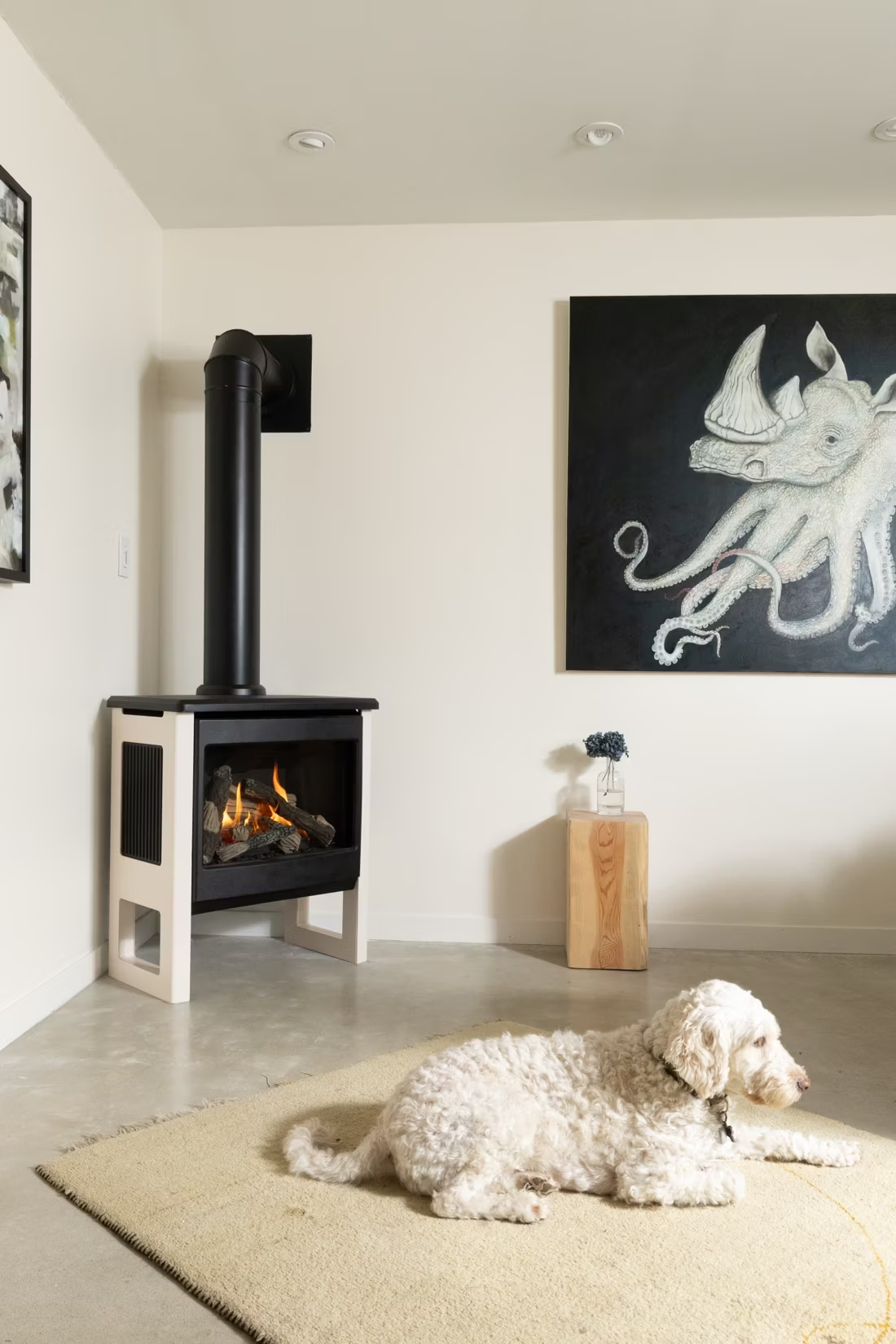
A gas fireplace is a fully built-in unit framed into a wall—the right call for new construction or a remodel. A gas insert is sized to slide into an existing masonry firebox, which is common in Beach Park's older ranch and split-level homes that still have a wood-burning fireplace shell. A gas stove is a freestanding cabinet unit on a hearth pad, useful in a room without any existing fireplace opening. For most Beach Park homeowners working with an existing masonry fireplace, an insert is the simplest upgrade; homes without one usually do better with a built-in fireplace or a freestanding stove.
Do I need a permit to install a gas fireplace in Beach Park?
Yes. The Village of Beach Park requires a building permit for gas fireplace installations, and any new or modified gas line needs to be run by a licensed plumber or gas-fitter and inspected before it's covered over. Most hearth dealers who install in the area coordinate the permit, the gas line work, and the final inspection as part of the job, so you're not stuck managing multiple trades and paperwork yourself.
Should I get a vented or vent-free gas fireplace?
Illinois allows vent-free (unvented) gas fireplaces, but they come with strict room-size and ventilation requirements, and they release combustion byproducts—water vapor and small amounts of CO—directly into the living space. Vented direct-vent units, by contrast, draw combustion air from outside and exhaust it back outside through a sealed pipe, so they don't affect indoor air quality. Given how tightly built newer Beach Park homes tend to be for energy efficiency, direct-vent is the option most local dealers recommend and the one that shows up in the large majority of installs here.
How often does a gas fireplace need to be serviced?
Plan on an annual inspection, ideally before the heating season starts each fall. A certified technician checks the burner, pilot assembly, venting, and gas connections, and cleans the glass and interior—usually $150 to $250 for a standard visit. It's a lighter lift than chimney sweeping for a wood-burning unit, but skipping it is still the most common way small pilot or ignition problems turn into a fireplace that won't light on the coldest night of the year.
Should I consider a wood-burning fireplace instead of gas?
For most Beach Park homes, gas is the more practical choice, and wood-burning fireplaces are genuinely uncommon here. The village's housing stock, mostly built from the 1970s onward with gas already plumbed in, and the lack of a local cut-your-own-firewood culture—unlike the oak, hickory, walnut, and maple forests further out in rural Lake County—mean few homeowners choose to install a new wood-burning unit. If you already have an old masonry wood fireplace, most dealers will point you toward a gas insert conversion rather than restoring the wood-burning setup—it gets you real heat without sourcing, seasoning, and stacking cordwood.
What's the difference between an insert and a zero-clearance fireplace?
An insert is a fireplace that slides into a pre-existing wood-burning fireplace—if you don't have one, there's nothing to insert it into. A zero-clearance fireplace is built into a framed wall, which makes it the answer for remodels and new construction. Simple test: existing masonry fireplace means insert; blank or framed wall means zero-clearance.
Why is a fireplace insert so efficient?
An insert does two things: it seals the chimney completely, so you stop losing air you already paid to heat, and it radiates warmth into the room through the firebox and glass. Most add a heat-exchange fan that pulls cool room air underneath, wraps it around the hot firebox, and pushes it back out warm. Your home is more efficient before you've even lit the first fire.
What is an in-home preview and do I need one?
It's a visit where a hearth professional measures your space, confirms the model you picked actually works in your home, and walks the specs—framing, gas line, venting, finish work—before anything is ordered. Some details you just can't know until you see the house. Never make a down payment without one; it's the single most-skipped step that burns buyers.
Can I install a fireplace myself?
If you're putting a fire in your house on purpose, it's best to work with an expert. Unless you're genuinely experienced in framing, gas line, vent pipe, and the national code on clearances to combustibles, have a professional do it—and ideally the same company that sells you the fireplace, so warranty, service, and liability all live under one roof.
Nearby Dealers
Hearth shops serving Beach Park and the surrounding area. Every listing shows whether it is a WhyFire partner, a dealer we have verified as authorized for the brands we recommend, or a local business carrying hearth products. No manufacturer pays for placement. How we verify dealers →
Fireplaces Plus
Smokin' Deal Bbq
Alaskan Fireplace Co
General Masonry Supply
Fireplace And Patio
Find your gas fireplace in Beach Park.
Tell us about your home and we'll match you with a trusted local dealer and send over your free Project Guide & Parts List—the exact parts, vent kit, and installer recommendation for your Beach Park gas fireplace project.
Find Your Fireplace →