
Warm, reliable gas heat for every corner of Alexander County.
From Cairo at the Mississippi-Ohio confluence to Tamms, Thebes, and Miller City, gas fireplaces and inserts give Alexander County homes instant, no-fuss warmth through a heating season that runs roughly October to April. Find the right unit and get matched with a trusted local dealer.
Every Project Starts From One of These Five Situations
Steady heat without the wood-splitting, in Illinois's southernmost county.
Alexander County sits at the very tip of Illinois, wedged between the Mississippi and Ohio rivers, with low bottomland elevation and a climate zone 4A profile that's milder than most of the Midwest—average winter lows near 26°F and a moderate winter heating load overall. That's a real but moderate heating season compared to places like Duluth or Bismarck, which means a well-sized gas unit can carry a home through the coldest stretches without the constant tending a wood stove demands. With a population under 4,000 spread across Cairo, Tamms, Thebes, Miller City, and McClure, this is one of the smallest and most rural counties in the state, and heating decisions here often come down to what's practical for an older home on a working budget.
Natural gas service reaches Cairo and the immediate surrounding area, while much of rural Alexander County—including Tamms, Thebes, and the unincorporated stretches along the river bottoms—relies on propane instead. Either fuel works for a modern direct-vent gas fireplace or insert, and many of the county's older homes still have the original oak or hickory-mantled masonry fireplace that's a natural candidate for a gas insert conversion. The appeal is straightforward: heat at the flip of a switch, no ash or creosote, and models with battery-backup ignition that keep working when river-bottom storms knock out power. Find My Fireplace doesn't sell or ship anything—we match you with a trusted local dealer who knows which fuel line reaches your address and hands you a free planning packet before any work begins.
Three steps. No salesperson until you're ready.
Tell us about your project
Your zip code, your situation, and the fuel you're leaning toward—or let the answers point you to one.
See what's actually available
The brands dealers within 100 miles genuinely carry—real options, never a catalog mirage.
Get your dealer & Project Guide
A trusted local dealer, plus the free Project Guide & Parts List that names every component of the job.
Frequently Asked Questions
How much does a gas fireplace installation cost in Alexander County?
Most gas fireplace and insert installations in this part of southern Illinois run roughly $3,800 to $9,500, depending on the unit, whether you're converting an existing masonry fireplace, and whether new gas line work is needed. A gas insert dropped into an existing chimney with gas already run to the house sits at the lower end. A new direct-vent fireplace in a home addition or a house where propane service has to be extended runs higher. Because Alexander County is small and rural, expect installers to factor in a bit of travel time for jobs out toward Thebes, Miller City, or McClure—a local dealer will give you a firm number after seeing the space.
Can I convert my existing wood fireplace to gas?
Yes, and it's a common project in a county with as much older housing stock as Alexander County has. Many homes here were built with a real masonry fireplace originally burning local oak or hickory, and a gas insert converts that into a sealed, high-efficiency unit that vents through the existing chimney with a stainless liner. The conversion typically runs $4,000 to $8,500 depending on whether you're on natural gas in Cairo or need a propane hookup elsewhere in the county. It keeps the look of the original hearth while eliminating the ash, smoke, and wood handling.
Do I need natural gas, or is propane the standard option here?
Both are used in Alexander County, but the split depends on where you live. Natural gas service is available in and around Cairo; outside that footprint—in Tamms, Thebes, Miller City, McClure, and the unincorporated county—propane is the standard fuel, typically supplied by a regional propane company with either a leased or owned tank. Nearly every gas fireplace on the market can be configured for either fuel with the correct orifice and regulator, so the choice comes down to what actually reaches your house, not which unit you want.
Will my gas fireplace still work if the power goes out?
Most modern gas fireplaces will, which matters in a county where river-bottom storms and ice can take down power lines for hours or longer. Units with intermittent pilot ignition (IPI) include a battery backup that automatically kicks in when the power drops, so the fireplace lights on demand off the batteries. Valor fireplaces go a step further—their pilot's thermocouple generates its own electricity, so there's no battery to remember at all. If backup heat during outages is a priority for your Alexander County home, ask your local dealer specifically about the ignition system on any model you're considering.
What's the difference between a gas fireplace, gas insert, and gas stove?
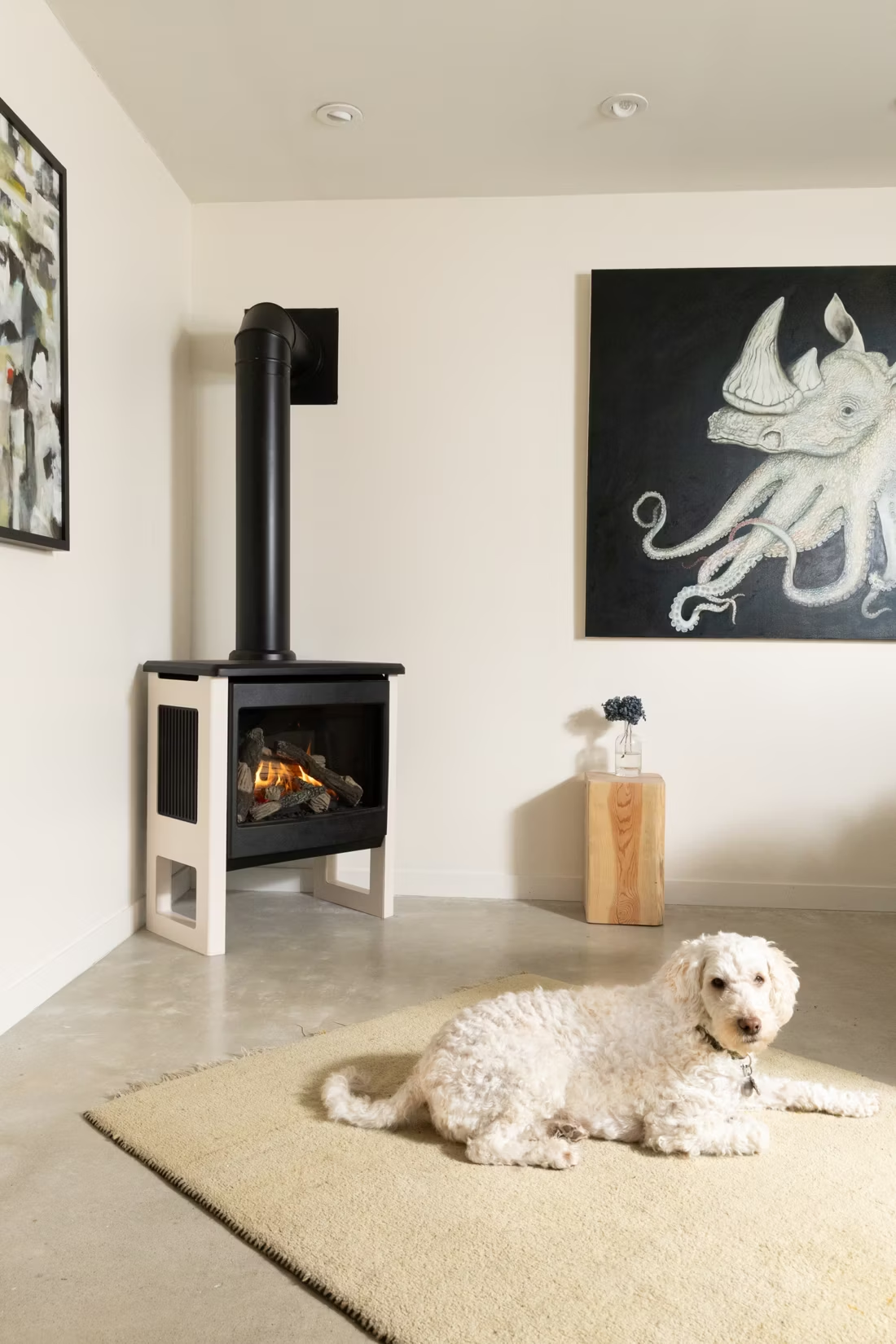
A gas fireplace is a fully built-in unit framed into a wall, typically used in new construction or a remodel. A gas insert is sized to slide into an existing masonry fireplace opening and uses your current chimney as the vent path—the right call for the many older homes in Cairo and the surrounding county with a real fireplace already in place. A gas stove is a freestanding unit that sits on the floor like a wood stove but burns gas, useful when there's no existing fireplace and you don't want to frame in a built-in unit. A local dealer can tell you which fits your specific opening and floor plan.
Do I need a permit to install a gas fireplace in Alexander County?
Yes—a new gas fireplace install typically requires both a building permit and a separate gas line permit, with the gas line work performed by a licensed gas-fitter. In a county this size, most homeowners go through the county building department for permitting, and a good local installer will handle that paperwork as part of the job rather than leaving you to coordinate it yourself. This is one of the practical reasons to work with a dealer who installs regularly in Alexander County rather than a general contractor unfamiliar with local gas code.
What's the difference between vented and vent-free gas fireplaces?
Vented (direct-vent) gas fireplaces pull combustion air from outside and exhaust it back outside through a sealed pipe—they're the cleanest and most universally code-compliant option, and the type most commonly installed in Alexander County. Vent-free units burn gas directly into the room without external venting; they're legal in Illinois but come with strict room-size requirements and an oxygen depletion sensor, and they release some water vapor and combustion byproducts into the living space. For most homes here, a direct-vent unit is the safer, more straightforward choice, but ask your local dealer about both if you're weighing a smaller room or a tight budget.
How often should a gas fireplace be serviced?
Plan on an annual inspection, ideally before the heating season starts each fall. A technician checks the burner, pilot assembly, venting, and gas connections, and cleans the glass and interior—a much quicker job than a wood chimney sweep, but still important for safety and efficiency. In a rural county like this, scheduling that inspection early in the season is worth it, since a service call in the middle of a cold snap may mean a longer wait for a technician to make the drive out.
Gas vs. wood—which makes more sense for my Alexander County home?
With winter lows averaging around 26°F and a heating season that's real but not extreme, either fuel works here. Wood has deep roots in this part of southern Illinois, where oak, hickory, walnut, and maple are all abundant in the river-bottom forests, and a wood stove keeps working with no electricity if a storm knocks out power. Gas wins on convenience—no splitting or hauling wood, no ash, instant on-off heat, and a cleaner look for a primary living space. Many homeowners in Alexander County end up with gas in the main living area for everyday use and keep the option of wood or a backup heat source for extended outages.
What's the difference between an insert and a zero-clearance fireplace?
An insert is a fireplace that slides into a pre-existing wood-burning fireplace—if you don't have one, there's nothing to insert it into. A zero-clearance fireplace is built into a framed wall, which makes it the answer for remodels and new construction. Simple test: existing masonry fireplace means insert; blank or framed wall means zero-clearance.
Why is my open fireplace making my house colder?
Open fireplaces suck—literally. As the fire burns, it consumes air your furnace already paid to heat and pulls it out through the chimney, so the house is actually colder after the fire goes out than before you lit it. An insert fixes this: it seals the chimney, puts fixed glass across the front, and turns that hole in your house into a real heat source.
Can a fireplace actually lower my heating bill?
Yes—by creating a comfort zone. A furnace heats every square foot of the house just to warm the one room you're in; a gas fireplace on low burns roughly a sixth of the gas a typical furnace does. Set the furnace around 55–60 degrees as a baseline, then heat the rooms your family actually uses. Families who heat this way commonly save $20–$60 a month.
What is an in-home preview and do I need one?
It's a visit where a hearth professional measures your space, confirms the model you picked actually works in your home, and walks the specs—framing, gas line, venting, finish work—before anything is ordered. Some details you just can't know until you see the house. Never make a down payment without one; it's the single most-skipped step that burns buyers.
Find your gas fireplace in Alexander County.
Tell us about your home and heating goals, and we'll match you with a trusted local dealer plus a free Project Guide & Parts List—the exact parts, vent kit, and recommended installer for your Alexander County gas project.
Find Your Fireplace →