
Zone heat and real ambiance for Teton Valley—no chimney required.
From Driggs to Victor to Tetonia, electric fireplaces bring instant, ventless warmth to finished basements, primary bedrooms, and vacation rentals across Teton Valley. Find the right unit and connect with a trusted local dealer.
Every Project Starts From One of These Five Situations
A supplemental heat source built for convenience, not the coldest nights.
Teton County sits at roughly 6,200 feet in the Teton Valley, boxed in by the Big Hole Mountains on one side and the Teton Range on the other, with a long, brutal heating season and an average winter low of 9°F—a climate on par with International Falls, Minnesota. Winters here run long, and the primary heat load in most homes falls to a propane furnace or a wood stove burning lodgepole pine, Douglas fir, or larch off permits from the Caribou-Targhee or Bridger-Teton National Forests. Electric fireplaces don't compete with that primary system—they layer on top of it, adding instant heat and a real flame look to a specific room without a gas line or chimney.
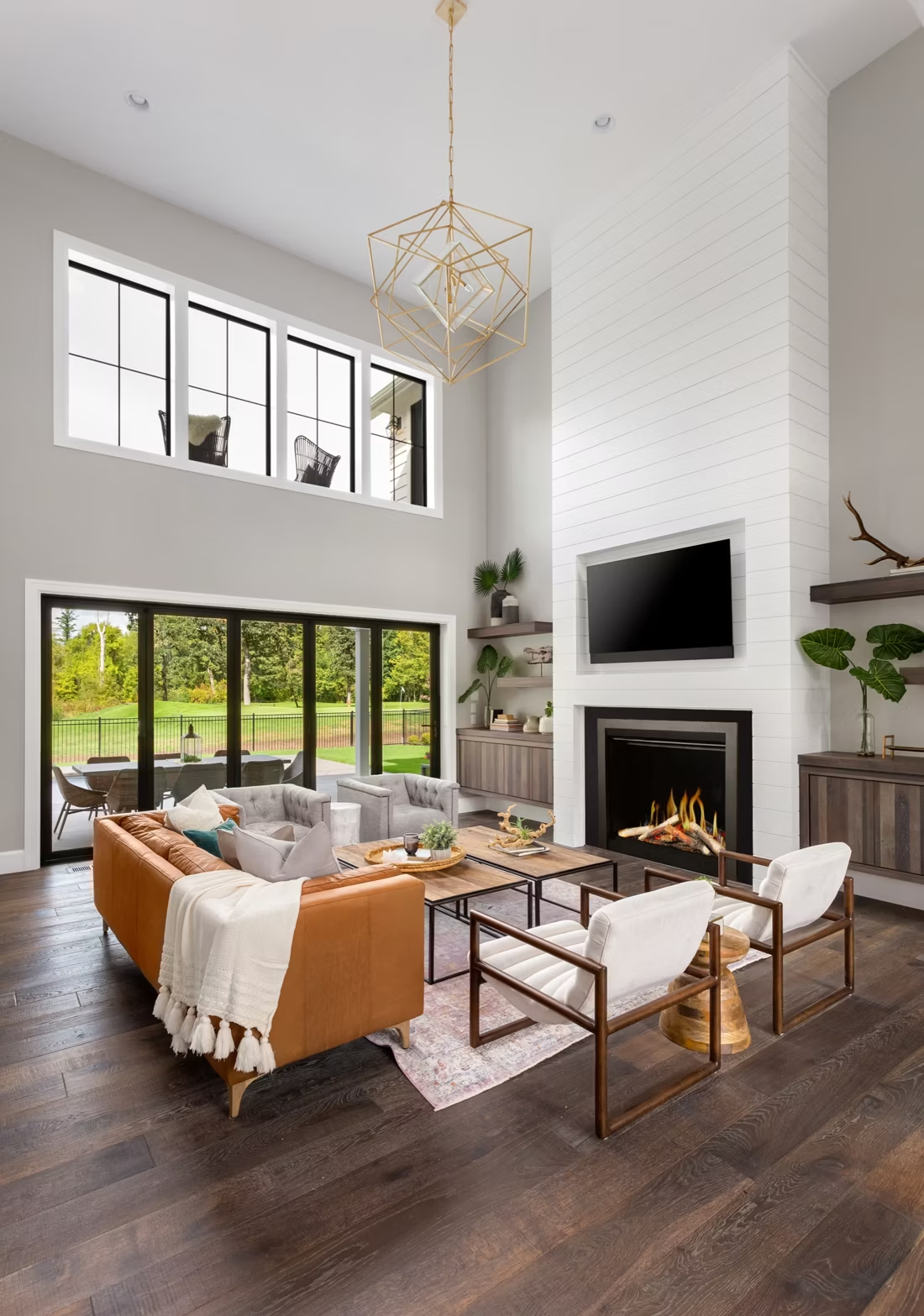
That's exactly why electric units show up so often in Teton Valley's newer construction and second homes: a finished basement in Victor, a bonus room in a Driggs remodel, or a vacation rental near Grand Targhee Resort where owners want ambiance and zone heat without adding venting to the build. Power comes through Fall River Electric Cooperative, and running a resistance heater as your only source of heat through a valley winter this cold gets expensive fast—most local buyers treat electric as the supplemental layer, not the furnace replacement, and a local dealer can help you figure out exactly which role it should play in your home.
Three steps. No salesperson until you're ready.
Tell us about your project
Your zip code, your situation, and the fuel you're leaning toward—or let the answers point you to one.
See what's actually available
The brands dealers within 100 miles genuinely carry—real options, never a catalog mirage.
Get your dealer & Project Guide
A trusted local dealer, plus the free Project Guide & Parts List that names every component of the job.
Frequently Asked Questions
How much does an electric fireplace installation cost in Teton County?
Plug-in electric fireplaces and freestanding stoves that run on a standard 15-amp outlet typically run $300 to $1,200 installed, since there's no venting or gas line involved—just placement and, in some cases, a wall opening. Built-in electric fireplaces or mantel inserts that require a dedicated 20-amp circuit run higher, often $1,200 to $2,500, once an electrician runs new wiring—a common need in older Driggs and Victor homes not originally wired for a fireplace circuit. Larger linear units for great rooms or finished basements sit at the top of that range. A local dealer can give you a firm number after seeing the space and your electrical panel.
Can an electric fireplace actually heat a room in Teton Valley's winters?
To a point. Most electric fireplaces put out around 4,500 to 5,000 BTU from a 1,500-watt heater, which is enough to noticeably warm a single room—a bedroom, a den, a finished basement—especially with the door closed. It is not enough to serve as your primary heat source through a Teton Valley winter with lows averaging 9°F and one of the longest, coldest heating seasons in Idaho on the books. Homeowners here almost always pair an electric fireplace with a propane furnace or wood stove for whole-home heat, and use the electric unit for the room where they spend the most time and want instant, no-fuss warmth.
Do I need an electrician or a permit to install an electric fireplace?
Plug-in units that run off an existing outlet don't require a permit—you're just plugging in an appliance. Built-in electric fireplaces or inserts wired to a dedicated circuit typically do require an electrical permit through the Teton County Building Department, and the wiring work should be done by a licensed electrician regardless of whether a permit is pulled. This matters more in older Teton Valley homes, where panels are often already near capacity from well pumps, propane furnace blowers, and snowmelt systems—an electrician can confirm your panel has room before your dealer finalizes a unit.
Electric vs. wood—which is right for my Teton County home?
Wood stoves burning local lodgepole pine, Douglas fir, or larch—cut under permits from the Caribou-Targhee or Bridger-Teton National Forests—remain the backbone of backup and primary heat for a lot of Teton Valley homes, and they work without power during winter outages. Electric fireplaces can't do that; they need grid power from Fall River Electric to run at all. Where electric wins is convenience and placement: no chimney, no wood handling, no ash, and it can go almost anywhere in the house, including a basement or bedroom where a wood stove wouldn't make sense. Many Driggs and Victor homeowners run both—wood for real heat and outage backup, electric for ambiance in a secondary room.
Electric vs. propane—which fireplace fuel makes more sense here?
Teton County doesn't have natural gas infrastructure, so propane is the standard fueled option for most fireplace and furnace installs in the valley. A propane fireplace puts out real heat—often 20,000 to 30,000 BTU—and can be sized to actually carry a room through a cold snap, but it requires a gas line or tank and venting. An electric fireplace skips the fuel delivery and venting entirely but tops out around 5,000 BTU and depends entirely on grid power, which matters during the winter storms that occasionally take down lines in the valley. If you want backup heat during an outage, propane or wood beats electric. If you want a clean, low-maintenance ambiance piece for a room that already has adequate heat, electric is the simpler install.
What types of electric fireplaces are available?
Wall-mount linear units are popular for great rooms and offer a wide, modern flame display. Mantel-style built-ins mimic a traditional fireplace opening and work well in living rooms during a remodel. Insert-style electric units can drop into an existing masonry fireplace opening, which is useful in older Victor and Tetonia farmhouses that have a fireplace shell but no working chimney. Freestanding electric stoves offer a wood-stove look without any venting, which fits smaller rooms or cabins around the valley. A local dealer can walk you through realistic flame technology and heater output for each style before you commit to one.
Will my electric fireplace work during a power outage?
No—electric fireplaces run entirely on grid power from Fall River Electric Cooperative, so if the power goes out, so does the fireplace, flame effect included. This is worth planning around in Teton County, where winter storms occasionally knock out lines in outlying parts of the valley for a few hours at a time. If backup heat during an outage matters to you, a wood stove or a propane unit with battery-backed ignition is the better primary choice, with electric reserved for the rooms where you just want ambiance and daily convenience.
Are electric fireplaces a good fit for vacation rentals in Teton County?
Yes—this is one of the more common uses local dealers see, especially in properties feeding the Grand Targhee Resort and Jackson Hole-adjacent rental market around Driggs and Victor. Electric fireplaces need no chimney sweeping, no fuel deliveries, and no risk of guests mishandling a real fire, which matters for an owner managing the place remotely. They also install fast during a remodel or spec build since there's no venting to route. Most rental owners pair the electric fireplace with the home's existing propane furnace for actual heat load, using the fireplace purely for the look and feel guests expect in a mountain rental.
What's the best electric fireplace for a cold-climate home like mine?
Look for a unit with a full 1,500-watt heater rather than a lower-wattage decorative-only model—brands like Dimplex, Napoleon, and Amantii all make linear and insert units with realistic flame technology and enough heater output to genuinely warm a single room in a Teton Valley home. For a finished basement or bedroom that runs cold relative to the rest of the house, size toward the larger end of what fits the space. For a great room where the propane furnace already carries the load, a smaller decorative unit may be all you need. A local dealer can match wattage and size to your specific room once they've seen it.
Can I put a TV above my fireplace?
Yes—with an asterisk. Fireplaces are hot and TVs don't like heat. Either put a mantel between them to deflect rising warmth, or choose a fireplace with heat-management technology that creates a cool zone on the wall above—the wall stays around 125 degrees, barely warm, while the room still gets full heat. If you like clean lines and don't want a mantel, heat management is the answer.
Does an electric fireplace need a vent or chimney?
No—that's its superpower. An electric fireplace needs a wall and an outlet, period. No vent pipe, no gas line, no clearances to design around, which is why it works in bedrooms, offices, apartments, and walls where venting a gas or wood unit would be impractical or impossible. Installation is typically the simplest and least expensive of any fireplace type.
What is an in-home preview and do I need one?
It's a visit where a hearth professional measures your space, confirms the model you picked actually works in your home, and walks the specs—framing, gas line, venting, finish work—before anything is ordered. Some details you just can't know until you see the house. Never make a down payment without one; it's the single most-skipped step that burns buyers.
Can I install a fireplace myself?
If you're putting a fire in your house on purpose, it's best to work with an expert. Unless you're genuinely experienced in framing, gas line, vent pipe, and the national code on clearances to combustibles, have a professional do it—and ideally the same company that sells you the fireplace, so warranty, service, and liability all live under one roof.
Stove and Fireplace Dealers in Teton County
Find your electric fireplace in Teton County.
Tell us about your space and we'll match you with a trusted local dealer who can size the right unit and hand you a free Project Guide & Parts List for your Teton County home.
Find Your Fireplace →