
Reliable heat with the flip of a switch.
Clean, no-venting heat for Rigby's long winters and smoky summers. Find the right electric fireplace or insert and connect with a trusted local dealer.
Every Project Starts From One of These Five Situations
The easiest heat source in a hard climate.
Rigby sits at nearly 4,900 feet in Jefferson County, part of the high desert plain east of Idaho Falls where winters run long and cold—average winter lows hover around 15°F and the area sees a long, demanding heating season, putting it in the same cold-climate territory as Helena, Montana. Many homes here, especially manufactured and rural properties outside city limits, have no municipal natural gas hookup, which pushes homeowners toward propane, wood, or electric resistance heat for supplemental warmth.
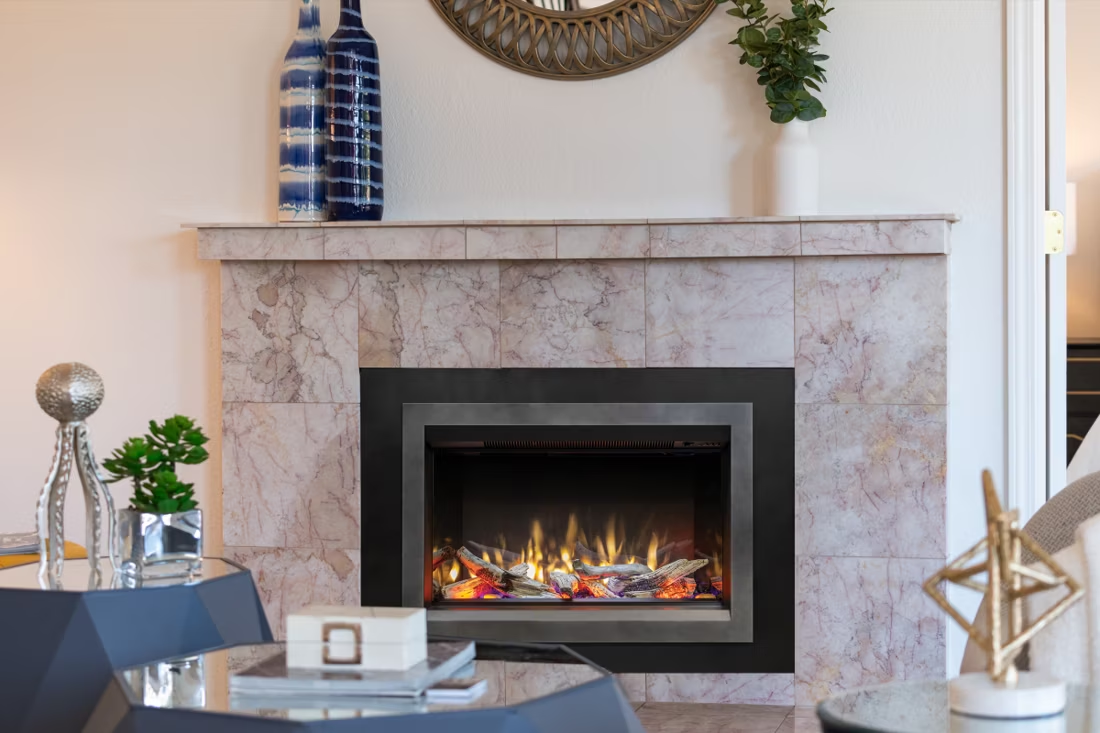
Electric fireplaces fill a specific niche in that mix: they need no chimney, no gas line, and no combustion air, which makes them the simplest retrofit for a bonus room, a mobile home, or a living room that just needs zone heat on top of a central furnace or heat pump. Fall River Rural Electric Cooperative serves most of Rigby and Jefferson County, and its residential rate of about $0.11 per kWh—backed by regional hydropower—keeps day-to-day running costs modest. Electric units also produce zero indoor combustion byproducts and no smoke, a real advantage during summer wildfire smoke events when air quality across eastern Idaho can turn hazardous.
Three steps. No salesperson until you're ready.
Tell us about your project
Your zip code, your situation, and the fuel you're leaning toward—or let the answers point you to one.
See what's actually available
The brands dealers within 100 miles genuinely carry—real options, never a catalog mirage.
Get your dealer & Project Guide
A trusted local dealer, plus the free Project Guide & Parts List that names every component of the job.
Frequently Asked Questions
How much does it cost to install an electric fireplace in Rigby?
Costs vary widely by unit type. A plug-in wall-mount or freestanding electric fireplace typically runs $300 to $1,200 installed, since most just need a standard outlet. A built-in electric fireplace or insert set into an existing mantel or wall opening usually runs $1,500 to $4,000 once carpentry and a dedicated circuit are factored in. If your home needs a new 240V circuit run from the panel—common in older Rigby homes or manufactured housing—add an electrician's time to that estimate. A local dealer can give you a firm number after seeing your space.
Can an electric fireplace heat my whole home in Rigby's climate?
No, and any dealer who tells you otherwise isn't being straight with you. Most electric fireplaces are 1,500-watt units putting out around 5,100 BTU—fine for taking the chill off a single room, but not enough for a home in a climate with a long, demanding heating season and winter lows that regularly sit in the teens. In Rigby, electric fireplaces work best as zone heat for a living room, bonus room, or finished basement, layered on top of a primary heat pump, propane furnace, or wood stove that carries the whole-house load through January and February.
Do I need an electrician to install an electric fireplace?
It depends on the unit. Plug-in models—wall-mounted or freestanding—just need a standard 120V outlet and can often be installed without an electrician. Built-in units, especially larger ones or those requiring a dedicated 240V circuit, need a licensed electrician to run new wiring from the panel. If you're adding new circuit capacity, check with Jefferson County's building department on whether an electrical permit is required before work starts—most local dealers can point you to an electrician who already knows the local code requirements.
Are electric fireplaces expensive to run on Fall River Rural Electric Cooperative rates?
Not particularly. At the co-op's residential rate of roughly $0.11 per kWh, a 1,500-watt electric fireplace running on high for five hours a day costs somewhere around 80 cents a day, or about $25 a month—cheaper than most people expect. Because Fall River draws on regional hydropower, Rigby's rates run below the national average, which makes electric fireplaces an economical choice for supplemental heat compared to running a whole-home furnace longer than necessary.
What's the difference between an electric fireplace, insert, and stove?
An electric fireplace is typically a built-in unit set into a wall, mantel surround, or media console—common in newer construction and remodels around Rigby. An electric insert is sized to slide into an existing masonry or wood-fireplace opening, letting you keep the existing mantel while retiring an old, drafty wood-burning firebox. An electric stove is a freestanding cabinet-style unit that mimics a wood stove's look without any venting or wood handling—a popular option in the manufactured and modular homes common throughout rural Jefferson County, since it needs no chimney at all.
Is an electric fireplace a good option during wildfire smoke season?
Yes. Eastern Idaho, including Rigby, sees periods of wildfire smoke drift into the region during late summer, and an electric fireplace produces zero combustion byproducts—no smoke, no particulate, nothing added to indoor air. Unlike a wood stove, there's no flue to worry about backdrafting smoke into the house during a temperature inversion. It's a reasonable ambiance and supplemental-heat option to run on smoky days when you'd rather not deal with any combustion appliance at all.
Electric vs. wood—which makes more sense for a Rigby home?
Wood remains a strong option here—lodgepole pine, ponderosa pine, Douglas fir, and larch are all locally available, and cutting permits through Caribou-Targhee National Forest or the BLM Idaho Falls District run as low as $5 to $20 per cord during the spring-to-fall season. Wood also keeps working during a power outage, which matters given how remote parts of Jefferson County are. Electric wins on convenience and cleanliness—no cutting, hauling, ash, or chimney maintenance, and no smoke output. Many Rigby homeowners run wood as their serious cold-weather backup and use an electric unit for everyday ambiance and quick supplemental heat in one room.
Electric vs. propane—which is the better supplemental heat source?
Since Rigby has no widespread municipal natural gas service, propane is the common gas alternative here, and it puts out more heat per unit than electric resistance—useful if you want a fireplace that can meaningfully offset furnace use on the coldest nights. But propane means a tank, a delivery contract, and gas line work, which raises both upfront cost and ongoing complexity. Electric fireplaces skip all of that: no tank, no delivery, no gas permit, just a circuit. If you want maximum heat output for the dollar, propane usually wins; if you want the simplest possible install with no fuel deliveries to manage, electric is the easier path.
How much maintenance does an electric fireplace need?
Very little, which is a big part of the appeal. There's no chimney to sweep and no annual gas safety inspection required. Maintenance is mostly dusting the unit, occasionally cleaning the blower fan of dust, and replacing LED light strips or heating elements if they wear out after years of use—usually a straightforward DIY fix or a quick call to the dealer you bought it from. Compared to the yearly upkeep a wood stove or propane insert requires in Jefferson County, electric units are close to maintenance-free.
Can I put a TV above my fireplace?
Yes—with an asterisk. Fireplaces are hot and TVs don't like heat. Either put a mantel between them to deflect rising warmth, or choose a fireplace with heat-management technology that creates a cool zone on the wall above—the wall stays around 125 degrees, barely warm, while the room still gets full heat. If you like clean lines and don't want a mantel, heat management is the answer.
Do electric fireplaces actually produce heat?
Yes—most put out around 4,800–5,000 BTUs from a standard outlet, which comfortably warms a bedroom, office, or den as a comfort-zone heater. What they won't do is carry a whole house the way wood, gas, or pellet can. Think of electric as ambiance-first with honest supplemental heat: flames on with no heat in July, flames plus warmth in January.
Can I install a fireplace myself?
If you're putting a fire in your house on purpose, it's best to work with an expert. Unless you're genuinely experienced in framing, gas line, vent pipe, and the national code on clearances to combustibles, have a professional do it—and ideally the same company that sells you the fireplace, so warranty, service, and liability all live under one roof.
Should the dealer who sells my fireplace also install it?
Ideally, yes. A fireplace project involves vent pipe, gas line, electrical, and often tile or stone. Hire three or four separate trades and you own the liability and the game of telephone between them. One company selling and installing means one accountable party, start to finish—ask about factory training, on-time completion records, and what happens if an inspection fails.
Nearby Dealers
Hearth shops serving Rigby and the surrounding area. Every listing shows whether it is a WhyFire partner, a dealer we have verified as authorized for the brands we recommend, or a local business carrying hearth products. No manufacturer pays for placement. How we verify dealers →
We’ve paused dealer listings for this connection today. Enter your zip or postal code above to find dealers near you, or come back tomorrow.
Popular Electric Brands
Where each brand came from, what's inside it today, and every current model. No brand pays to be here. Not every dealer carries every brand, so enter your zip code to see what's sold near Rigby.
Fireplace Xtrordinair
Fireplace Xtrordinair, now often called FireplaceX, is the fireplace brand of Travis Industries, Inc., of Mukilteo, Washington.
5 electric models →DaVinci
DaVinci Custom Fireplaces is a brand of Travis Industries, Inc., of Mukilteo, Washington, the company behind Lopi and Fireplace Xtrordinair.
5 electric models →Kozy Heat
Kozy Heat was founded in 1976 by Dudley Hussong in Lakefield, Minnesota, and incorporated as Hussong Manufacturing Co., Inc. in 1978.
3 electric models →Forge & Flame
Forge & Flame is the stove brand Hearth & Home Technologies introduced in August 2023 to bring Vermont Castings, Harman, and Quadra-Fire under one name.
1 electric model →Electric Service in Rigby
An electric fireplace's heater draws about 1,500 watts—pennies per hour at local rates.
Fall River Rural Elec Coop Inc
Find your electric fireplace in Rigby.
Tell us a bit about your home and we'll help you find a trusted local dealer and send over a free Project Guide & Parts List—the exact components, including any electrical work, for your Rigby electric fireplace project.
Find Your Fireplace →