
Flip-a-switch heat for Priest River's long winters.
With a winter heating season as long and cold as Duluth, Minnesota's, and no natural gas line running through town, Priest River homeowners lean on wood—and increasingly, on electric fireplaces for the rooms wood can't easily reach. Find the right unit and a trusted local dealer to install it.
Every Project Starts From One of These Five Situations
Where hydropower keeps electric heat surprisingly affordable.
Priest River sits at 2,069 feet where the Priest and Pend Oreille rivers meet in the Idaho Panhandle, and winter here is no joke—a long, cold heating season puts it in the same company as Duluth, Minnesota. Wood has always been the backbone of heat in Bonner County, cut from the lodgepole pine, ponderosa pine, Douglas fir, and larch that cover the surrounding national forest land. But electric fireplaces and inserts have earned a real place in local homes too, especially in additions, bedrooms, cabins on Priest Lake, and rooms where running a wood stove or gas line isn't practical.
There's no natural gas utility serving Priest River, so the practical choices for flip-a-switch heat are propane or electric—and electric has an edge that catches a lot of homeowners off guard. Avista Corp and Northern Lights, Inc., the two utilities serving the area, bill residential customers around 11.5 to 11.9 cents per kWh, well below the national average, a byproduct of the Pacific Northwest's hydroelectric-heavy grid. That makes an electric insert or built-in a reasonable option for zone-heating one room, supplementing a wood stove during shoulder-season cold snaps, or adding ambiance without a chimney to maintain.
Three steps. No salesperson until you're ready.
Tell us about your project
Your zip code, your situation, and the fuel you're leaning toward—or let the answers point you to one.
See what's actually available
The brands dealers within 100 miles genuinely carry—real options, never a catalog mirage.
Get your dealer & Project Guide
A trusted local dealer, plus the free Project Guide & Parts List that names every component of the job.
Frequently Asked Questions
How much does an electric fireplace installation cost in Priest River?
Plug-in electric fireplaces and inserts that use an existing standard outlet typically run $300 to $1,200 installed, since there's no venting, gas line, or chimney work involved—just placement and trim. Built-in electric fireplaces that require a dedicated 120V or 240V circuit run higher, often $1,200 to $2,500, mostly for the electrician's time running new wiring through log or timber-frame construction, which is common in Bonner County homes. Because there's no combustion and no flue, electric is consistently the least expensive fireplace category to install here.
Can electric heat actually keep up with Priest River winters?
Not as a whole-home primary heat source—with a heating season as long and cold as Duluth's, there are a lot of hours where resistance electric heat alone would run up a real bill, even at Avista and Northern Lights' relatively favorable rates. Most Priest River homeowners use electric fireplaces and inserts the way they're best suited: zone heating a single bedroom or addition, taking the chill off during shoulder-season months when firing up the wood stove feels like overkill, or providing backup warmth in a room a wood stove doesn't reach. For primary heat through a Bonner County winter, wood or a heat pump paired with wood backup is still the norm.
Do I need a permit for an electric fireplace in Priest River?
A simple plug-in electric fireplace or insert typically doesn't require a permit since it uses an existing outlet and there's no venting or gas work involved. If your installation requires a new dedicated circuit—common for larger built-in units—an electrical permit through Bonner County is standard, and a licensed electrician will pull it as part of the job. Unlike wood stove installs, there's no EPA certification or clearance-to-combustible review required, which is part of why electric units are the fastest category to get installed here.
Avista or Northern Lights—does it matter which utility serves my home?
Both utilities serve parts of Priest River and the surrounding Bonner County area, and which one bills you depends on your specific address and line—Avista Corp serves a broad swath of the region while Northern Lights, Inc. is the local rural electric cooperative covering other pockets. Rates are close either way, running roughly 11.5 to 11.9 cents per kWh, so the choice of fireplace or insert doesn't change based on provider. Your local dealer can tell you which utility serves your address if you're not sure.
What's the difference between an electric insert and a built-in electric fireplace?
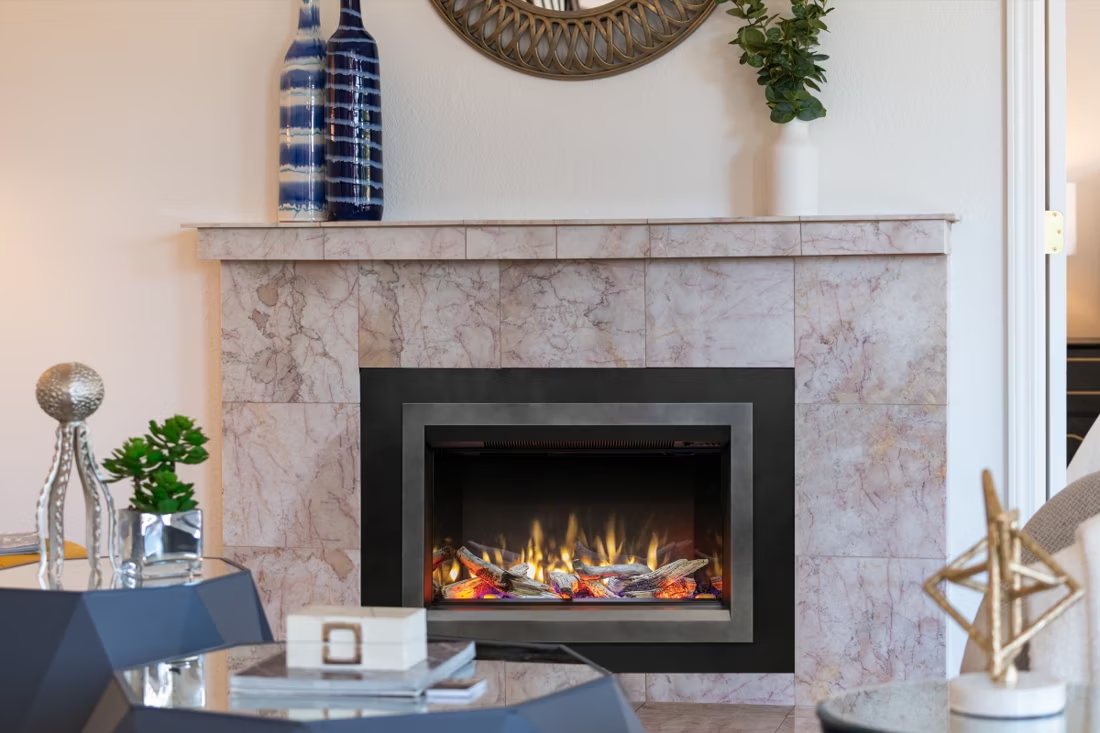
An electric insert is sized to slide into an existing wood-burning masonry fireplace opening, giving you flame visuals and supplemental heat without the ash, smoke, or chimney maintenance of burning wood—a popular option for older Priest River homes that inherited a fireplace they don't want to keep feeding. A built-in electric fireplace is designed for new construction or remodels, framed into a wall like a gas unit would be, often with a dedicated circuit run during the build. For homes near Priest Lake with existing masonry fireplaces that see occasional use, an insert is usually the simpler, less expensive path.
Will my electric fireplace work during a power outage?
No—electric fireplaces and inserts require power to run, both for the heating element and the flame effect, so they go dark the moment the grid does. That matters in Bonner County, where rural power lines running through heavily timbered terrain can go down during winter storms or wildfire season. Most Priest River households treat electric fireplaces as a convenience and zone-heat option rather than emergency backup, and keep a wood stove or insert as the heat source that still works when the lines are down.
What's the best electric fireplace brand for a room in my home?
Dimplex and Napoleon both make well-regarded electric inserts and built-ins with realistic flame technology and dual heat settings that let you run the flame effect without the heater engaged—useful if you want ambiance in July without warming the room. For a masonry fireplace conversion, look for an insert sized to match your firebox opening closely, since a poor fit lets heat escape around the edges. A local dealer can match a specific model to your room's square footage and your fireplace opening dimensions.
Electric vs. wood—which makes more sense for my Priest River home?
Wood is still the practical choice for primary heat in Priest River—the surrounding Idaho Panhandle National Forests, BLM Coeur d'Alene District, and Kootenai National Forest all issue cutting permits for $5 to $20 per cord, and species like Douglas fir and larch burn hot and long through a Bonner County winter. Electric wins on convenience, cleanliness, and zero maintenance—no chimney sweeping, no ash, no smoke during wildfire smoke season when air quality already takes a hit locally. Many homes here run both: wood as the primary heat source, and an electric insert or built-in in a bedroom, office, or addition where hauling firewood isn't worth it.
Electric vs. pellet stove—which is right for a secondary heat source?
Pellet stoves burn bagged pellets from regional brands like Bear Mountain, Lignetics, and Pacific Pellet, and they put out real heat—enough to serve as a primary or near-primary source for a well-insulated Priest River home—but they need electricity to run the auger and blower, so they stop working in an outage just like electric units do. Electric fireplaces are simpler still: no hopper to load, no ash to empty, no annual service, but meaningfully less heat output per dollar than a pellet stove. If you want a genuine secondary heat source that can carry real square footage, pellet is usually the stronger pick; if you want ambiance and light zone heat with zero maintenance, electric wins.
What fireplace styles should I know before shopping?
Four cover most of the market: screen-front traditional (mesh front, open feel, fits craftsman homes), traditional door set (the classic look you grew up with), modern linear (wide, low, the statement piece for entertaining), and clean face contemporary (no trim—your tile or stone runs right to the fire's edge). Walk in knowing those four terms and you're ahead of most buyers.
How much does an electric fireplace cost to run?
With the heater on, a typical unit draws about 1,500 watts—at average electric rates that's roughly 20 cents an hour. Run the flame effect alone and it costs pennies; the flames are LED-driven and use about as much power as a light bulb. There's no pilot light, no fuel delivery, and essentially no maintenance.
What is an in-home preview and do I need one?
It's a visit where a hearth professional measures your space, confirms the model you picked actually works in your home, and walks the specs—framing, gas line, venting, finish work—before anything is ordered. Some details you just can't know until you see the house. Never make a down payment without one; it's the single most-skipped step that burns buyers.
Can a fireplace actually lower my heating bill?
Yes—by creating a comfort zone. A furnace heats every square foot of the house just to warm the one room you're in; a gas fireplace on low burns roughly a sixth of the gas a typical furnace does. Set the furnace around 55–60 degrees as a baseline, then heat the rooms your family actually uses. Families who heat this way commonly save $20–$60 a month.
Nearby Dealers
Hearth shops serving Priest River and the surrounding area. Every listing shows whether it is a WhyFire partner, a dealer we have verified as authorized for the brands we recommend, or a local business carrying hearth products. No manufacturer pays for placement. How we verify dealers →
We’ve paused dealer listings for this connection today. Enter your zip or postal code above to find dealers near you, or come back tomorrow.
Popular Electric Brands
Where each brand came from, what's inside it today, and every current model. No brand pays to be here. Not every dealer carries every brand, so enter your zip code to see what's sold near Priest River.
Fireplace Xtrordinair
Fireplace Xtrordinair, now often called FireplaceX, is the fireplace brand of Travis Industries, Inc., of Mukilteo, Washington.
5 electric models →DaVinci
DaVinci Custom Fireplaces is a brand of Travis Industries, Inc., of Mukilteo, Washington, the company behind Lopi and Fireplace Xtrordinair.
5 electric models →Kozy Heat
Kozy Heat was founded in 1976 by Dudley Hussong in Lakefield, Minnesota, and incorporated as Hussong Manufacturing Co., Inc. in 1978.
3 electric models →Forge & Flame
Forge & Flame is the stove brand Hearth & Home Technologies introduced in August 2023 to bring Vermont Castings, Harman, and Quadra-Fire under one name.
1 electric model →Electric Service in Priest River
An electric fireplace's heater draws about 1,500 watts—pennies per hour at local rates.
Avista Corp
Northern Lights, Inc
Find your electric fireplace in Priest River.
Tell us about your home and where you want the heat, and we'll put together a free Project Guide & Parts List—the right electric fireplace or insert for your space, along with help finding a trusted local dealer who can install it.
Find Your Fireplace →