
Add electric warmth to your Latah County home.
From Moscow's campus rentals to farmhouses out toward Genesee and Kendrick, electric units bring clean, no-fuss heat and ambiance to Palouse homes without a chimney or a woodpile. Find the right unit and connect with a trusted local dealer.
Every Project Starts From One of These Five Situations
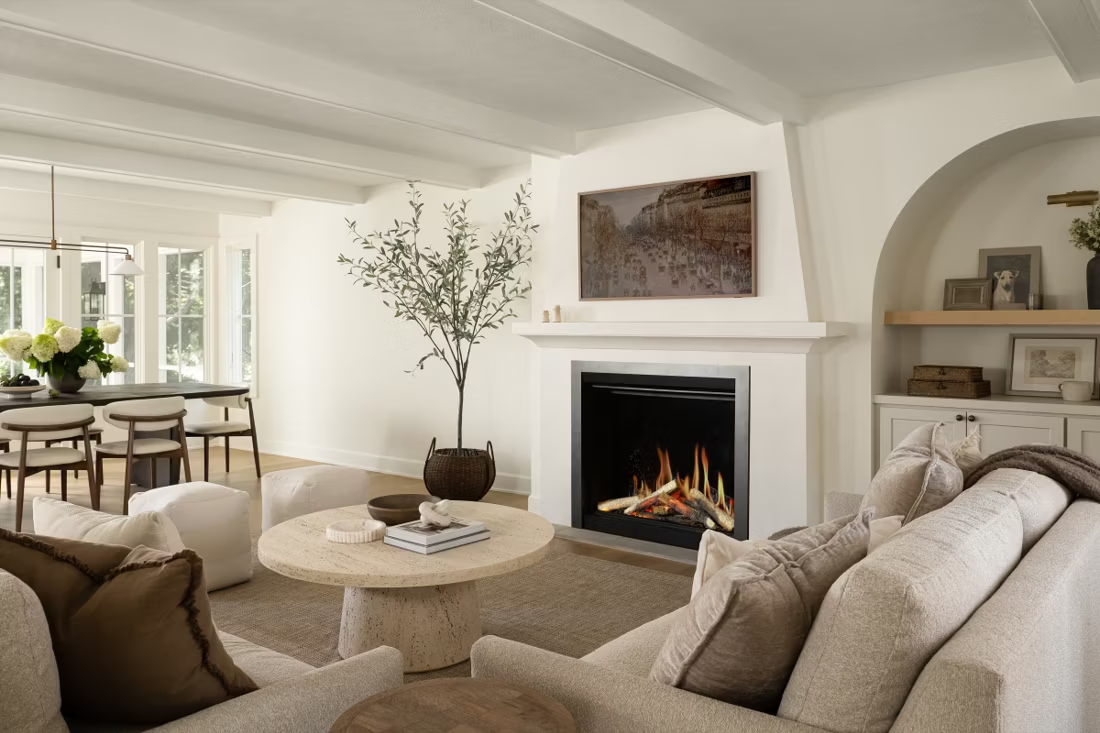
Modern warmth without the wood pile or the gas line.
Latah County sits in the rolling wheat country of the Palouse, with Moscow—home to the University of Idaho—as its hub, and smaller communities like Genesee, Kendrick, Juliaetta, Troy, Deary, and Potlatch spread across the hills. Winters here run long: an average winter low near 22°F and a cold-climate heating load in the same range as Bozeman, Montana. Wood heat has deep roots here too—lodgepole pine, ponderosa pine, Douglas fir, and larch are all cut locally through affordable permits from the Nez Perce-Clearwater National Forests, Idaho Panhandle National Forests, and BLM Coeur d'Alene District—but electric fireplaces have carved out a real niche of their own.
Electric units make sense in exactly the places wood and gas don't: University of Idaho rentals and apartments near campus where an open flame isn't allowed, newer subdivisions on Moscow's edges without a masonry chimney, finished basements, and bedrooms where a homeowner wants supplemental warmth and the look of a fire without running venting. Plug-in units need no wiring work at all. Built-in models that need a dedicated 20-amp circuit call for a licensed electrician and, in most cases, an electrical permit through the Latah County Building Department or the City of Moscow, depending on where the home sits. Moscow proper is served by Avista Utilities; much of rural Latah County runs on Clearwater Power Company, a member-owned cooperative—either way, a local dealer can tell you what your circuit can realistically support before you buy.
Three steps. No salesperson until you're ready.
Tell us about your project
Your zip code, your situation, and the fuel you're leaning toward—or let the answers point you to one.
See what's actually available
The brands dealers within 100 miles genuinely carry—real options, never a catalog mirage.
Get your dealer & Project Guide
A trusted local dealer, plus the free Project Guide & Parts List that names every component of the job.
Frequently Asked Questions
How much does an electric fireplace installation cost in Latah County?
A basic plug-in electric fireplace insert or freestanding unit runs $300 to $1,200 installed, since most just slide into an existing opening or mount on a wall with no wiring changes. A built-in wall unit or a full mantel package that requires a new dedicated circuit typically runs $1,200 to $2,500 once you add electrician labor for running that circuit from the panel—more if the panel itself needs upgrading, which comes up occasionally in Latah County's older farmhouses around Genesee and Kendrick. Local dealers can quote a firm number after seeing your wall, your panel, and your existing wiring.
Can an electric fireplace actually heat a room in a Latah County winter?
It can supplement, but with a heating load in the same range as Bozeman, Montana and winter lows regularly in the low 20s, an electric fireplace on its own isn't going to carry a whole house the way a wood stove or a furnace will. Most electric units put out around 5,000 BTU (roughly 1,500 watts), enough to noticeably warm a single room of 300 to 600 square feet, especially a well-insulated bedroom or den. Homeowners around Moscow and Troy generally use electric units as zone heat—taking the edge off a cold room, or letting them turn the furnace down a couple degrees in the space they're using most—rather than as the home's primary heat source.
Do I need a permit to install an electric fireplace in Latah County?
A plug-in unit that uses a standard household outlet needs no permit—it's treated like any other appliance. If you're installing a built-in model that requires a new dedicated circuit, that electrical work does need a permit, pulled either through the Latah County Building Department for rural addresses or the City of Moscow for homes inside city limits. Most licensed electricians who do this work pull the permit as part of the job, so it's rarely something you have to handle yourself.
Will my electric fireplace work if the power goes out?
No—electric fireplaces need power to run, so during an outage they go dark along with everything else. This matters more in Latah County's rural stretches, where winter storms can knock out power for hours at a time on Clearwater Power Company lines outside Moscow. Homes that need heat during an outage typically keep a wood stove or a generator-backed system as a fallback; the electric unit is best thought of as everyday convenience heat, not emergency heat.
Electric vs. wood—which makes more sense for my Latah County home?
Wood wins on raw heat output and keeps working when the power's out—a real consideration given how much of rural Latah County still cuts its own firewood from Nez Perce-Clearwater or Idaho Panhandle permits at $5 to $20 a cord. Electric wins on convenience: no ash, no chimney to sweep, no smoke, and it's the only realistic option in campus apartments or condos where an open flame or venting isn't permitted. A lot of homes in Moscow end up with both—wood or a gas unit for the main living space, electric for a bedroom, basement, or rental unit where simplicity matters more than raw BTUs.
What's the difference between an electric insert and an electric fireplace?
An electric insert is built to slide into an existing fireplace opening—a common move for older Latah County homes with a masonry fireplace that's rarely used, since it covers the old firebox and gives you flame effect and heat without touching the chimney. A standalone electric fireplace or wall-mount unit is designed for rooms with no existing opening at all, which is more typical in newer construction around Moscow's growing subdivisions. Both plug into a standard outlet unless you're going with a larger built-in model.
Is an electric fireplace a good fit for a University of Idaho-area rental?
It's usually the best fit available. Many rental properties near campus in Moscow don't allow wood-burning units due to insurance and liability, and running new gas lines into an older rental isn't something most landlords want to take on. A plug-in electric fireplace or a wall-mounted unit gives tenants supplemental heat and ambiance with no open flame, no venting, and no permanent changes to the structure—which is part of why they've become common in student housing and smaller rental units across Latah County.
How much does it cost to run an electric fireplace in Latah County?
A typical 1,500-watt electric fireplace running on Avista Utilities or Clearwater Power Company rates costs roughly 15 to 25 cents an hour to operate on high, depending on current rates and whether you're inside Moscow city limits or on a rural co-op account. Running it a few hours an evening through a cold Palouse winter adds up to a modest amount on the monthly bill—nowhere near what electric baseboard or resistance heating an entire house would cost, since most owners use these units for a single room rather than whole-home heat.
What's the best type of electric fireplace for a Latah County home?
For older homes near downtown Moscow or out toward Kendrick and Juliaetta with an existing masonry fireplace, an electric insert is the simplest option—no chimney work, no permit for a plug-in model. For newer construction or rooms without an existing opening, a wall-mount or built-in unit with a realistic flame effect works well, especially in a bedroom or finished basement. If you're aiming for real supplemental warmth rather than just ambiance, look for a model with a stated heating capacity in the 400-600 square foot range and a thermostat rather than a single on/off switch—a local dealer can match that to your specific room.
Can I put a TV above my fireplace?
Yes—with an asterisk. Fireplaces are hot and TVs don't like heat. Either put a mantel between them to deflect rising warmth, or choose a fireplace with heat-management technology that creates a cool zone on the wall above—the wall stays around 125 degrees, barely warm, while the room still gets full heat. If you like clean lines and don't want a mantel, heat management is the answer.
Do electric fireplaces actually produce heat?
Yes—most put out around 4,800–5,000 BTUs from a standard outlet, which comfortably warms a bedroom, office, or den as a comfort-zone heater. What they won't do is carry a whole house the way wood, gas, or pellet can. Think of electric as ambiance-first with honest supplemental heat: flames on with no heat in July, flames plus warmth in January.
How much should I budget for a fireplace?
For an average home—covering the fireplace, the vent pipe, and basic installation—a budget between $3,900 and $5,500 gives you a lot of options across wood, gas, and pellet. By the time you add finish work, gas line, and electrical, the average complete installation lands between $5,000 and $12,000 all-in. In a remodel or new build, a good rule is to put about 2.5% of the total project cost toward the fireplace.
Does a fireplace add value to my home?
On average, a fireplace adds back to the home about the same amount you spent installing it. Add the monthly savings from heating the rooms you actually use instead of the whole house—often hundreds of dollars a year—and the value case is strong before you even count what a fire does for how your family uses the room.
Stove and Fireplace Dealers in Latah County
Listings include WhyFire partner dealers, dealers we have verified as authorized for the brands we recommend, and established local businesses that carry hearth products. Every listing shows which one it is. The ones marked Preferred run on WhyFire's software, so they can show you real pricing and book your appointment right here. No manufacturer pays for placement. How we verify dealers →
Panhandle Heating Solutions LLC
Moscow Building Supply
Pullman Heating
Hemphill Heating And Electric LLC
Welenco Stove Store
Find your electric fireplace in Latah County.
Tell us about your room and your wiring, and we'll match you with a trusted local dealer serving Latah County and hand you a free Project Guide & Parts List—the exact parts for your electric fireplace project and who to call to get it installed right.h
Find Your Fireplace →