
Clean, instant heat for Jefferson County's coldest nights.
From Rigby to Ririe to the open farmland around Monteview, Jefferson County sees average winter lows near 15°F and a long, demanding winter heating season. Find the right gas fireplace, insert, or stove for a Zone 6B winter, and get matched with a trusted local dealer.
Every Project Starts From One of These Five Situations
Convenience heat for a demanding climate.
Jefferson County sits on the Snake River Plain in eastern Idaho, with Rigby as the county seat and towns like Ririe, Menan, and Lewisville spread across the farmland between the Teton foothills and the Snake River. At roughly 4,800 feet of elevation and Climate Zone 6B, the county sees a long, demanding winter heating season—a heating load closer to Bozeman, Montana than to most of the Mountain West's population centers. Winter lows average 15°F, but arctic outbreaks off the Snake River Plain regularly push overnight temperatures well below zero.
Natural gas service through Intermountain Gas Company reaches Rigby and the more developed corridors near Idaho Falls, but a large share of Jefferson County—Lewisville, Hamer, Terreton, Monteview, and the farmland in between—relies on propane delivered by tank. Either fuel source works well in a modern direct-vent gas fireplace, insert, or stove, and the appeal is the same across the county: heat at the flip of a switch during a January cold front, no wood to split or haul, and, during the wildfire-smoke stretches of late summer, no need to choose between a fire and clean indoor air.
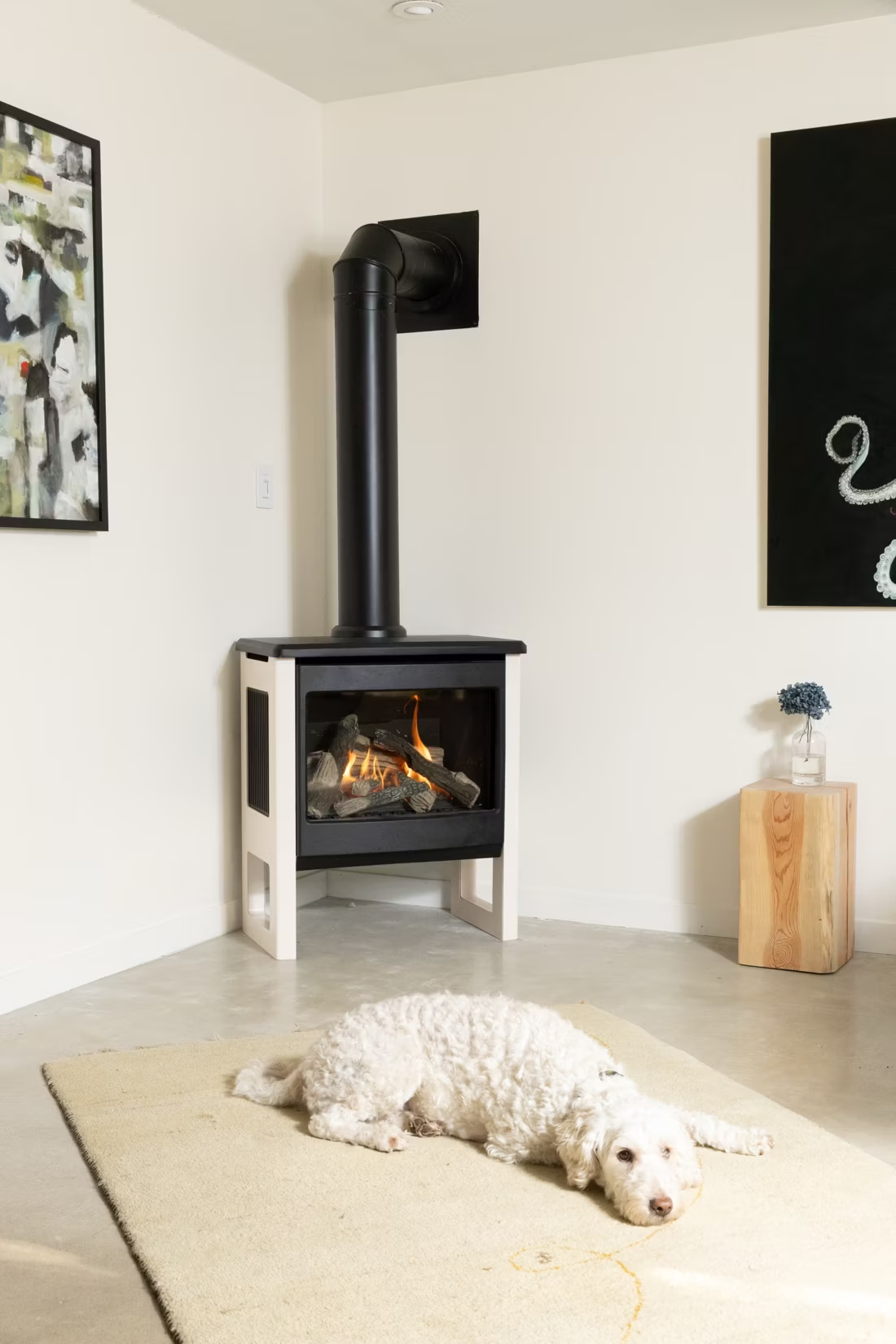
Three steps. No salesperson until you're ready.
Tell us about your project
Your zip code, your situation, and the fuel you're leaning toward—or let the answers point you to one.
See what's actually available
The brands dealers within 100 miles genuinely carry—real options, never a catalog mirage.
Get your dealer & Project Guide
A trusted local dealer, plus the free Project Guide & Parts List that names every component of the job.
Frequently Asked Questions
How much does a gas fireplace installation cost in Jefferson County?
Costs vary widely based on whether you're installing a direct-vent insert into an existing masonry fireplace, a new built-in unit, or adding a stove from scratch. A straightforward insert conversion into an existing fireplace with gas already run to the house tends to land on the lower end of typical pricing; new construction or remodels that require framing, venting through an exterior wall, and a fresh propane tank installation run higher. Homes outside the Intermountain Gas Company service area that need a new propane tank set should budget extra for the tank and line work. A local dealer will give you a firm number after seeing your home.
Can I convert my existing wood fireplace to gas?
Yes, and it's one of the more common upgrades in Jefferson County's older farmhouses around Rigby and Ririe. A gas insert typically slides into the existing masonry opening and vents through a stainless liner run up your current chimney, which keeps the mantel and hearth look intact while swapping out the wood-hauling and ash cleanup for a switch or remote. Whether you're on natural gas through Intermountain Gas Company or plan to run the insert off a propane tank, the conversion is straightforward for a certified local installer.
Do I need natural gas, or should I plan on propane?
It depends on where in the county you are. Natural gas service from Intermountain Gas Company covers Rigby and the tighter-knit parts of the county closer to Idaho Falls. Head out toward Lewisville, Hamer, Terreton, or Monteview and you're in propane territory, delivered and stored in a tank on the property. Nearly every gas fireplace, insert, or stove on the market today can be set up for either fuel—your installer just configures the correct orifice and regulator for whichever you have.
Will my gas fireplace still work if the power goes out?
Most will, with the right ignition system. Units with intermittent pilot ignition (IPI) run on a battery backup that kicks in the moment power drops, so the fireplace lights on demand just like normal. Valor fireplaces go a step further—their pilot generates its own electricity through the thermocouple, so there are no batteries to remember at all. Given how exposed Jefferson County's farmland is to high-wind winter storms that can knock out power for hours, this is worth asking about when you're comparing units with a local dealer.
Gas fireplace, gas insert, or gas stove—what's the difference?
A gas fireplace is a fully built-in unit framed into a wall, typically chosen for new construction or a major remodel. A gas insert drops into an existing masonry fireplace opening and uses the existing chimney, with a liner, to vent, which is the common route for older homes around Rigby and Ririe that already have a wood-burning fireplace they want to upgrade. A gas stove is freestanding, sits on its own hearth pad, and can go almost anywhere with the right clearances—a good option for a shop, addition, or a home without an existing chimney.
Do I need a permit to install a gas fireplace in Jefferson County?
Yes—a building permit through the Jefferson County Building Department, plus a gas line permit for any new gas piping or propane line work, which has to be done by a licensed gas-fitter. Most hearth retailers coordinate the permitting and inspection as part of the installation, so you're not left managing separate trades. Homes converting from an existing wood fireplace to a gas insert still need the gas line permit even if no structural work is involved.
Vented vs. vent-free gas fireplaces—which is allowed and which is better?
Vented (direct-vent) units draw combustion air from outside and exhaust it back outside through sealed pipe, which makes them the safer and more universally recommended choice—and the one most Jefferson County homes end up with. Vent-free units are legal in Idaho within room-size and ventilation limits, but they release some combustion byproducts indoors, which matters more during Jefferson County's summer wildfire-smoke stretches when indoor air quality is already a concern. For most installations, direct-vent is the straightforward answer.
How often does a gas fireplace need to be serviced?
Plan on an annual inspection, ideally before the heating season starts in the fall. A technician checks the burner, pilot assembly, venting, and gas connections, and cleans the glass and interior—routine maintenance that's far less involved than chimney sweeping but still important, especially for units that run daily through a long, demanding Jefferson County winter. Expect to pay somewhere in the $150 to $250 range for a standard inspection.
Gas vs. wood—which makes more sense for a Jefferson County home?
Wood is still viable here—lodgepole pine, ponderosa pine, Douglas fir, and larch are all common locally, and cutting permits through the Caribou-Targhee National Forest, BLM Idaho Falls District, or Bridger-Teton National Forest run as little as $5 to $20 per cord during the May-to-October season. Wood also keeps working when the power's out, which matters on the exposed Snake River Plain. But gas wins on convenience: no hauling or splitting, no ash, and no tradeoff during wildfire-smoke season when adding more smoke to the air isn't appealing. Plenty of local homes run both—gas for daily use in the main living space, wood as backup and for the times a real fire is worth the effort.
Why is my open fireplace making my house colder?
Open fireplaces suck—literally. As the fire burns, it consumes air your furnace already paid to heat and pulls it out through the chimney, so the house is actually colder after the fire goes out than before you lit it. An insert fixes this: it seals the chimney, puts fixed glass across the front, and turns that hole in your house into a real heat source.
What's the difference between radiant and convective fireplace heat?
Most fireplaces are a thin metal box—they heat fine, but you rely on the fan to move the warmth into the room. Radiant models use a thick cast-ceramic firebox, about an inch and a quarter thick, that soaks up the fire's heat and radiates roughly 25–30% more warmth into the room with no fan running. If you watch TV in the same room or want heat in a power outage, radiant is worth asking about.
Can I install a fireplace myself?
If you're putting a fire in your house on purpose, it's best to work with an expert. Unless you're genuinely experienced in framing, gas line, vent pipe, and the national code on clearances to combustibles, have a professional do it—and ideally the same company that sells you the fireplace, so warranty, service, and liability all live under one roof.
What is an in-home preview and do I need one?
It's a visit where a hearth professional measures your space, confirms the model you picked actually works in your home, and walks the specs—framing, gas line, venting, finish work—before anything is ordered. Some details you just can't know until you see the house. Never make a down payment without one; it's the single most-skipped step that burns buyers.
Find your gas fireplace in Jefferson County.
Tell us about your home and we'll match you with a trusted local dealer and a free Project Guide & Parts List—the exact parts, including the vent kit, for your Jefferson County gas fireplace, insert, or stove project.
Find Your Fireplace →