
Clean, code-friendly heat for Sun Valley condos and Wood River Valley homes.
Blaine County has winters on par with Bozeman, MT, with winter lows averaging 16°F—a heating season on par with Bozeman, MT—but a lot of the county's condos, remodels, and seasonal homes in Ketchum and Sun Valley can't run a chimney or gas line through shared walls. I match you with a vetted local dealer who knows which electric unit actually clears code and delivers real supplemental heat for your space.
Every Project Starts From One of These Five Situations
Built for condos, remodels, and wildfire-smoke season.
Blaine County runs the length of the Wood River Valley, from Sun Valley and Ketchum at roughly 5,900 feet down through Hailey and Bellevue near 5,300 feet. With winters comparable to Bozeman, MT and winter lows averaging 16°F, the county sits in climate zone 6B—a heating season comparable to Bozeman, MT—and most homes lean on forced-air or hydronic systems as primary heat, often backed up by wood stoves burning lodgepole pine, ponderosa pine, Douglas fir, or larch cut under Sawtooth National Forest or BLM Twin Falls District permits. Electric fireplaces fill a different niche here: a large share of Ketchum and Sun Valley's housing stock is condos, townhomes, and remodeled ski chalets where there's no existing chimney, no clear path for gas line or vent pipe through a shared wall, or an HOA that restricts solid-fuel and vented-gas appliances outright. Electric is often the only hearth option that clears those constraints without opening up finished walls.
The county's other recurring issue is wildfire smoke—the Wood River Valley sits downwind of regional fire activity most summers and into fall, and on the worst smoke-impacted days, homeowners are already managing poor outdoor air quality. An electric fireplace adds no combustion byproduct and no particulates to indoor air, which matters for anyone already running air purifiers during a smoke advisory. It's also a practical fit for the county's many part-time-occupied vacation properties: no cordwood to stack, no propane tank to schedule refills for, no chimney to sweep before an owner flies in for a long weekend—just a switch or app that turns on real heat and flame effect the moment someone walks in the door.
Three steps. No salesperson until you're ready.
Tell us about your project
Your zip code, your situation, and the fuel you're leaning toward—or let the answers point you to one.
See what's actually available
The brands dealers within 100 miles genuinely carry—real options, never a catalog mirage.
Get your dealer & Project Guide
A trusted local dealer, plus the free Project Guide & Parts List that names every component of the job.
Frequently Asked Questions
How much does an electric fireplace installation cost in Blaine County?
Because electric units don't need a chimney, vent pipe, or gas line, they're consistently the least expensive hearth project in Blaine County. A basic insert or built-in unit for a bedroom or den typically runs $300 to $1,500 for the appliance itself, with straightforward electrician work if it isn't already on an existing circuit. Larger linear or wall-mount units for a Ketchum or Sun Valley great room, especially ones set into custom cabinetry or stone surround, run $2,000 to $5,000 or more installed once finish carpentry and a dedicated circuit are factored in. Either way, expect a fraction of the cost and disruption of adding wood or gas venting to a condo or remodel.
Is an electric fireplace enough heat for a Blaine County winter?
Not as a stand-alone primary heat source—with winters comparable to Bozeman, MT and winter lows averaging 16°F, most electric fireplaces (typically rated around 4,600–5,000 BTU, roughly 1,500 watts) are built for zone heating a single room, not carrying a whole Wood River Valley home through January. They're a strong supplement to an existing forced-air or hydronic system, especially in a bonus room, primary suite, or basement remodel in Hailey or Bellevue where extending ductwork is impractical. If you're trying to heat a larger open floor plan as a primary source, a local dealer will likely steer you toward wood or gas instead.
Do I need a permit or special wiring for an electric fireplace in Blaine County?
Most plug-in electric fireplaces don't require a building permit, but built-in or wall-recessed units that get hardwired usually do, and any new dedicated circuit needs to meet electrical code regardless of unit type. Ketchum, Hailey, Sun Valley, and Bellevue each handle permitting within their own city limits, while unincorporated parts of the county fall under Blaine County's building department. Most electric fireplaces draw close to 1,500 watts on high, so a dedicated 20-amp circuit is standard practice rather than sharing an existing outlet circuit—your electrician or hearth dealer can confirm what your home's panel can support.
How does electric heat compare to a wood stove in Blaine County?
Wood stoves burning lodgepole pine, ponderosa pine, Douglas fir, or larch—cut for as little as $5 to $20 a cord under a Sawtooth National Forest or BLM Twin Falls District permit—remain the lowest-cost way to heat a Wood River Valley home through a winter on par with Bozeman, MT, and they keep working without power during a storm outage. Electric fireplaces can't compete on raw heat output or cost per BTU, but they win on convenience and code flexibility: no chimney, no ash, no cutting or hauling wood, and no conflict with a condo or HOA that won't allow solid-fuel appliances. Many Ketchum-area homeowners run wood as primary heat at a cabin or ranch property and electric as the practical choice for a valley condo or in-town remodel.
Electric vs. gas fireplace—which makes more sense for my Blaine County home?
Gas fireplaces deliver far more real heat output and can keep running during a power outage if they have battery-backup ignition, which matters given how often Wood River Valley winter storms interrupt power at elevation. Electric fireplaces trade that heat output for simplicity: no gas line, no venting, and installation that a homeowner or electrician can often handle in a day rather than scheduling a full hearth crew. If your home already has a propane or gas line run to the room, gas is usually worth the extra install cost for the heat; if it doesn't, and you're mainly after supplemental warmth and ambiance in a remodel or condo, electric is the faster and cheaper path.
Will my electric fireplace still work if the power goes out?
No—electric fireplaces are entirely dependent on grid power, so during a winter storm outage in the Wood River Valley, which can knock out power for hours at higher elevations around Sun Valley and Ketchum, an electric unit goes dark along with everything else in the house. If backup heat during an outage is a priority, pair the electric fireplace with a wood stove or a battery-backup gas unit elsewhere in the home rather than relying on electric as your only appliance.
Does an electric fireplace help with Blaine County's wildfire smoke season?
Indirectly, yes. Electric fireplaces produce no combustion byproducts and add zero particulates to indoor air, which is worth something on the days each summer and fall when regional wildfire smoke pushes outdoor air quality into unhealthy territory across the Wood River Valley. Homeowners running air purifiers or keeping windows sealed during a smoke advisory don't have to worry about an electric fireplace undoing that work the way an open wood fire or poorly sealed gas appliance can.
Is electric a good fit for a Sun Valley or Ketchum vacation home?
It's one of the more common reasons homeowners choose electric here. A large share of Blaine County's housing stock in Sun Valley and Ketchum sits empty for stretches between owner visits or rental turnovers, and electric fireplaces need no fuel delivery, no chimney sweep, and no winterizing beyond normal home care. Many models pair with a smart plug or app so a property manager can turn on heat and flame effect remotely before an owner arrives, which isn't something you can do with a wood stove or most gas units.
How much maintenance does an electric fireplace need?
Very little compared to wood or gas—there's no chimney to sweep, no pilot to service, and no annual inspection required by code. Most upkeep is limited to occasionally cleaning the glass front and, on units with an LED ember bed, replacing the bulb after a few thousand hours of use, which for most households is several years out. That low-maintenance profile is part of why electric shows up so often in Blaine County's condos and part-time-occupied vacation properties, where nobody's around to schedule a fall service call before the snow flies.
Does an electric fireplace need a vent or chimney?
No—that's its superpower. An electric fireplace needs a wall and an outlet, period. No vent pipe, no gas line, no clearances to design around, which is why it works in bedrooms, offices, apartments, and walls where venting a gas or wood unit would be impractical or impossible. Installation is typically the simplest and least expensive of any fireplace type.
Can I put a TV above my fireplace?
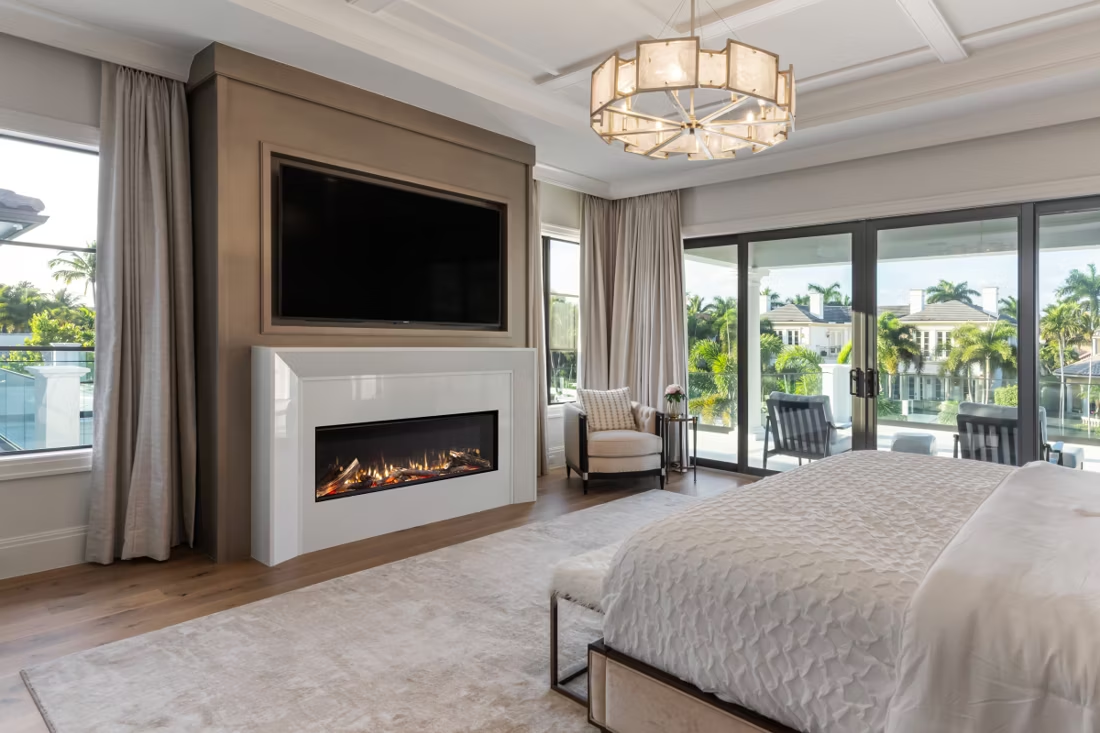
Yes—with an asterisk. Fireplaces are hot and TVs don't like heat. Either put a mantel between them to deflect rising warmth, or choose a fireplace with heat-management technology that creates a cool zone on the wall above—the wall stays around 125 degrees, barely warm, while the room still gets full heat. If you like clean lines and don't want a mantel, heat management is the answer.
How much should I budget for a fireplace?
For an average home—covering the fireplace, the vent pipe, and basic installation—a budget between $3,900 and $5,500 gives you a lot of options across wood, gas, and pellet. By the time you add finish work, gas line, and electrical, the average complete installation lands between $5,000 and $12,000 all-in. In a remodel or new build, a good rule is to put about 2.5% of the total project cost toward the fireplace.
Can a fireplace actually lower my heating bill?
Yes—by creating a comfort zone. A furnace heats every square foot of the house just to warm the one room you're in; a gas fireplace on low burns roughly a sixth of the gas a typical furnace does. Set the furnace around 55–60 degrees as a baseline, then heat the rooms your family actually uses. Families who heat this way commonly save $20–$60 a month.
Stove and Fireplace Dealers in Blaine County
Get your free Project Guide & Parts List for an electric fireplace in Blaine County.
Tell me about your home—condo, remodel, or vacation property—and I'll match you with a trusted local Blaine County dealer and send over a free Project Guide & Parts List: the right unit, the circuit requirements, and a recommended installer for your electric fireplace project.
Find Your Fireplace →