
Instant heat for Bingham County's cold desert nights, no chimney required.
Zone heat for Blackfoot, Shelley, Aberdeen, Firth, and every farm town on the Snake River Plain—no gas line, no wood pile, no venting. Find the right unit and connect with a trusted local dealer.
Every Project Starts From One of These Five Situations
Clean, reliable heat that fits any room.
Bingham County sits on the Snake River Plain in southeastern Idaho, anchored by Blackfoot—the county seat and self-proclaimed 'Potato Capital of the World'—along with Shelley, Aberdeen, Firth, and Riverside. At roughly 4,500 feet elevation, the county sits in climate zone 6B with a winter heating load in the same range as Bozeman, Montana. Winter lows average 17°F, and the open, irrigated farmland offers little windbreak, so cold air moves through fast and stays.
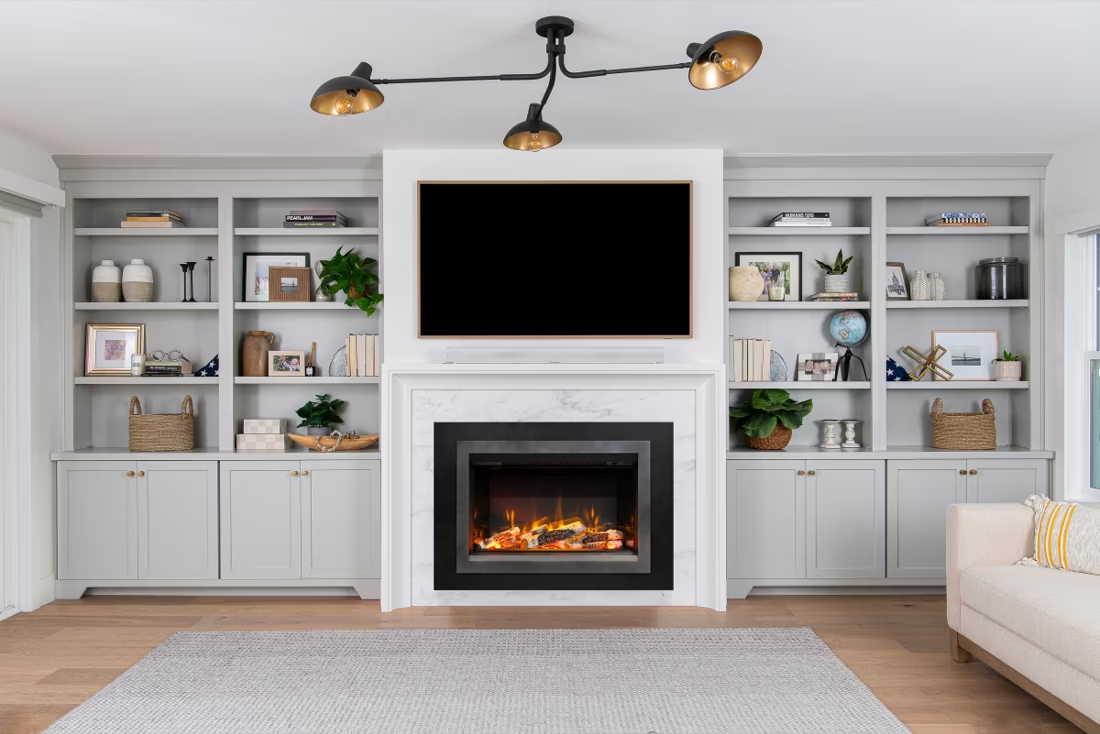
Wood and propane still do most of the heavy lifting in Bingham County's older farmhouses, but electric fireplaces have carved out a real niche—especially in the manufactured and modular homes common across the county's agricultural communities, where running a gas line or building a masonry chimney isn't practical. An electric insert or wall-mount unit gives a bedroom, finished basement, or rental property real zone heat with a standard outlet, no permit hassle, and none of the wildfire-smoke tradeoffs that come with wood burning during the region's increasingly common smoke-advisory summers and falls. The one honest tradeoff: electric units need power to run, so they won't help during a Rocky Mountain Power outage the way a wood stove will.
Three steps. No salesperson until you're ready.
Tell us about your project
Your zip code, your situation, and the fuel you're leaning toward—or let the answers point you to one.
See what's actually available
The brands dealers within 100 miles genuinely carry—real options, never a catalog mirage.
Get your dealer & Project Guide
A trusted local dealer, plus the free Project Guide & Parts List that names every component of the job.
Frequently Asked Questions
How much does an electric fireplace installation cost in Bingham County?
Most electric fireplace projects in Bingham County run $300 to $1,500. A plug-in freestanding unit or a simple wall-mount on an existing circuit sits at the low end—often a same-day project. A recessed, built-in electric insert or a linear wall unit that requires a dedicated 120V or 240V circuit run by an electrician costs more, especially in older Blackfoot or Shelley homes where panel capacity is tight. Because electric units don't need venting, chimney work, or gas line extensions, the total is almost always lower than a comparable wood, gas, or pellet installation in the county.
Do I need a permit to install an electric fireplace in Bingham County?
In most cases, no. A plug-in electric fireplace that uses a standard household outlet doesn't require a permit through the Bingham County Building Department. If you're adding a new dedicated circuit or having an electrician hardwire a built-in unit, that electrical work typically does require a permit, pulled by the licensed electrician doing the job. It's a much lighter lift than the building and gas permits required for wood or gas installs elsewhere in the county.
Will an electric fireplace heat my whole room, or just add ambiance?
A quality electric insert or wall unit will genuinely heat a single room—most models put out 4,000 to 5,000 BTUs, enough for 400 to 1,000 square feet depending on insulation and ceiling height. That covers a bedroom, den, or finished basement space in a typical Blackfoot or Aberdeen home. What it won't do is replace a furnace across an entire farmhouse during a 17°F January night—for whole-home heat in Bingham County's climate, electric fireplaces work best as zone heat alongside a home's primary furnace, not as a stand-alone solution.
Electric vs. wood vs. gas—which fits my Bingham County home?
Wood remains common in the county's older farmhouses, where Forest Service permits through Caribou-Targhee National Forest and BLM's Idaho Falls District make cutting your own lodgepole pine, ponderosa pine, douglas fir, or larch affordable—and wood keeps working when the power goes out. Gas offers instant, higher-BTU heat where a propane tank or gas line is already in place. Electric wins on simplicity and cost: no venting, no fuel storage, no permits for a plug-in unit, and zero emissions during wildfire smoke season. For a manufactured home, a rental, or a room where running gas or a chimney isn't realistic, electric is usually the right call.
What's the best type of electric fireplace for Bingham County's climate?
For genuine supplemental heat rather than pure ambiance, look at electric inserts or linear wall units with a built-in fan-forced heater rated 4,000+ BTUs and a thermostat, rather than the lower-output decorative models. In a county where January nights regularly sit near 17°F, a unit with real heating capacity earns its keep in a bedroom or basement far more than a flame-effect-only model. Local dealers can match wattage and circuit requirements to your specific room, which matters more here than the brand name on the unit.
Can I install an electric fireplace in a manufactured or modular home?
Yes, and it's one of the more common installs in Bingham County's agricultural communities, where manufactured and modular housing makes up a meaningful share of the stock. Electric units avoid the combustion-air and clearance issues that complicate wood or gas installs in manufactured homes, since there's no flame, no venting, and no chimney chase to build. The main consideration is electrical capacity—older manufactured home panels sometimes need an upgrade before adding a dedicated circuit for a larger built-in unit, which a local electrician or dealer can assess quickly.
What's the difference between an electric insert, wall-mount, and freestanding stove?
An electric insert is built to slide into an existing masonry or wood-stove opening, giving an old fireplace new life without touching the chimney. A wall-mount or linear unit recesses into or hangs on a wall, common in newer builds and remodels around Blackfoot and Shelley. A freestanding electric stove looks like a traditional wood stove and simply plugs into an outlet, making it the easiest retrofit for a room with no existing fireplace. All three heat the same way—resistance coils or infrared elements behind a fan—the difference is really about fitting your existing space.
Will my electric fireplace work during a power outage?
No—electric fireplaces require power to run the heating element, fan, and controls, so they'll shut down the moment Rocky Mountain Power service drops, along with the rest of your home's electrical system. This is the main tradeoff against wood heat in Bingham County, where winter storms and high-wind events across the open plain can knock out power for hours at a time. Homes that want both convenience and outage-proof backup often pair an electric fireplace for daily zone heat with a wood stove or propane heater somewhere in the house for storm days.
How much does it cost to run an electric fireplace in Bingham County?
Running a typical 1,500-watt electric fireplace on high for several hours a day costs somewhere in the neighborhood of $15 to $30 a month at Rocky Mountain Power's residential rates, depending on how often it's used and the season. That's meaningfully cheaper than running a whole-home furnace to heat a single occupied room, which is exactly why electric units get used as targeted zone heat in bedrooms, basements, and additions across the county rather than as a home's primary heat source.
Do electric fireplaces actually produce heat?
Yes—most put out around 4,800–5,000 BTUs from a standard outlet, which comfortably warms a bedroom, office, or den as a comfort-zone heater. What they won't do is carry a whole house the way wood, gas, or pellet can. Think of electric as ambiance-first with honest supplemental heat: flames on with no heat in July, flames plus warmth in January.
Does an electric fireplace need a vent or chimney?
No—that's its superpower. An electric fireplace needs a wall and an outlet, period. No vent pipe, no gas line, no clearances to design around, which is why it works in bedrooms, offices, apartments, and walls where venting a gas or wood unit would be impractical or impossible. Installation is typically the simplest and least expensive of any fireplace type.
How much should I budget for a fireplace?
For an average home—covering the fireplace, the vent pipe, and basic installation—a budget between $3,900 and $5,500 gives you a lot of options across wood, gas, and pellet. By the time you add finish work, gas line, and electrical, the average complete installation lands between $5,000 and $12,000 all-in. In a remodel or new build, a good rule is to put about 2.5% of the total project cost toward the fireplace.
What is an in-home preview and do I need one?
It's a visit where a hearth professional measures your space, confirms the model you picked actually works in your home, and walks the specs—framing, gas line, venting, finish work—before anything is ordered. Some details you just can't know until you see the house. Never make a down payment without one; it's the single most-skipped step that burns buyers.
Find your electric fireplace in Bingham County.
Tell us about your home and we'll match you with the right electric fireplace or insert, plus a free Project Guide & Parts List—including the exact unit specs and your recommended local Bingham County dealer.
Find Your Fireplace →