
Clean electric heat for Benewah County homes built around wood.
From St. Maries to Plummer and Tensed, most homes here run on wood heat—electric fireplaces and inserts add convenient zone heat, smoke-season backup, and no-maintenance ambiance without a chimney. Find the right unit and connect with a trusted local installer.
Every Project Starts From One of These Five Situations
The low-maintenance layer in a wood-heavy county.
Benewah County sits in the Idaho Panhandle along the St. Joe River, home to fewer than 4,000 residents spread across St. Maries, Plummer, Tensed, Fernwood, and the Coeur d'Alene Reservation lands. Climate zone 5B, roughly 6,553 heating degree days, and winter lows averaging 24°F put the county in the same winter-severity league as Helena, Montana. With the Idaho Panhandle National Forests and BLM land bordering nearly every town, wood—lodgepole pine, ponderosa pine, Douglas fir, larch—remains the default heat source, backed by cutting permits running $5 to $20 per cord depending on the district.
Electric fireplaces and inserts fill a different role here: zone heat for a bedroom or addition a wood stove doesn't reach, a smoke-season alternative when wildfire smoke advisories make burning less appealing, and a low-effort way to add warmth and ambiance without a chimney, venting, or a cord of wood to stack. Most Benewah County homeowners who add electric heat are layering it on top of an existing wood setup rather than replacing it—and the install itself is usually the simplest of any fuel type in the county.
Three steps. No salesperson until you're ready.
Tell us about your project
Your zip code, your situation, and the fuel you're leaning toward—or let the answers point you to one.
See what's actually available
The brands dealers within 100 miles genuinely carry—real options, never a catalog mirage.
Get your dealer & Project Guide
A trusted local dealer, plus the free Project Guide & Parts List that names every component of the job.
Frequently Asked Questions
How much does an electric fireplace or insert cost to install in Benewah County?
Plug-in electric fireplaces and inserts start around $300 to $1,000 for the unit itself and typically need nothing more than an existing outlet—no permit, no electrician. Built-in units or anything requiring a dedicated 240-volt circuit run higher, usually $1,500 to $3,500 once you factor in the unit, wall preparation, and an electrician's time running new wire from the panel. Because Benewah County is home to under 4,000 people, there isn't a dedicated hearth showroom in the county—electricians based in St. Maries handle most circuit work, and installers from Coeur d'Alene occasionally build a Benewah County stop into a broader Panhandle route.
What size electric fireplace do I need for my Benewah County home?
Electric units are rated for effective heat coverage, typically 400 to 1,000 square feet for a 1,500-watt unit, which is why most Benewah County installs function as zone heat rather than whole-home warmth. An insert or stove can take the edge off a bedroom, sunroom, or an addition off the back of a St. Maries or Plummer farmhouse, but with winter lows averaging 24°F and heating degree days near Helena, Montana territory, electric alone won't carry a drafty Panhandle home through January. Most homeowners here pair electric heat with an existing wood stove or furnace rather than relying on it as the sole source.
Where can I find someone to install an electric fireplace near me in Benewah County?
Because the county's population is under 4,000 spread across St. Maries, Plummer, Tensed, and Fernwood, there's no standalone hearth retailer based here. Electricians in St. Maries handle circuit work for built-in units, and hearth retailers out of Coeur d'Alene or Spokane cover Benewah County for anything more involved, often quoting a small travel charge for homes near the Coeur d'Alene Reservation lands around Plummer or the more remote stretches toward Fernwood.
What's the difference between an electric fireplace, insert, and stove?
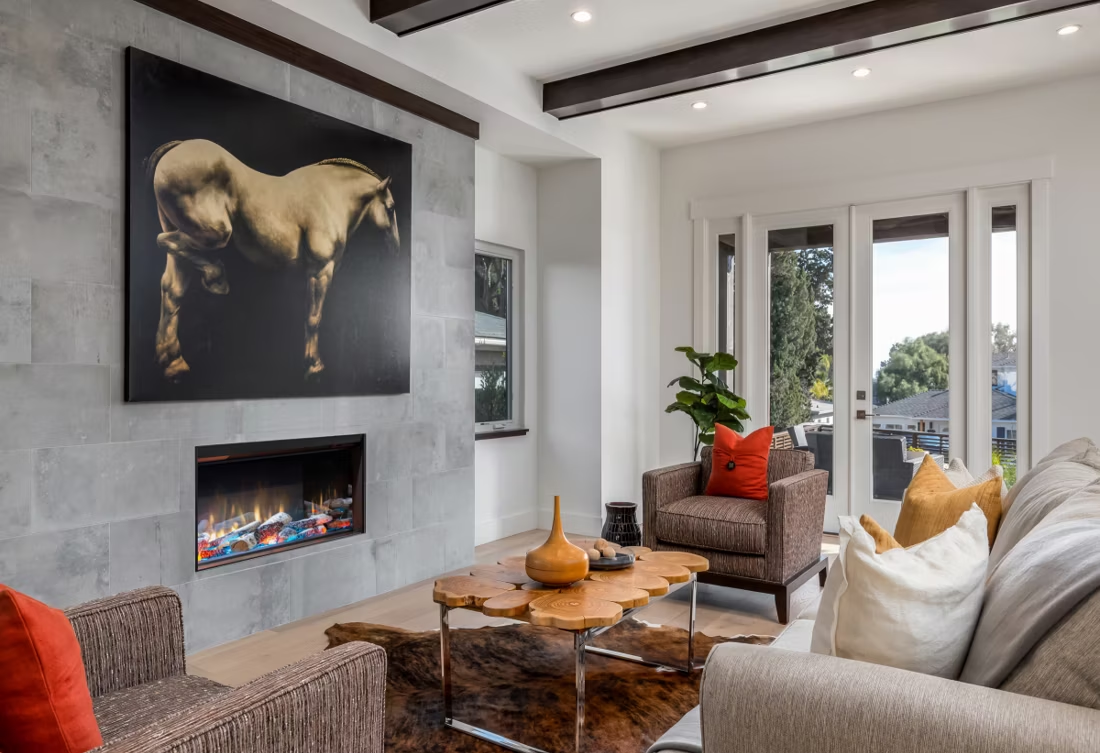
An electric fireplace is usually a wall-mounted or built-in unit with a flame-effect display and an optional heating element. An electric insert slides into an existing masonry or wood-stove opening—a good option for Benewah County homeowners with an old, unused fireplace who want ambiance and light heat without firewood or chimney sweeping. An electric stove is a freestanding, cabinet-style unit shaped like a traditional wood stove. None of the three need venting, a chimney, or combustion air, which is the whole appeal in a county where existing hearths were mostly built for wood.
Do I need a permit to install an electric fireplace in Benewah County?
A simple plug-in electric fireplace needs no permit. If the installation requires a new dedicated circuit—which most built-in units do—that electrical work falls under Benewah County's building permit process, and the electrician typically pulls the permit as part of the job. There's no combustion inspection, no chimney sign-off, and no EPA certification requirement, which is a big part of why electric installs move faster here than wood or gas projects.
What's the best electric fireplace for Benewah County's climate?
Look for a unit with a genuine 1,500-watt heating element rather than a decorative-only model—with winter lows averaging 24°F and cold snaps dropping well below that, you want measurable heat output, not just a flame effect. Benewah County also sees regular wildfire smoke advisories from Panhandle-area fires in summer and early fall, and some homeowners use electric units as a smoke-season substitute for wood burning since electric produces zero particulate emissions regardless of outdoor air quality. For most homes, an insert into an old fireplace opening or a stove-style unit in a mudroom or addition covers the gap without adding another appliance to maintain.
Will my electric fireplace work during a power outage?
No. Electric fireplaces stop the moment the power goes out, which matters in a rural, timbered county where winter storms and downed lines aren't rare. That's the main reason most Benewah County homes keep a wood stove or insert as primary or backup heat—lodgepole pine, ponderosa pine, Douglas fir, and larch are all available locally through inexpensive cutting permits on Idaho Panhandle National Forest and BLM land—while using electric heat for daily convenience and zone heating rather than storm-season reliability.
Electric vs. wood—which makes more sense for my home?
Wood remains the dominant heat source across Benewah County, backed by abundant timber and low-cost cutting permits—$5 to $20 per cord through the Idaho Panhandle National Forests, $10 per cord through the BLM Coeur d'Alene and Spokane districts—plus the advantage of working through winter power outages. Electric fireplaces can't compete on raw heat output or storm resilience, but they win on convenience: no wood to split and stack, no chimney to sweep, no ash to clean, and no smoke added during the wildfire-smoke months when regional air quality already suffers. Most Benewah County homes adding electric heat are supplementing an existing wood setup, not replacing it.
Electric vs. pellet stove—which is right for my Benewah County home?
Pellet stoves burn compressed wood pellets from regional brands like Bear Mountain, Lignetics, and Pacific Pellet, but they still need electricity to run the auger and blower—so neither pellet nor electric works during a power outage. Electric fireplaces are simpler still: no hopper to fill, no ash to empty, no venting at all. For homeowners who want real, sustained heat output without buying fuel, pellet is the stronger choice; for those who mainly want ambiance or light supplemental warmth in a room a wood stove doesn't reach, a plug-in or built-in electric unit is the lower-maintenance option.
Do electric fireplaces actually produce heat?
Yes—most put out around 4,800–5,000 BTUs from a standard outlet, which comfortably warms a bedroom, office, or den as a comfort-zone heater. What they won't do is carry a whole house the way wood, gas, or pellet can. Think of electric as ambiance-first with honest supplemental heat: flames on with no heat in July, flames plus warmth in January.
Can I put a TV above my fireplace?
Yes—with an asterisk. Fireplaces are hot and TVs don't like heat. Either put a mantel between them to deflect rising warmth, or choose a fireplace with heat-management technology that creates a cool zone on the wall above—the wall stays around 125 degrees, barely warm, while the room still gets full heat. If you like clean lines and don't want a mantel, heat management is the answer.
What is an in-home preview and do I need one?
It's a visit where a hearth professional measures your space, confirms the model you picked actually works in your home, and walks the specs—framing, gas line, venting, finish work—before anything is ordered. Some details you just can't know until you see the house. Never make a down payment without one; it's the single most-skipped step that burns buyers.
Does a fireplace add value to my home?
On average, a fireplace adds back to the home about the same amount you spent installing it. Add the monthly savings from heating the rooms you actually use instead of the whole house—often hundreds of dollars a year—and the value case is strong before you even count what a fire does for how your family uses the room.
Stove and Fireplace Dealers in Benewah County
Find your electric fireplace in Benewah County.
Tell us about your home and we'll match you with the right electric fireplace, insert, or stove and a trusted local installer, plus a free Project Guide & Parts List with the exact parts for your project in Benewah County.
Find Your Fireplace →