
Gas Heat That Keeps Up With Ammon Winters.
With a long, demanding heating season and winter lows averaging 16°F, Ammon homes need heat that doesn't quit. Find the right gas fireplace or insert and connect with a trusted local dealer.
Every Project Starts From One of These Five Situations
Instant heat for the high desert cold.
Ammon sits at 4,721 feet on the upper Snake River Plain, just east of Idaho Falls, in climate zone 6B—a heating season on par with Bozeman, Montana, with a long, demanding winter and average winter lows around 16°F. Bonneville County also sees regular winter temperature inversions that can trap valley air, along with wildfire smoke drifting in from summer fire season. Both conditions push a lot of local homeowners toward gas as the cleaner-burning option.
Intermountain Gas Company serves much of the Ammon area within city limits, so most homes already connected to natural gas for a furnace or water heater can add a fireplace without much added infrastructure. Outside city limits and in more rural stretches of Bonneville County, propane fills the gap. Either fuel path gets you a direct-vent gas fireplace or insert that lights instantly, doesn't add smoke to an already inversion-prone valley, and—with the right ignition system—keeps working during winter power outages.
Three steps. No salesperson until you're ready.
Tell us about your project
Your zip code, your situation, and the fuel you're leaning toward—or let the answers point you to one.
See what's actually available
The brands dealers within 100 miles genuinely carry—real options, never a catalog mirage.
Get your dealer & Project Guide
A trusted local dealer, plus the free Project Guide & Parts List that names every component of the job.
Frequently Asked Questions
How much does a gas fireplace installation cost in Ammon?
Most gas fireplace installations in Ammon run between roughly $4,000 and $10,000, depending on the unit, the venting run, and whether new gas line work is needed. A direct-vent insert going into an existing masonry fireplace with gas already stubbed nearby sits on the lower end. A new built-in gas fireplace for a remodel or addition—with framing, a fresh gas line, and full venting—lands in the middle to upper end. Homes on propane that need a new tank or a longer line run typically land at the higher end. A local dealer will give you a firm number after seeing your home.
Can I convert my existing wood fireplace to gas?
Yes, and it's one of the more common projects for older Ammon and Idaho Falls-area homes built with a wood-burning masonry fireplace. A gas insert typically slides into the existing firebox with a stainless liner run up your existing chimney, so you keep the look of the fireplace while gaining real, controllable heat output. In this area that conversion usually runs $4,000 to $8,500, with the low end going to homes that already have natural gas from Intermountain Gas Company running to the house, and the high end covering propane conversions that need new tank or line work.
Do I need natural gas, or can I use propane?
Either works, and which one makes sense mostly comes down to where you live. Intermountain Gas Company provides natural gas service to much of Ammon within city limits, so if you already run gas to a furnace, range, or water heater, adding a fireplace is usually straightforward. Homes in the more rural stretches of Bonneville County, outside the natural gas footprint, typically run on propane instead—either an existing tank or a new one set by a local propane supplier. Nearly every gas fireplace model on the market can be configured for either fuel; your installer sets the correct orifice and regulator for whichever you have.
Will my gas fireplace still work if the power goes out?
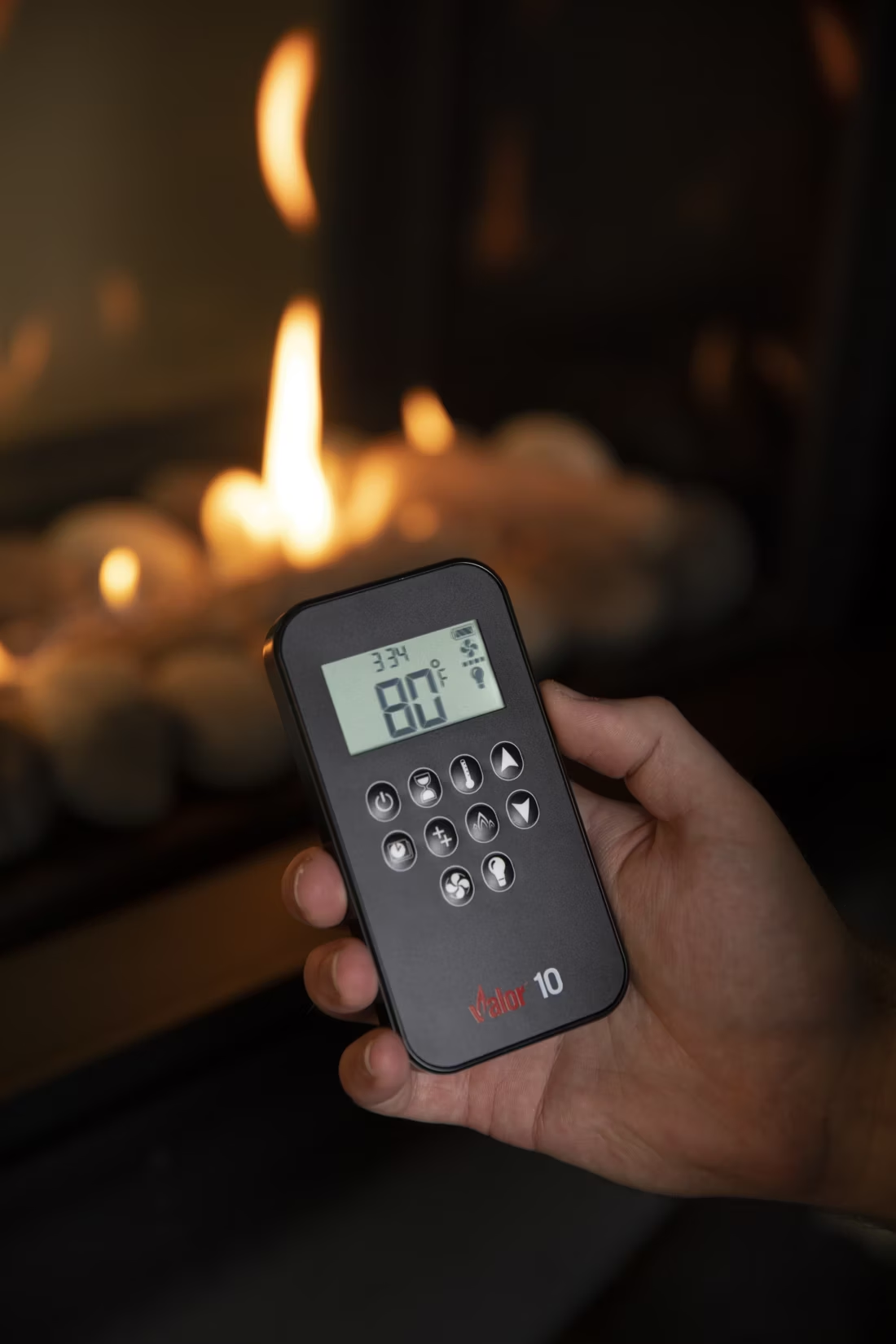
Most modern gas fireplaces will, with the right ignition system. Units with intermittent pilot ignition (IPI) run on a small battery backup that kicks in automatically when the power drops, so the fireplace still lights and runs like normal—you just need to keep fresh batteries in the unit. Valor takes a different approach: their fireplaces generate their own electricity through the pilot's thermocouple, so there's no battery to remember at all. For Ammon winters, where a hard storm off the Snake River Plain can knock out power for a stretch, that distinction is worth asking your local dealer about directly.
What's the difference between a gas fireplace, gas insert, and gas stove?
A gas fireplace is a fully built-in unit, framed into a wall—the right choice for new construction or a room without an existing fireplace. A gas insert is built to slide into an existing masonry firebox and vents up the chimney you already have, which makes it the natural fit for older Ammon homes with a wood fireplace they want to upgrade. A gas stove is a freestanding cabinet unit, similar in footprint to a wood stove, that can go almost anywhere with the right clearances and venting. Most local dealers can walk you through which fits your existing structure.
Do I need a permit to install a gas fireplace in Ammon?
Yes—new gas fireplace installations go through the City of Ammon Building Department (or Bonneville County if you're outside city limits), and gas line work requires sign-off from a licensed gas-fitter. Most established local hearth dealers handle the permitting and inspection scheduling as part of the installation, which is one of the real advantages of working with a certified installer instead of a handyman: they coordinate the gas line, venting, and inspection as one job rather than leaving you to manage separate trades.
Should I get a vented or vent-free gas fireplace?
Vented, direct-vent units draw combustion air from outside and exhaust it back outside through sealed venting—they're the standard recommendation almost everywhere, including Ammon. Vent-free (unvented) units burn gas directly into the room and are legal in Idaho with proper room sizing and an oxygen depletion sensor, but they do release some moisture and combustion byproducts indoors. Given how often Bonneville County deals with winter inversions that already trap valley air, most local dealers steer homeowners toward direct-vent units—you get real heat output without adding anything to the indoor or outdoor air during an inversion event.
How often does a gas fireplace need to be serviced?
Plan on an annual inspection, ideally before heating season ramps up in the fall. A technician checks the burner, pilot assembly, venting, and gas connections, and cleans the glass and interior—a much smaller job than sweeping a wood chimney, but it matters for safe operation. Locally, this kind of annual service typically runs $150 to $250. If you notice yellow or flickering flame instead of a steady blue, that's usually a sign to call sooner rather than wait for the annual visit.
Gas or wood—which makes more sense for an Ammon home?
Wood has a real place here: lodgepole pine, ponderosa pine, Douglas fir, and larch are all common locally, and personal-use cutting permits through the Caribou-Targhee National Forest or BLM Idaho Falls District run about $5 to $20 per cord during the spring-to-fall season. Wood also keeps working with no electricity, which matters during storm outages. But Bonneville County's winter inversions are a real factor—smoke can settle over the valley for days at a time, and gas simply doesn't add to that. For daily-use heat in town, especially in a primary living space, most Ammon homeowners lean toward gas for the clean, instant, no-mess operation, and keep wood (if at all) as backup or ambiance.
Why is a fireplace insert so efficient?
An insert does two things: it seals the chimney completely, so you stop losing air you already paid to heat, and it radiates warmth into the room through the firebox and glass. Most add a heat-exchange fan that pulls cool room air underneath, wraps it around the hot firebox, and pushes it back out warm. Your home is more efficient before you've even lit the first fire.
What's the difference between an insert and a zero-clearance fireplace?
An insert is a fireplace that slides into a pre-existing wood-burning fireplace—if you don't have one, there's nothing to insert it into. A zero-clearance fireplace is built into a framed wall, which makes it the answer for remodels and new construction. Simple test: existing masonry fireplace means insert; blank or framed wall means zero-clearance.
How much should I budget for a fireplace?
For an average home—covering the fireplace, the vent pipe, and basic installation—a budget between $3,900 and $5,500 gives you a lot of options across wood, gas, and pellet. By the time you add finish work, gas line, and electrical, the average complete installation lands between $5,000 and $12,000 all-in. In a remodel or new build, a good rule is to put about 2.5% of the total project cost toward the fireplace.
Does a fireplace add value to my home?
On average, a fireplace adds back to the home about the same amount you spent installing it. Add the monthly savings from heating the rooms you actually use instead of the whole house—often hundreds of dollars a year—and the value case is strong before you even count what a fire does for how your family uses the room.
Preferred Dealer in Ammon
Marked Preferred because they run on WhyFire's software—so they can show you real pricing and book your appointment right here. No manufacturer pays for placement. How we verify dealers →
Find your gas fireplace in Ammon.
Tell us about your home and we'll put together a free Project Guide & Parts List—the right unit, the vent kit, and a trusted local Ammon-area dealer to install it.
Find Your Fireplace →