
Add ambiance to Whitmore Village without adding heat you don't need.
With winters this mild and lows around 61°F, nobody here needs a furnace substitute. Find a gas fireplace built for atmosphere, and connect with a local dealer who installs it correctly.
Every Project Starts From One of These Five Situations
On the Wahiawa plateau, a gas flame is decor, not defense against winter.
Whitmore Village sits at just under 1,000 feet elevation in Central Oahu's pineapple country, cool enough on a trade-wind evening to notice but nowhere close to a heating climate. Climate zone 1A and a heating season so mild it barely registers put this zip code in a different universe from a place like Duluth, MN, which faces a brutal, months-long winter heating season. Nobody in Whitmore Village is choosing a gas fireplace to keep pipes from freezing.
That reframes the whole decision. A gas fireplace here is almost always about the look of a fire, resale appeal, or a warm spot for the handful of genuinely cool nights each year—not BTU output. It also changes the fuel logistics: there's no piped natural gas main running through Whitmore Village, so installs here run on propane, delivered and stored on-site, rather than a utility gas hookup. Hawaiian Electric's residential rate of roughly 42.87 cents per kWh—among the highest in the country—is also worth knowing if you're weighing gas against an electric unit for occasional decorative use.
Three steps. No salesperson until you're ready.
Tell us about your project
Your zip code, your situation, and the fuel you're leaning toward—or let the answers point you to one.
See what's actually available
The brands dealers within 100 miles genuinely carry—real options, never a catalog mirage.
Get your dealer & Project Guide
A trusted local dealer, plus the free Project Guide & Parts List that names every component of the job.
Frequently Asked Questions
How much does a gas fireplace installation cost in Whitmore Village?
There's no natural gas main serving this part of Oahu, so almost every install here runs on propane, which adds a tank setup—regulator, gas line to the unit, and either a small ground-mounted or buried tank—on top of the fireplace and venting itself. Factor in inter-island freight on the appliance and materials, and total project costs in Whitmore Village typically run higher than mainland averages, often landing in the $6,000-$12,000 range for a direct-vent unit with a new propane line. A local dealer will give you a firm number after seeing your home, since propane tank placement and venting path both swing the estimate.
Does a gas fireplace even make sense in a climate this warm?
It's a fair question. With average winter lows around 61°F and almost no heating demand, a gas fireplace in Whitmore Village isn't doing the job it does in a cold-winter state—it's not your primary heat source and it's not preventing frozen pipes. What it does deliver here is ambiance for entertaining, a focal point for a living room, and genuine warmth on the rare cool, breezy evenings when the trade winds pick up on the plateau. Homeowners who install one are usually motivated by looks and resale value more than heating need, and that's a perfectly reasonable reason to do it.
Can I use natural gas, or does everyone here run on propane?
Propane is the standard route for Whitmore Village. Hawai'i Gas (The Gas Company) does pipe synthetic natural gas to parts of urban Honolulu, but that service area doesn't extend out to the Wahiawa-Mililani plateau where zip 96786 sits. Nearly every gas fireplace installed in this area runs on a propane tank, either exchanged periodically or refilled by a local propane supplier. Any gas fireplace model your dealer recommends will be configured for propane with the correct orifice and regulator—it's a routine setup here, not a workaround.
Will a gas fireplace work if the power goes out?
Most direct-vent gas fireplaces with an IPI (intermittent pilot ignition) system include a battery backup that keeps the unit operable during an outage—relevant on Oahu given the occasional tropical storm or high-wind event that knocks out Hawaiian Electric service for a stretch. Valor's lineup goes a step further: their units generate their own electricity through the pilot's thermocouple, so there's no battery to remember or replace. Given how infrequently these units get used for actual heat here, a battery-free ignition system is a nice hedge against a fireplace that hasn't been touched in months suddenly needing to work.
What's the difference between a gas fireplace, insert, and stove for a home like mine?
Most homes in Whitmore Village are single-story plantation-era or newer wood-frame construction without an existing masonry fireplace to convert, so a built-in direct-vent gas fireplace or a freestanding gas stove is the more common project than an insert. A gas insert only makes sense if you already have a masonry firebox and chimney to retrofit—uncommon in this neighborhood. A freestanding gas stove is often the simpler install since it doesn't require framing a new firebox enclosure, and it still delivers the visual fire effect most homeowners here are actually after.
Do I need a permit to install a gas fireplace in Whitmore Village?
Yes. Whitmore Village falls under the City and County of Honolulu Department of Planning and Permitting (DPP), which requires a building permit for the fireplace installation and sign-off from a licensed plumber or gasfitter for the propane line and tank connection. A trusted local dealer typically coordinates both pieces—the appliance permit and the gas line work—rather than leaving you to manage separate trades. Skipping the permit is a real risk at resale, since an unpermitted gas appliance can hold up escrow on Oahu.
Vented or vent-free—which should I choose here?
Vented direct-vent units are the standard recommendation in Whitmore Village, same as almost everywhere: they draw combustion air from outside and exhaust it back outside, so they don't affect indoor air quality. Vent-free units are technically permitted in Hawaii but come with strict room-sizing and ventilation requirements, and given how little actual heating this climate demands, there's rarely a good reason to accept the indoor air tradeoffs of a vent-free unit just to save on venting costs. A local dealer can walk you through both, but for a fireplace that's mostly about ambiance, vented is the easy call.
How often does a gas fireplace need servicing in a place like this?
An annual inspection is still the right cadence even though the unit sees light use—a technician checks the burner, pilot, venting, and gas connections, and cleans the glass. Oahu's humidity and salt-laden air can accelerate corrosion on exterior venting caps and propane fittings faster than it would on a mainland install, so that yearly check is worth keeping even if the fireplace only runs a handful of evenings a year. Expect roughly $150-$250 for a standard annual service call from a local hearth technician.
Gas vs. wood vs. electric—what actually makes sense in Whitmore Village?
Wood heat is essentially a non-factor here—the local species people know, ohia, koa, and eucalyptus, are either protected, prized for woodworking, or simply not stocked as firewood, and nobody needs cordwood heat when winters are this mild. That leaves gas and electric as the realistic choices for a decorative fireplace. Gas gives you a more authentic-looking flame and instant on-off operation from a propane tank. Electric skips the venting and gas line entirely, which simplifies installation, but Hawaiian Electric's rate of about 42.87 cents per kWh makes it one of the more expensive places in the country to run one regularly—though for occasional ambiance use rather than daily heating, that cost difference is minor. Most homeowners here choose based on the look and feel they want more than fuel economics.
Can I put a TV above my fireplace?
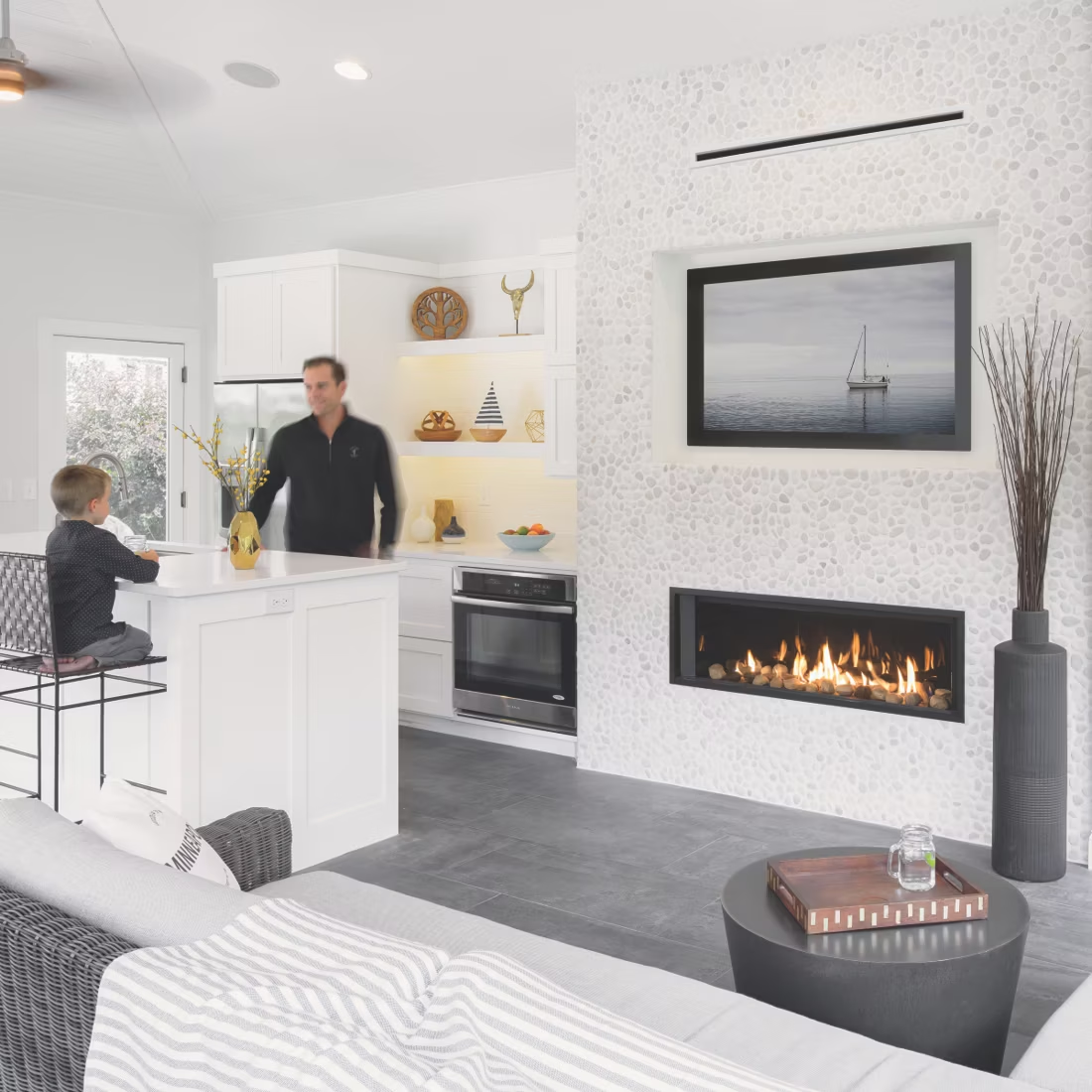
Yes—with an asterisk. Fireplaces are hot and TVs don't like heat. Either put a mantel between them to deflect rising warmth, or choose a fireplace with heat-management technology that creates a cool zone on the wall above—the wall stays around 125 degrees, barely warm, while the room still gets full heat. If you like clean lines and don't want a mantel, heat management is the answer.
What's the difference between an insert and a zero-clearance fireplace?
An insert is a fireplace that slides into a pre-existing wood-burning fireplace—if you don't have one, there's nothing to insert it into. A zero-clearance fireplace is built into a framed wall, which makes it the answer for remodels and new construction. Simple test: existing masonry fireplace means insert; blank or framed wall means zero-clearance.
Can a fireplace actually lower my heating bill?
Yes—by creating a comfort zone. A furnace heats every square foot of the house just to warm the one room you're in; a gas fireplace on low burns roughly a sixth of the gas a typical furnace does. Set the furnace around 55–60 degrees as a baseline, then heat the rooms your family actually uses. Families who heat this way commonly save $20–$60 a month.
Does a fireplace add value to my home?
On average, a fireplace adds back to the home about the same amount you spent installing it. Add the monthly savings from heating the rooms you actually use instead of the whole house—often hundreds of dollars a year—and the value case is strong before you even count what a fire does for how your family uses the room.
Nearby Dealers
Hearth shops serving Whitmore Village and the surrounding area. Every listing shows whether it is a WhyFire partner, a dealer we have verified as authorized for the brands we recommend, or a local business carrying hearth products. No manufacturer pays for placement. How we verify dealers →
Island Pool And Supply
Find your gas fireplace in Whitmore Village.
Tell us about your home and we'll put together a free Project Guide & Parts List—the right unit, propane setup, and venting for your Whitmore Village project—and match you with a trusted local dealer.
Find Your Fireplace →