
Real Flame, Zero Furnace Required in Waipio.
A gas fireplace in Waipio isn't about survival heat—it's about the look, the gathering spot, and the occasional cool trade-wind evening. Get matched with a trusted local dealer who knows what's actually installable on Oahu.
Every Project Starts From One of These Five Situations
A flame for style, not survival.
Waipio sits at 351 feet on Oahu's leeward plain, where the average winter low hovers around 61°F and the heating season adds up to just a handful of chilly days a year. Compare that to a place like Duluth, Minnesota, which has a long, brutal winter heating season lasting many months, and it's clear: nobody in Waipio is installing a gas fireplace to keep the pipes from freezing. What drives demand here is almost entirely aesthetic—a linear flame feature in a great room, a focal point for a lanai-adjacent living space, or a cozy touch on the rare December and January evenings when trade winds push indoor temperatures into the upper 50s.
Oahu is one of the few places in Hawaii with piped utility gas—Hawaii Gas (formerly The Gas Company) runs a synthetic natural gas network through parts of urban Honolulu, and Waipio homes outside that footprint typically run on propane tanks instead. Either way, running a gas fireplace here is cheap relative to the alternative: Hawaiian Electric's residential rate sits around $0.43 per kWh, among the highest in the country, which makes an occasional-use gas flame a lot less expensive to operate than an electric space heater or a large electric fireplace insert running for hours.
Three steps. No salesperson until you're ready.
Tell us about your project
Your zip code, your situation, and the fuel you're leaning toward—or let the answers point you to one.
See what's actually available
The brands dealers within 100 miles genuinely carry—real options, never a catalog mirage.
Get your dealer & Project Guide
A trusted local dealer, plus the free Project Guide & Parts List that names every component of the job.
Frequently Asked Questions
How much does a gas fireplace installation cost in Waipio?
Expect to pay more here than the mainland averages you'll see quoted online—typically $5,500 to $12,000 for a direct-vent gas fireplace or linear unit, including venting and gas line work. Island freight adds cost to the unit itself, and licensed gas-fitters on Oahu charge accordingly. A propane hookup with a new tank runs toward the higher end of that range; a home already on the Hawaii Gas utility network in urban Honolulu can come in lower since there's no tank to install. Get a firm number from a local dealer after they've seen your home—Oahu installs vary more than mainland ones because so much depends on whether piped gas reaches your street.
Do I need natural gas, or does Waipio run on propane?
It depends on exactly where in Waipio you are. Hawaii Gas maintains a piped synthetic natural gas network through parts of urban Honolulu, but coverage on Oahu is patchy outside the urban core, and many homes in Waipio and the surrounding Central Oahu area run on propane tanks instead. Your local dealer will check whether your address falls inside the Hawaii Gas service footprint before quoting the job—if it doesn't, they'll spec the fireplace for propane and coordinate the tank installation with a local propane supplier.
Will a gas fireplace actually heat my Waipio home?
Not in any meaningful way, and it's worth saying plainly: with a 61°F average winter low and essentially no heating season, a gas fireplace in Waipio functions as a design feature, not a heat source. On the handful of cooler, windier nights in December and January—especially in older single-wall-construction homes without AC—a gas fireplace will take the edge off a room, but nobody here is sizing one for BTU output the way a homeowner in Bozeman or Burlington would. Most Waipio customers choose gas fireplaces for the visual and the ambiance, not the heat.
Should I get a gas fireplace, insert, or stove?
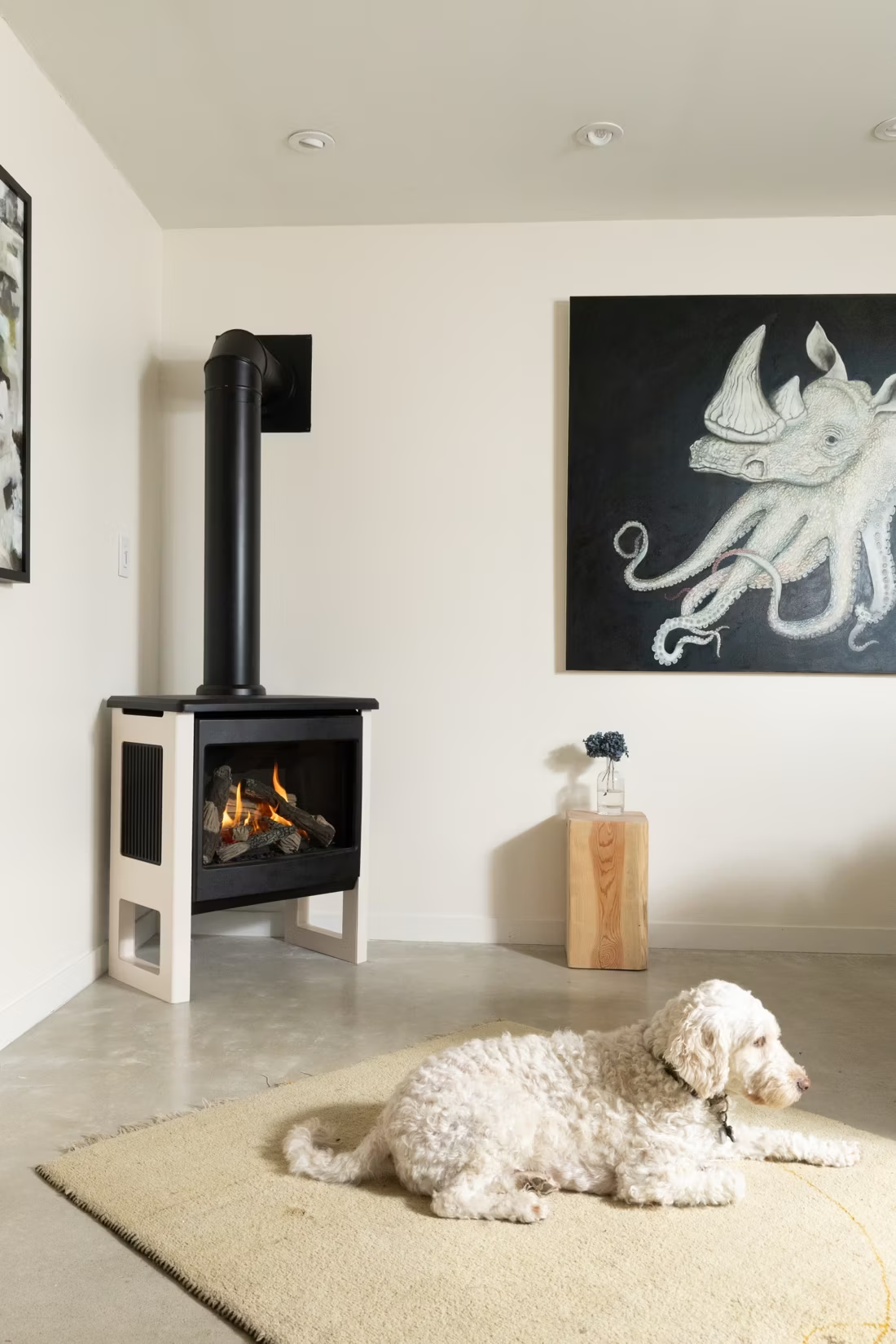
Most Waipio and Oahu homes don't have an existing masonry fireplace and chimney to convert—the building stock here runs mostly slab-on-grade with single-wall or CMU construction—so a gas insert conversion, the most common project on the mainland, is rare here. Instead, most local installs are new direct-vent gas fireplaces or linear gas fireplaces built into a wall or media center during a remodel. A freestanding gas stove is an option too, though it's less common in island homes where the aesthetic tends toward sleek, low-profile linear units rather than a traditional stove silhouette.
Do I need a permit to install a gas fireplace in Waipio?
Yes. Building permits for gas fireplace installations in Waipio go through the Department of Planning and Permitting for the City and County of Honolulu, and any new gas line—whether tied into Hawaii Gas's network or run from a propane tank—has to be done by a licensed gas-fitter. A reputable local dealer handles the permit application and inspection scheduling as part of the install, which matters on Oahu since permit processing times can run longer than mainland jurisdictions.
Vented or vent-free—which makes more sense in Waipio's climate?
Vented, direct-vent units are the better call here. Vent-free gas fireplaces release water vapor into the room, and Waipio already sits in a humid, low-elevation tropical climate where added indoor moisture isn't doing you any favors. A direct-vent unit draws combustion air from outside and exhausts it back outside through a sealed system, which keeps your indoor air quality and humidity levels unaffected. Local dealers can walk you through both, but for island homes, vented is the near-universal recommendation.
Will my gas fireplace work if the power goes out?
Most direct-vent gas fireplaces with intermittent pilot ignition (IPI) run on a battery backup that kicks in automatically during an outage, so the fireplace still lights on demand. That's a real consideration on Oahu, where tropical storms and the occasional hurricane threat—like Iniki in 1992—can knock out Hawaiian Electric service for days at a time. Valor fireplaces take it a step further with a self-generating pilot system that needs no batteries at all. Ask your local dealer about the ignition system on any unit you're considering if outage resilience matters to you.
How often does a gas fireplace need to be serviced in Waipio?
Plan on an annual inspection, same as anywhere—a technician checks the burner, pilot, gas connections, and venting, and cleans the glass. In Waipio, that typically runs $200 to $350, a bit above mainland averages because of Oahu labor rates and the smaller number of certified gas hearth technicians on the island. Given how infrequently most Waipio units actually get used compared to a cold-climate home running one daily, an annual check is usually more than enough to catch any issues before they become a problem.
Gas fireplace or electric fireplace—which is the better fit here?
Both make sense in Waipio, and the choice usually comes down to look and running cost rather than heat output, since wood and pellet stoves are essentially off the table in this climate. Electric fireplaces install cheap—often $400 to $1,200—and give you flexible placement without any venting or gas line work, but Hawaiian Electric's residential rate of roughly $0.43 per kWh makes them noticeably more expensive to run for extended ambiance use. A gas unit costs more upfront but is cheaper to operate over time, especially if you're already on propane or within the Hawaii Gas network. If you want a fireplace on nightly for atmosphere, gas usually wins on lifetime cost; if you want something for occasional use with zero installation hassle, electric is hard to beat.
Can I put a TV above my fireplace?
Yes—with an asterisk. Fireplaces are hot and TVs don't like heat. Either put a mantel between them to deflect rising warmth, or choose a fireplace with heat-management technology that creates a cool zone on the wall above—the wall stays around 125 degrees, barely warm, while the room still gets full heat. If you like clean lines and don't want a mantel, heat management is the answer.
Why is my open fireplace making my house colder?
Open fireplaces suck—literally. As the fire burns, it consumes air your furnace already paid to heat and pulls it out through the chimney, so the house is actually colder after the fire goes out than before you lit it. An insert fixes this: it seals the chimney, puts fixed glass across the front, and turns that hole in your house into a real heat source.
How much should I budget for a fireplace?
For an average home—covering the fireplace, the vent pipe, and basic installation—a budget between $3,900 and $5,500 gives you a lot of options across wood, gas, and pellet. By the time you add finish work, gas line, and electrical, the average complete installation lands between $5,000 and $12,000 all-in. In a remodel or new build, a good rule is to put about 2.5% of the total project cost toward the fireplace.
Can I install a fireplace myself?
If you're putting a fire in your house on purpose, it's best to work with an expert. Unless you're genuinely experienced in framing, gas line, vent pipe, and the national code on clearances to combustibles, have a professional do it—and ideally the same company that sells you the fireplace, so warranty, service, and liability all live under one roof.
Nearby Dealers
Hearth shops serving Waipio and the surrounding area. Every listing shows whether it is a WhyFire partner, a dealer we have verified as authorized for the brands we recommend, or a local business carrying hearth products. No manufacturer pays for placement. How we verify dealers →
Island Pool And Supply
Find your gas fireplace in Waipio.
Tell us about your home and we'll match you with a trusted local Oahu dealer, plus a free Project Guide & Parts List spelling out the exact parts—including the vent kit—for your Waipio gas fireplace project.
Find Your Fireplace →