
A Fireplace for Ambiance, Not for Heat.
With winter lows averaging 62°F and essentially no real heating season on record, a gas fireplace in Waipahu is about flame, glow, and a finished great room—not staying warm. Find the right unit and connect with a trusted local dealer.
Every Project Starts From One of These Five Situations
Fire as a feature, not a furnace.
Waipahu sits at just 23 feet of elevation on Oahu's central plain, squarely in climate zone 1A—hot and humid year-round, with an average winter low near 62°F and essentially no real heating season at all. Compare that to a place like Duluth, MN, which has a long, brutal winter heating season lasting months on end, and it's clear why wood stoves and pellet stoves never caught on here. Gas, though, still shows up in a real number of Waipahu homes—just for a different reason than it does on the mainland.
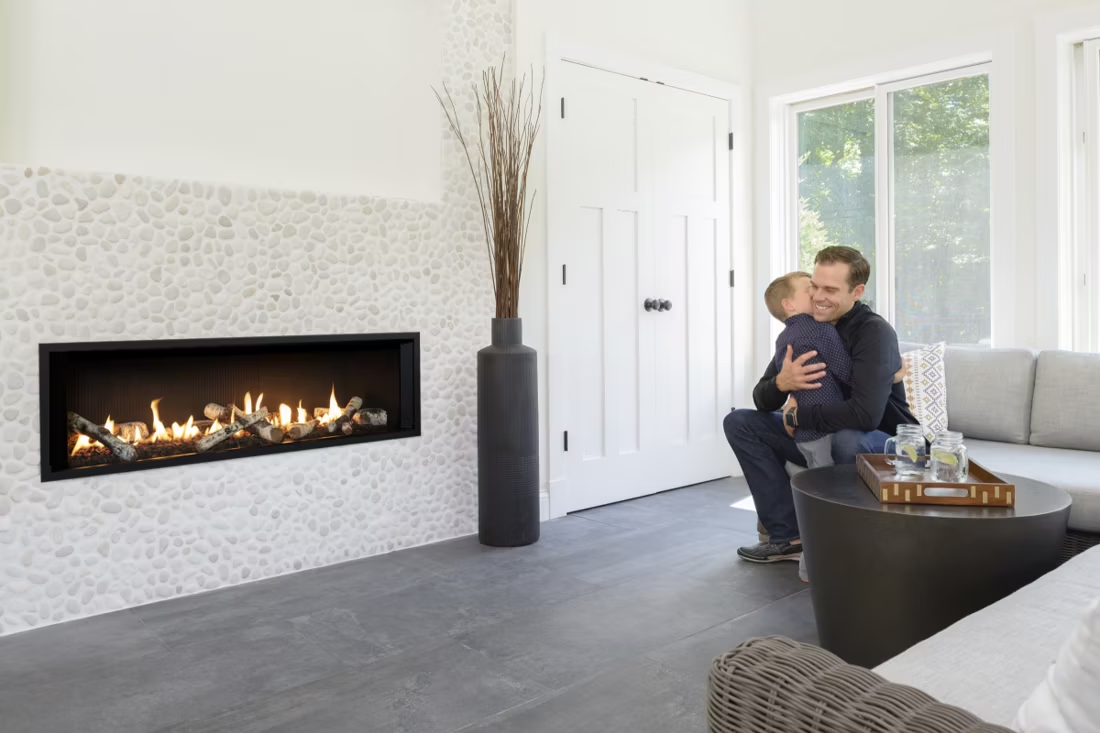
Homeowners here install gas fireplaces and linear fire features for the same reasons they'd add a water feature or accent lighting: a warm glow for evening entertaining on the lanai, a design centerpiece in a great room, or a touch of the mainland hearth aesthetic that transplants from colder states miss. Hawai'i doesn't have a mainland-style natural gas pipeline network—gas service on Oahu comes from Hawai'i Gas (The Gas Company), which delivers synthetic utility gas to much of urban and suburban Oahu including Waipahu, with propane tanks filling in for homes outside that grid. A local dealer will know which service reaches your specific street and size the unit and venting accordingly.
Three steps. No salesperson until you're ready.
Tell us about your project
Your zip code, your situation, and the fuel you're leaning toward—or let the answers point you to one.
See what's actually available
The brands dealers within 100 miles genuinely carry—real options, never a catalog mirage.
Get your dealer & Project Guide
A trusted local dealer, plus the free Project Guide & Parts List that names every component of the job.
Frequently Asked Questions
Does a gas fireplace even make sense in a climate as warm as Waipahu's?
For heating, no—with an average winter low around 62°F and essentially no real heating season at all, Waipahu homes never need supplemental heat the way a place like Bozeman, MT or Burlington, VT does. What a gas fireplace does provide here is ambiance: a real flame for evening gatherings, a design feature for a great room or lanai, and a small amount of warmth on the rare cool, rainy Kona-wind evenings when the trades die down and the house feels damp. Most Waipahu installs are driven by aesthetics and home value, not comfort necessity, and local dealers size and spec the unit with that in mind—often a smaller, glass-front linear unit rather than a large heat-output stove.
How much does a gas fireplace installation cost in Waipahu?
Expect to pay more than mainland pricing due to Oahu's shipping and materials costs—most Waipahu installs run in the $5,000 to $10,000 range depending on whether it's a direct-vent insert into an existing opening, a new linear fire feature built into a great room wall, or a lanai installation exposed to salt air. Units, venting components, and glass panels typically arrive by container from the mainland, which adds both cost and lead time compared to a similar job in a mainland city. A local dealer can give you a firm number once they've seen the space and confirmed whether Hawai'i Gas service or a propane tank will fuel the unit.
Is gas fireplace fuel in Waipahu natural gas or propane?
It depends on your specific location. Hawai'i Gas (The Gas Company) supplies synthetic utility gas through a limited pipeline network across parts of urban and suburban Oahu, and Waipahu falls within reach of that system in many neighborhoods. Homes outside the utility gas footprint run on propane, delivered and stored in a tank on the property. Most gas fireplace models can be configured for either fuel with the correct orifice and regulator, so the fuel type mainly affects your ongoing setup—a metered utility bill versus periodic propane tank refills—rather than which fireplace you can choose.
Will a gas fireplace still work if the power goes out?
Most direct-vent gas fireplaces with intermittent pilot ignition include a battery backup that keeps the unit operable when the electricity drops—relevant in Waipahu given Oahu's exposure to hurricane season and occasional tropical storm outages. Valor units go a step further, generating their own electricity through the pilot's thermocouple so there's no battery to remember at all. For a Waipahu home, that backup capability matters less for heat and more for having working light and ambiance during a storm-related outage—ask your local dealer which ignition system a given model uses.
What's the difference between a gas fireplace, insert, and linear fire feature for a Waipahu home?
A gas fireplace is a fully built-in unit framed into a wall, common in newer great-room construction. A gas insert drops into an existing masonry or built-in fireplace opening to modernize it. A linear fire feature is a wide, low, glass-fronted unit that reads more like architectural lighting than a traditional hearth—and it's increasingly the choice in Waipahu's open-concept, indoor-outdoor floor plans, since it delivers the visual flame without dominating the room with heat output nobody needs. A local dealer can walk you through which format fits your wall, ceiling height, and existing opening, if any.
Do I need a permit to install a gas fireplace in Waipahu?
Yes—gas fireplace installations fall under the City and County of Honolulu Department of Planning and Permitting (DPP), which requires both a building permit and sign-off on the gas line work by a licensed plumber or gas-fitter. Most established hearth and fire-feature dealers on Oahu handle the DPP paperwork as part of the installation, coordinating the gas connection, venting, and inspection together rather than leaving you to manage separate trades.
What should I look for in a gas fireplace given Waipahu's coastal, humid air?
Salt air and high humidity are the real durability factors here, more than cold weather ever will be. Look for stainless steel venting components and corrosion-resistant hardware, especially if the unit vents near an exterior wall facing Pearl Harbor or the coast. Direct-vent sealed-combustion units also perform better in Waipahu's humidity than open designs, since they don't pull moist indoor air across the burner. A local dealer familiar with Oahu installs will know which manufacturers hold up best against salt exposure versus which ones are really built for mainland climates.
How often does a gas fireplace need to be serviced in Waipahu?
An annual inspection is still recommended even though these units run far less often here than in a cold-climate home—humidity and salt air can corrode burner components and venting seals faster than in a dry mainland climate, even with light use. A certified technician will check the pilot, burner, gas connections, and venting, and clean the glass. Because Oahu has a smaller pool of hearth service technicians than a mainland metro, it's worth booking your annual check early in the year rather than waiting until you notice a problem.
Gas or electric fireplace—which makes more sense in Waipahu?
Electric fireplaces are cheaper to install (often $400–$1,200) and need no gas line or venting, but Hawaiian Electric's residential rate—around $0.43 per kWh, among the highest in the country—makes them expensive to run if you use the heat setting regularly. Gas units cost more upfront but are cheaper to operate for the occasional cool evening, and they deliver a real flame rather than an LED simulation. Since most Waipahu installs are about ambiance rather than daily heating, either fuel type can work—the deciding factor is usually whether you want a genuine flame (gas) or a simpler, no-venting install with lower upfront cost (electric).
Why is a fireplace insert so efficient?
An insert does two things: it seals the chimney completely, so you stop losing air you already paid to heat, and it radiates warmth into the room through the firebox and glass. Most add a heat-exchange fan that pulls cool room air underneath, wraps it around the hot firebox, and pushes it back out warm. Your home is more efficient before you've even lit the first fire.
Is my gas fireplace wasting gas?
If it was installed more than 15 years ago, probably. Older gas fireplaces keep a standing pilot light burning all the time, and that little flame can cost a couple hundred dollars a year. Newer models use pilot-on-demand ignition—the pilot lights only when you use the fireplace and goes out when you turn it off.
Can I install a fireplace myself?
If you're putting a fire in your house on purpose, it's best to work with an expert. Unless you're genuinely experienced in framing, gas line, vent pipe, and the national code on clearances to combustibles, have a professional do it—and ideally the same company that sells you the fireplace, so warranty, service, and liability all live under one roof.
How much should I budget for a fireplace?
For an average home—covering the fireplace, the vent pipe, and basic installation—a budget between $3,900 and $5,500 gives you a lot of options across wood, gas, and pellet. By the time you add finish work, gas line, and electrical, the average complete installation lands between $5,000 and $12,000 all-in. In a remodel or new build, a good rule is to put about 2.5% of the total project cost toward the fireplace.
Nearby Dealers
Hearth shops serving Waipahu and the surrounding area. Every listing shows whether it is a WhyFire partner, a dealer we have verified as authorized for the brands we recommend, or a local business carrying hearth products. No manufacturer pays for placement. How we verify dealers →
Island Pool And Supply
Find your gas fireplace in Waipahu.
Tell us a bit about your home and we'll match you with the right gas fireplace or fire feature for Waipahu's climate—plus a free Project Guide & Parts List and a trusted local dealer to install it.
Find Your Fireplace →