
A Gas Fireplace for Cool Nights on the North Shore.
Pupukea rarely gets cold, but trade-wind evenings and the occasional Kona low still call for a little warmth and a lot of ambiance. Find the right gas fireplace and connect with a trusted local installer.
Every Project Starts From One of These Five Situations
Ambiance first, comfort on the rare cool night.
Pupukea sits on Oahu's North Shore near Ehukai Beach Park and Pipeline, at about 600 feet of elevation with winter lows averaging 62°F and essentially no need for winter heating at all. This isn't a climate that demands a heat source—wood stoves and pellet stoves don't make practical sense here, and you won't find firewood permit offices or cutting seasons anywhere on this side of the island. What Pupukea homeowners do want, especially in newer construction and vacation properties near the surf breaks, is the visual warmth and gathering-point feel of a real flame on a lanai or in an open living room.
There's no piped natural gas on the North Shore—Hawaii Gas's synthetic natural gas network serves the urban Honolulu grid, not rural Pupukea, so every gas fireplace here runs on propane from a residential tank. That's a straightforward setup for most installers, and it pairs well with Hawaiian Electric's residential rate of roughly 43 cents per kWh, among the highest in the country, which makes homeowners here think twice before relying on electric resistance heat or space heaters for the rare chilly evening. A well-placed direct-vent gas fireplace or linear unit gives you instant ambiance without adding to that electric bill.
Three steps. No salesperson until you're ready.
Tell us about your project
Your zip code, your situation, and the fuel you're leaning toward—or let the answers point you to one.
See what's actually available
The brands dealers within 100 miles genuinely carry—real options, never a catalog mirage.
Get your dealer & Project Guide
A trusted local dealer, plus the free Project Guide & Parts List that names every component of the job.
Frequently Asked Questions
How much does a gas fireplace installation cost in Pupukea?
Most gas fireplace installations in Pupukea run $5,000 to $10,000, which is higher than mainland averages mostly because of shipping costs for the unit and venting materials out to the North Shore, plus the propane tank and line work almost every home here needs. A linear direct-vent fireplace built into a great-room wall or lanai enclosure sits toward the upper end; a smaller freestanding gas stove or a simpler insert into an existing masonry surround costs less. Local installers who regularly work Oahu's North Shore can give you a firm number after seeing your home.
Do I need natural gas, or is propane the only option in Pupukea?
Propane is effectively the only option. Hawaii Gas delivers synthetic natural gas through a pipeline network concentrated in the Honolulu urban core and parts of Waikiki, but that grid doesn't extend to the North Shore. Every gas fireplace installed in Pupukea runs on propane from a residential tank, either buried or set on a concrete pad with proper clearances. Your installer will size the tank based on your fireplace's BTU output and whether you're also running a propane range or water heater off the same supply.
Does a gas fireplace even make sense in a climate this warm?
Honestly, heating isn't the reason most Pupukea homeowners install one. With winter lows averaging 62°F and essentially no need for winter heating at all, you're not fighting cold the way a mainland home would. What a gas fireplace adds here is atmosphere: a visual centerpiece for an open-concept living room or covered lanai, real warmth on the occasional Kona low when trade winds shut down and temperatures dip into the upper 50s, and a design feature that shows well on North Shore vacation rentals and resale listings. It's a want, not a need—and that's a fine reason to install one.
What permits do I need to install a gas fireplace in Pupukea?
Gas fireplace installations fall under the City and County of Honolulu Department of Planning and Permitting (DPP), which requires both a building permit and a licensed plumbing/gas permit for the propane line work. Because Pupukea sits in a coastal and, in places, tsunami evacuation zone, your installer also needs to follow Honolulu's wind-load and setback requirements if the propane tank sits outdoors. A local installer who's pulled permits on the North Shore before will handle this coordination for you.
Vented or vent-free—which is right for a Pupukea home?
Direct-vent units are the standard recommendation here, same as anywhere else, and Hawaii's building code treats vent-free (ventless) gas appliances the same cautious way most states do—allowed within room-sizing and ventilation limits, but not the default choice. Given how much of Pupukea living happens with doors and louvers open to the trade winds, indoor air quality concerns are less acute than in a sealed mainland home, but a direct-vent unit still gives you cleaner glass, no combustion byproducts in the room, and a real flame you can run for hours on a cool evening without a second thought.
Will my gas fireplace still work if the power goes out?
Most direct-vent gas fireplaces with intermittent pilot ignition (IPI) run on a small battery backup, so they'll light and operate normally even with Hawaiian Electric power down. That matters more than you'd think on the North Shore, where hurricane-season outages (June through November) and the occasional major swell-related grid issue near Pipeline can knock out power for a day or more. A propane-fed fireplace with battery-backup ignition is one of the few heat and light sources in the house that keeps working through it.
What style of gas fireplace fits Pupukea's indoor-outdoor homes?
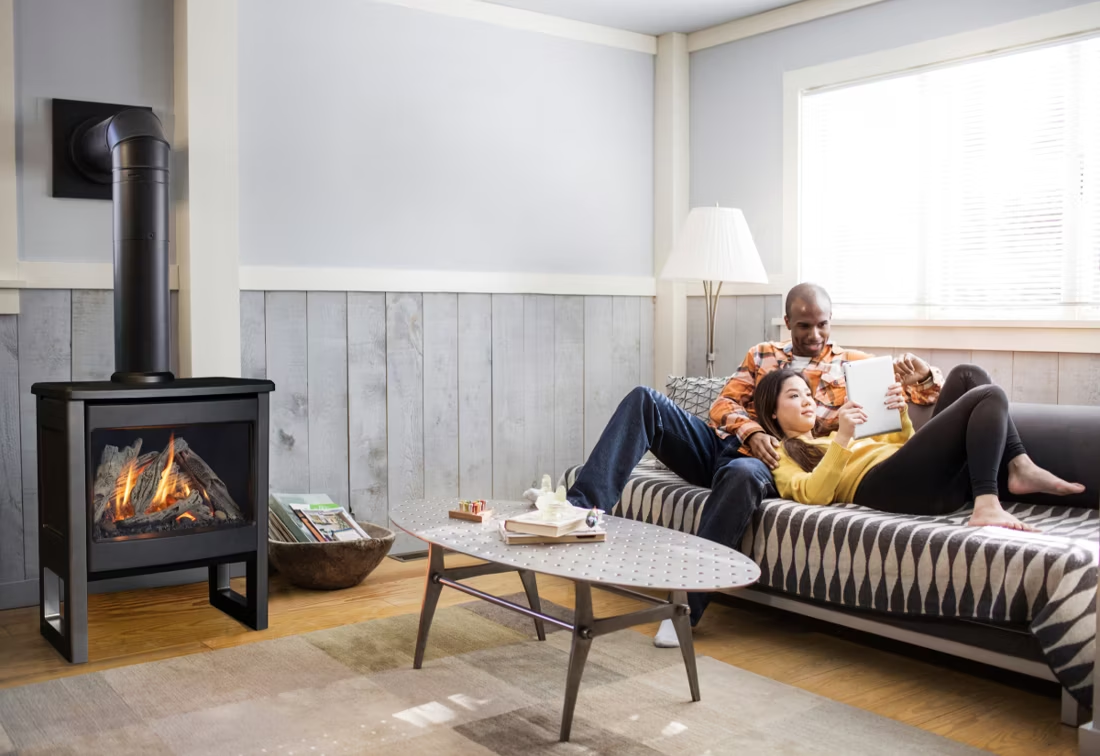
Linear direct-vent fireplaces are popular here because they fit the low-profile, wide-glass aesthetic of North Shore homes built around ocean views and open floor plans. A slim linear unit set into a great-room wall or a lanai partition reads more like a piece of architecture than a traditional hearth. For homeowners who want something more compact, a small freestanding gas stove works in a bedroom or den. Brands like Napoleon and Heat & Glo make direct-vent models sized for both applications—your local dealer can walk you through options that match the home's design rather than a mainland-style masonry surround.
Why don't more Pupukea homes just install a wood-burning fireplace instead?
Wood heat doesn't have much of a foothold on Oahu's North Shore, and it's not really about air quality—Pupukea has none of the inversion or smoke concerns you'd see on the mainland. It's that there's essentially no heating demand to justify it, no cut-your-own-firewood culture or permit system the way there is in cold-climate states, and hauling or storing cordwood in a humid coastal climate is more hassle than it's worth. A propane gas fireplace gives you the same flame and ambiance on demand, with none of the wood storage, ash, or humidity issues.
How often does a gas fireplace need servicing in a coastal climate like Pupukea's?
Plan on an annual inspection, same as anywhere, but salt air is the extra variable on the North Shore. Homes within a mile or two of the water—which includes most of Pupukea—see faster corrosion on exterior venting caps, propane tank fittings, and any exposed hardware. A technician should check those components for salt corrosion in addition to the standard burner, pilot, and gas line inspection. Local HVAC and propane service companies familiar with Oahu's coastal conditions typically use stainless or coated venting components for exactly this reason.
Can I put a TV above my fireplace?
Yes—with an asterisk. Fireplaces are hot and TVs don't like heat. Either put a mantel between them to deflect rising warmth, or choose a fireplace with heat-management technology that creates a cool zone on the wall above—the wall stays around 125 degrees, barely warm, while the room still gets full heat. If you like clean lines and don't want a mantel, heat management is the answer.
Why is my open fireplace making my house colder?
Open fireplaces suck—literally. As the fire burns, it consumes air your furnace already paid to heat and pulls it out through the chimney, so the house is actually colder after the fire goes out than before you lit it. An insert fixes this: it seals the chimney, puts fixed glass across the front, and turns that hole in your house into a real heat source.
Can a fireplace actually lower my heating bill?
Yes—by creating a comfort zone. A furnace heats every square foot of the house just to warm the one room you're in; a gas fireplace on low burns roughly a sixth of the gas a typical furnace does. Set the furnace around 55–60 degrees as a baseline, then heat the rooms your family actually uses. Families who heat this way commonly save $20–$60 a month.
What is an in-home preview and do I need one?
It's a visit where a hearth professional measures your space, confirms the model you picked actually works in your home, and walks the specs—framing, gas line, venting, finish work—before anything is ordered. Some details you just can't know until you see the house. Never make a down payment without one; it's the single most-skipped step that burns buyers.
Nearby Dealers
Hearth shops serving Pupukea and the surrounding area. Every listing shows whether it is a WhyFire partner, a dealer we have verified as authorized for the brands we recommend, or a local business carrying hearth products. No manufacturer pays for placement. How we verify dealers →
Island Pool And Supply
Island Pool And Spa Supply
Find your gas fireplace in Pupukea.
Tell us a bit about your home and we'll match you with the right gas fireplace or insert for your Pupukea property—plus a free Project Guide & Parts List with the exact parts, vent kit, and a trusted local dealer recommendation.
Find Your Fireplace →