
Add a Gas Flame Feature to Your Makaha Home.
Nobody on the Leeward Coast needs a fireplace to survive winter. Homeowners in Makaha still add real gas flame for design, resale value, and evening ambiance on the lanai—and we'll connect you with a local dealer who installs it right.
Every Project Starts From One of These Five Situations
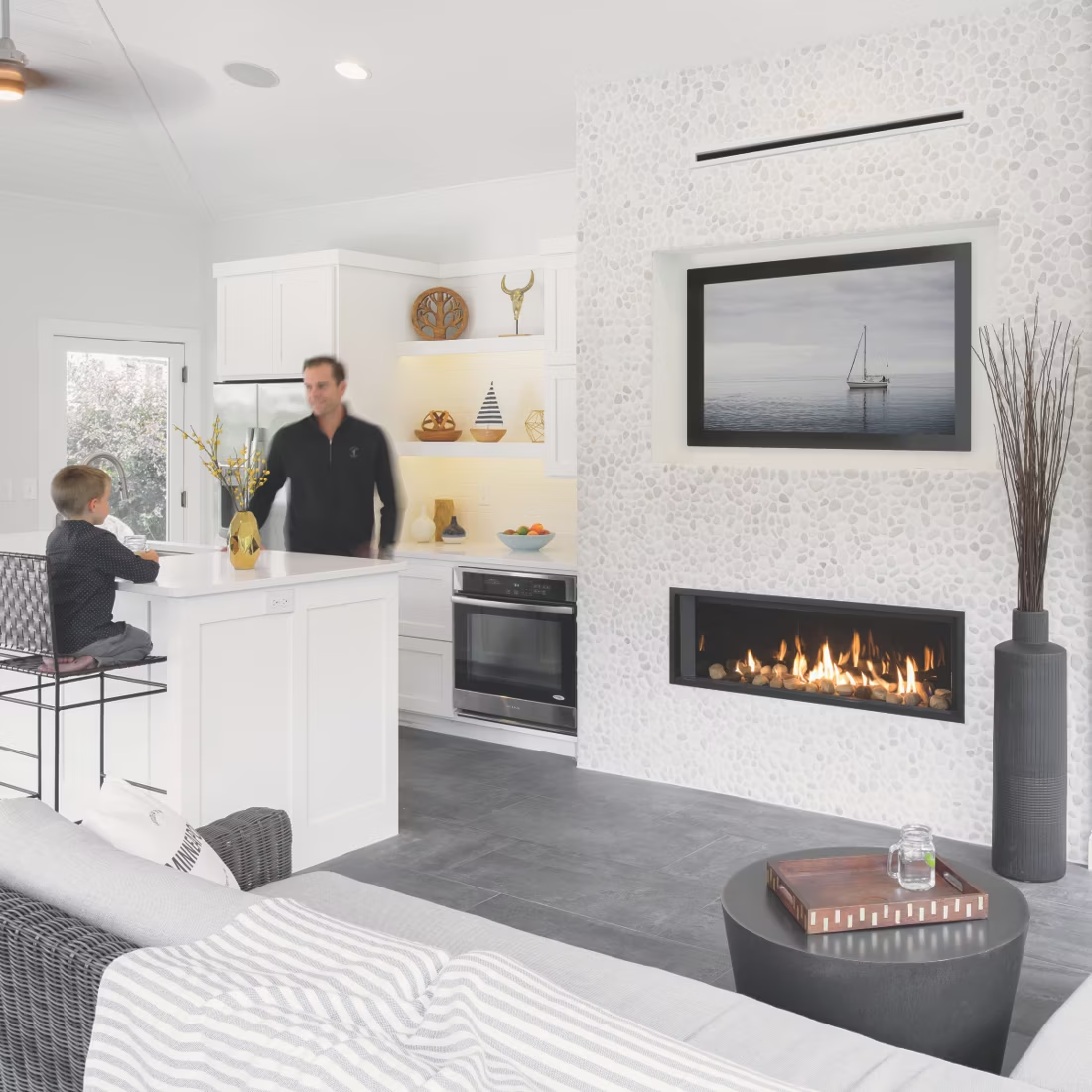
Real flame, minus the need for heat.
Makaha sits at just 81 feet on Oahu's Leeward Coast, in climate zone 1A, with an average winter low near 65°F and essentially no heating season in a typical year. Nobody here is choosing a gas fireplace to keep a house warm the way a homeowner in Duluth or Fargo would. Wood and pellet stoves are essentially non-existent in Makaha for the same reason—there's simply no heating load to justify them, even with eucalyptus, ohia, and koa growing right up in the valley behind town. Gas is different: it shows up as a design centerpiece in Waianae Coast remodels, a lanai fire feature for indoor-outdoor living, and a resale upgrade in newer builds along the coastline.
There's no piped natural gas main out this far west on Oahu—Hawaii Gas runs synthetic natural gas lines through parts of urban Honolulu, but Makaha and the rest of the Waianae Coast run on propane, delivered by tank and refilled or exchanged locally. Electric service comes from Hawaiian Electric at a residential rate around 42.9 cents per kWh—among the highest in the country—which matters more for the fireplace's blower and ignition draw than for any actual heating cost, since heating simply isn't the job this fireplace is doing.
Three steps. No salesperson until you're ready.
Tell us about your project
Your zip code, your situation, and the fuel you're leaning toward—or let the answers point you to one.
See what's actually available
The brands dealers within 100 miles genuinely carry—real options, never a catalog mirage.
Get your dealer & Project Guide
A trusted local dealer, plus the free Project Guide & Parts List that names every component of the job.
Frequently Asked Questions
How much does a gas fireplace installation cost in Makaha?
A typical gas fireplace or fire feature installation in Makaha runs roughly $7,000 to $14,000, higher than mainland averages because materials, venting components, and skilled labor all cost more to get out to the Waianae Coast. A propane tank installation (if you don't already have one) adds to that, and units built into an outdoor lanai wall or a custom masonry surround push toward the top of the range. A simple direct-vent unit with an existing propane line already run to the house lands on the lower end. A local dealer will give you a firm number after seeing the space.
Do I actually need a gas fireplace if Makaha never gets cold?
No—and we'll say that plainly. With essentially no heating season and winter lows that rarely dip below the mid-60s, a gas fireplace in Makaha isn't solving a heating problem. It's a design and lifestyle choice: a visual centerpiece for a great room, a fire feature on an outdoor lanai for evening entertaining, or a resale draw in a higher-end coastal home. If you're weighing whether it's "worth it," think of it the way you'd think of a built-in outdoor kitchen—real value, just not a heating investment.
Is my gas fireplace propane or natural gas?
Almost certainly propane. Hawaii Gas's piped synthetic natural gas network covers parts of urban Honolulu, but it doesn't extend out to Makaha or the rest of the Waianae Coast. Homes here run on propane, either from a small exchangeable cylinder for a modest unit or a larger buried or above-ground tank for a bigger fireplace or full outdoor kitchen setup. Your local dealer will size the tank and regulator to match the BTU output of whatever unit you choose.
What permits do I need for a gas fireplace in Makaha?
Gas fireplace installations in Makaha fall under the City and County of Honolulu's Department of Planning and Permitting (DPP), which requires a building permit for the installation and separate sign-off on the gas line work from a licensed plumber or gasfitter. If you're adding a new propane tank, that typically needs its own placement approval relative to setbacks from the house and property line. Most established local dealers handle the DPP paperwork as part of the install so you're not coordinating multiple trades yourself.
Will my gas fireplace work during a power outage?
Most direct-vent gas fireplaces with intermittent pilot ignition (IPI) run on battery backup and will light and operate even with the grid down—worth knowing given how often Leeward Oahu loses power during hurricane season storms and high-wind events. Some manufacturers, like Valor, go a step further with pilot systems that generate their own electricity via thermocouple, so there's no battery to remember at all. For a Makaha home where storm-related outages are the most likely disruption, that's a genuinely useful feature to ask your dealer about.
Vented or vent-free—which makes sense on the coast?
Vented (direct-vent) gas fireplaces draw combustion air from outside and exhaust it back outside through sealed venting—the safest option and the one most local dealers install by default. Vent-free units burn directly into the room and are legal in Hawaii, but they release moisture into a climate that's already humid on the Leeward Coast, which isn't ideal. For an oceanfront or near-coastal Makaha property, we'd also flag that venting components and outdoor units should use stainless or coated hardware—salt air corrodes standard steel venting faster here than almost anywhere on the mainland.
How often does a gas fireplace need servicing in Makaha?
Plan on an annual inspection, same as anywhere—a technician checks the burner, pilot assembly, gas connections, and venting, and cleans the glass. In Makaha's salt-air environment, pay extra attention to the venting termination and any outdoor-facing hardware; corrosion shows up faster this close to the ocean than it would inland. Local service techs familiar with Leeward Coast installs will typically inspect those components more closely as a matter of course.
What size gas fireplace do I need if I'm not trying to heat the house?
Since heat output isn't the design goal in Makaha, most homeowners size down from what a cold-climate buyer would choose—a smaller-BTU unit that reads as a strong visual flame without warming the room more than a few degrees. This also keeps propane consumption and any blower's electric draw modest, which matters given Hawaiian Electric's residential rate near 43 cents per kWh. A local dealer can walk you through flame height and glass size options that prioritize looks over BTUs.
Gas fireplace or electric fireplace—which fits a Makaha home better?
Electric fireplaces cost less to install (often $500–$2,000, no gas line or venting required) and can go almost anywhere, but they run entirely on Hawaiian Electric's roughly 43-cent kWh rate, which makes hourly operating cost noticeably higher than propane for the same flame effect. Gas fireplaces cost more upfront and require a propane setup and DPP permitting, but the flame is more realistic and cheaper to run per hour. For a primary design feature that gets used often—a great room or lanai centerpiece—gas usually wins on look and running cost. For a bedroom accent or a rental property where simplicity matters more, electric is often the practical choice.
Is my gas fireplace wasting gas?
If it was installed more than 15 years ago, probably. Older gas fireplaces keep a standing pilot light burning all the time, and that little flame can cost a couple hundred dollars a year. Newer models use pilot-on-demand ignition—the pilot lights only when you use the fireplace and goes out when you turn it off.
What's the difference between an insert and a zero-clearance fireplace?
An insert is a fireplace that slides into a pre-existing wood-burning fireplace—if you don't have one, there's nothing to insert it into. A zero-clearance fireplace is built into a framed wall, which makes it the answer for remodels and new construction. Simple test: existing masonry fireplace means insert; blank or framed wall means zero-clearance.
Can I install a fireplace myself?
If you're putting a fire in your house on purpose, it's best to work with an expert. Unless you're genuinely experienced in framing, gas line, vent pipe, and the national code on clearances to combustibles, have a professional do it—and ideally the same company that sells you the fireplace, so warranty, service, and liability all live under one roof.
How much should I budget for a fireplace?
For an average home—covering the fireplace, the vent pipe, and basic installation—a budget between $3,900 and $5,500 gives you a lot of options across wood, gas, and pellet. By the time you add finish work, gas line, and electrical, the average complete installation lands between $5,000 and $12,000 all-in. In a remodel or new build, a good rule is to put about 2.5% of the total project cost toward the fireplace.
Nearby Dealers
Hearth shops serving Makaha and the surrounding area. Every listing shows whether it is a WhyFire partner, a dealer we have verified as authorized for the brands we recommend, or a local business carrying hearth products. No manufacturer pays for placement. How we verify dealers →
Island Pool And Supply
Island Pool And Spa Supply
Find your gas fireplace in Makaha.
Tell us a bit about your home and project, and we'll match you with a trusted Leeward Coast dealer plus a free Project Guide & Parts List—the exact parts, propane setup, and vent kit your Makaha installation needs.
Find Your Fireplace →