
A gas fire feature for ambiance, not survival, in Kilauea.
With practically no real winter heating season at all and winter lows averaging 63°F, nobody in Kilauea needs a gas fireplace to stay warm. But plenty of North Shore homeowners want one anyway—for design, for cool Kona-storm evenings, and for the nights KIUC's lines go down. We'll help you find a trusted local dealer who knows propane logistics on Kauai.
Every Project Starts From One of These Five Situations
Heat isn't the point here.
Kilauea sits at 226 feet on Kauai's North Shore in climate zone 1A—hot and humid, with practically no real winter heating season at all. Compare that to a place like Duluth or Fargo, where winters demand months of steady heating, and it's clear a Kilauea gas fireplace was never going to be about survival heat. Winter lows here average 63°F, though Kona storms and trade-wind rain can push a cool, damp evening down into the upper 50s, especially at the slightly higher elevations around Kalihiwai Ridge—enough for homeowners to appreciate a real flame in the living room a few nights a season.
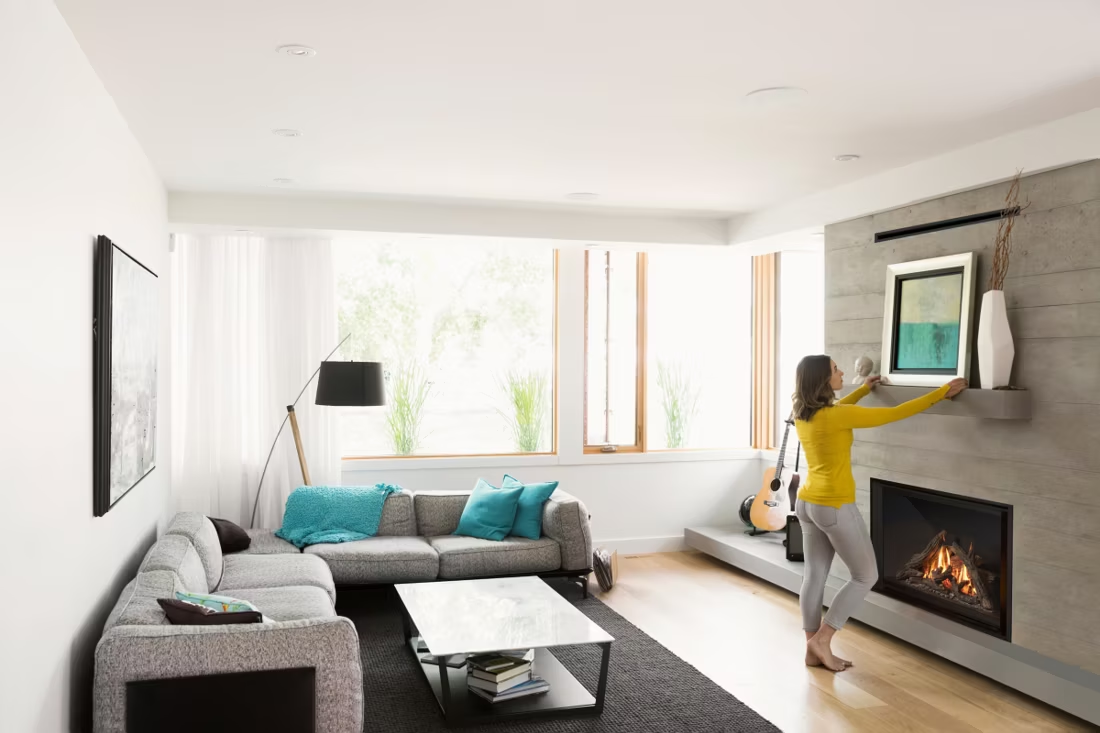
What drives demand instead is design and resilience. Kilauea's mix of plantation-style homes, newer luxury builds, and vacation rentals near Kilauea Point and Princeville often specs a linear gas fireplace or an indoor-outdoor lanai fire feature as a design centerpiece—the kind of amenity that matters for resale and for renters browsing photos. There's also a practical angle: Kauai has no piped natural gas grid, so any 'gas' fireplace here runs on propane delivered by local suppliers, and a propane unit with standing-pilot or battery-backed ignition keeps working when North Shore power lines go down in a Kona storm or hurricane season outage—a real consideration on an island that still remembers Iniki. With KIUC's residential rate sitting around $0.41 per kWh, one of the highest in the country, an occasional-use propane flame also tends to be cheaper to run for ambiance than leaning on electric resistance heat.
Three steps. No salesperson until you're ready.
Tell us about your project
Your zip code, your situation, and the fuel you're leaning toward—or let the answers point you to one.
See what's actually available
The brands dealers within 100 miles genuinely carry—real options, never a catalog mirage.
Get your dealer & Project Guide
A trusted local dealer, plus the free Project Guide & Parts List that names every component of the job.
Frequently Asked Questions
How much does a gas fireplace installation cost in Kilauea?
Because Kauai has no piped natural gas, most Kilauea installs run on propane, and the total cost depends heavily on whether propane infrastructure already exists at the property. If the home already has a bulk tank or cylinder service for the range or water heater, running a new line to a fireplace and installing a direct-vent unit typically lands in the $4,000-$7,000 range. Homes starting from scratch—setting a new propane tank, trenching a line, and installing the unit—usually land closer to $7,000-$10,000. A local dealer familiar with North Shore propane suppliers can give you a firm number after seeing the site.
Why would anyone in Kilauea want a gas fireplace if it never really gets cold?
With winter lows averaging 63°F and practically no real winter heating season at all, almost nobody in Kilauea installs a gas fireplace to solve a heating problem. The demand here is about ambiance and design—a linear fireplace built into a great-room wall or an outdoor fire feature on a lanai reads as a premium amenity in the plantation-style and luxury homes common near Kilauea Point and Princeville, and it matters for vacation rental listings. It also gets genuine use: Kona storms and North Shore trade-wind rain can bring a damp evening down into the 50s, and a real flame is a welcome contrast to Kauai's humidity on those nights.
Is that natural gas or propane in Kilauea?
Propane, in almost every case. Kauai doesn't have a piped natural gas grid the way Oahu does through Hawaii Gas's synthetic gas network—homes and businesses on the island run on propane delivered by bulk tank or cylinder exchange through local suppliers. When people search for a 'gas fireplace' in Kilauea, what they'll actually be installing is a propane-fueled unit, and your local dealer will size the fireplace and the tank or line run around that fuel.
Do I need a permit to install a gas fireplace in Kilauea?
Yes. You'll need a building permit through the County of Kauai Department of Public Works Building Division, and the propane line work requires a licensed gas fitter separately from the general contractor. On the North Shore, where a lot of homes are wood-sided plantation-style construction with lanais close to the proposed fireplace location, the permit review also confirms your vent or fire feature termination clearances meet code—something an experienced local installer will already have dialed in.
Will a gas fireplace still work if the power goes out in Kilauea?
Often, yes, and that's a real selling point on the North Shore, where Kona storms and hurricane season have historically knocked out KIUC service for extended stretches. A propane fireplace with a standing pilot needs no electricity at all to produce a flame. Units with intermittent pilot ignition (IPI) instead rely on AA battery backup that kicks in automatically. Either way, ask your dealer which ignition system is on the unit you're considering—it's the difference between a fireplace that works during a multi-day outage and one that doesn't.
Vented vs. vent-free gas fireplaces—does it matter in Kilauea's climate?
It matters more here than in a dry climate. Vent-free units burn directly into the room, adding combustion moisture to indoor air—a problem in a climate zone 1A location like Kilauea that's already humid and prone to mold and mildew in island construction. Direct-vent units draw combustion air from outside and exhaust it back outside through sealed venting, keeping that extra moisture out of the house. Most local dealers steer North Shore homeowners toward direct-vent for exactly that reason, on top of it being the safer, code-compliant choice everywhere.
How does a gas fireplace compare to an electric one given Kauai's electricity rates?
Kauai Island Utility Cooperative's residential rate runs around $0.41 per kWh—among the highest in the country—which makes running electric heat elements for warmth or ambiance noticeably more expensive over time than an occasional-use propane flame. That said, since Kilauea barely needs heat at all, plenty of homeowners choose an electric fireplace insert purely for the visual flame effect with the heater switched off, which draws very little power. If you want a real flame for design or the outage resilience of a fuel that doesn't depend on KIUC's grid, propane is the better fit; if you just want the look with minimal install complexity, electric is worth a look too.
What style of gas fireplace fits Kilauea's indoor-outdoor homes?
Because BTU output isn't the priority here, design flexibility usually wins. Linear direct-vent fireplaces built into a great-room wall are popular in the newer luxury builds around Kilauea and Princeville, and see-through units that open onto a covered lanai suit the indoor-outdoor living common on this side of the island. Freestanding outdoor gas fire tables and fire pits are also common additions for entertaining spaces, since a lanai fire feature gets more actual use here on a cool evening than an indoor unit ever will.
How often does a gas fireplace need servicing in a place like Kilauea?
Plan on an annual inspection, and don't skip it just because the unit barely runs for heat. Kilauea's coastal, salt-laden air and constant humidity corrode igniter components, burner orifices, and propane fittings faster than they'd wear in a drier mainland climate. A technician should check the propane line connections, clean the glass, and test the ignition system each year—a lighter service than a wood chimney sweep, but skipping it on a North Shore coastal property is how a rarely-used fireplace fails right when you want it for a Kona-storm evening or an outage.
Is my gas fireplace wasting gas?
If it was installed more than 15 years ago, probably. Older gas fireplaces keep a standing pilot light burning all the time, and that little flame can cost a couple hundred dollars a year. Newer models use pilot-on-demand ignition—the pilot lights only when you use the fireplace and goes out when you turn it off.
Why is a fireplace insert so efficient?
An insert does two things: it seals the chimney completely, so you stop losing air you already paid to heat, and it radiates warmth into the room through the firebox and glass. Most add a heat-exchange fan that pulls cool room air underneath, wraps it around the hot firebox, and pushes it back out warm. Your home is more efficient before you've even lit the first fire.
Can I install a fireplace myself?
If you're putting a fire in your house on purpose, it's best to work with an expert. Unless you're genuinely experienced in framing, gas line, vent pipe, and the national code on clearances to combustibles, have a professional do it—and ideally the same company that sells you the fireplace, so warranty, service, and liability all live under one roof.
How much should I budget for a fireplace?
For an average home—covering the fireplace, the vent pipe, and basic installation—a budget between $3,900 and $5,500 gives you a lot of options across wood, gas, and pellet. By the time you add finish work, gas line, and electrical, the average complete installation lands between $5,000 and $12,000 all-in. In a remodel or new build, a good rule is to put about 2.5% of the total project cost toward the fireplace.
Nearby Dealers
Hearth shops serving Kilauea and the surrounding area. Every listing shows whether it is a WhyFire partner, a dealer we have verified as authorized for the brands we recommend, or a local business carrying hearth products. No manufacturer pays for placement. How we verify dealers →
We’ve paused dealer listings for this connection today. Enter your zip or postal code above to find dealers near you, or come back tomorrow.
Popular Gas Brands
Where each brand came from, what's inside it today, and every current model. No brand pays to be here. Not every dealer carries every brand, so enter your zip code to see what's sold near Kilauea.
Kozy Heat
Kozy Heat was founded in 1976 by Dudley Hussong in Lakefield, Minnesota, and incorporated as Hussong Manufacturing Co., Inc. in 1978.
28 gas models →Fireplace Xtrordinair
Fireplace Xtrordinair, now often called FireplaceX, is the fireplace brand of Travis Industries, Inc., of Mukilteo, Washington.
25 gas models →Town & Country
Town & Country Fireplaces is the luxury gas fireplace brand of Pacific Energy Fireplace Products Ltd., of Duncan, British Columbia.
14 gas models →Lopi
Lopi is a wood, pellet, and gas stove brand founded by Kurt Rumens in Bellevue, Washington, in 1979.
7 gas models →Forge & Flame
Forge & Flame is the stove brand Hearth & Home Technologies introduced in August 2023 to bring Vermont Castings, Harman, and Quadra-Fire under one name.
6 gas models →Vermont Castings
Vermont Castings was founded in 1975 by Duncan Syme, the designer, and his brother-in-law Murray Howell, the business partner, in Randolph, Vermont.
6 gas models →Get your free Project Guide & Parts List for a gas fireplace in Kilauea.
Tell us about your home, your propane setup, and what you're after—ambiance, outage backup, or an indoor-outdoor lanai feature—and we'll help you find a trusted local dealer and send a free Project Guide & Parts List with the exact parts and vent kit your Kilauea project needs.
Find Your Fireplace →