
Warm evenings, without the woodpile.
With winters this mild, Worth County homeowners want ambiance and instant comfort more than survival heat. A gas fireplace or insert delivers both. We'll match you with a trusted local dealer who knows what actually works here.
Every Project Starts From One of These Five Situations
A comfort upgrade, not a survival necessity.
Worth County sits in Georgia's Zone 3A climate band, where the average winter low hovers around 36°F and the county logs just over 2,000 heating degree days a year. Compare that to a place like International Falls, Minnesota, which routinely rack up 10,000+ HDD, and it's clear why Worth County homes were never built around wood as a primary heat source, even with plenty of oak, pine, and hickory in the surrounding timberland. What Worth County residents actually want from a fireplace is different: instant warmth on the handful of genuinely cold nights each winter, plus the look and feel of a real hearth the other 350 days a year.
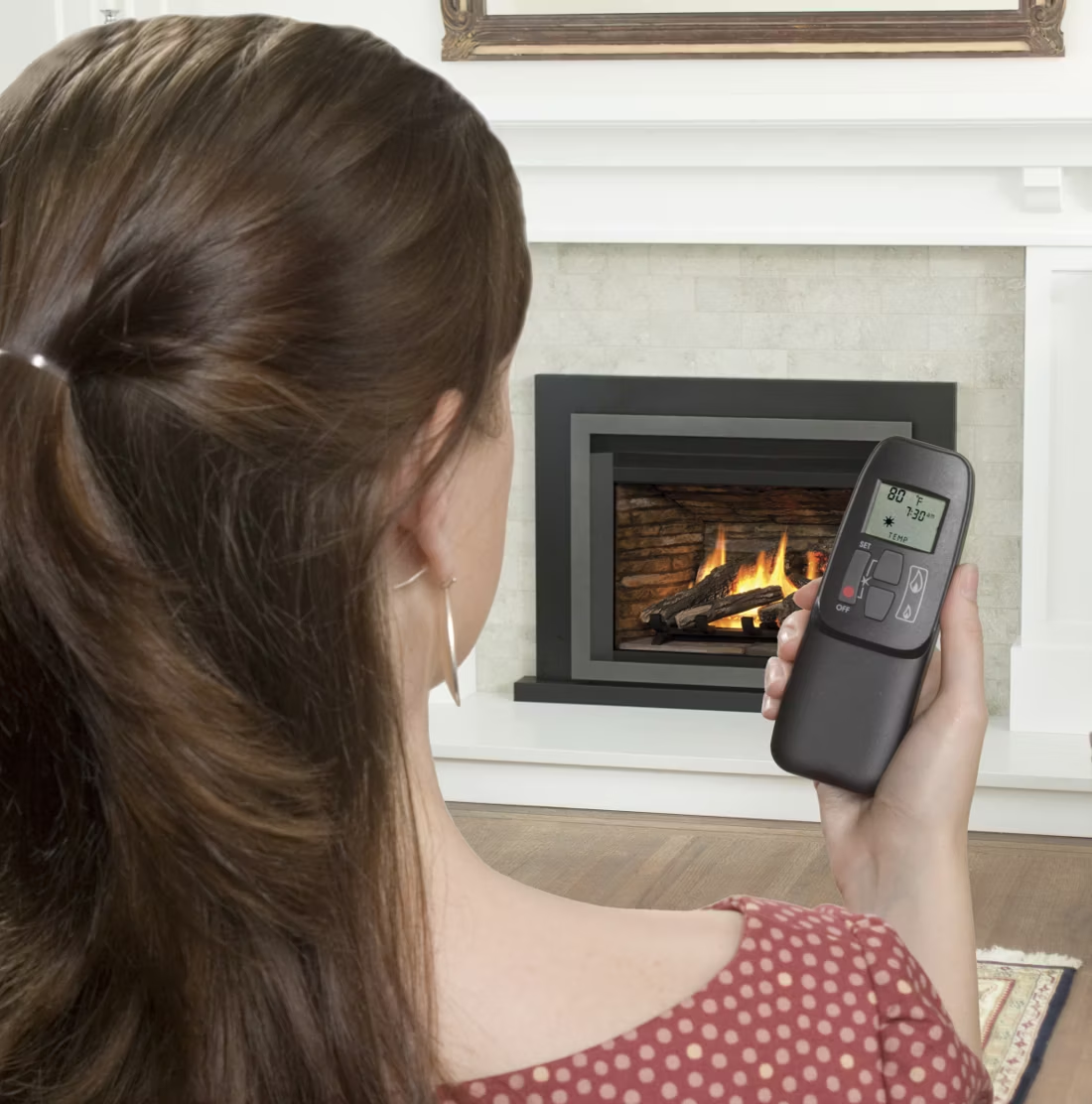
That's exactly where gas fits. A direct-vent gas fireplace or insert lights instantly, holds a steady flame without tending, and doesn't ask you to stack or dry firewood you'll rarely need in a Sylvester winter. Natural gas service in Worth County is limited mostly to in-town areas around Sylvester, so most rural homeowners in the county run on propane instead—either way, a local installer will size the unit and gas line correctly for your home rather than guessing. The result is a fireplace that looks and performs like the real thing, with none of the wood-handling that doesn't make much sense in this climate anyway.
Three steps. No salesperson until you're ready.
Tell us about your project
Your zip code, your situation, and the fuel you're leaning toward—or let the answers point you to one.
See what's actually available
The brands dealers within 100 miles genuinely carry—real options, never a catalog mirage.
Get your dealer & Project Guide
A trusted local dealer, plus the free Project Guide & Parts List that names every component of the job.
Frequently Asked Questions
How much does a gas fireplace installation cost in Worth County?
Most gas fireplace and insert installations in Worth County run in the $3,000 to $8,500 range, with the spread driven mainly by whether you already have a gas line and chimney in place. A direct-vent insert dropped into an existing masonry fireplace with gas already run to the room sits at the lower end. A new built-in unit for a remodel or addition—including framing, venting, and a fresh gas line—lands in the middle to upper end. If your home is on propane and needs a new tank set, add the tank and line-run cost on top. A local dealer will give you a firm number after seeing the room and your existing gas or propane setup.
Why isn't wood heat more common here—shouldn't I just get a wood stove?
Worth County has plenty of oak, pine, and hickory in the surrounding woods, but with an average winter low around 36°F and only about 2,000 heating degree days a year, there simply aren't enough cold nights to make wood a practical primary heat source the way it is in colder parts of the country. Most Worth County homeowners who want a real fireplace experience are better served by a gas unit—you get instant flame and real heat output on the cold snaps without committing to firewood storage, ash cleanup, and chimney maintenance for a fuel you'd only burn a few weeks a year.
Should I use natural gas or propane for my fireplace?
It depends on where in Worth County you live. Natural gas service is generally limited to areas in and around Sylvester; outside those service areas, propane is the standard choice, either from an existing tank or a new tank set up by a local propane supplier. Both fuels work in the same fireplace models—your installer sets the correct orifice and regulator for whichever you're running. If you're currently on propane for a water heater or range, adding a fireplace to that same tank is usually the simplest and most cost-effective route.
Do I need a permit to install a gas fireplace in Worth County?
Yes. New gas fireplace installations in Worth County require a building permit through the county building department, and any new gas line work needs to be done by a licensed gas-fitter. In practice, most local dealers handle the permitting and inspection scheduling as part of the installation, so you're not stuck coordinating multiple trades and permit visits yourself.
Will my gas fireplace still work if the power goes out?
Most modern gas fireplaces will, which matters during the summer thunderstorm season and the occasional winter ice event that knocks out power in this part of Georgia. Units with intermittent pilot ignition (IPI) run on AA battery backup that kicks in automatically when the power drops—just remember to swap the batteries periodically since they're easy to forget until you need them. Valor fireplaces take a different approach: their pilot generates its own electricity through the thermocouple, so there's no battery to maintain at all. Ask your local dealer which ignition system is on any unit you're considering.
Can I install a vent-free gas fireplace in Worth County, or do I need a vented one?
Vent-free (ventless) gas fireplaces are legal in Georgia, but they release combustion byproducts—including water vapor—directly into the room, which is worth thinking twice about in Worth County's humid Zone 3A climate where indoor moisture control already matters for mold and comfort. Direct-vent units, by contrast, draw combustion air from outside and exhaust it back outside through a sealed system, so they don't add humidity or byproducts to the room. Most local dealers steer homeowners toward direct-vent models for exactly this reason, though vent-free log sets remain a common lower-cost option for supplemental rooms.
What size gas fireplace do I actually need for a Worth County home?
Smaller than you'd need up north. With only about 2,000 heating degree days a year, most Worth County homeowners are buying a gas fireplace for a specific room's ambiance and occasional cold-snap warmth, not to heat an entire house. A modest 20,000-30,000 BTU direct-vent unit comfortably handles a typical living room, and oversizing is a real risk here—a fireplace sized for a Minnesota winter will run you out of a Georgia living room on a 40°F evening. A local dealer can walk the room and recommend a size that matches how you'll actually use it.
How often does a gas fireplace need to be serviced?
An annual inspection is recommended for any gas-burning appliance, even one that only sees moderate use during Worth County's short heating season. A technician checks the burner, pilot assembly, gas connections, and venting, and cleans the glass and interior—usually a $150 to $250 visit. It's a quick appointment compared to wood-stove chimney sweeping, but skipping it is still the most common cause of pilot and ignition problems down the line.
Gas vs. electric fireplace—which makes more sense for Worth County?
Both are solid options given the mild climate here, and the right choice comes down to what you want from the fireplace. Gas delivers real flame, real heat output for the occasional cold night, and works during power outages with battery or self-powered ignition—but it needs a gas line or propane tank and professional venting. Electric fireplaces plug into a standard outlet, need no venting or gas hookup, and install in an afternoon for $400 to $1,200 in most cases—but they rely on the grid and produce ambiance-level heat rather than real BTU output. For a primary living space where you want authentic fire and real warmth on Georgia's colder nights, gas usually wins; for a bedroom, den, or rental property where simplicity matters more, electric is often the better fit.
Is my gas fireplace wasting gas?
If it was installed more than 15 years ago, probably. Older gas fireplaces keep a standing pilot light burning all the time, and that little flame can cost a couple hundred dollars a year. Newer models use pilot-on-demand ignition—the pilot lights only when you use the fireplace and goes out when you turn it off.
Can I put a TV above my fireplace?
Yes—with an asterisk. Fireplaces are hot and TVs don't like heat. Either put a mantel between them to deflect rising warmth, or choose a fireplace with heat-management technology that creates a cool zone on the wall above—the wall stays around 125 degrees, barely warm, while the room still gets full heat. If you like clean lines and don't want a mantel, heat management is the answer.
What is an in-home preview and do I need one?
It's a visit where a hearth professional measures your space, confirms the model you picked actually works in your home, and walks the specs—framing, gas line, venting, finish work—before anything is ordered. Some details you just can't know until you see the house. Never make a down payment without one; it's the single most-skipped step that burns buyers.
How much should I budget for a fireplace?
For an average home—covering the fireplace, the vent pipe, and basic installation—a budget between $3,900 and $5,500 gives you a lot of options across wood, gas, and pellet. By the time you add finish work, gas line, and electrical, the average complete installation lands between $5,000 and $12,000 all-in. In a remodel or new build, a good rule is to put about 2.5% of the total project cost toward the fireplace.
Stove and Fireplace Dealers in Worth County
Find your gas fireplace in Worth County.
Tell us about your home and we'll match you with a trusted local Worth County dealer and send over a free Project Guide & Parts List—the exact fireplace, venting, and parts your project needs, no big-box guesswork.
Find Your Fireplace →