
Add real warmth to your Warren County home—no chimney required.
Winters in Warren County rarely test a heating system the way they do farther north—average lows sit around 33°F and the county logs just 2,722 heating degree days a year. That's exactly the kind of mild-winter, zone-heating situation where an electric fireplace or insert makes sense, whether you're in Warrenton, Norwood, Camak, or out along the farm roads between them. I'll match you with a trusted local dealer who can size the right unit for your home and get it installed correctly.
Every Project Starts From One of These Five Situations
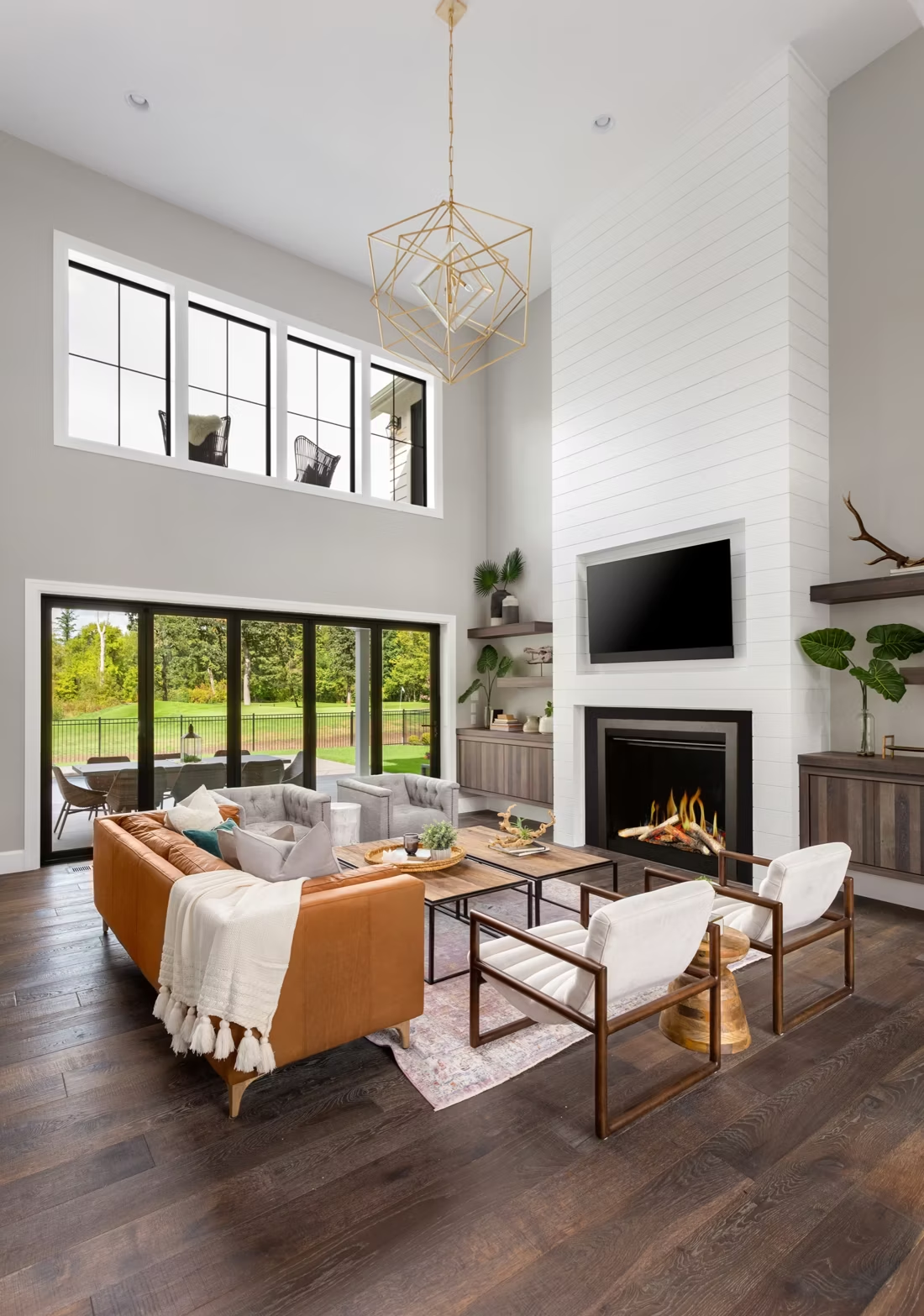
Electric fireplaces make sense where winters are mild.
Warren County sits in Georgia's climate zone 3A, a hot-humid region where the heating season is short and the cold is rarely severe—the average winter low is 33°F and the county racks up only about 2,722 heating degree days a year, a fraction of what a place like Duluth, Minnesota sees in a single winter. With a population of roughly 2,558 spread across Warrenton, Norwood, Camak, and the farmland between them, most homes here don't need a heating appliance built to survive sustained sub-zero cold. They need something that takes the edge off a 30-degree morning, warms a single room, and looks good doing it.
That's the case for electric heat. There's no chimney to build, no gas line to run, no cutting permit to pull from a national forest, and nothing to vent through the roof—an electric fireplace or insert plugs into a standard outlet or ties into a dedicated circuit, depending on the model, and most installs are done in an afternoon. Many Warren County homes are older farmhouses or manufactured housing without an existing masonry fireplace or gas service nearby, and electric is often the only realistic option for adding a fireplace look and feel without a major renovation. It also runs on whatever electric service you already have—Georgia Power in some parts of the county, a rural electric membership cooperative in others—so there's no new utility account or fuel delivery to set up.
Three steps. No salesperson until you're ready.
Tell us about your project
Your zip code, your situation, and the fuel you're leaning toward—or let the answers point you to one.
See what's actually available
The brands dealers within 100 miles genuinely carry—real options, never a catalog mirage.
Get your dealer & Project Guide
A trusted local dealer, plus the free Project Guide & Parts List that names every component of the job.
Frequently Asked Questions
How much does it cost to install an electric fireplace in Warren County?
Most electric fireplace installations in Warren County run $400 to $1,800. A plug-in insert that drops into an existing fireplace opening or a freestanding unit sits at the low end—no wiring changes needed, just slide it in and plug it in. A built-in wall unit that requires a dedicated circuit, a professionally framed opening, or a mantel surround runs toward the higher end, especially if an electrician needs to run new wire to the room. Because Warren County is rural and spread out—Warrenton, Norwood, and Camak are each a fair drive apart—expect a small travel charge from installers covering the outlying farm properties.
Electric insert, built-in, or freestanding—which is right for my home?
An electric insert is built to slide into an existing wood or gas fireplace opening, which makes it a fast upgrade for the many older farmhouses in Warren County that already have a masonry firebox sitting unused. A built-in unit is framed into a wall from scratch—the right choice for newer construction or a remodel where you want the fireplace centered in a specific spot. A freestanding electric stove or mantel package needs no construction at all; it just needs an outlet, which makes it the simplest option for manufactured and mobile homes common throughout the county. A local dealer can tell you which option fits your existing structure without guesswork.
Do I need a permit or an electrician to install an electric fireplace?
A basic plug-in electric fireplace or insert that uses a standard household outlet typically doesn't require a permit—it's treated like any other appliance. If your unit needs a dedicated 20-amp or 240V circuit, or if you're having a wall opened up for a built-in installation, that electrical work should go through a licensed electrician, and larger structural changes may need a permit through the Warren County Building & Zoning Department in Warrenton. Most local dealers coordinate this for you as part of the installation rather than leaving you to sort out the paperwork.
Will an electric fireplace actually heat a room, or is it just for looks?
Most electric fireplaces include a built-in fan heater rated between 4,000 and 5,000 BTU, enough to noticeably warm a single room of 300 to 400 square feet—which lines up well with Warren County's mild heating season. Given the county's average winter low around 33°F and modest 2,722 heating degree days, an electric unit is realistic as supplemental or zone heat for a den, bedroom, or living room rather than a whole-home furnace replacement. For homeowners who want the visual of a fire with real warmth on the coldest mornings, that's exactly the right amount of heat for this climate—you're not trying to survive a Fargo, North Dakota winter.
Electric vs. gas fireplace—which is right for my home?
Gas fireplaces put out more heat and can run during a power outage if you have propane and a battery-backed ignition, which matters if you're on a rural line in Warren County where outages can run longer than in town. But gas requires either a propane tank and delivery or, where available, a natural gas line, plus venting work. Electric skips all of that—no fuel delivery, no venting, no gas permit—and installs almost anywhere with power. For a primary heat source in a home without existing gas service, propane-fed gas is worth considering; for a simple, low-maintenance fireplace in a den, bonus room, or manufactured home, electric is usually the more practical and less expensive route.
Electric vs. wood fireplace—which makes more sense here?
Wood heat has deep roots in this part of Georgia—oak, pine, and hickory are all common locally and burn well in a traditional stove or insert—and it works without electricity, which matters during a storm-related outage. But wood means chimney maintenance, ash cleanup, and stacking cordwood, and given Warren County's mild 2,722-heating-degree-day climate, most homes simply don't burn through enough wood to justify it as a primary heat source anymore. Electric fireplaces give you the visual warmth and ambiance without the upkeep, which is why they've become the more common choice for homeowners who want a fireplace but aren't trying to heat the whole house through a Georgia winter.
Can I install an electric fireplace in a manufactured or mobile home?
Yes, and it's one of the more common electric fireplace projects in Warren County given how many manufactured and mobile homes are spread across the county's rural areas. Freestanding electric stoves and small wall-mounted units are generally the easiest fit since they don't require cutting into a wall that may have limited stud depth or non-standard framing. A local dealer familiar with manufactured housing construction can confirm clearances and outlet requirements before you buy, which avoids ending up with a unit that doesn't actually fit the wall you had in mind.
What will an electric fireplace cost to run each month?
An electric fireplace heater running on its highest setting typically draws 1,500 watts, which costs roughly 15 to 20 cents per hour depending on your rate—whether you're served by Georgia Power or a local electric membership cooperative in the more rural parts of the county. Running it a few hours a night through a mild Warren County winter typically adds $15 to $30 a month to a power bill, far less than heating an entire home with a furnace. Many owners run the flame effect alone, with the heater off, for ambiance without adding to the electric bill at all.
What's the best electric fireplace for Warren County's climate?
Because winters here are short and mild, prioritize realistic flame appearance and a quality heater over sheer BTU output—you're rarely asking a fireplace to be the only thing standing between your family and a hard freeze the way homeowners in a place like Bismarck, North Dakota might. Models with LED flame technology and a thermostat-controlled ceramic or infrared heater give you both convincing ambiance and genuine warmth for those 30-degree mornings, without the higher output—or higher cost—of units built for sustained sub-zero climates. A local dealer can walk you through options that fit your room size and how you plan to use it—ambiance-first or heat-first.
Can I put a TV above my fireplace?
Yes—with an asterisk. Fireplaces are hot and TVs don't like heat. Either put a mantel between them to deflect rising warmth, or choose a fireplace with heat-management technology that creates a cool zone on the wall above—the wall stays around 125 degrees, barely warm, while the room still gets full heat. If you like clean lines and don't want a mantel, heat management is the answer.
Do electric fireplaces actually produce heat?
Yes—most put out around 4,800–5,000 BTUs from a standard outlet, which comfortably warms a bedroom, office, or den as a comfort-zone heater. What they won't do is carry a whole house the way wood, gas, or pellet can. Think of electric as ambiance-first with honest supplemental heat: flames on with no heat in July, flames plus warmth in January.
Can a fireplace actually lower my heating bill?
Yes—by creating a comfort zone. A furnace heats every square foot of the house just to warm the one room you're in; a gas fireplace on low burns roughly a sixth of the gas a typical furnace does. Set the furnace around 55–60 degrees as a baseline, then heat the rooms your family actually uses. Families who heat this way commonly save $20–$60 a month.
Can I install a fireplace myself?
If you're putting a fire in your house on purpose, it's best to work with an expert. Unless you're genuinely experienced in framing, gas line, vent pipe, and the national code on clearances to combustibles, have a professional do it—and ideally the same company that sells you the fireplace, so warranty, service, and liability all live under one roof.
Find your electric fireplace in Warren County.
Tell me a bit about your Warren County home and I'll match you with a trusted local dealer and send over a free Project Guide & Parts List—the exact parts your electric fireplace project needs, sized for your space, and your recommended local installer.
Find Your Fireplace →