
Find your electric fireplace in Union County.
No chimney, no gas line, no permit headaches—just plug-in ambiance and supplemental warmth for cabins and homes across Blairsville, Lake Nottely, and the surrounding Blue Ridge foothills. Find the right unit and connect with a trusted local dealer.
Every Project Starts From One of These Five Situations
Electric heat that fits mountain cabins and second homes.
Union County sits in the Blue Ridge foothills of north Georgia, home to Brasstown Bald—the highest point in the state at 4,784 feet—and a landscape of ridgelines, coves, and Lake Nottely shoreline dotted with cabins. The climate here falls in Zone 4A, a mixed-humid zone where most winter days are mild, but Arctic fronts pushing down from the Appalachians can drop overnight temperatures into the teens, especially at elevation near Brasstown Bald and Coosa Bald. Ice is a bigger worry than deep cold—winter storms here tend to bring freezing rain and downed lines more often than sustained sub-zero stretches.
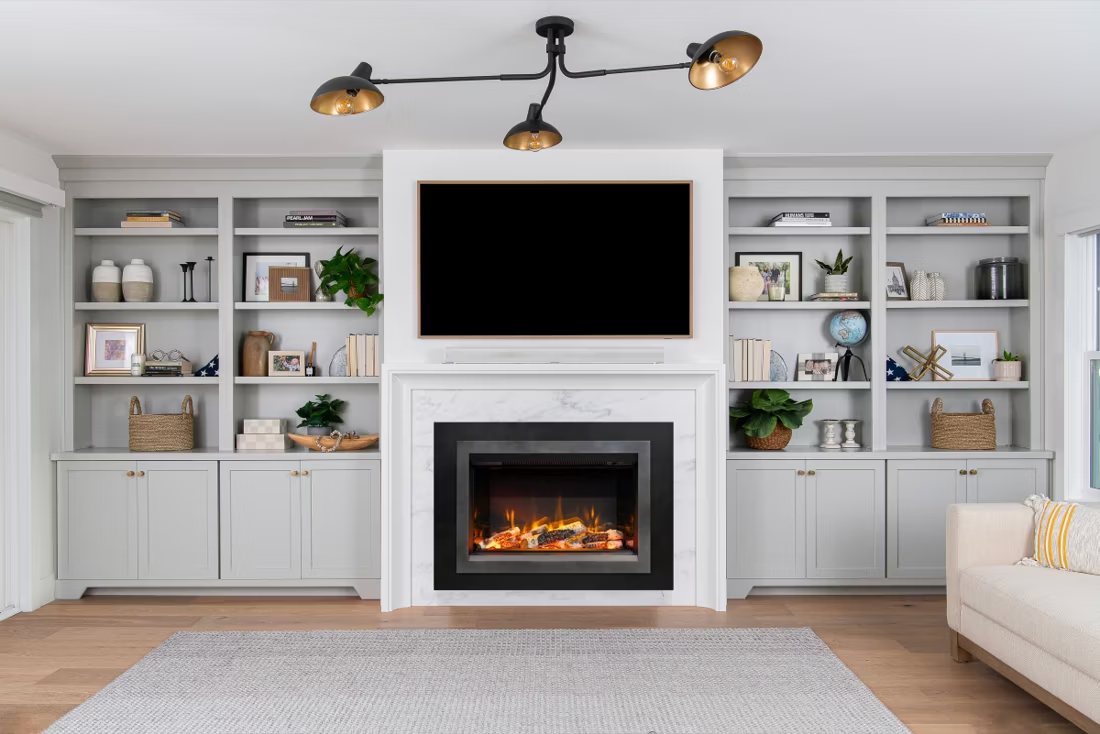
That mix of terrain and lifestyle is exactly where electric fireplaces earn their place. Blairsville and the lake communities around Union County have a dense short-term rental economy—cabins that sit empty for stretches and then need to look and feel warm the moment a guest arrives. An electric insert or built-in unit installs in an afternoon with no masonry work, no Class A chimney, and no coordination with a propane supplier—just a standard outlet or a dedicated circuit run by an electrician. For owners managing a cabin from Atlanta or elsewhere, that plug-and-play simplicity, backed by reliable Blue Ridge Mountain EMC service to most of the county, matters more than raw BTU output.
Three steps. No salesperson until you're ready.
Tell us about your project
Your zip code, your situation, and the fuel you're leaning toward—or let the answers point you to one.
See what's actually available
The brands dealers within 100 miles genuinely carry—real options, never a catalog mirage.
Get your dealer & Project Guide
A trusted local dealer, plus the free Project Guide & Parts List that names every component of the job.
Frequently Asked Questions
How much does an electric fireplace installation cost in Union County?
Most electric fireplace and insert installations in Union County run $400 to $1,200, and a large share of that spread comes down to whether the unit plugs into an existing outlet or needs a dedicated 20-amp circuit run by an electrician. A basic plug-in insert dropped into an old wood-burning fireplace opening in a Lake Nottely cabin sits at the low end. A built-in wall unit for a new-construction living room, or one requiring an electrician to run new wiring through log or timber-frame construction common in this area, lands closer to the top of that range. There's no venting, permitting, or chimney work to add on top, which keeps electric consistently the most affordable fireplace option in the county.
Electric insert vs. built-in vs. freestanding—which fits my cabin?
An electric insert is built to slide into an existing fireplace opening, which makes it the natural fit for older Union County cabins around Blairsville and Trackrock Gap that already have a masonry firebox but no working chimney or one the owner doesn't want to maintain. A built-in electric fireplace is designed into new construction or a remodel—recessed into a wall with a custom surround, popular in newer lake-view homes going up around Nottely. A freestanding electric stove or mantel unit needs no framing at all and can be moved between rooms or even between properties, which appeals to owners managing multiple short-term rentals. Local dealers can walk through your specific fireplace opening or wall layout and tell you which format actually fits.
Will an electric fireplace actually heat my Union County cabin, or is it just for looks?
Most electric fireplaces include a real heating element—typically 4,600 to 5,000 BTU, roughly equivalent to a space heater—that will comfortably take the edge off a single room or open-concept cabin living area during Union County's typical winter nights in the 20s and 30s. What they won't do is replace central heat during the harder cold snaps that push temperatures into the teens near Brasstown Bald, and most units let you run the flame visual with the heater switched off, which is common in warmer months or for pure ambiance. For a primary-heat need in a drafty older cabin, pair the electric unit with your existing HVAC or a wood stove rather than expecting it to carry the whole load.
Do I need a permit to install an electric fireplace in Union County?
In most cases, no—because there's no venting, gas line, or chimney involved, a plug-in electric insert or freestanding unit typically doesn't trigger a building permit in Union County. If your installation requires new electrical wiring or a dedicated circuit, the electrician pulling that wire may need an electrical permit through the county, which is standard practice and usually handled by the electrician directly. This is one of the real advantages of electric heat for cabin owners managing property from a distance—there's rarely a building department back-and-forth to coordinate.
What's the best electric fireplace for a Union County short-term rental cabin?
For rental cabins around Blairsville and Lake Nottely, look for units with a remote or app-controlled flame effect and a heater that can be switched off independently—guests want the visual year-round, but you don't want the heating element running during a July booking. Wall-mount and insert-style units from mainstream electric fireplace brands hold up well to the wear of guest turnover, and models with LED flame technology (rather than older mirror-and-light designs) look convincing enough to double as a real selling point in listing photos. A local dealer who's outfitted other cabins in the area can point you toward the models that have held up best in that specific use case.
Will my electric fireplace work if the power goes out?
No—and this is worth planning around in Union County, where winter ice storms are a more common cause of outages than deep cold. An electric fireplace, unlike a wood stove or a battery-backed gas unit, goes dark the moment the grid does. For a cabin that's occupied through winter storms, or a full-time home relying on Blue Ridge Mountain EMC service through mountain terrain prone to downed lines, it's smart to keep a wood stove, gas unit, or generator as backup rather than counting on electric as your only heat source during an outage.
How much does it cost to run an electric fireplace day to day?
Running costs depend on your Blue Ridge Mountain EMC rate and how much you use the heating element versus the flame-only setting. A typical 1,500-watt heater running a few hours a night costs a few dollars a month in electricity—considerably less than heating an entire cabin with propane, and with none of the tank refills or delivery scheduling that propane requires out in the more remote parts of the county. Running the flame effect alone, with the heater off, draws only a small fraction of that, which is why many cabin owners leave the ambiance running for showings or guest arrivals without worrying about the bill.
Can I put an electric fireplace into an old fireplace opening that no longer has a working chimney?
Yes—this is one of the most common projects in Union County's older cabin stock, where a masonry firebox and chimney were built decades ago and no longer get used or maintained. An electric insert sized to the existing opening slides in, plugs into a nearby outlet or a new dedicated circuit, and gives the fireplace a working, code-free second life without any chimney inspection or rebuild. It's a straightforward way to bring a dead fireplace back into a cabin's living space, particularly for owners who don't want the ongoing maintenance of a wood-burning chimney at a rarely-visited property.
Electric vs. wood—which is right for my Union County property?
Wood has deep roots in this part of Georgia—oak, pine, and hickory are all common locally and burn well in a traditional stove or fireplace, and wood heat keeps working even when the power doesn't, which matters given how often ice storms knock out lines in the foothills. Electric offers no wood handling, no chimney maintenance, no permitting, and a much lower installation cost, which is exactly why it's become the default choice for cabin owners who want ambiance and light supplemental heat without taking on a wood-burning system they can't tend to remotely. If your property is occupied full-time and you want heat that survives an outage, wood is worth serious consideration. If it's a rental or seasonal cabin where simplicity and low upkeep matter most, electric is usually the better fit.
Do electric fireplaces actually produce heat?
Yes—most put out around 4,800–5,000 BTUs from a standard outlet, which comfortably warms a bedroom, office, or den as a comfort-zone heater. What they won't do is carry a whole house the way wood, gas, or pellet can. Think of electric as ambiance-first with honest supplemental heat: flames on with no heat in July, flames plus warmth in January.
Does an electric fireplace need a vent or chimney?
No—that's its superpower. An electric fireplace needs a wall and an outlet, period. No vent pipe, no gas line, no clearances to design around, which is why it works in bedrooms, offices, apartments, and walls where venting a gas or wood unit would be impractical or impossible. Installation is typically the simplest and least expensive of any fireplace type.
Does a fireplace add value to my home?
On average, a fireplace adds back to the home about the same amount you spent installing it. Add the monthly savings from heating the rooms you actually use instead of the whole house—often hundreds of dollars a year—and the value case is strong before you even count what a fire does for how your family uses the room.
How much should I budget for a fireplace?
For an average home—covering the fireplace, the vent pipe, and basic installation—a budget between $3,900 and $5,500 gives you a lot of options across wood, gas, and pellet. By the time you add finish work, gas line, and electrical, the average complete installation lands between $5,000 and $12,000 all-in. In a remodel or new build, a good rule is to put about 2.5% of the total project cost toward the fireplace.
Find your electric fireplace in Union County.
Tell us a bit about your cabin or home and we'll match you with the right electric fireplace or insert—plus a free Project Guide & Parts List with the exact parts and a trusted local Union County dealer to install it.
Find Your Fireplace →