
Electric warmth built for Sumter County's mild winters.
From Americus to Plains, Sumter County winters rarely demand a furnace-grade heat source. An electric fireplace adds real ambiance and supplemental warmth to a living room or den—no chimney, no gas line, no venting. I'll match you with a local dealer who can size it right and get it installed.
Every Project Starts From One of These Five Situations
Built for supplemental heat, not survival heat.
Sumter County sits in Georgia's climate zone 3A, with an average winter low around 35°F and a mild, short heating season—a fraction of what a cold-climate town like Fargo, ND or International Falls, MN racks up. Homes here, whether a brick ranch in Americus or a farmhouse near Plains, are built around central HVAC that handles the bulk of the heating load through a short, mild season running roughly December into February. That's exactly the setup where an electric fireplace earns its keep: it's not trying to replace the furnace, it's adding focused warmth and a real fire look to the room where the family actually spends winter evenings.
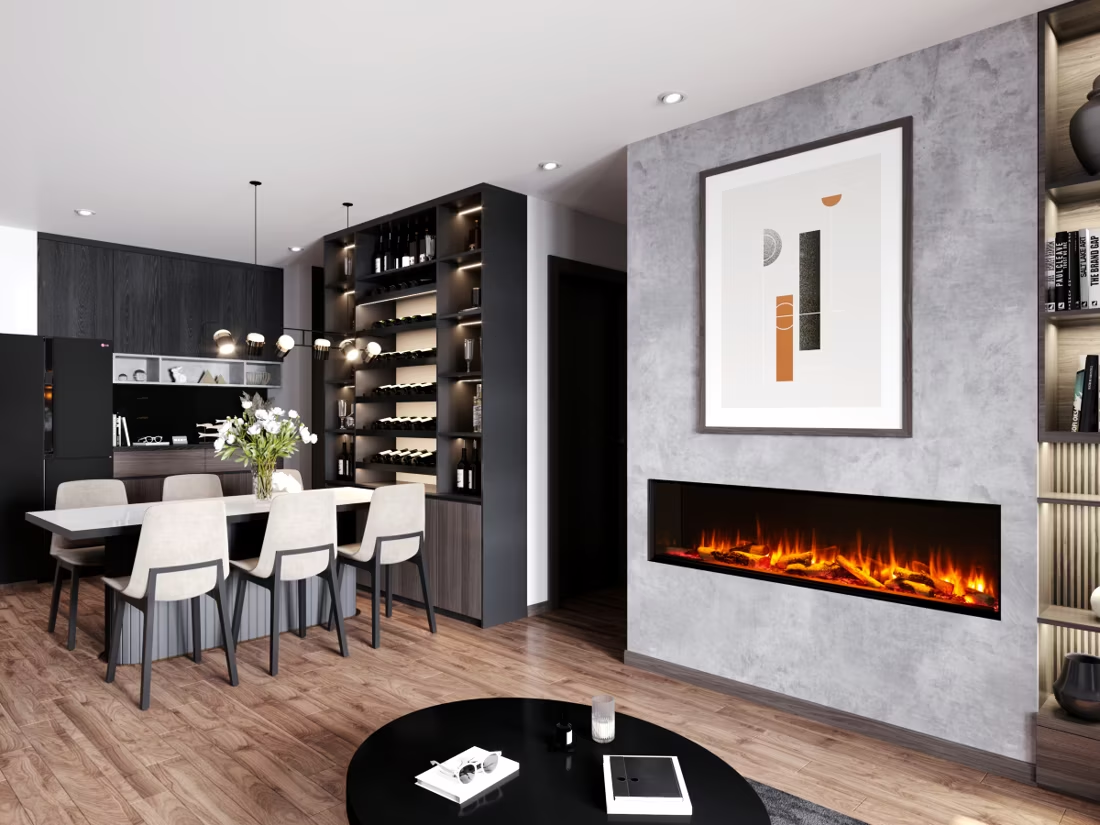
Because electric units don't need a flue, a gas line, or masonry, they're an easy retrofit into Sumter County's older housing stock—including historic homes around downtown Americus and Georgia Southwestern State University that were never built with a second chimney in mind. Plug-in models need nothing more than a standard outlet; built-in units may call for a dedicated circuit from a licensed electrician. Either way, a local dealer who knows the area's electrical service—Georgia Power in town, local EMC territory in the more rural parts of the county—will steer you toward the right unit without overselling heat output you don't need here.
Three steps. No salesperson until you're ready.
Tell us about your project
Your zip code, your situation, and the fuel you're leaning toward—or let the answers point you to one.
See what's actually available
The brands dealers within 100 miles genuinely carry—real options, never a catalog mirage.
Get your dealer & Project Guide
A trusted local dealer, plus the free Project Guide & Parts List that names every component of the job.
Frequently Asked Questions
How much does an electric fireplace installation cost in Sumter County?
Most electric fireplace projects in Sumter County run in a fairly narrow band because there's no venting or gas work involved. A plug-in insert or mantel unit typically lands between $300 and $900 installed, while a built-in or wall-recessed unit that needs a new dedicated 120V or 240V circuit can run $800 to $1,800 once electrical work is included. Homes in older sections of Americus with dated panels sometimes need a panel upgrade first, which adds to the electrician's portion of the bill. A local dealer will give you a firm number after seeing the room and the existing wiring.
Do I need a permit to install an electric fireplace in Sumter County?
For a plug-in electric fireplace or insert, generally no—there's no combustion, no flue, and no gas line to inspect. If your installation calls for a new dedicated circuit or panel work, that portion typically does require an electrical permit through the Sumter County Building Department, and any licensed electrician doing the work should pull it as a matter of course. It's a much lighter permitting lift than a wood or gas installation, which is part of why electric is a popular choice for a quick living-room upgrade in this county.
What size electric fireplace do I need for my home?
Because Sumter County's heating season is short and mild—nowhere near the long, harsh winters of a place like Bismarck, ND—sizing here is less about raw BTU output and more about matching the unit to the room and the wall or hearth opening. A 26–36 inch insert or mantel unit comfortably supplements a living room or den in a typical Americus or Plains-area home. Larger linear wall units work well as a focal point in an open-concept great room but aren't doing much heavy heating lifting beyond that space. A local dealer can measure your opening and recommend wattage based on the room size rather than the whole house.
Electric vs. gas fireplace—which is right for my Sumter County home?
Gas is a solid option here too—natural gas and propane service both reach parts of Sumter County, and a gas insert delivers a more authentic flame with real heat output. Electric wins on simplicity and cost: no gas line, no venting, no annual gas appliance service, and a much lower installed price. For a mild climate like this one, where the fireplace is mostly about ambiance and topping off a chilly evening rather than heating the whole house, electric covers most homeowners' needs without the added infrastructure gas requires.
Will an electric fireplace actually heat a room, or is it just for looks?
Most electric fireplace inserts put out roughly 4,000 to 5,000 BTU on the heat setting—enough to noticeably warm a single room, especially on the kind of 35-degree mornings that are typical for a Sumter County winter. It won't replace your furnace on a rare hard freeze, but for the bulk of the season it can let you turn the thermostat down and heat only the room you're using. Every unit also runs flame-only with the heater off, so you get the visual any time of year without adding heat to a room that's already warm.
Can I install an electric fireplace in an older home near Americus or Plains without an existing chimney?
Yes—this is one of the biggest reasons electric fireplaces are popular in Sumter County's older housing stock. A historic home near downtown Americus or a farmhouse outside Plains often has no second flue and no interest in adding masonry. An electric insert can go into an existing mantel opening, or a built-in unit can be recessed into a stud wall with simple framing and an electrical run. No chimney, no clearance-to-combustibles calculations, no roof penetration.
What's the best electric fireplace for Sumter County's climate?
Given the mild winters here, most homeowners do well with a mid-range insert or wall-mounted linear unit from a mainstream line—the kind of unit designed for ambiance plus modest supplemental heat rather than the aggressive, cold-climate-rated output you'd shop for in a place with a real winter. Look for adjustable flame brightness and a heater you can run independently of the flame, since in Sumter County you'll likely use the flame-only mode more months than not. A local dealer can walk you through options that fit your room's size and your home's electrical capacity.
Is wood or pellet heat common in Sumter County?
Not really, and it's worth being straight about that. Sumter County has plenty of oak, pine, and hickory in the area, and a small number of rural properties do keep a wood stove or fireplace for occasional cool-weather use or backup heat during outages. But with an average winter low around 35°F and only a short, mild heating season each year, wood and pellet heating systems simply don't carry the year-round demand they would in a colder state—which is why they're uncommon here compared to counties further north. Electric and gas cover the vast majority of Sumter County heating and ambiance needs.
Electric vs. wood—which is right for my home?
For most Sumter County homes, electric is the more practical everyday choice: no wood to source or store, no ash cleanup, and none of the smoke or particulate concerns that come with combustion—even though air quality isn't a significant issue in this county the way it can be in wood-heavy western regions. Wood still has a place for a handful of rural properties that value backup heat during power outages or simply like burning locally cut oak and hickory, but it's a minority choice here given how short and mild the heating season runs. If backup heat during outages matters to you, mention that to your local dealer—some electric units require power to run, so a battery or generator backup plan is worth discussing.
Can I put a TV above my fireplace?
Yes—with an asterisk. Fireplaces are hot and TVs don't like heat. Either put a mantel between them to deflect rising warmth, or choose a fireplace with heat-management technology that creates a cool zone on the wall above—the wall stays around 125 degrees, barely warm, while the room still gets full heat. If you like clean lines and don't want a mantel, heat management is the answer.
Does an electric fireplace need a vent or chimney?
No—that's its superpower. An electric fireplace needs a wall and an outlet, period. No vent pipe, no gas line, no clearances to design around, which is why it works in bedrooms, offices, apartments, and walls where venting a gas or wood unit would be impractical or impossible. Installation is typically the simplest and least expensive of any fireplace type.
Does a fireplace add value to my home?
On average, a fireplace adds back to the home about the same amount you spent installing it. Add the monthly savings from heating the rooms you actually use instead of the whole house—often hundreds of dollars a year—and the value case is strong before you even count what a fire does for how your family uses the room.
Can I install a fireplace myself?
If you're putting a fire in your house on purpose, it's best to work with an expert. Unless you're genuinely experienced in framing, gas line, vent pipe, and the national code on clearances to combustibles, have a professional do it—and ideally the same company that sells you the fireplace, so warranty, service, and liability all live under one roof.
Find your electric fireplace in Sumter County.
Tell me a bit about your home in Sumter County and I'll put together a free Project Guide & Parts List—the right unit, the exact parts, and a trusted local dealer who can install it correctly.
Find Your Fireplace →