
Electric heat and ambiance, built for Spalding County's mild winters.
From historic Griffin bungalows to newer builds out toward Orchard Hill and Sun, an electric fireplace gives you real flame-look ambiance and supplemental warmth without a chimney, a gas line, or a woodpile. Find the right unit and connect with a trusted local dealer.
Every Project Starts From One of These Five Situations
The heating season is short. Electric heat fits it.
Spalding County sits in climate zone 3A, with an average winter low around 34°F and a winter heating season that's a fraction of what a place like Duluth, Minnesota deals with over a full season. Winters here are short and generally mild, which is exactly why electric fireplaces have become such a common choice in Griffin, Orchard Hill, and the unincorporated parts of the county. Many of Griffin's older cotton-mill-era homes still have original masonry fireplaces built for oak, pine, and hickory—the woods that have always been plentiful in this part of Middle Georgia—but few homeowners today need or want to run a wood-burning system for a heating season this short.
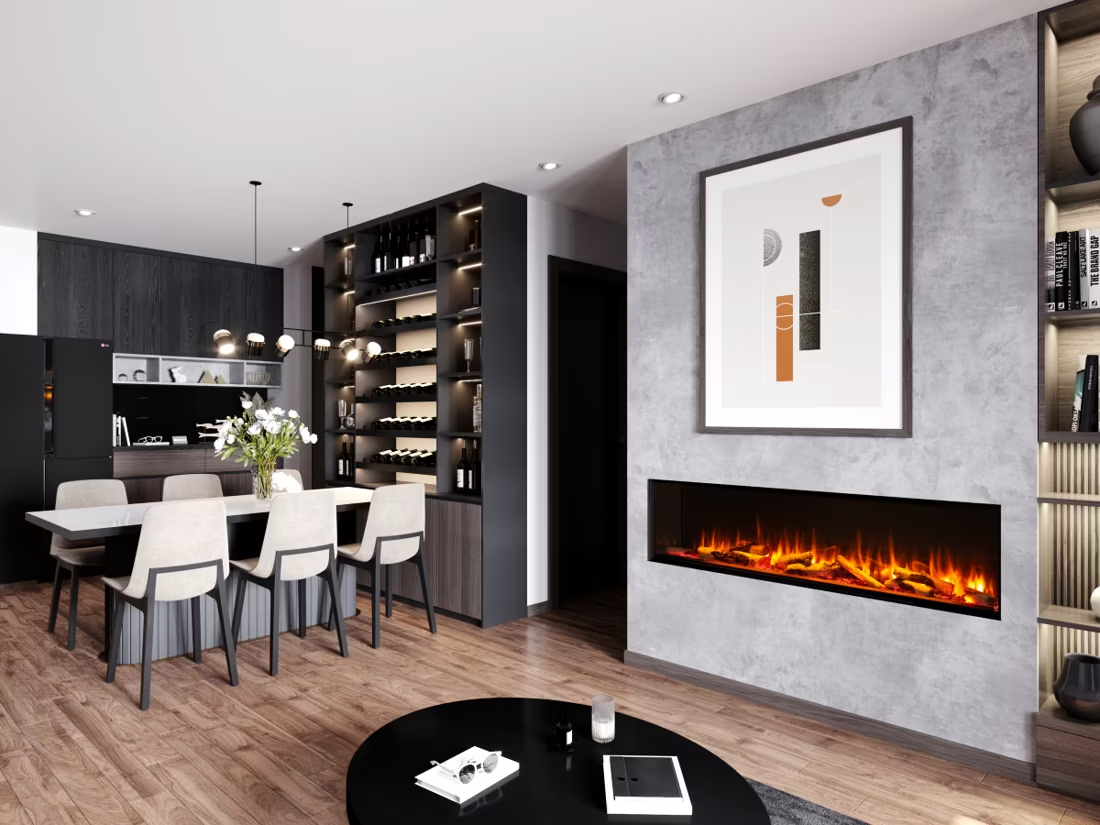
That's where electric makes sense. A well-chosen electric insert or built-in linear unit gives you the visual of a real fire—most current models use realistic LED flame technology—plus a heat boost on the handful of genuinely cold nights the county sees each winter, without venting, gas lines, or a wood supply to manage. Most of Spalding County is served by Georgia Power, while the city of Griffin operates its own municipal electric utility, so your exact rate structure depends on where you live—but because these units are supplemental rather than primary heat sources here, operating cost is rarely the deciding factor. The bigger question is usually which style fits your room and whether your existing wiring can support it, which is where a local dealer's in-home visit earns its keep.
Three steps. No salesperson until you're ready.
Tell us about your project
Your zip code, your situation, and the fuel you're leaning toward—or let the answers point you to one.
See what's actually available
The brands dealers within 100 miles genuinely carry—real options, never a catalog mirage.
Get your dealer & Project Guide
A trusted local dealer, plus the free Project Guide & Parts List that names every component of the job.
Frequently Asked Questions
How much does it cost to install an electric fireplace in Spalding County?
Costs vary quite a bit by unit type. A plug-in electric insert that drops into an existing masonry fireplace opening in one of Griffin's older homes can run as little as $500 to $1,200 installed, since it typically just needs an accessible outlet. A built-in linear electric fireplace or a wall-recessed unit for new construction or a remodel usually runs $1,500 to $4,000, and often requires a licensed electrician to run a dedicated 20-amp circuit if one isn't already in place near the install location. Framing and mantel work for a built-in adds to that range. Local dealers will size the unit to your wall and quote the electrical work as part of a single estimate rather than leaving you to coordinate a separate electrician.
Do I need a permit or an electrician to install an electric fireplace?
A basic plug-in insert or freestanding electric stove that runs off a standard outlet generally doesn't require a permit. A built-in or wall-mounted unit wired to a dedicated circuit typically does need a licensed electrician, and depending on the scope of the electrical work, a permit through the county or city building department—whichever applies, depending on whether the home is inside Griffin city limits or in unincorporated Spalding County. Reputable local dealers coordinate this as part of the installation rather than handing you off to find your own electrician.
What's the difference between an electric insert, a built-in, and a wall-mounted unit?
An electric insert is sized to slide into an existing fireplace opening—a common upgrade for Griffin's older homes with original masonry fireboxes that no longer see regular wood fires. A built-in electric fireplace is framed into a wall like a traditional fireplace, usually for new construction or a remodel where there's no existing opening. A wall-mounted or freestanding unit sits on or hangs from the wall with no framing at all, which is often the fastest and least invasive option for a room that never had a fireplace to begin with. For a lot of Spalding County homeowners with an unused masonry fireplace, the insert is the simplest path—it uses the opening you already have.
How much does it cost to run an electric fireplace here?
Electric fireplaces are inexpensive to operate almost everywhere, and that's especially true in Spalding County given how few genuinely cold days the county sees each winter. A typical unit on heat mode draws around 1,500 watts, which—whether you're billed through Georgia Power or Griffin's municipal electric service—usually costs somewhere in the range of a few cents to about 20 cents per hour depending on your rate. Because most homeowners here run these units for ambiance most of the time and only lean on the heater function during the occasional cold snap, the electric bill impact is minor compared to a furnace or heat pump running a full winter.
Will an electric fireplace actually heat my room, or is it just for looks?
Most electric fireplaces include a built-in heater capable of warming 400 to 1,000 square feet, which is genuinely useful supplemental heat for a den, living room, or bonus room—not a whole-home solution, but enough to take the edge off on a 30-degree morning without running central heat through the whole house. Given Spalding County's mild winters and short heating season, that supplemental role is usually exactly what homeowners need; very few people here are trying to heat an entire house with one. If you want the flame look without any heat output at all—common for homes that already have efficient central HVAC—most units let you run the flame effect with the heater switched off.
Do electric fireplaces actually look like a real fire?
Current-generation units have come a long way. Higher-end electric fireplaces use layered LED flame technology with adjustable color, brightness, and flame speed, along with realistic log or crystal media, and can look convincing even up close—a real shift from the flickering orange bulb units of a decade ago. Entry-level units still look more like a stylized effect than a real fire. If realism matters to you, ask a local dealer to show you a unit running in person rather than judging from a photo or a spec sheet—flame quality varies a lot between brands and price points.
Can I convert my old wood-burning fireplace to electric?
Yes, and it's one of the most common projects for Griffin's older housing stock, much of it built during the county's cotton-mill era with masonry fireboxes originally meant for oak, pine, or hickory cordwood. An electric log insert or full-size electric fireplace insert fits into that existing opening, and if there's already an outlet nearby you may not need any electrical work at all. This route also sidesteps chimney concerns entirely—no sweeping, no creosote, no draft issues—since the electric insert doesn't vent through the flue at all.
Electric vs. gas—which is the better fit for my Spalding County home?
Gas fireplaces are a strong option here too, since natural gas and propane service both reach much of the county, and gas delivers real, consistent heat output with the flip of a switch. Electric skips the gas line and venting work entirely, installs faster and cheaper in most cases, and is the more flexible choice for a room without existing gas service or an interior wall that can't easily be vented. For a primary living space where you want dependable heat output, gas often wins. For a bedroom, den, or secondary room where ambiance and simple installation matter more than serious heat output, electric is usually the better call. Several dealers in the area carry both, and can walk through the tradeoff for your specific room.
Why don't more homes here use wood stoves instead of electric or gas?
With an average winter low around 34°F and a winter heating season that's short overall, Spalding County's heating season is short enough that a dedicated wood-burning system is more than most homes need—very different from a place like Bozeman, Montana, where wood heat can be a genuine primary heat source for months. Plenty of older Griffin homes still have the original masonry fireplace that once burned local oak, pine, or hickory, but today those openings are far more likely to get converted to a gas or electric insert for convenience than to be used for a nightly wood fire. Wood stoves aren't unheard of here, but they're the exception rather than the norm.
Can I put a TV above my fireplace?
Yes—with an asterisk. Fireplaces are hot and TVs don't like heat. Either put a mantel between them to deflect rising warmth, or choose a fireplace with heat-management technology that creates a cool zone on the wall above—the wall stays around 125 degrees, barely warm, while the room still gets full heat. If you like clean lines and don't want a mantel, heat management is the answer.
Do electric fireplaces actually produce heat?
Yes—most put out around 4,800–5,000 BTUs from a standard outlet, which comfortably warms a bedroom, office, or den as a comfort-zone heater. What they won't do is carry a whole house the way wood, gas, or pellet can. Think of electric as ambiance-first with honest supplemental heat: flames on with no heat in July, flames plus warmth in January.
How much should I budget for a fireplace?
For an average home—covering the fireplace, the vent pipe, and basic installation—a budget between $3,900 and $5,500 gives you a lot of options across wood, gas, and pellet. By the time you add finish work, gas line, and electrical, the average complete installation lands between $5,000 and $12,000 all-in. In a remodel or new build, a good rule is to put about 2.5% of the total project cost toward the fireplace.
What is an in-home preview and do I need one?
It's a visit where a hearth professional measures your space, confirms the model you picked actually works in your home, and walks the specs—framing, gas line, venting, finish work—before anything is ordered. Some details you just can't know until you see the house. Never make a down payment without one; it's the single most-skipped step that burns buyers.
Find your electric fireplace in Spalding County.
Tell us a bit about your home and we'll put together a free Project Guide & Parts List for your electric fireplace project—the right unit, the electrical work it needs, and a trusted local dealer near Griffin to install it.
Find Your Fireplace →