
Real Flame Look, Zero Venting Required.
South Fulton's mild winters don't call for a wood-burning chimney or a gas line—an electric fireplace delivers the ambiance and zone heat most homes here actually need. Find the right unit and connect with a trusted local dealer.
Every Project Starts From One of These Five Situations
Electric fireplaces fit South Fulton's mild winters.
South Fulton sits at just under 1,000 feet elevation with an average winter low around 36°F and a mild, short heating season—a fraction of what a place like Duluth, Minnesota sees in a single season. That's not a climate that demands a whole-home wood or catalytic heating solution. It's a climate where a fireplace is mostly about ambiance, a supplemental warm zone on a chilly January evening, and instant heat in a family room or primary suite without waiting on a furnace to catch up.
South Fulton is also a young, fast-growing city—incorporated in 2017 out of unincorporated Fulton County—with a housing mix that runs from newer subdivisions near Camp Creek Parkway to older homes around Old National Highway with existing masonry fireplaces. Electric units work well across all of it: no chimney, no gas line, no venting to plan around, and most run on a standard outlet or a single dedicated circuit. With Georgia Power as the utility and a residential rate around 15.5 cents per kWh, running one for a few hours most evenings is inexpensive compared to heating an entire room with central HVAC.
Three steps. No salesperson until you're ready.
Tell us about your project
Your zip code, your situation, and the fuel you're leaning toward—or let the answers point you to one.
See what's actually available
The brands dealers within 100 miles genuinely carry—real options, never a catalog mirage.
Get your dealer & Project Guide
A trusted local dealer, plus the free Project Guide & Parts List that names every component of the job.
Frequently Asked Questions
How much does an electric fireplace installation cost in South Fulton?
A plug-in electric insert or freestanding unit typically runs $300 to $800 installed, since it just needs an existing outlet. A built-in wall-mounted linear fireplace or a full mantel package usually runs $1,500 to $4,000, mainly because it requires a licensed electrician to run a dedicated 20-amp circuit and often some carpentry or drywall work for a flush-mount look. Converting an existing masonry fireplace to an electric insert tends to land in the $500 to $1,500 range, since there's no venting to install—just the insert, a surround kit if needed, and a code-compliant electrical hookup.
What type of electric fireplace makes sense for my South Fulton home?
For newer construction without an existing fireplace, a linear wall-mounted unit or a built-in mantel package from brands like Dimplex or Amantii gives the cleanest look. For the older homes around South Fulton with a real masonry fireplace that's rarely used, an electric insert is usually the better move—it slides into the existing firebox, uses the outlet or circuit you run to it, and eliminates the maintenance of an unused wood-burning opening. A local dealer can walk your space and tell you which approach fits your room and your budget.
Do electric fireplaces actually put out real heat, or are they just for looks?
Most residential electric fireplaces include a 1,500-watt heater rated for around 5,000 BTU, which is enough to noticeably warm a single room—a family room, bedroom, or den—but not a whole house. Given South Fulton's mild winter average of 36°F and its short, easy heating season, that's usually plenty. Homeowners here use electric fireplaces as targeted zone heat on cold snaps and cranked-down thermostat nights, while central HVAC handles the rest of the house.
Do I need a permit to install an electric fireplace in South Fulton?
A simple plug-in unit that uses an existing outlet doesn't require a permit. If your installation involves running a new dedicated circuit, adding a receptacle, or any wiring modification, that work falls under South Fulton's Building Permits & Inspections division within the Community Development Department, and it needs to be pulled by a licensed electrician. Most local hearth and electrical dealers handle this paperwork as part of the installation, so it's rarely something homeowners have to manage themselves.
What does it cost to run an electric fireplace in South Fulton?
With Georgia Power's residential rate around 15.5 cents per kWh, a 1,500-watt fireplace running on high costs about 23 cents an hour. Used for five hours a night through a cool South Fulton winter evening, that's roughly $1.15 a day, or about $35 a month if run daily—far less than heating an entire home with central electric resistance heat. Most units also let you run the flame effect with the heater off, which draws only a few watts, so you can enjoy the look year-round without touching your electric bill.
Can I convert my existing wood-burning fireplace to electric?
Yes, and it's a common project for older South Fulton homes with a masonry fireplace that rarely sees a real fire. An electric insert slides into the existing firebox opening, requires no chimney work or venting, and can usually be wired and installed in a single day. It's a straightforward way to get a real flame look and usable heat out of a fireplace that's currently just decorative—without the chimney sweep, ash cleanup, or air quality concerns of wood.
Will my electric fireplace work during a power outage?
No—unlike a gas unit with battery-backup ignition, an electric fireplace goes dark the moment the power does, since both the flame effect and the heater run on household current. South Fulton occasionally sees outages from summer storms and winter ice events that roll through metro Atlanta, so if backup heat during an outage is a priority, it's worth pairing an electric fireplace with a separate battery or generator plan rather than relying on it as your only source of emergency warmth.
Electric vs. gas fireplace—which is right for my South Fulton home?
Gas fireplaces are common in South Fulton too and offer higher heat output plus operation during outages if the unit has battery-backup ignition, but they require a gas line and venting work, which raises both cost and installation complexity. Electric fireplaces skip all of that—no gas line, no venting, and a fraction of the install cost—but they draw noticeably more from your electric bill during heavy use and won't run without power. For a supplemental-heat, ambiance-first fireplace in a mild climate like South Fulton's, electric is often the simpler and cheaper choice; for homes wanting a stronger primary heat source with existing gas service, a gas unit may be worth the extra investment.
Why don't more homes in South Fulton use wood-burning fireplaces?
Wood heat is genuinely rare here, and that's worth saying plainly rather than pretending otherwise. With average winter lows around 36°F and only a short, mild heating season, South Fulton simply doesn't have the sustained cold that makes cordwood heat practical the way it is in places like Bozeman, Montana. Add in South Fulton's mostly suburban lot sizes, newer subdivisions with HOA restrictions, and no nearby public land permit offices for cutting firewood, and wood-burning units end up being a niche choice for a small number of homeowners rather than a mainstream option. Electric and gas fireplaces cover the vast majority of what local dealers install.
Does an electric fireplace need a vent or chimney?
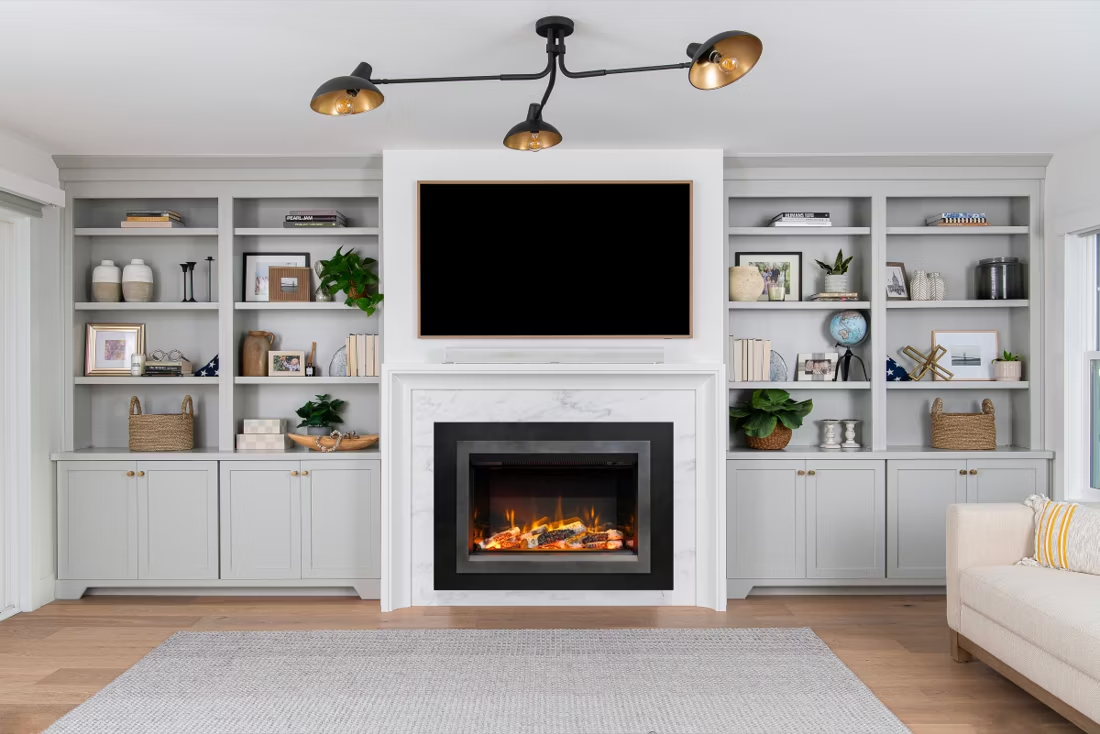
No—that's its superpower. An electric fireplace needs a wall and an outlet, period. No vent pipe, no gas line, no clearances to design around, which is why it works in bedrooms, offices, apartments, and walls where venting a gas or wood unit would be impractical or impossible. Installation is typically the simplest and least expensive of any fireplace type.
Can I put a TV above my fireplace?
Yes—with an asterisk. Fireplaces are hot and TVs don't like heat. Either put a mantel between them to deflect rising warmth, or choose a fireplace with heat-management technology that creates a cool zone on the wall above—the wall stays around 125 degrees, barely warm, while the room still gets full heat. If you like clean lines and don't want a mantel, heat management is the answer.
How much should I budget for a fireplace?
For an average home—covering the fireplace, the vent pipe, and basic installation—a budget between $3,900 and $5,500 gives you a lot of options across wood, gas, and pellet. By the time you add finish work, gas line, and electrical, the average complete installation lands between $5,000 and $12,000 all-in. In a remodel or new build, a good rule is to put about 2.5% of the total project cost toward the fireplace.
Can a fireplace actually lower my heating bill?
Yes—by creating a comfort zone. A furnace heats every square foot of the house just to warm the one room you're in; a gas fireplace on low burns roughly a sixth of the gas a typical furnace does. Set the furnace around 55–60 degrees as a baseline, then heat the rooms your family actually uses. Families who heat this way commonly save $20–$60 a month.
Nearby Dealers
Hearth shops serving South Fulton and the surrounding area. Every listing shows whether it is a WhyFire partner, a dealer we have verified as authorized for the brands we recommend, or a local business carrying hearth products. No manufacturer pays for placement. How we verify dealers →
L&W Insulation And Fireplaces
Blossman Gas And Appliance
Cr Design Center - Westside
Authenteak
Atlanta Chimney Worx
Construction Resources - Decatur
Fireplace Depot
EarthCore Industries
The Mad Hatter
Electric Service in South Fulton
An electric fireplace's heater draws about 1,500 watts—pennies per hour at local rates.
Georgia Power Co
Find your electric fireplace in South Fulton.
Tell us a bit about your home and we'll put together a free Project Guide & Parts List for your electric fireplace project—including the right unit and your recommended local South Fulton dealer.
Find Your Fireplace →