
Add real warmth to your Oglethorpe County home—no chimney required.
From the old farmhouses around Lexington to the manufactured homes scattered along the county's back roads, an electric fireplace adds zone heat and real ambiance without venting, gas lines, or chimney work. We'll match you with a trusted local dealer who knows the housing stock here.
Every Project Starts From One of These Five Situations
Zone heat that fits Piedmont winters.
Oglethorpe County sits in the Georgia Piedmont, a climate zone 3A county where winters are mild and humid rather than brutal—overnight lows commonly drop into the 20s and 30s, but sustained hard freezes are the exception, not the rule. That's very different from the wood-heat culture of a place like International Falls, MN. Around here, oak, pine, and hickory are all common in the woodlot, and plenty of longtime residents still burn wood for supplemental heat or ambiance in a fireplace. But for a county of roughly 2,400 people spread across small crossroads towns like Lexington, Crawford, Maxeys, Arnoldsville, and Philomath, electric heat has become a practical everyday choice—no ash, no flue to maintain, and no dependence on a chimney that may not even exist in a lot of the housing stock.
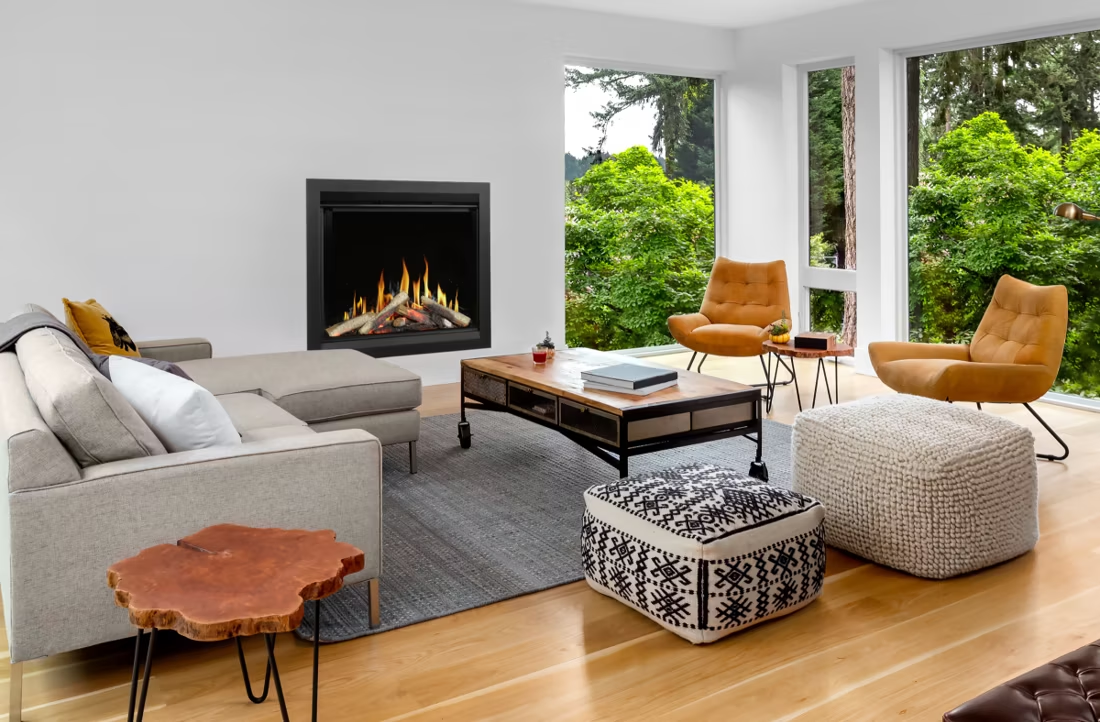
Electric fireplaces fit especially well in the mix of older farmhouses, manufactured homes, and newer construction that make up Oglethorpe County. Many rural properties here run on heat pumps or window units as primary heat, and an electric insert or built-in unit gives a room supplemental warmth and a real flame look without an electrician rewiring the whole house—most plug into a standard outlet, and larger built-ins just need a dedicated circuit. Local power comes through Little River EMC across most of the county, and any wiring beyond a simple plug-in typically runs through the Oglethorpe County Building Department for an electrical permit. It's a low-friction way to add heat and finish out a room, whether that's a den in a 1930s Lexington farmhouse or a living room in a newer double-wide off Highway 78.
Three steps. No salesperson until you're ready.
Tell us about your project
Your zip code, your situation, and the fuel you're leaning toward—or let the answers point you to one.
See what's actually available
The brands dealers within 100 miles genuinely carry—real options, never a catalog mirage.
Get your dealer & Project Guide
A trusted local dealer, plus the free Project Guide & Parts List that names every component of the job.
Frequently Asked Questions
How much does an electric fireplace installation cost in Oglethorpe County?
A plug-in electric insert or freestanding unit typically runs $300 to $800 installed since it just needs an existing outlet—no electrician required in most cases. A built-in wall unit or a recessed electric fireplace with custom framing and trim runs higher, usually $1,500 to $3,500, especially if a dedicated 20-amp circuit needs to be run. Older farmhouses around Lexington and Crawford with dated electrical panels sometimes need a panel assessment first, which can add to the cost. A local dealer will walk your specific wiring situation before quoting a firm number.
Electric vs. wood—which makes more sense for my Oglethorpe County home?
Wood has deep roots here—oak, pine, and hickory are all common on local woodlots, and plenty of county residents still cut and split their own for a fireplace or stove, especially since there are no air quality restrictions on burning in Oglethorpe County. But wood requires a chimney, storage, and regular upkeep. Electric wins for convenience: no venting, no ash, no chimney inspection, and it works in homes—manufactured housing, additions, newer builds—that were never set up with a masonry flue to begin with. If you already have a working chimney and enjoy the ritual of a real fire, wood still makes sense as supplemental heat. If you just want reliable zone warmth and ambiance with none of the maintenance, electric is the simpler answer.
Do I need a permit to install an electric fireplace in Oglethorpe County?
A simple plug-in electric fireplace or insert that uses an existing outlet doesn't require a permit. If your installation needs new wiring—a dedicated circuit for a larger built-in unit, for example—that electrical work falls under the Oglethorpe County Building Department, and a licensed electrician will need to pull a permit for the wiring itself. Most local dealers either employ a licensed electrician or coordinate with one directly, so you're not left figuring out the permitting process on your own.
Will an electric fireplace actually heat a room, or is it just for looks?
Most electric fireplaces put out 4,000 to 10,000 BTUs, which is enough to comfortably heat a single room—a den, bedroom, or living area—especially in a climate zone 3A county like Oglethorpe where overnight lows are cold but not extreme. Think of it as zone heating: it can supplement a heat pump or window unit and let you turn the thermostat down elsewhere in the house, but it isn't going to replace whole-home heating in an older, leaky farmhouse. For a well-insulated single room, it can absolutely be your primary heat source on a mild winter night.
What's the best electric fireplace option for an older farmhouse or manufactured home?
A lot of the housing stock in Oglethorpe County—older farmhouses around Lexington and Crawford, manufactured and modular homes scattered through the county—doesn't have an existing masonry chimney, which is exactly where electric fireplaces make the most sense. A freestanding electric stove or a simple wall-mount unit needs no venting and minimal structural work, which matters in a manufactured home where you don't want to cut into walls unnecessarily. A recessed, built-in unit looks more finished but requires framing and usually a dedicated circuit, which is a bigger project in a farmhouse with older wiring. A local dealer can look at your specific home and tell you which approach avoids the most rework.
Can I put an electric insert into an existing fireplace opening?
Yes—some of the older homes in and around Lexington still have working masonry fireplaces, and an electric insert can drop into that existing opening for a straightforward upgrade. You get the flame effect and supplemental heat without dealing with an aging flue liner or chimney repairs. Costs typically run $300 to $1,200 depending on the insert size and trim kit needed to fill the opening cleanly. It's one of the simpler electric projects available and a good option if you like the look of your existing fireplace but don't want to deal with wood or a gas line run.
How much does it cost to run an electric fireplace in Oglethorpe County?
Most electric fireplaces draw around 1,500 watts on the heat setting. At typical Little River EMC residential rates, that works out to roughly 18 to 22 cents an hour of heating—a fraction of what it costs to run central heat across the whole house. That's the appeal for zone heating in a mild climate zone 3A county like this one: you can heat just the room you're in during a cold spell and leave the thermostat lower everywhere else, without the fuel storage or delivery hassle of propane or firewood.
What's the difference between an electric fireplace, insert, and stove?
An electric fireplace is typically a built-in or wall-mounted unit designed to look like a framed, finished fireplace—common in newer construction or remodels. An electric insert is sized to drop into an existing fireplace opening, which works well if you already have a masonry hearth you want to modernize. An electric stove is a freestanding cabinet-style unit that sits on the floor like a traditional wood stove, which is a popular choice in manufactured homes and additions around the county since it needs no framing at all. For most Oglethorpe County homes without an existing fireplace, a freestanding stove or wall-mount unit is the least invasive option.
Electric vs. pellet stove—which is right for my home?
Pellet stoves burn compressed wood pellets from brands available regionally like Lignetics, Hamer Pellet Fuel, and Greenway Renewable Energy, and they put out real, sustained heat—enough to serve as a primary heat source in a drafty older home. But they need a vent, a hopper to keep filled, and periodic ash cleanup. An electric fireplace or stove needs none of that—just an outlet—but tops out around 10,000 BTUs, which makes it better suited to zone heating one room than heating an entire farmhouse. If you're after real winter heat output in a rural Oglethorpe County home with uneven insulation, pellet may serve you better. If you want simple, clean supplemental warmth with zero fuel handling, electric is the easier path.
Can I put a TV above my fireplace?
Yes—with an asterisk. Fireplaces are hot and TVs don't like heat. Either put a mantel between them to deflect rising warmth, or choose a fireplace with heat-management technology that creates a cool zone on the wall above—the wall stays around 125 degrees, barely warm, while the room still gets full heat. If you like clean lines and don't want a mantel, heat management is the answer.
Does an electric fireplace need a vent or chimney?
No—that's its superpower. An electric fireplace needs a wall and an outlet, period. No vent pipe, no gas line, no clearances to design around, which is why it works in bedrooms, offices, apartments, and walls where venting a gas or wood unit would be impractical or impossible. Installation is typically the simplest and least expensive of any fireplace type.
Can a fireplace actually lower my heating bill?
Yes—by creating a comfort zone. A furnace heats every square foot of the house just to warm the one room you're in; a gas fireplace on low burns roughly a sixth of the gas a typical furnace does. Set the furnace around 55–60 degrees as a baseline, then heat the rooms your family actually uses. Families who heat this way commonly save $20–$60 a month.
How much should I budget for a fireplace?
For an average home—covering the fireplace, the vent pipe, and basic installation—a budget between $3,900 and $5,500 gives you a lot of options across wood, gas, and pellet. By the time you add finish work, gas line, and electrical, the average complete installation lands between $5,000 and $12,000 all-in. In a remodel or new build, a good rule is to put about 2.5% of the total project cost toward the fireplace.
Find your electric fireplace in Oglethorpe County.
Tell us a little about your home—farmhouse, manufactured home, or new build—and we'll put together a free Project Guide & Parts List for your electric fireplace project, then connect you with a trusted local dealer who can install it right.
Find Your Fireplace →