
Effortless heat for Miller County's mild winters.
With winter lows averaging 39°F and a short heating season around Colquitt and the rest of Miller County, an electric fireplace delivers real ambiance and supplemental warmth without a chimney, a gas line, or a permit headache.
Every Project Starts From One of These Five Situations
Electric fireplaces make sense where winters are short and mild.
Miller County sits in Georgia's climate zone 2A, a hot-humid region where the annual heating load is light—just a short, mild heating season, a fraction of what a place like Duluth, MN racks up in a single hard winter. Winter lows here average 39°F, with only occasional dips into the 20s. That kind of climate doesn't call for a workhorse wood stove or a full gas-fired system to get through January. It calls for something that turns on instantly, needs no chimney or venting, and covers the handful of genuinely cold nights each year without asking a homeowner to manage fuel, ash, or combustion byproducts.
Around Colquitt and the farm communities scattered through Miller County—a lot of them site-built homes and manufactured housing on rural electric lines rather than natural gas—electric fireplaces have become a practical fit. Plug-in units need nothing more than a standard outlet; larger built-ins or inserts run on a dedicated 240V circuit that a licensed electrician sets up in an afternoon. There's no cutting permit, no chimney sweep, and in most cases no county building permit at all unless new wiring is involved. For a county of just over 2,100 people spread across a lot of rural road, that simplicity matters—a good electric fireplace or insert gives a family room real supplemental heat and the look of a fire without adding another system to maintain.
Three steps. No salesperson until you're ready.
Tell us about your project
Your zip code, your situation, and the fuel you're leaning toward—or let the answers point you to one.
See what's actually available
The brands dealers within 100 miles genuinely carry—real options, never a catalog mirage.
Get your dealer & Project Guide
A trusted local dealer, plus the free Project Guide & Parts List that names every component of the job.
Frequently Asked Questions
How much does an electric fireplace installation cost in Miller County?
Plug-in electric fireplace inserts and small wall-mount units typically run $400 to $1,200 installed, since there's no venting or chimney work involved—often just placement and, for built-ins, connecting to an existing outlet. Larger built-in units or full mantel packages that require a dedicated 240V circuit run higher, generally $1,000 to $2,500 once electrical work is included. Because Miller County homes are a mix of site-built houses and manufactured housing, the biggest cost variable is usually whether the electrical panel has room for a new circuit—a local electrician can confirm that during a walkthrough before you commit to a unit.
Do I need a permit to install an electric fireplace in Miller County?
In most cases, no—a plug-in electric fireplace or insert doesn't require a building permit since there's no venting, gas line, or structural change involved. If your installation calls for new wiring or a dedicated 240V circuit, that electrical work should go through a licensed electrician, and depending on scope the Miller County Building Department may require an electrical permit for the circuit itself. This is far simpler than the permitting required for wood or gas installations, which is one reason electric has become a popular retrofit choice for older homes and manufactured housing throughout the county.
Will an electric fireplace actually keep my house warm?
An electric fireplace is best understood as supplemental heat for a specific room, not a replacement for your home's primary heating system—and in Miller County's climate, that's usually all you need. With only a short, mild heating season each year and winter lows averaging in the upper 30s, most homes here already rely on a heat pump or central system for whole-house heating; the electric fireplace's job is to take the edge off a family room or sunroom on the coldest evenings and provide instant, controllable heat without running the whole HVAC system. For the occasional hard freeze, most units put out 4,600 to 5,000 BTU on the high setting, enough to noticeably warm a single room.
What's the best type of electric fireplace for a manufactured or modular home?
A lot of Miller County housing stock is manufactured or modular, and electric is often the safest, simplest hearth option for these homes because there's no roof penetration or chimney chase to engineer. Wall-mount and freestanding electric units work well since they don't require framing changes, and many can be installed with minimal wall modification. If you want the look of a built-in, a local dealer can walk through your home's electrical panel capacity and wall construction to confirm what's realistic before recommending a specific model.
Electric vs. propane fireplace—which makes more sense here?
Natural gas infrastructure is limited in rural Miller County, so the practical comparison for most homeowners is electric versus propane. Propane fireplaces put out more heat and can run during a power outage, which matters if you're in one of the more remote parts of the county where outages can run long after a storm. Electric fireplaces are simpler and cheaper to install since there's no tank, no gas line, and no venting, and they produce zero combustion byproducts—a real advantage for indoor air quality in a tightly sealed manufactured home. For a family room used mostly for ambiance and mild-weather supplemental heat, electric is usually the lower-cost, lower-maintenance choice; for a household that wants a genuine backup heat source, propane is worth the added installation cost.
How much does it cost to run an electric fireplace day to day?
Most electric fireplaces draw around 1,500 watts on the heat setting, which costs a few cents to run per hour at typical Georgia residential electric rates through Georgia Power or the local EMC serving your part of Miller County. Because the heating season here is short—usually just a handful of weeks with real overnight chill—annual operating costs stay modest even with regular winter evening use. Running the flame effect alone, without heat, draws only a fraction of that and can be used year-round for ambiance.
How much maintenance does an electric fireplace need?
Very little, which is one of its biggest advantages over wood or gas in a rural county like Miller. There's no chimney to sweep, no gas line to inspect, and no ash or creosote to manage. Periodic dusting of the heating element and an occasional check that the fan isn't obstructed is typically all that's needed. Most manufacturers recommend having the internal components checked if the flame effect or heater stops working properly, but there's no annual service requirement like you'd see with a wood stove or gas insert.
Will my electric fireplace work during a power outage?
No—this is worth being upfront about. Electric fireplaces require power to run, so during an outage they won't provide heat or the flame effect, unlike a wood stove or a propane unit with a standing pilot. For most Miller County households this is an acceptable tradeoff since outages tend to be short, but if you're in a more remote area of the county where storm-related outages can stretch longer, it's worth keeping a wood-burning option or a generator plan in place as backup rather than relying on an electric fireplace alone.
What size electric fireplace do I need for my room?
Sizing an electric fireplace is mostly about visual fit and BTU output for the room rather than climate, since these units aren't sized to heat an entire house. A 26 to 36-inch insert or wall-mount unit typically covers a family room or den in a standard Miller County home, while a 50-inch or larger linear unit suits an open-concept living space. If you're converting an existing wood-burning fireplace, an electric insert sized to your firebox opening is usually the simplest retrofit—a local dealer can measure your opening and recommend a unit that fits without modification.
Can I put a TV above my fireplace?
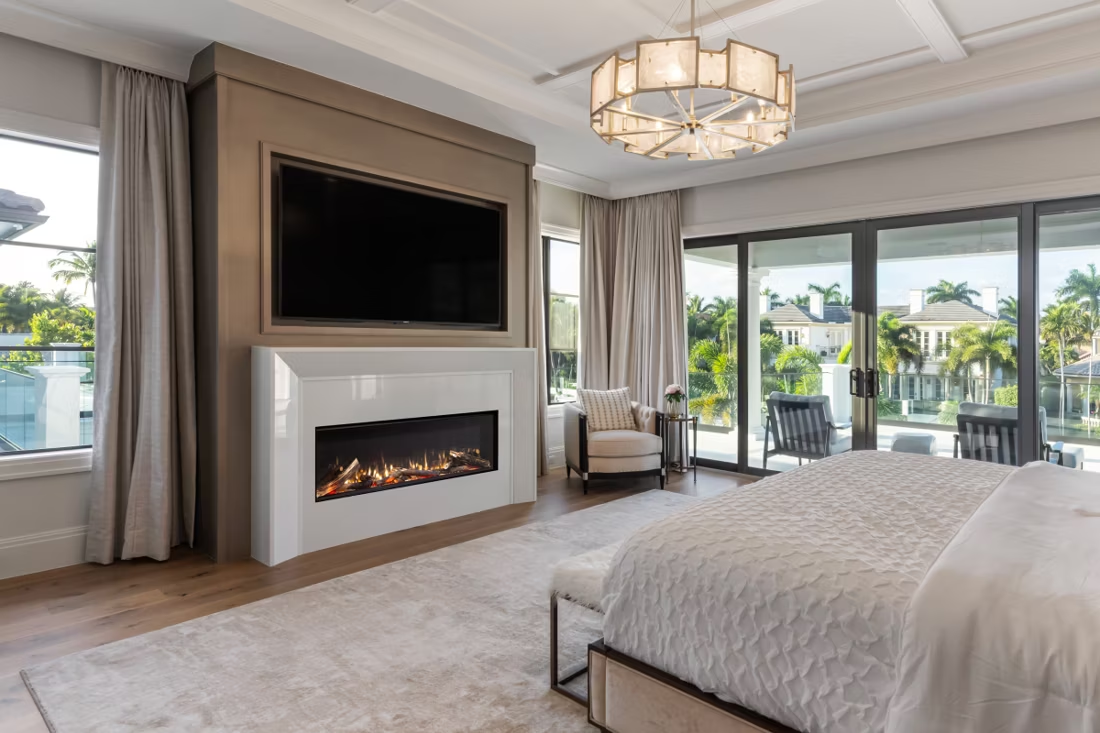
Yes—with an asterisk. Fireplaces are hot and TVs don't like heat. Either put a mantel between them to deflect rising warmth, or choose a fireplace with heat-management technology that creates a cool zone on the wall above—the wall stays around 125 degrees, barely warm, while the room still gets full heat. If you like clean lines and don't want a mantel, heat management is the answer.
Do electric fireplaces actually produce heat?
Yes—most put out around 4,800–5,000 BTUs from a standard outlet, which comfortably warms a bedroom, office, or den as a comfort-zone heater. What they won't do is carry a whole house the way wood, gas, or pellet can. Think of electric as ambiance-first with honest supplemental heat: flames on with no heat in July, flames plus warmth in January.
Does a fireplace add value to my home?
On average, a fireplace adds back to the home about the same amount you spent installing it. Add the monthly savings from heating the rooms you actually use instead of the whole house—often hundreds of dollars a year—and the value case is strong before you even count what a fire does for how your family uses the room.
What is an in-home preview and do I need one?
It's a visit where a hearth professional measures your space, confirms the model you picked actually works in your home, and walks the specs—framing, gas line, venting, finish work—before anything is ordered. Some details you just can't know until you see the house. Never make a down payment without one; it's the single most-skipped step that burns buyers.
Find your electric fireplace in Miller County.
Tell us about your home and we'll match you with a trusted local dealer and send over a free Project Guide & Parts List—sized right for your room, with no venting or chimney work required.
Find Your Fireplace →