
Find your electric fireplace in Lumpkin County.
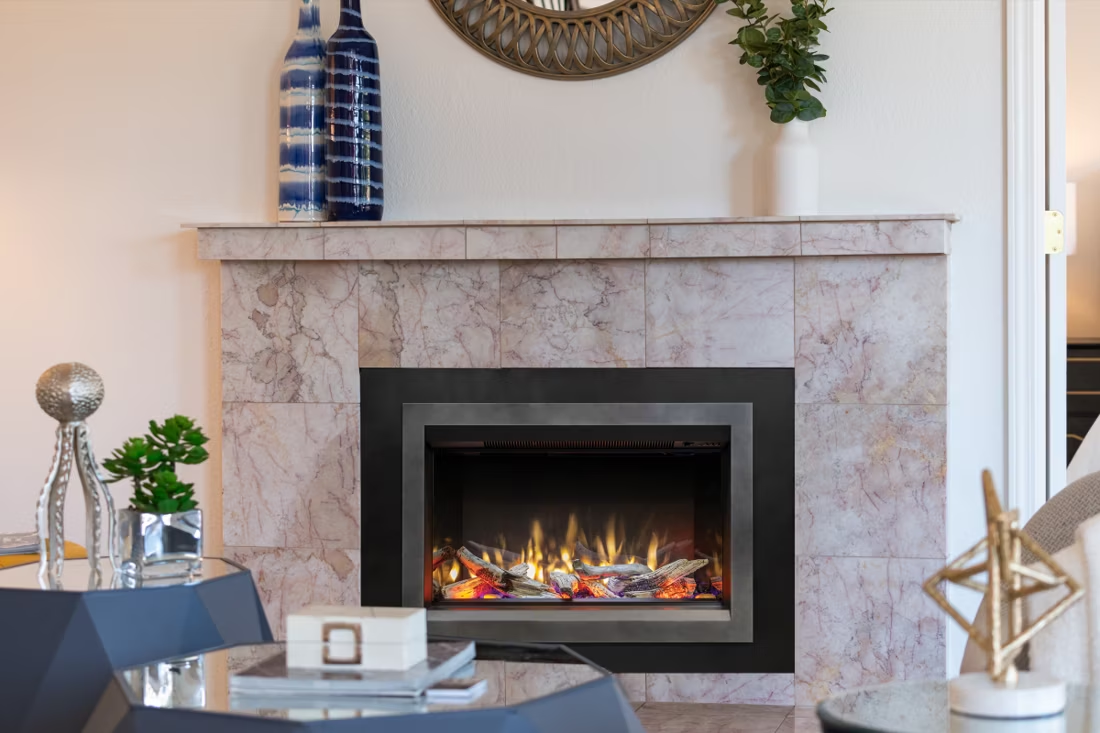
No chimney, no gas line, no combustion byproducts—just plug-in or hardwired warmth for Dahlonega homes, UNG-area rentals, and Blue Ridge foothill cabins. Find the right unit and get matched with a trusted local dealer.
Every Project Starts From One of These Five Situations
Electric heat that fits a mild mountain winter.
Lumpkin County sits in climate zone 4A with about 3,865 heating degree days and a winter low averaging 27°F—a real but moderate cold season compared to the deep freezes of a place like Duluth, MN, where HDDs run closer to 10,000. For most of the year, county seat Dahlonega and the surrounding foothills of the Blue Ridge don't need a whole-home combustion heating overhaul—they need targeted, reliable warmth for the handful of genuinely cold nights each winter, plus year-round ambiance the rest of the time. That's exactly the gap an electric fireplace fills.
Amicalola EMC serves most of Lumpkin County's electric load, and an electric fireplace draws on that existing circuit without requiring venting, a gas line, or a masonry chimney. That matters in a county with a lot of historic downtown Dahlonega structures where altering original masonry isn't always practical, and it matters just as much for the area's vacation cabins and University of North Georgia-area rentals, where landlords want a clean, low-maintenance heat source that doesn't come with ash, creosote, or an open flame to manage between tenants.
Three steps. No salesperson until you're ready.
Tell us about your project
Your zip code, your situation, and the fuel you're leaning toward—or let the answers point you to one.
See what's actually available
The brands dealers within 100 miles genuinely carry—real options, never a catalog mirage.
Get your dealer & Project Guide
A trusted local dealer, plus the free Project Guide & Parts List that names every component of the job.
Frequently Asked Questions
How much does an electric fireplace installation cost in Lumpkin County?
A plug-in electric insert or freestanding unit typically runs $200 to $1,500 installed, since it just plugs into an existing outlet—no electrician required in most cases. A built-in wall-mounted or linear electric fireplace that needs its own dedicated circuit usually runs $1,500 to $4,000 once you factor in an electrician to run new wiring, a wall opening or mantel surround, and finish work. Costs trend toward the higher end for older Dahlonega homes with limited panel capacity, where an electrician may need to address the panel before adding a dedicated circuit.
Do I need a permit to install an electric fireplace in Lumpkin County?
In most cases, no. A plug-in electric fireplace or insert doesn't require a permit since it involves no new wiring, venting, or structural change. If you're adding a built-in unit that requires a new dedicated circuit, that electrical work typically needs a permit through the Lumpkin County building department, and it should be pulled by a licensed electrician—not a general handyman. Since there's no combustion, venting, or gas line involved, the permitting process for electric is far simpler than for wood or gas installations in the county.
What size electric fireplace do I need for my Lumpkin County home?
Most electric fireplaces are sized by linear width (30 to 60 inches is common for living rooms) rather than square footage, since they're built to supplement—not replace—your existing HVAC in most Lumpkin County homes. A 30 to 40 inch unit comfortably heats a bedroom or den; a 50 to 60 inch linear unit can serve as the visual and heating focal point of a larger great room. Check your amperage: many larger built-in units draw close to 1,500 watts on high heat, which is worth confirming against your panel capacity before your electrician sizes the circuit.
Will an electric fireplace actually heat my home during a Lumpkin County winter?
It will comfortably supplement your heat, but it isn't designed to be a whole-home primary heat source. With a winter low averaging 27°F and roughly 3,865 heating degree days a year, Lumpkin County doesn't demand the sustained high-output heat that a wood stove or gas furnace provides in harsher climates—most homes here already have central HVAC, and an electric fireplace is used to zone-heat the room you're actually in, cut back on running the whole system, and add ambiance without a flame. For a drafty mountain cabin or an older Dahlonega home with poor insulation, don't expect it to keep pace on the coldest nights of the year without backup.
What happens to my electric fireplace during a power outage?
It stops working entirely—unlike a gas fireplace with battery-backup ignition, an electric fireplace has zero heat output without grid power from Amicalola EMC. Ice storms and downed lines do happen in the North Georgia foothills, so if you're relying on heat during winter outages, an electric-only setup shouldn't be your sole plan. Many Lumpkin County homes pair an electric fireplace for everyday convenience and ambiance with a wood stove or fireplace as backup heat for the rare multi-day outage.
What's the difference between an electric insert, a built-in, and a freestanding electric stove?
An electric insert is designed to slide into an existing masonry fireplace opening, instantly upgrading an old wood-burning fireplace to clean electric heat and flame effects without any venting work—a common choice for Dahlonega's older homes with existing hearths. A built-in (linear or traditional) is installed into a wall or custom surround for new construction or remodels. A freestanding electric stove mimics a wood stove's look and simply plugs in, making it the easiest option for rentals and cabins where you want zero installation. All three run on standard household current with no chimney or gas line required.
What electric fireplace brands work well for Lumpkin County homes?
Given the county's moderate climate, you don't need a high-output unit—brands like Dimplex, Napoleon, and Touchstone make well-regarded linear inserts and freestanding units with realistic flame effects and reliable 1,500-watt heaters, which is plenty for zone heating a bedroom or den in a 4A climate. For vacation cabins and short-term rentals in the Dahlonega area, look for models with a remote-only or app-based interface and a heat-off flame-only setting, since many owners run the flame effect without heat for ambiance most of the year.
Are electric fireplaces a good fit for Dahlonega-area vacation rentals?
Very much so. With Dahlonega's wine-country cabins and University of North Georgia-area rentals, owners generally want a hearth feature that adds ambiance and marketing appeal without the liability of an open flame, ash cleanup, or chimney maintenance between guests. An electric insert or freestanding stove gets installed once, requires no permit in most cases, needs no seasonal service, and can be run flame-only for photos and guest ambiance without adding heat load in the shoulder seasons.
Electric vs. wood—which fits my Lumpkin County home?
Wood has deep roots here—oak, pine, and hickory are common locally, and Forest Service cutting permits (roughly $20 per cord through Cherokee National Forest land, May through October) still support real self-sufficient wood heat for many rural county residents. Wood also works without grid power, which matters during ice-storm outages. Electric, on the other hand, wins on simplicity: no chimney, no ash, no combustion byproducts, and installation that a plug-in unit handles in minutes. For a primary residence with a wood-burning tradition, wood often stays in the mix; for secondary rooms, rentals, condos, or historic structures where altering masonry isn't practical, electric is usually the better fit.
Can I put a TV above my fireplace?
Yes—with an asterisk. Fireplaces are hot and TVs don't like heat. Either put a mantel between them to deflect rising warmth, or choose a fireplace with heat-management technology that creates a cool zone on the wall above—the wall stays around 125 degrees, barely warm, while the room still gets full heat. If you like clean lines and don't want a mantel, heat management is the answer.
Does an electric fireplace need a vent or chimney?
No—that's its superpower. An electric fireplace needs a wall and an outlet, period. No vent pipe, no gas line, no clearances to design around, which is why it works in bedrooms, offices, apartments, and walls where venting a gas or wood unit would be impractical or impossible. Installation is typically the simplest and least expensive of any fireplace type.
Can a fireplace actually lower my heating bill?
Yes—by creating a comfort zone. A furnace heats every square foot of the house just to warm the one room you're in; a gas fireplace on low burns roughly a sixth of the gas a typical furnace does. Set the furnace around 55–60 degrees as a baseline, then heat the rooms your family actually uses. Families who heat this way commonly save $20–$60 a month.
What is an in-home preview and do I need one?
It's a visit where a hearth professional measures your space, confirms the model you picked actually works in your home, and walks the specs—framing, gas line, venting, finish work—before anything is ordered. Some details you just can't know until you see the house. Never make a down payment without one; it's the single most-skipped step that burns buyers.
Find your electric fireplace in Lumpkin County.
Tell us a bit about your home or rental property and we'll match you with the right electric fireplace or insert, plus a free Project Guide & Parts List—and a trusted local dealer who can install it right.
Find Your Fireplace →