
Real fire ambiance for Laurens County's mild winters—without a woodpile or a flue.
With winter lows averaging 35°F and just a mild, short heating season each year, most Laurens County homes don't need a wood-burning heat source—they need ambiance and the occasional supplemental warmth. Electric delivers both, plugged in or wired, with no chimney required.
Every Project Starts From One of These Five Situations
Mild winters, modern convenience.
Laurens County sits in Georgia's climate zone 3A, and Dublin's winters simply don't demand heavy-duty heat. With a mild, short heating season and average lows near 35°F, the coldest nights here are mild compared to most of the country—nothing like the sub-zero stretches that make a cordwood stove a necessity up north. That's exactly why wood and pellet stoves are rare in this part of Georgia: oak, pine, and hickory are plentiful locally, but they mostly end up in outdoor fire pits or the occasional weekend fire in an old masonry fireplace, not as a primary heat source homeowners depend on to get through winter.
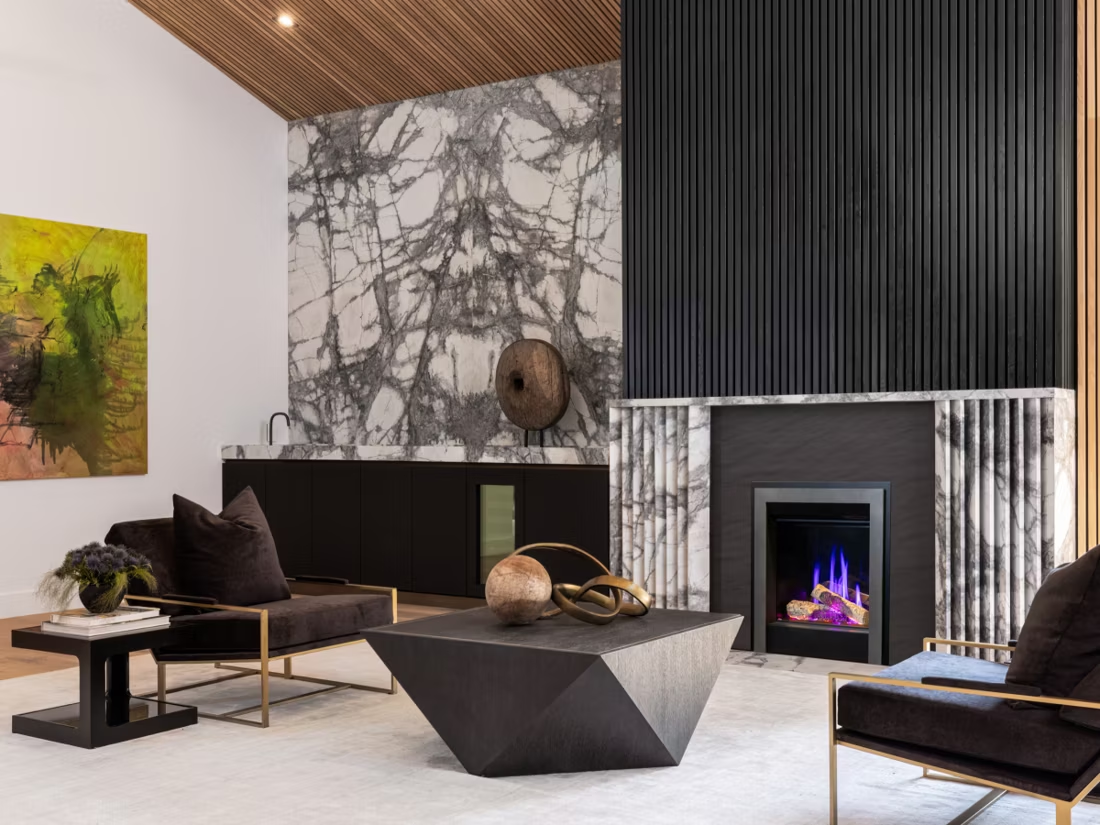
Electric fireplaces fill that gap well. There's no combustion, no venting, and no need to size a unit against square footage the way you would a wood stove—most homeowners in Dublin and the surrounding county are shopping for the look and feel of a real fire, plus a little supplemental heat for a chilly January evening. Georgia Power serves most of the county, with rural electric cooperatives covering areas outside Dublin's city limits, so power is reliable and the units themselves are simple: plug in a freestanding model, or have an electrician wire a built-in insert into an existing opening or new stud wall. Either way, a local dealer who actually installs these day to day will steer you away from big-box units that look great in photos and run hot or flicker unevenly in person.
Three steps. No salesperson until you're ready.
Tell us about your project
Your zip code, your situation, and the fuel you're leaning toward—or let the answers point you to one.
See what's actually available
The brands dealers within 100 miles genuinely carry—real options, never a catalog mirage.
Get your dealer & Project Guide
A trusted local dealer, plus the free Project Guide & Parts List that names every component of the job.
Frequently Asked Questions
How much does an electric fireplace installation cost in Laurens County?
Plug-in freestanding electric fireplaces and stove-style units generally run $400 to $900 installed, since most just need a standard 120V outlet and a hearth pad or stand—no electrician required. Built-in wall inserts or linear units set into new framing typically run $1,000 to $2,500 once you factor in a licensed electrician to run a dedicated circuit, plus any carpentry to frame the opening and finish the surround. Mantel packages with a built-in insert land in the middle of that range. A local dealer can give you a firm number after seeing the wall or opening you're working with.
Do I need a permit to install an electric fireplace in Laurens County?
For a plug-in freestanding unit, no—there's no venting, no gas line, and no structural change, so it falls outside what the Laurens County Building Department typically reviews. If you're having a built-in insert hardwired on its own circuit, that electrical work generally requires a permit and inspection, which a licensed electrician pulls as part of the job. This is one of the appeals of electric in a mild climate like this one—it sidesteps the chimney and clearance requirements that come with wood or gas installations entirely.
What's the difference between a plug-in electric fireplace and a built-in insert?
A plug-in unit—whether it's a freestanding stove-style model or a mantel package—just needs a standard outlet and can be relocated later if you move or remodel. A built-in insert is wired into a dedicated circuit and set into a wall opening or existing masonry fireplace, giving you a flush, seamless look but requiring an electrician for the hookup. For most Dublin-area homes without an existing fireplace opening, a plug-in mantel or wall-mount is the simpler route. Homes with an old masonry fireplace that's rarely used can often drop in an electric insert and get the look of a working fireplace with zero venting work.
Will a standard outlet handle my electric fireplace, or do I need special wiring?
Most electric fireplaces, including many built-in inserts, run on a standard 120V/15-amp circuit—the same as a typical wall outlet. Larger linear units or models with higher-wattage heaters sometimes call for a dedicated circuit to avoid tripping a breaker shared with other appliances. Your local dealer or an electrician can check the unit's spec sheet against your home's panel before installation, which is a five-minute conversation that saves you a callback later.
How much does it cost to run an electric fireplace in Laurens County?
Electric fireplaces convert essentially all of their electricity into heat and light at the unit, so running cost comes down to wattage and your Georgia Power or local co-op rate. A typical 1,500-watt heater setting costs somewhere in the range of 15 to 25 cents an hour to run at most residential rates—flame-only mode with the heater off costs a fraction of that. Given the mild winters here, most owners run the heater only on the occasional cold night and keep the flame effect on for ambiance the rest of the year, which keeps the electric bill impact minimal.
What's the best electric fireplace for a home in Laurens County?
Since heating output matters less here than it would in a colder climate, prioritize flame realism and fit over raw BTUs. Brands like Dimplex and Napoleon make linear and insert models with layered LED flame technology that looks convincing rather than gimmicky, and both offer models sized for a media wall, a mantel package, or a drop-in insert for an old masonry opening. If you do want meaningful supplemental heat for the handful of genuinely cold nights each winter, look for a model with a stated heating capacity of 400 to 500 square feet rather than judging on flame size alone.
Can I put an electric fireplace insert into my existing masonry fireplace?
In most cases, yes. Many older homes in and around Dublin have a masonry fireplace that's rarely used for a real wood fire, and an electric insert is a straightforward way to bring that space back into daily use without chimney work, cleaning, or the smoke and ash that come with burning oak or hickory. A dealer will measure the firebox opening to make sure the insert fits and confirm whether the outlet inside the fireplace needs to be relocated or upgraded to a dedicated circuit for a larger unit.
Why don't more Laurens County homes use wood or pellet stoves?
It comes down to climate. With a mild, short heating season and winter lows averaging 35°F, Laurens County simply doesn't get cold enough long enough to justify a dedicated wood-burning heat source the way a place with harsh winters would. Local oak, pine, and hickory are easy to come by, and pellet brands like Lignetics and Hamer Pellet Fuel are available regionally, but pellet stoves and wood stoves both see limited demand here—they're a bigger investment and more daily maintenance than the actual heating need calls for. Electric fills that role instead: real flame appearance, supplemental warmth on the rare cold snap, and none of the upkeep.
Electric vs. gas fireplace—which is right for my Laurens County home?
Gas is a solid option here too, particularly in homes already set up with natural gas within Dublin's city limits or propane service in the more rural parts of the county—it gives you a stronger, more consistent heat output and a more traditional-looking flame. Electric wins on installation simplicity and cost: no gas line, no venting, and a fraction of the install price, which matters most in a climate where the fireplace is used more for ambiance than for keeping a house warm through winter. If you want a fireplace mainly for looks and occasional supplemental heat, electric is usually the more practical choice; if you want it to function as genuine secondary heat during a cold front, gas has the edge.
Can I put a TV above my fireplace?
Yes—with an asterisk. Fireplaces are hot and TVs don't like heat. Either put a mantel between them to deflect rising warmth, or choose a fireplace with heat-management technology that creates a cool zone on the wall above—the wall stays around 125 degrees, barely warm, while the room still gets full heat. If you like clean lines and don't want a mantel, heat management is the answer.
What fireplace styles should I know before shopping?
Four cover most of the market: screen-front traditional (mesh front, open feel, fits craftsman homes), traditional door set (the classic look you grew up with), modern linear (wide, low, the statement piece for entertaining), and clean face contemporary (no trim—your tile or stone runs right to the fire's edge). Walk in knowing those four terms and you're ahead of most buyers.
How much should I budget for a fireplace?
For an average home—covering the fireplace, the vent pipe, and basic installation—a budget between $3,900 and $5,500 gives you a lot of options across wood, gas, and pellet. By the time you add finish work, gas line, and electrical, the average complete installation lands between $5,000 and $12,000 all-in. In a remodel or new build, a good rule is to put about 2.5% of the total project cost toward the fireplace.
Can a fireplace actually lower my heating bill?
Yes—by creating a comfort zone. A furnace heats every square foot of the house just to warm the one room you're in; a gas fireplace on low burns roughly a sixth of the gas a typical furnace does. Set the furnace around 55–60 degrees as a baseline, then heat the rooms your family actually uses. Families who heat this way commonly save $20–$60 a month.
Find your electric fireplace in Laurens County.
Tell us a bit about your home in Dublin or elsewhere in Laurens County, and we'll put together a free Project Guide & Parts List—the exact parts for your electric fireplace project and a trusted local dealer who can install it right.
Find Your Fireplace →