
Find the right gas fireplace for your Jackson County home.
Mild winters and quick weekend cold fronts make gas the practical choice for most Jackson County homes—from Jefferson to Commerce to the growing Braselton corridor. Get matched with a trusted local dealer who can size and install it right.
Every Project Starts From One of These Five Situations
Instant heat for a climate that doesn't demand much more.
Jackson County sits in climate zone 3A with around 3,002 heating degree days and an average winter low near 34°F—a fraction of what a place like Bozeman, MT sees in a single January week. Winters here are short and mild, with cold stretches that arrive in bursts rather than settling in for months. That pattern is exactly why gas has become the default choice for most homeowners across Jefferson, Commerce, Hoschton, Braselton, and the newer subdivisions filling in along the Highway 129 and I-85 corridors: you want real heat on demand for the occasional 20-degree night, not a full-time heating appliance to feed and tend.
Jackson County doesn't carry the wood-heat culture you'd find in colder Appalachian counties to the north, and there are no local air quality non-attainment concerns limiting appliance choice here. That gives homeowners real flexibility: a direct-vent gas fireplace or insert installed by a trusted local dealer delivers instant flip-of-a-switch warmth, works well as a design centerpiece in the new construction common throughout the county, and—with the right ignition system—can even provide backup heat during the occasional ice-storm power outage. I match homeowners with the local pro who can size the unit correctly and handle the gas line and venting work, rather than leaving it to guesswork.
Three steps. No salesperson until you're ready.
Tell us about your project
Your zip code, your situation, and the fuel you're leaning toward—or let the answers point you to one.
See what's actually available
The brands dealers within 100 miles genuinely carry—real options, never a catalog mirage.
Get your dealer & Project Guide
A trusted local dealer, plus the free Project Guide & Parts List that names every component of the job.
Frequently Asked Questions
How much does a gas fireplace installation cost in Jackson County?
Costs vary by unit and venting path, but most Jackson County installations fall in a similar range to what you'd see across the broader north Georgia market: a direct-vent gas insert into an existing masonry fireplace with gas already run to the house tends to sit on the lower end, while a new built-in gas fireplace in a remodel or new-construction home—with framing, venting, and a fresh gas line—runs higher. Homes on propane in more rural parts of the county, like areas outside Nicholson or Maysville, may see added cost if a new tank has to be installed. A local dealer will give you a firm number after seeing your home.
Can I convert my existing wood fireplace to gas?
Yes, and it's a common upgrade in Jackson County's older homes around Jefferson and Commerce that were originally built with a wood-burning masonry fireplace. A gas insert typically slides into the existing firebox and uses a stainless liner run up the existing chimney for venting. The project is more straightforward, and often cheaper, if the home already has a gas line for a water heater or range—if not, your dealer will need to price in the gas line run as part of the job.
Do I need natural gas, or can I use propane in Jackson County?
Both are common here. Natural gas service reaches many of the more built-up areas around Jefferson and Commerce, but a lot of Jackson County—especially the more rural stretches near Nicholson, Maysville, and Apple Valley—relies on propane instead. Most gas fireplace models can be set up for either fuel with the correct orifice and regulator, so the fireplace itself isn't the limiting factor. If you're on propane, your local dealer will coordinate with a propane supplier if a new or larger tank is needed.
Will my gas fireplace work during a power outage?
Most will, with the right ignition setup. Units with IPI (intermittent pilot ignition) include a battery backup that automatically takes over when the power drops, so the fireplace still lights on demand. That matters in Jackson County during the occasional winter ice storm that knocks out power along the rural lines outside Commerce and Hoschton. Some brands, like Valor, generate their own electricity through the pilot's thermocouple and never need batteries at all. Ask your local dealer about the ignition system on any unit you're considering if backup heat matters to you.
What's the difference between a gas fireplace, gas insert, and gas stove?
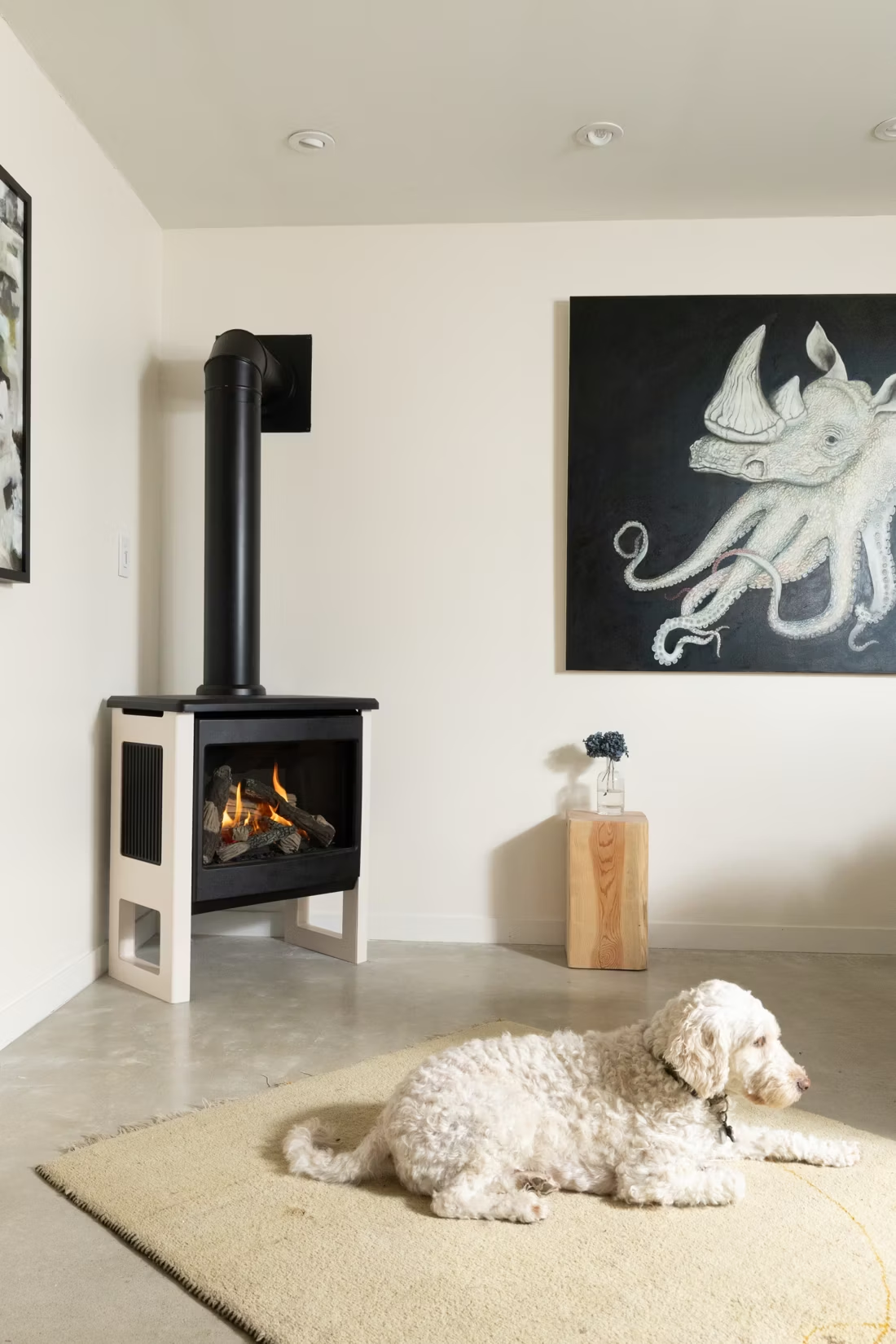
A gas fireplace is a fully built-in unit framed into a wall—common in the newer construction going up throughout Jackson County's growing subdivisions. A gas insert fits into an existing masonry firebox, which is the right call for the county's older homes with a wood fireplace already in place. A gas stove is a freestanding unit that sits on the floor and vents like a wood stove but burns gas—a good option if you want a stand-alone heat source without the framing work of a built-in unit.
Do I need a permit to install a gas fireplace in Jackson County?
Yes—Jackson County requires a building permit and gas line permit for new gas fireplace installations, whether the project is inside city limits in Jefferson or Commerce or out in the unincorporated county. The gas line work itself has to be done by a licensed gas-fitter. Most established local dealers handle the permitting and inspection scheduling as part of the installation, so you're not left coordinating separate trades yourself.
What's the difference between vented and vent-free gas fireplaces?
Vented gas fireplaces draw combustion air from outside and exhaust the byproducts back outside through a sealed vent—they're the most common and most universally code-compliant option, and what most Jackson County dealers will steer you toward. Vent-free units burn directly into the room without external venting; they're legal in Georgia but come with strict room-sizing rules and require an oxygen depletion sensor. For most homes here, a vented direct-vent unit is the simpler, safer choice and doesn't require any tradeoff on indoor air quality.
How often should my gas fireplace be serviced?
Plan on an annual inspection, ideally before the first cold front rolls through in late fall. A certified technician checks the burner, pilot assembly, gas connections, and venting, and cleans the glass and interior. It's a quicker, less involved job than a wood chimney sweep, but still worth doing every year—especially for units that sit unused for much of Jackson County's long, mild off-season and can accumulate dust or spider webs in the burner assembly.
Gas vs. wood—which is right for my home?
Wood offers a real fire experience, lower fuel costs if you're already cutting or sourcing local oak, pine, or hickory, and heat that keeps working without electricity. Gas offers instant on-off convenience, no ash or wood handling, and a cleaner look—which is a big part of why it's the more popular pick in Jackson County's mild 3A climate, where most homeowners want a fireplace as a design feature and occasional-use heat source rather than a primary heating appliance. If you want both, plenty of local homes here pair a gas fireplace in the main living space with a wood-burning option in a den or outbuilding.
Why is my open fireplace making my house colder?
Open fireplaces suck—literally. As the fire burns, it consumes air your furnace already paid to heat and pulls it out through the chimney, so the house is actually colder after the fire goes out than before you lit it. An insert fixes this: it seals the chimney, puts fixed glass across the front, and turns that hole in your house into a real heat source.
Is my gas fireplace wasting gas?
If it was installed more than 15 years ago, probably. Older gas fireplaces keep a standing pilot light burning all the time, and that little flame can cost a couple hundred dollars a year. Newer models use pilot-on-demand ignition—the pilot lights only when you use the fireplace and goes out when you turn it off.
Can I install a fireplace myself?
If you're putting a fire in your house on purpose, it's best to work with an expert. Unless you're genuinely experienced in framing, gas line, vent pipe, and the national code on clearances to combustibles, have a professional do it—and ideally the same company that sells you the fireplace, so warranty, service, and liability all live under one roof.
Can a fireplace actually lower my heating bill?
Yes—by creating a comfort zone. A furnace heats every square foot of the house just to warm the one room you're in; a gas fireplace on low burns roughly a sixth of the gas a typical furnace does. Set the furnace around 55–60 degrees as a baseline, then heat the rooms your family actually uses. Families who heat this way commonly save $20–$60 a month.
Stove and Fireplace Dealers in Jackson County
Get your free Project Guide & Parts List for a gas fireplace in Jackson County.
Tell us about your home and we'll match you with a trusted local Jackson County dealer, plus a free Project Guide & Parts List—the exact parts, vent kit, and installer recommendation for your gas fireplace project.
Find Your Fireplace →