
Add electric warmth to your Haralson County home.
No chimney, no venting, no wood to split—just clean, on-demand heat and ambiance for homes across Haralson County, from Buchanan to Tallapoosa to Bremen. Find the right unit and connect with a trusted local dealer.
Every Project Starts From One of These Five Situations
Mild winters, modern convenience.
Haralson County sits in the Piedmont foothills of west Georgia along the I-20 corridor, just east of the Alabama line, with a population spread across Buchanan, Tallapoosa, Bremen, and Waco. Climate Zone 3A means winters here are short and mild by national standards—an average winter low around 32°F and a mild winter heating season overall, a fraction of what a place like Duluth, MN or Fargo, ND racks up in a single winter. Most homes rely on a central heat pump for primary heat, which leaves electric fireplaces and inserts in the role they're best suited for: zone heat and ambiance in the rooms families actually spend time in, without the standby losses of running the whole system just to warm the den.
A lot of the older farmhouses scattered across the county still have a masonry firebox with an oak, pine, or hickory mantel—and one of the most common projects here is dropping a plug-in or built-in electric insert straight into that existing opening with zero venting work and zero chimney maintenance. Electric is also a natural fit for the manufactured and modular homes common throughout rural Haralson County, where a wood stove or gas line simply isn't practical. Power comes from either Carroll EMC or Georgia Power depending on where you're located in the county, and either grid handles a standard electric fireplace circuit without issue.
Three steps. No salesperson until you're ready.
Tell us about your project
Your zip code, your situation, and the fuel you're leaning toward—or let the answers point you to one.
See what's actually available
The brands dealers within 100 miles genuinely carry—real options, never a catalog mirage.
Get your dealer & Project Guide
A trusted local dealer, plus the free Project Guide & Parts List that names every component of the job.
Frequently Asked Questions
How much does an electric fireplace or insert cost to install in Haralson County?
A basic plug-in electric fireplace or insert that uses a standard household outlet runs roughly $300 to $800 including the unit and a simple setup—no electrician needed in most cases. A built-in linear electric fireplace or a larger insert that requires a dedicated 20-amp circuit typically runs $1,200 to $2,800 once you factor in a licensed electrician to run new wiring, especially in older Haralson County homes with dated panels. Units installed into an existing masonry firebox with a custom surround land in that same middle range. Local dealers will give you a firm number after seeing your existing wiring and the space.
Do I need a permit to install an electric fireplace in Haralson County?
Plug-in units generally don't require a permit since they use an existing outlet and no structural or electrical changes are made. If your project involves adding a dedicated circuit, running new wiring, or building a new wall opening for a built-in unit, that electrical work typically requires a permit through the Haralson County Building Department. Most licensed electricians and hearth dealers who handle built-in installs will pull the permit as part of the job, so you're not left coordinating it yourself.
Can I put an electric insert into my existing wood-burning fireplace?
Yes—this is one of the more common projects in Haralson County's older homes, many of which have a masonry firebox and a mantel built from local oak, pine, or hickory. An electric insert slides into that existing opening, uses a nearby outlet or a new dedicated circuit, and gives you real-looking flame and heat without ever needing to sweep a chimney or worry about creosote. It's a popular option for homeowners who like the look of their fireplace but don't want the upkeep of burning wood.
Will an electric fireplace actually lower my heating costs in a mild climate like this?
With a mild winter heating season overall, Haralson County doesn't have the brutal heating loads of a northern climate, so an electric fireplace won't replace your central heat pump—but it's genuinely effective as zone heat. Running a 1,500-watt electric insert to warm the living room instead of pushing the whole-house heat pump harder can meaningfully cut your bill on the mild-to-moderate cold days that make up most of the county's winter, whether you're on Carroll EMC or Georgia Power.
What electrical circuit does a built-in electric fireplace need?
Most full-size built-in electric fireplaces and larger inserts call for a dedicated 20-amp, 120-volt circuit, though some larger units are wired for 240 volts for higher heat output. Smaller plug-in models run fine on a standard household outlet already in the room. If your Haralson County home's panel is older or already near capacity—common in some of the county's farmhouses and older Bremen and Tallapoosa properties—a licensed electrician should confirm there's room before you commit to a specific model.
Electric vs. propane—which makes more sense for my home?
Natural gas service is limited across most of rural Haralson County, so propane is the usual gas alternative—and it comes with tank rental or purchase, delivery scheduling, and venting requirements. Electric skips all of that: no tank, no fuel deliveries, no venting to plan around, just an outlet or a circuit. For homeowners who want supplemental heat and fireplace ambiance without adding a fuel account to manage, electric is often the simpler path, especially for smaller rooms or secondary living spaces.
Are electric fireplaces a good option for mobile and manufactured homes?
Yes, and it's one of the more common uses in this part of west Georgia. Manufactured and modular homes are common throughout Haralson County's rural areas, and most manufacturers don't allow wood stoves or masonry chimneys in these structures. A plug-in or low-profile electric fireplace gives you real flame effect and supplemental heat without any structural modification, and it can be moved if the home is ever relocated.
How long do electric fireplaces last, and do they need maintenance?
A quality electric fireplace or insert typically lasts 10 to 15 years with minimal upkeep—occasional dusting of the vents and an LED bulb or heating element replacement every several years on models that use them. There's no annual chimney sweep, no ash removal, and no emissions to worry about, which matters in a county with no current air quality restrictions but plenty of homeowners who'd rather not deal with soot. Compare that to the annual inspection wood and gas units need, and electric is by far the lowest-maintenance option on the table.
Electric vs. wood—which fits my Haralson County home better?
Wood is still common in the county given the abundance of oak, pine, and hickory, and it works well as a real heat source during the occasional hard freeze or a power outage, since it needs no electricity to run. Electric can't provide backup heat if the grid goes down, but it wins on convenience—no wood to split or stack, no venting, no permit hassle for a plug-in unit, and instant on-off operation. Given the county's relatively mild winter heating season overall, most homeowners here choose electric for ambiance and zone heat in living areas, and either keep a heat pump or a wood stove elsewhere in the house for backup during winter storms.
Can I put a TV above my fireplace?
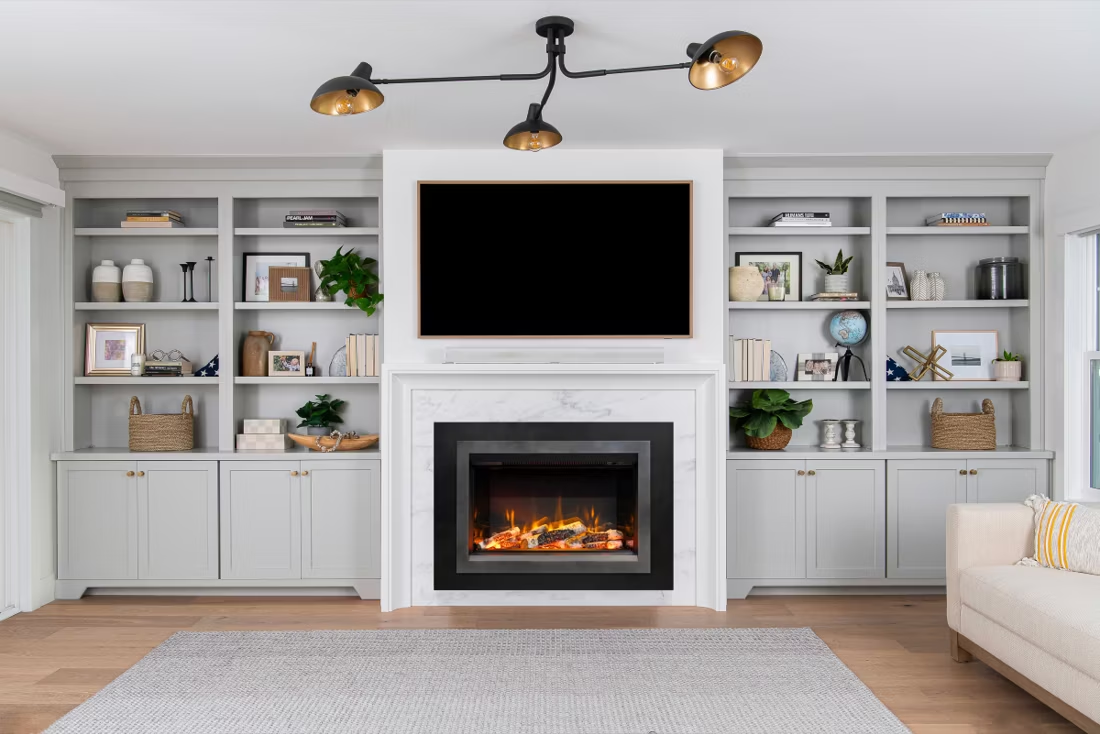
Yes—with an asterisk. Fireplaces are hot and TVs don't like heat. Either put a mantel between them to deflect rising warmth, or choose a fireplace with heat-management technology that creates a cool zone on the wall above—the wall stays around 125 degrees, barely warm, while the room still gets full heat. If you like clean lines and don't want a mantel, heat management is the answer.
Does an electric fireplace need a vent or chimney?
No—that's its superpower. An electric fireplace needs a wall and an outlet, period. No vent pipe, no gas line, no clearances to design around, which is why it works in bedrooms, offices, apartments, and walls where venting a gas or wood unit would be impractical or impossible. Installation is typically the simplest and least expensive of any fireplace type.
Does a fireplace add value to my home?
On average, a fireplace adds back to the home about the same amount you spent installing it. Add the monthly savings from heating the rooms you actually use instead of the whole house—often hundreds of dollars a year—and the value case is strong before you even count what a fire does for how your family uses the room.
What is an in-home preview and do I need one?
It's a visit where a hearth professional measures your space, confirms the model you picked actually works in your home, and walks the specs—framing, gas line, venting, finish work—before anything is ordered. Some details you just can't know until you see the house. Never make a down payment without one; it's the single most-skipped step that burns buyers.
Stove and Fireplace Dealers in Haralson County
Find your electric fireplace in Haralson County.
Tell us a bit about your home and we'll put together a free Project Guide & Parts List for your electric fireplace project—the right unit, the exact parts, and a trusted local dealer in Haralson County to install it.
Find Your Fireplace →