
Ambiance and instant heat for Greene County's mild winters.
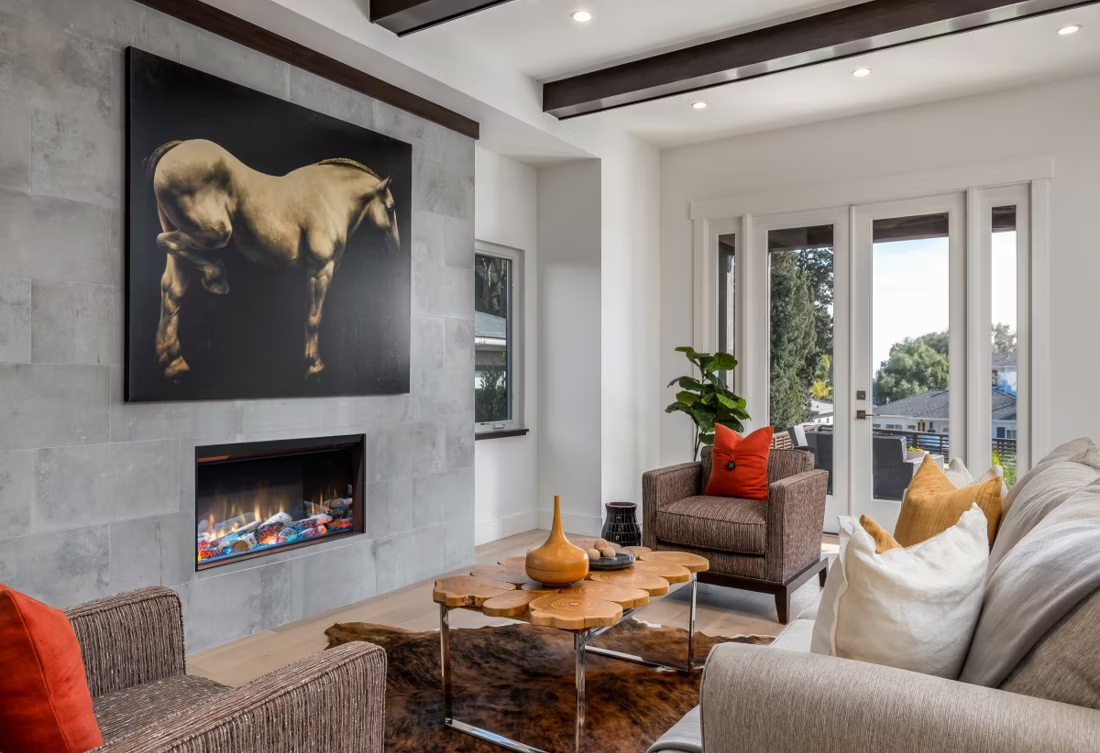
With only 2,861 heating degree days and winter lows that hover around freezing, Greene County doesn't need a wood-burning heat plant to get through January. From Greensboro to the lake homes ringing Lake Oconee, electric fireplaces add real zone heat and ambiance with no chimney and no flue. I'll match you with a trusted local dealer who knows what actually fits your space.
Every Project Starts From One of These Five Situations
A mild climate and a lake full of remodels.
Greene County is a small, rural Piedmont county of just over 6,000 people, anchored by Greensboro and shaped in large part by Lake Oconee, where waterfront cottages, condos, and Reynolds Lake Oconee-area homes have driven steady remodel and new-build activity. The climate here is Zone 3A with 2,861 heating degree days and winter lows averaging around 32 degrees—a fraction of the roughly 8,000-9,000 HDD a place like Duluth, MN sees, and a world away from the all-season wood-burning tradition you'd find further north. Older farmhouses and rural properties in the county still burn oak, pine, and hickory in original masonry fireplaces, but a lot of the newer demand around the lake is for electric units that drop into a remodel or a condo without any venting at all.
Greene County has no reported air quality concerns, so there's no burn-ban or curtailment consideration shaping fuel choice the way there is in some parts of the country—the decision here comes down to convenience, install simplicity, and how the space is actually used. Electric fireplaces run off a standard outlet or a dedicated circuit through Georgia Power or, in outlying parts of the county, a rural electric cooperative, and they don't ask for a chimney, gas line, or wood supply. For a weekend lake house, a guest suite, or a condo without existing masonry, that's often the deciding factor over wood or gas—you get instant flame and heat with none of the flue work.
Three steps. No salesperson until you're ready.
Tell us about your project
Your zip code, your situation, and the fuel you're leaning toward—or let the answers point you to one.
See what's actually available
The brands dealers within 100 miles genuinely carry—real options, never a catalog mirage.
Get your dealer & Project Guide
A trusted local dealer, plus the free Project Guide & Parts List that names every component of the job.
Frequently Asked Questions
How much does an electric fireplace installation cost in Greene County?
A simple wall-mount or freestanding electric unit that plugs into an existing outlet can run as little as $300 to $800 installed. A built-in electric insert or a custom linear unit set into a mantel surround—common in Lake Oconee remodels and new lake homes—typically runs $1,500 to $3,000 once you factor in a dedicated 120V or 240V circuit, framing, and finish carpentry. Homes converting an old wood fireplace opening into a clean electric insert usually land in the middle of that range, since the existing masonry opening does most of the framing work for you.
Do I need a chimney or vent for an electric fireplace?
No. Electric fireplaces produce no combustion byproducts, so there's no flue, liner, or venting required—that's a big part of why they're popular in Lake Oconee condos and newer construction that was never built with a masonry chimney. You can install one against an interior wall, inside an existing (even non-functional) fireplace opening, or as part of a built-in media wall, as long as you have access to the right electrical circuit.
Will an electric fireplace actually heat my home through a Greene County winter?
Honestly, it's built to supplement, not replace, your primary system. With winter lows averaging around 32 degrees and only 2,861 heating degree days for the season, most Greene County homes already run on a heat pump or central system sized for the whole house, and an electric fireplace's 1,500-watt heater is meant to zone-heat a single room. That said, in a well-insulated sunroom, guest suite, or lake-house addition, a properly sized unit can genuinely carry that space on its own through most of the county's mild winter nights without the central system kicking on.
Do I need a permit to install an electric fireplace in Greene County?
A plug-in unit on an existing outlet generally doesn't require a permit. A built-in unit that needs a new dedicated circuit does require an electrical permit through the Greene County Building Department, and a licensed electrician should pull it as part of the job. For dock houses, boat houses, or any installation near Lake Oconee's shoreline, GFCI protection and proper circuit spacing from water are code requirements your installer will handle—worth confirming with any dealer quoting a lakefront project.
Electric vs. gas vs. wood—which makes the most sense in Greene County?
Wood has deep roots here—older farmhouses around the county still burn oak, pine, and hickory in original masonry fireplaces, and fuel cost is low if you have access to your own woodlot. Gas is available in pockets but mostly runs on propane outside Greensboro, since natural gas mains don't reach most of rural Greene County. Electric is the simplest option for a remodel, a condo, or any space without an existing chimney or gas line—no fuel storage, no venting, and given the county's mild 2,861-HDD winters, the modest running cost of an electric unit rarely becomes a real burden the way it might in a colder climate where it's asked to run all day.
How much does it cost to run an electric fireplace here?
A typical 1,500-watt electric fireplace costs roughly 15 to 20 cents an hour to run at full heat, depending on your Georgia Power or local electric cooperative rate—a few dollars for an evening of use. Because Greene County's heating season is short and mild, most owners run these units for ambiance and occasional supplemental heat rather than as an all-day appliance, which keeps the electric bill impact modest compared to running a whole-home system longer than necessary.
What type of electric fireplace works best for a lake house or condo?
For weekend and second homes around Lake Oconee, a built-in linear electric insert or a wall-mount unit is the most common choice—no ash, no soot, and nothing that needs tending if the house sits empty for stretches between visits. Insert-style units that drop into an existing (or newly framed) fireplace opening give you the traditional look homeowners want in a remodel without the upkeep of a working flue. Condos and units in multi-family buildings almost always require electric, since shared-wall construction typically rules out a masonry chimney or gas line anyway.
How much maintenance does an electric fireplace need?
Very little compared to wood or gas. There's no annual chimney sweep, no gas line inspection, and no ash to manage—occasional dusting of the unit and glass, and eventually replacing the LED light strip or heater element after several years of regular use, is about it. That low-maintenance profile is a big part of the appeal for lake properties in Greene County that sit unoccupied for stretches during the week.
Are there rebates or efficiency incentives for electric fireplaces in Greene County?
Electric fireplaces themselves generally don't qualify for efficiency rebates since they're supplemental heat rather than a home's primary system, but if you're bundling the project with broader efficiency work—insulation upgrades, a new heat pump, or other envelope improvements in a lake-house remodel—check with Georgia Power or your local electric cooperative, as those broader efficiency programs sometimes apply to the overall renovation even when the fireplace itself doesn't qualify on its own.
Can I put a TV above my fireplace?
Yes—with an asterisk. Fireplaces are hot and TVs don't like heat. Either put a mantel between them to deflect rising warmth, or choose a fireplace with heat-management technology that creates a cool zone on the wall above—the wall stays around 125 degrees, barely warm, while the room still gets full heat. If you like clean lines and don't want a mantel, heat management is the answer.
What fireplace styles should I know before shopping?
Four cover most of the market: screen-front traditional (mesh front, open feel, fits craftsman homes), traditional door set (the classic look you grew up with), modern linear (wide, low, the statement piece for entertaining), and clean face contemporary (no trim—your tile or stone runs right to the fire's edge). Walk in knowing those four terms and you're ahead of most buyers.
What is an in-home preview and do I need one?
It's a visit where a hearth professional measures your space, confirms the model you picked actually works in your home, and walks the specs—framing, gas line, venting, finish work—before anything is ordered. Some details you just can't know until you see the house. Never make a down payment without one; it's the single most-skipped step that burns buyers.
How much should I budget for a fireplace?
For an average home—covering the fireplace, the vent pipe, and basic installation—a budget between $3,900 and $5,500 gives you a lot of options across wood, gas, and pellet. By the time you add finish work, gas line, and electrical, the average complete installation lands between $5,000 and $12,000 all-in. In a remodel or new build, a good rule is to put about 2.5% of the total project cost toward the fireplace.
Stove and Fireplace Dealers in Greene County
Get your free Project Guide & Parts List for an electric fireplace in Greene County.
Tell me about your space—a lake house remodel, a condo, or a guest suite—and I'll match you with a trusted local dealer and send over a free Project Guide & Parts List: the exact unit, circuit requirements, and recommended installer for your project, no big-box guesswork.
Find Your Fireplace →