
Electric warmth that fits Gainesville's mild winters.
With winter lows averaging 34°F and a short, mild winter heating season, Gainesville doesn't need a furnace-replacing fireplace—it needs an easy, no-venting way to warm a room and add ambiance. I'll match you with a trusted local dealer who can size the right unit for your home.
Every Project Starts From One of These Five Situations
Mild winters make electric the easy upgrade.
Gainesville sits at 1,214 feet in the foothills above Lake Lanier, in a climate zone 4A pocket that runs mild by national standards—the winter heating load here is just a fraction of what a place like Burlington, VT racks up, and winter lows averaging 34°F mean hard freezes are the exception, not the rule. Most Hall County homes lean on a heat pump for whole-house heating, which leaves the fireplace question less about survival heat and more about which room needs a warm-up on the coldest nights and which spot in the house you actually want to sit in front of.
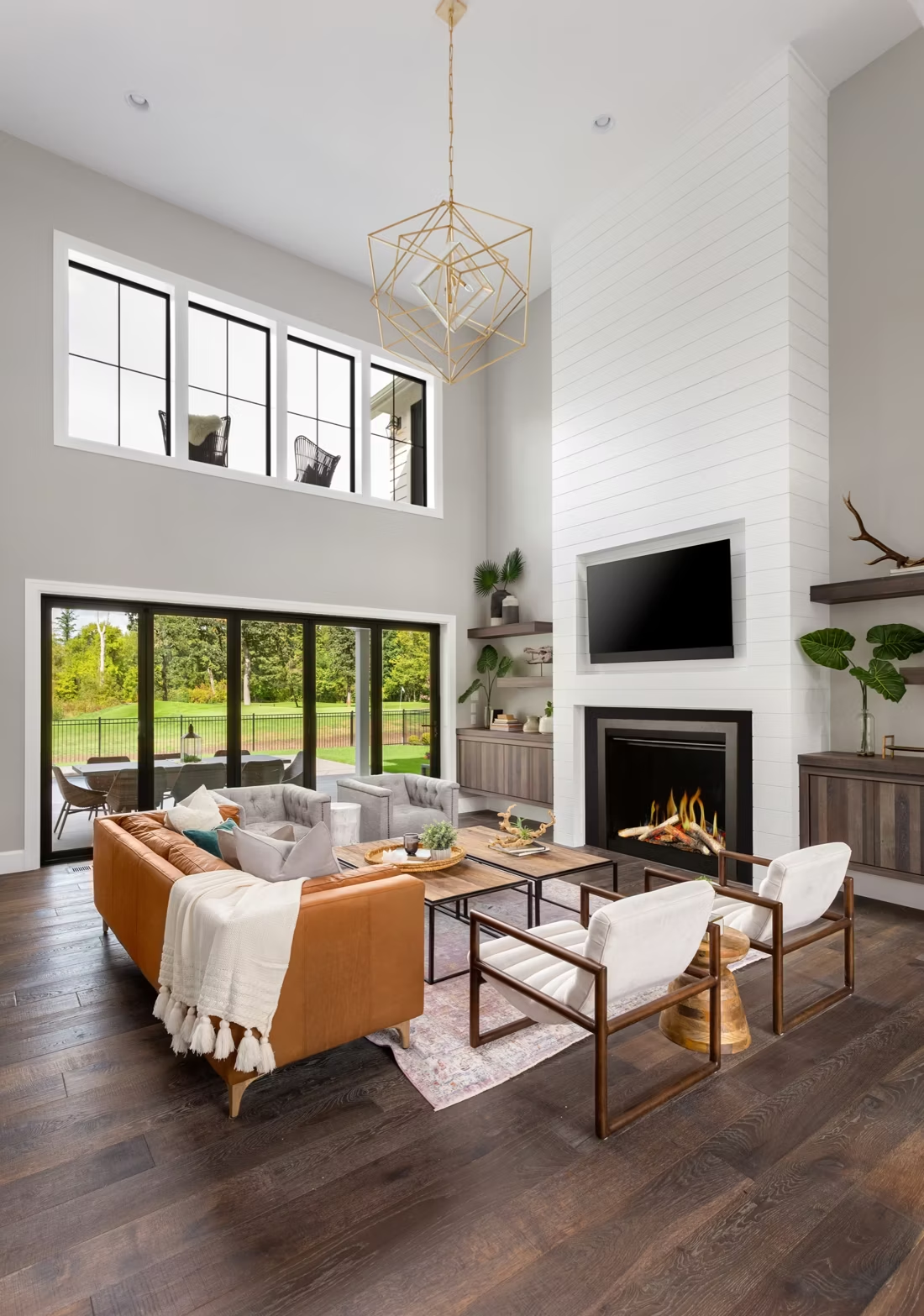
That's exactly where electric fireplaces earn their keep here. There's no chimney to build, no gas line to run, and no wood to stack—a real advantage for the lake homes around Lanier and the newer subdivisions on the north side of town that were never built with a masonry firebox in mind. Your operating cost depends on who serves your address: Georgia Power customers pay around $0.1549 per kWh, while Jackson Electric Membership Corp territory—common in the more rural and lakeside parts of Hall County—runs closer to $0.1138 per kWh, a difference worth knowing if you plan to run the heater function daily through the winter.
Three steps. No salesperson until you're ready.
Tell us about your project
Your zip code, your situation, and the fuel you're leaning toward—or let the answers point you to one.
See what's actually available
The brands dealers within 100 miles genuinely carry—real options, never a catalog mirage.
Get your dealer & Project Guide
A trusted local dealer, plus the free Project Guide & Parts List that names every component of the job.
Frequently Asked Questions
How much does an electric fireplace installation cost in Gainesville?
A plug-in insert or freestanding electric stove that just needs a standard outlet typically runs $300 to $800 installed, since there's no venting or gas line involved. A built-in wall unit or a linear electric fireplace set into new framing costs more—usually $1,500 to $3,500—because it involves carpentry, a dedicated electrical circuit, and often an electrician's time. Retrofitting an existing masonry firebox with an electric insert lands in between, generally $600 to $1,500, since the opening is already there and it's mostly a matter of fitting the unit and wiring it correctly.
Will an electric fireplace actually keep a Gainesville home warm?
For whole-house heat, no—that's still a job for your heat pump or furnace. But given Gainesville's mild profile, with winter lows averaging 34°F and a relatively short heating season, most electric fireplaces here are used exactly the way they're designed to be: a 1,500-watt heater element that comfortably takes the chill off a single room, whether that's a sunroom, a finished basement, or a living room where you'd rather not run central heat just to sit and read. For the handful of colder nights each winter when temperatures actually dip toward freezing, that's usually enough supplemental warmth without touching the thermostat.
Does it matter whether I'm on Georgia Power or Jackson EMC?
It affects your running cost more than you'd think. Georgia Power's residential rate is around $0.1549 per kWh, while Jackson Electric Membership Corp—which serves a lot of the more rural and lakeside stretches of Hall County—charges closer to $0.1138 per kWh. Running a typical 1,500-watt electric fireplace for four hours a night costs roughly $0.93 on Georgia Power versus about $0.68 on Jackson EMC. It's not a dramatic gap, but if you're deciding between an electric fireplace and adding a small gas unit for daily zone heating, knowing your actual utility rate is a useful part of that math.
Do I need a permit to install an electric fireplace in Gainesville?
A plug-in unit that runs off a standard outlet generally doesn't require a permit. A hardwired built-in fireplace, especially one that needs a new dedicated circuit, usually does require an electrical permit through the City of Gainesville or Hall County building department, depending on your address. Most local dealers handling a built-in installation will pull that permit and coordinate the electrical work as part of the job, so you're not left tracking down inspections yourself.
Can I convert an old wood-burning fireplace to electric?
Yes, and it's a common project in Gainesville's older homes, many of which have a masonry firebox that was built for burning local oak or hickory decades ago but hasn't seen a real fire in years. An electric insert drops into that existing opening without touching the chimney, giving you flame-effect ambiance and supplemental heat without the smoke, ash, or upkeep. It's a straightforward retrofit and typically one of the more affordable electric fireplace projects since the masonry opening is already sized and in place.
Electric vs. gas—which makes more sense for my Gainesville home?
It largely comes down to what's already run to your house. If you're inside Georgia Power's core service area with natural gas already piped to the street, a gas fireplace or insert gives you a stronger, always-on heat source for daily zone heating. But a lot of homes around Lake Lanier and in Jackson EMC's more rural coverage area don't have natural gas access at all, which makes electric the simpler, lower-cost path—no propane tank, no gas line trenching, just an outlet or a dedicated circuit. For pure ambiance with minimal installation hassle, electric wins regardless of gas availability.
What type of electric fireplace works best in a Gainesville home?
Wall-mounted linear units are popular in newer construction around Gainesville's north side, giving a wide modern flame view without eating up floor space. For older homes with an existing masonry opening, an insert that slides into the firebox is the natural fit. Mantel packages and TV-stand style units are common in lake houses around Lanier where homeowners want a self-contained piece of furniture rather than built-in construction. A local dealer can walk you through which style fits your room and your electrical setup.
How much maintenance does an electric fireplace need?
Very little compared to wood or gas. There's no chimney to sweep, no venting to inspect, and no combustion byproducts to worry about. Periodically dust the heater vents and wipe down the glass front, and check that the LED flame bulbs or light strip are functioning—most units use long-life LEDs that rarely need replacing. It's the lowest-upkeep hearth option available in Gainesville, which is part of why it's a common choice for rental properties and second homes around the lake.
What size electric fireplace do I need for my room?
Most standard electric fireplaces put out about 5,000 BTU (roughly 1,500 watts), which comfortably heats 400 to 500 square feet—plenty for a typical Gainesville living room or bonus room given the area's mild winter lows. Larger open-concept spaces or rooms with high ceilings may need a wider linear unit or a supplemental unit in an adjoining room rather than relying on heat output alone, since flame width and heater capacity are sized separately on most models. A dealer can match wattage and unit width to your actual floor plan rather than guessing from a box label.
Do electric fireplaces actually produce heat?
Yes—most put out around 4,800–5,000 BTUs from a standard outlet, which comfortably warms a bedroom, office, or den as a comfort-zone heater. What they won't do is carry a whole house the way wood, gas, or pellet can. Think of electric as ambiance-first with honest supplemental heat: flames on with no heat in July, flames plus warmth in January.
Can I put a TV above my fireplace?
Yes—with an asterisk. Fireplaces are hot and TVs don't like heat. Either put a mantel between them to deflect rising warmth, or choose a fireplace with heat-management technology that creates a cool zone on the wall above—the wall stays around 125 degrees, barely warm, while the room still gets full heat. If you like clean lines and don't want a mantel, heat management is the answer.
Can a fireplace actually lower my heating bill?
Yes—by creating a comfort zone. A furnace heats every square foot of the house just to warm the one room you're in; a gas fireplace on low burns roughly a sixth of the gas a typical furnace does. Set the furnace around 55–60 degrees as a baseline, then heat the rooms your family actually uses. Families who heat this way commonly save $20–$60 a month.
What is an in-home preview and do I need one?
It's a visit where a hearth professional measures your space, confirms the model you picked actually works in your home, and walks the specs—framing, gas line, venting, finish work—before anything is ordered. Some details you just can't know until you see the house. Never make a down payment without one; it's the single most-skipped step that burns buyers.
Nearby Dealers
Hearth shops serving Gainesville and the surrounding area. Every listing shows whether it is a WhyFire partner, a dealer we have verified as authorized for the brands we recommend, or a local business carrying hearth products. No manufacturer pays for placement. How we verify dealers →
The Luck Cricket
Blossman Gas And Appliance
Atlanta's Top Chimney Sweep
Extreme Chimneys
Alley-Cassetty
Maddox Feed & Seed
Bolton Fireplace
Tara Residential
Graves Fireplaces Inc.
Electric Service in Gainesville
An electric fireplace's heater draws about 1,500 watts—pennies per hour at local rates.
Georgia Power Co
Jackson Electric Member Corp - (Ga)
Get your free Project Guide & Parts List for an electric fireplace in Gainesville.
Tell me about your home, your room, and whether you're on Georgia Power or Jackson EMC, and I'll match you with a trusted local dealer and send a free Project Guide & Parts List with the right unit and wiring specified for your space.
Find Your Fireplace →