
The cleanest way to add fireplace warmth to a Forsyth County home.
No chimney, no gas line, no HOA committee headaches—just plug-in or hardwired ambiance that fits the master-planned neighborhoods stretching from Cumming to the shores of Lake Lanier.
Every Project Starts From One of These Five Situations
A mild climate and newer neighborhoods where electric heat just fits.
Forsyth County sits in climate zone 3A with a winter low average around 31 degrees and roughly 3,241 heating degree days a year—a fraction of what a place like Duluth, Minnesota sees in a single month. Winters here are short and mild, which means most homes need supplemental heat for a handful of chilly weeks rather than a primary heat source that runs all season. Native oak, pine, and hickory still line the ridges around Cumming and Lake Lanier, but they're rarely the fuel of choice inside homes here anymore.
A lot of that comes down to how the county has grown. Forsyth County has added subdivision after subdivision over the past two decades, and most of those communities operate under HOA covenants that restrict exterior chimneys, wood smoke, and solid-fuel appliances—which is why wood and pellet options rate as not-applicable for most of the county's housing stock. Electric fireplaces sidestep all of that: no venting, no combustion byproducts, no covenant review needed for a plug-in unit, and power delivered reliably through Sawnee EMC, the electric cooperative that serves most of the county. For zone heat in a bonus room, a linear feature wall in a new build, or a no-mess insert into an older masonry opening, electric is the fuel that matches how Forsyth County actually lives.
Three steps. No salesperson until you're ready.
Tell us about your project
Your zip code, your situation, and the fuel you're leaning toward—or let the answers point you to one.
See what's actually available
The brands dealers within 100 miles genuinely carry—real options, never a catalog mirage.
Get your dealer & Project Guide
A trusted local dealer, plus the free Project Guide & Parts List that names every component of the job.
Frequently Asked Questions
How much does an electric fireplace installation cost in Forsyth County?
Costs vary widely with the type of unit. A plug-in freestanding or wall-mount electric fireplace can run a few hundred dollars installed with no electrical work required beyond an existing outlet. A built-in electric fireplace set into a custom mantel or media wall—common in newer Forsyth County construction—typically runs $2,000 to $5,000 once framing, a dedicated 120V or 240V circuit, and finish carpentry are factored in. Converting an existing masonry wood fireplace to an electric insert usually lands in the $1,500 to $3,500 range depending on the insert size and whether new wiring needs to be run to the firebox.
Will an electric fireplace actually heat a room, or is it just for looks?
Most electric fireplaces include a 1,500-watt heater rated for roughly 400 to 500 square feet, which is genuinely useful supplemental heat given how mild Forsyth County winters run—a winter low average around 31 degrees means most homes aren't fighting sustained sub-zero cold the way northern climates do. For a bonus room, a finished basement, or a sunroom addition that your HVAC struggles to reach evenly, an electric unit can carry the room on its own during cool snaps. For whole-home primary heat, though, electric fireplaces are meant to supplement a central system, not replace it.
Do I need a permit to install an electric fireplace in Forsyth County?
A plug-in electric fireplace that uses an existing outlet typically doesn't require a permit. If your installation needs a new dedicated circuit—common for larger built-in units or 240V models—that electrical work needs to be pulled through the Forsyth County Department of Planning & Community Development and performed by a licensed electrician. If you're in a subdivision with an active HOA, it's worth checking your covenants too, since some communities require architectural review for changes to a fireplace wall or mantel even when no county permit is triggered.
Why don't more homes in Forsyth County have wood-burning fireplaces?
It's less about the wood—oak, pine, and hickory are all over the county—and more about how Forsyth County has developed. The county's rapid growth around Cumming and Lake Lanier has been driven almost entirely by planned subdivisions, and most of those communities' HOA covenants restrict or prohibit wood-burning appliances and exterior chimneys, largely for uniformity and fire-safety reasons rather than air quality (Forsyth County has no meaningful air quality restrictions). Combine that with winters mild enough that wood heat isn't a necessity, and electric and gas have become the default choices for new construction here.
Electric vs. gas fireplace—which makes more sense for my Forsyth County home?
Gas fireplaces offer higher heat output and the look of a real flame, and they're a standard, well-supported option throughout the county for homes with gas service. Electric fireplaces trade some heat output for simplicity: no gas line, no venting, no annual burner inspection, and installation options in rooms where running gas or venting isn't practical or where an HOA restricts anything resembling a traditional chimney. For a primary living room where you want strong, consistent heat, gas is often the better fit. For a bedroom, basement, condo, or townhome—increasingly common housing types in Forsyth County—electric is usually the simpler and more flexible choice.
Will my electric fireplace still work if the power goes out?
No—electric fireplaces are entirely dependent on grid power, so they'll shut off along with everything else during an outage. Most Forsyth County homes get their power through Sawnee EMC, which generally restores outages quickly outside of major storm events, but ice storms and severe thunderstorms can occasionally knock out power for hours at a time. If backup heat during outages is a priority for your household, that's worth factoring into your fuel choice—a gas fireplace with a standing pilot, for comparison, can often still operate without electricity.
What type of electric fireplace works best for Forsyth County homes?
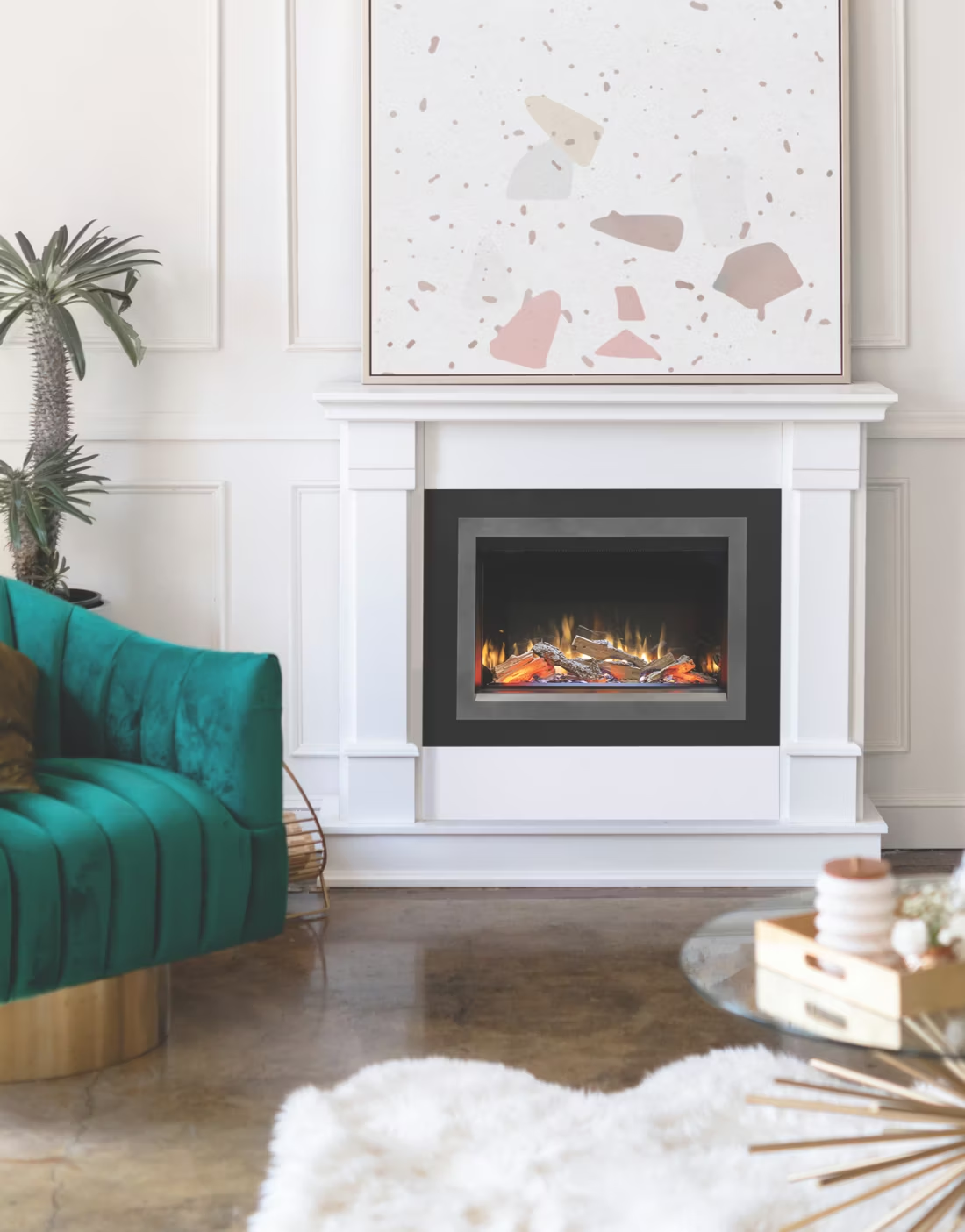
For newer construction and remodels, linear built-in electric fireplaces set into a media wall or custom mantel are the most popular choice locally—they read as a real architectural feature rather than an appliance. For older homes around the county with an existing masonry fireplace that's sitting unused (often because an HOA won't allow active wood burning), an electric insert is a straightforward way to bring that opening back to life without any venting work. Freestanding and wall-mount units are the right call for renters, secondary rooms, or anyone who wants a lower-cost option without permanent modification.
How much maintenance does an electric fireplace need?
Very little compared to wood or gas. There's no chimney to sweep, no burner to service annually, and no combustion byproducts to worry about. Maintenance is generally limited to occasionally dusting the heater vents and glass, and replacing the LED ember bed or flame-effect bulbs every several years as they dim with age. There's no annual inspection requirement the way there is for gas appliances, which is part of why electric appeals to owners who want fireplace ambiance without an ongoing service commitment.
Are there any rebates for installing an electric fireplace in Forsyth County?
Electric fireplaces themselves generally aren't eligible for utility rebates the way heat pumps or high-efficiency HVAC equipment are, since they're considered supplemental heat rather than a primary system. That said, if your project involves upgrading electrical service or pairing the fireplace purchase with broader energy-efficiency work, it's worth checking with Sawnee EMC directly, as cooperative-specific efficiency incentives do change from year to year. A local dealer familiar with Forsyth County installations can tell you what's currently available at the time of your project.
Can I put a TV above my fireplace?
Yes—with an asterisk. Fireplaces are hot and TVs don't like heat. Either put a mantel between them to deflect rising warmth, or choose a fireplace with heat-management technology that creates a cool zone on the wall above—the wall stays around 125 degrees, barely warm, while the room still gets full heat. If you like clean lines and don't want a mantel, heat management is the answer.
Do electric fireplaces actually produce heat?
Yes—most put out around 4,800–5,000 BTUs from a standard outlet, which comfortably warms a bedroom, office, or den as a comfort-zone heater. What they won't do is carry a whole house the way wood, gas, or pellet can. Think of electric as ambiance-first with honest supplemental heat: flames on with no heat in July, flames plus warmth in January.
How much should I budget for a fireplace?
For an average home—covering the fireplace, the vent pipe, and basic installation—a budget between $3,900 and $5,500 gives you a lot of options across wood, gas, and pellet. By the time you add finish work, gas line, and electrical, the average complete installation lands between $5,000 and $12,000 all-in. In a remodel or new build, a good rule is to put about 2.5% of the total project cost toward the fireplace.
Does a fireplace add value to my home?
On average, a fireplace adds back to the home about the same amount you spent installing it. Add the monthly savings from heating the rooms you actually use instead of the whole house—often hundreds of dollars a year—and the value case is strong before you even count what a fire does for how your family uses the room.
Stove and Fireplace Dealers in Forsyth County
Find your electric fireplace in Forsyth County.
Tell us about your home and we'll match you with a trusted local Forsyth County dealer and send over a free Project Guide & Parts List—sized and specified for your space, no HOA guesswork required.
Find Your Fireplace →