
Warm up Evans County without the woodpile.
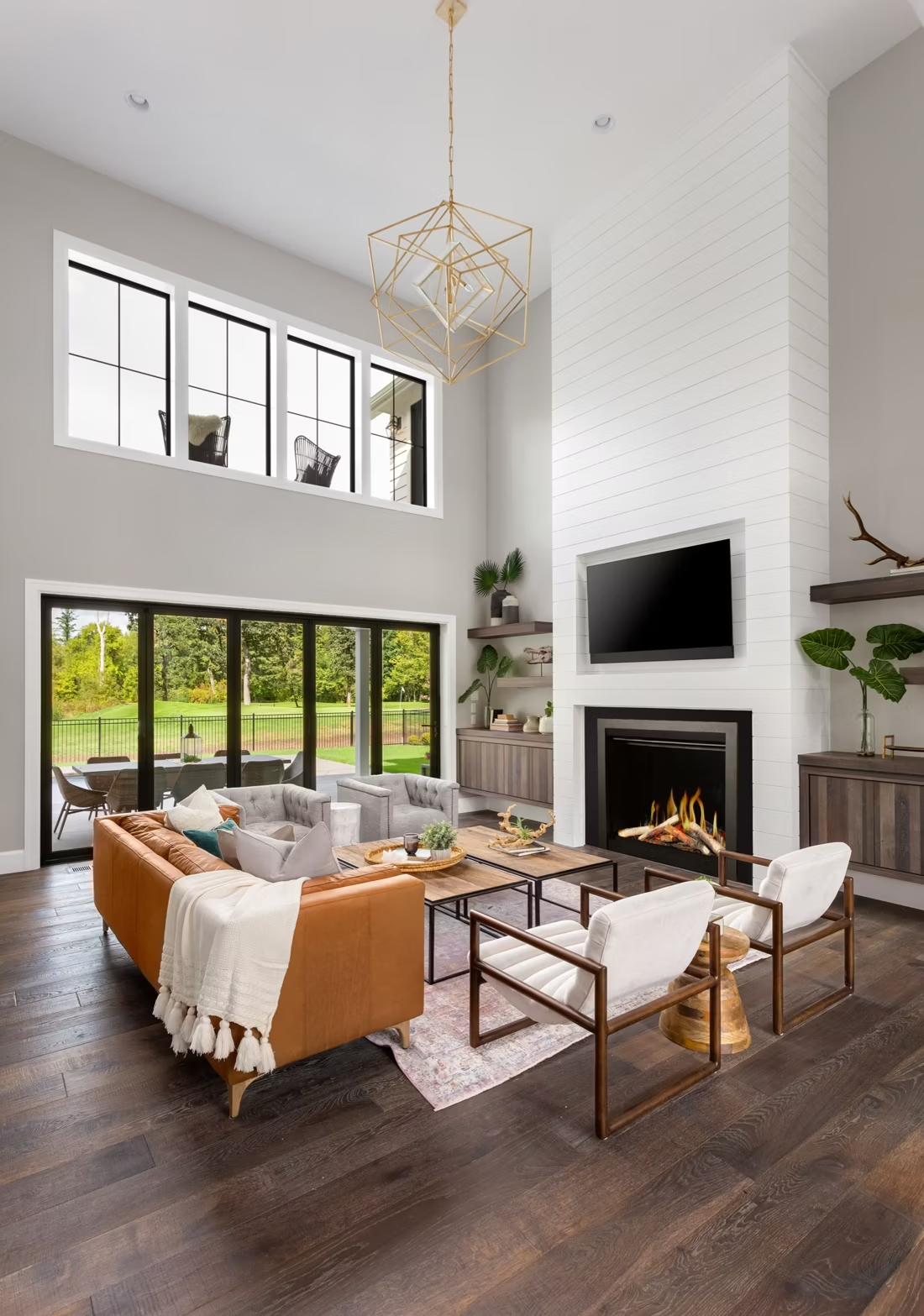
Evans County winters are short and mild, which makes electric fireplaces a practical, low-fuss way to add heat and ambiance to a den, bedroom, or living room from Claxton to Bellville. Find the right unit and connect with a trusted local dealer.
Every Project Starts From One of These Five Situations
Mild winters, modern convenience.
Evans County sits in climate zone 2A in southeast Georgia, with an average winter low around 38°F and a mild, short heating season—nowhere near what a place like Duluth, MN or Burlington, VT logs in a single season. That's not enough cold to justify a full wood-burning setup or a chimney rebuild for most homes here, but it's more than enough chill on a January night in Claxton or out along the Canoochee River to want supplemental heat in a bedroom, sunroom, or den.
That's exactly the gap electric fireplaces fill. There's no gas line to run, no chimney to maintain, and no cutting permit to track down—plug-in units heat a single room in minutes, and built-in inserts can slot into an existing masonry fireplace or a new stud wall with a standard 120V outlet. For a county of under 5,000 people served by Excelsior EMC, where the nearest big-box hearth showroom is often a drive to Statesboro or Savannah, a local dealer who can size, deliver, and install an electric unit correctly is worth more than a catalog full of options you can't get serviced nearby.
Three steps. No salesperson until you're ready.
Tell us about your project
Your zip code, your situation, and the fuel you're leaning toward—or let the answers point you to one.
See what's actually available
The brands dealers within 100 miles genuinely carry—real options, never a catalog mirage.
Get your dealer & Project Guide
A trusted local dealer, plus the free Project Guide & Parts List that names every component of the job.
Frequently Asked Questions
How much does an electric fireplace installation cost in Evans County?
Plug-in electric fireplaces and freestanding stoves that use an existing outlet typically run $400 to $1,000 installed, since there's no venting or gas line involved. Built-in electric inserts or wall-mounted units that require a dedicated 120V or 240V circuit, minor framing, or conversion of an old masonry fireplace usually land between $1,200 and $2,500, depending on electrical work and finish carpentry. Given Evans County's mild winters, most homeowners here are buying for a specific room—a den, a bedroom, or a sunroom—rather than trying to heat an entire house, which keeps most projects toward the lower end of that range.
Do I need a permit to install an electric fireplace in Evans County?
A simple plug-in unit that uses an existing outlet generally doesn't require a permit. If your installation involves new wiring, a dedicated circuit, or converting an existing wood or gas fireplace opening into a built-in electric insert, that electrical work typically needs to go through the Evans County Building & Zoning Department and be completed by a licensed electrician. A local hearth dealer who regularly installs electric units in the county can tell you upfront whether your specific project crosses that line.
Is an electric fireplace enough heat for an Evans County home?
For most rooms, yes. With an average winter low near 38°F and only a mild, short heating season, Evans County doesn't see the kind of sustained deep cold that overwhelms a 1,500-watt electric heater. A well-sized electric insert or stove can comfortably supplement a bedroom, den, or converted porch, and many homeowners here use one as their primary heat source in a room that's otherwise disconnected from central HVAC—a detached workshop, a mother-in-law suite, or an older farmhouse addition without ductwork.
What's the difference between an electric fireplace, insert, and stove?
An electric fireplace is usually a wall-mounted or built-in unit designed to look like a modern linear fireplace, often installed during a remodel. An electric insert is sized to slide into an existing masonry or wood-stove firebox, which is common for older Evans County homes with a fireplace opening that's no longer safe or practical to burn wood in. An electric stove is a freestanding cabinet-style unit that mimics a wood or pellet stove's look and can sit anywhere near an outlet. All three plug in or wire in—the choice comes down to whether you have an existing opening to fill or a blank wall to work with.
How much does it cost to run an electric fireplace here?
Most electric fireplaces draw around 1,500 watts on the heater setting. Running one for a typical Evans County evening—a few hours on a cool night, served through Excelsior EMC—usually costs somewhere between 20 and 40 cents an hour depending on your rate and settings, and many owners run the flame effect alone (no heat) for far less. Since the county's mild climate means the heater is only needed on genuinely cold nights rather than for months on end, seasonal running costs stay modest compared to colder-climate counties.
Electric vs. wood—which makes more sense in Evans County?
Wood is still a traditional choice in this part of Georgia—oak, pine, and hickory are all common and easy to source locally, and a wood stove or fireplace gives you heat during a power outage, which matters when storms roll through. But with only a mild, short heating season, most Evans County households don't need wood as a primary heat source, and don't want the upkeep of chimney sweeps and firewood storage for a handful of cold nights. Electric wins for convenience, cleanliness, and installation simplicity; wood wins if you want backup heat that doesn't depend on the grid or you like maintaining a real fire. Some homeowners here keep a small wood stove in a shop or barn and an electric unit in the main house.
What size electric fireplace do I need for my room?
Electric units are typically rated by BTU output and square footage coverage rather than firebox size. A compact 400–1,000 sq ft rating covers most bedrooms and dens common in Evans County's older single-story homes, while a 1,000–1,500 sq ft rated unit suits an open living room or a converted porch with less insulation. Because the heating demand here is light compared to colder regions, oversizing is rarely necessary—a local dealer can measure your specific room and recommend a unit that won't feel underpowered on the rare 20-degree morning.
Do electric fireplaces need any regular maintenance?
Very little. There's no chimney to sweep and no ash to clean out. Basic upkeep is limited to occasionally dusting the heating element and vents, checking that the fan runs quietly, and replacing an LED light strip after years of use if the flame effect dims. This low-maintenance profile is one of the biggest draws for Evans County homeowners who want fireplace ambiance without committing to seasonal chimney inspections or firewood stacking.
Can I get rebates or utility incentives for an electric fireplace in Evans County?
Electric fireplaces are simple resistance or infrared heaters, so they generally don't qualify for the efficiency rebates that apply to heat pumps or high-efficiency furnaces. That said, it's worth checking with Excelsior EMC directly, since electric co-ops occasionally run seasonal promotions on supplemental electric heating equipment. A local dealer can also tell you whether a specific model qualifies for any manufacturer rebate at the time of purchase.
Can I put a TV above my fireplace?
Yes—with an asterisk. Fireplaces are hot and TVs don't like heat. Either put a mantel between them to deflect rising warmth, or choose a fireplace with heat-management technology that creates a cool zone on the wall above—the wall stays around 125 degrees, barely warm, while the room still gets full heat. If you like clean lines and don't want a mantel, heat management is the answer.
What fireplace styles should I know before shopping?
Four cover most of the market: screen-front traditional (mesh front, open feel, fits craftsman homes), traditional door set (the classic look you grew up with), modern linear (wide, low, the statement piece for entertaining), and clean face contemporary (no trim—your tile or stone runs right to the fire's edge). Walk in knowing those four terms and you're ahead of most buyers.
Does a fireplace add value to my home?
On average, a fireplace adds back to the home about the same amount you spent installing it. Add the monthly savings from heating the rooms you actually use instead of the whole house—often hundreds of dollars a year—and the value case is strong before you even count what a fire does for how your family uses the room.
Can I install a fireplace myself?
If you're putting a fire in your house on purpose, it's best to work with an expert. Unless you're genuinely experienced in framing, gas line, vent pipe, and the national code on clearances to combustibles, have a professional do it—and ideally the same company that sells you the fireplace, so warranty, service, and liability all live under one roof.
Find your electric fireplace in Evans County.
Tell us a bit about your room and we'll match you with the right electric fireplace, insert, or stove—plus a free Project Guide & Parts List and a trusted local dealer to install it.
Find Your Fireplace →