
Warm up Elbert County without the wood pile or the vent pipe.
With winters this mild around Elberton and the rest of Elbert County, an electric fireplace often does the job with no chimney, no gas line, and no firewood to stack. Find the right unit and get matched with a trusted local dealer.
Every Project Starts From One of These Five Situations
Mild winters make electric the easy fit.
Elbert County sits in climate zone 3A, with an average winter low around 30°F and roughly 3,270 heating degree days a year—a fraction of what a place like Duluth, MN or Bismarck, ND racks up over a full winter. Most homes here, whether in Elberton (the self-proclaimed Granite Capital of the World) or out toward Bowman and the rural stretches of the county, only need real supplemental heat during a handful of cold snaps. That's exactly the kind of heating load an electric fireplace is built for.
There's no chimney to sweep, no gas line to run, and in most cases no structural work at all—a plug-in unit runs off a standard outlet, while a built-in model may need a dedicated 240V circuit from a licensed electrician. Power in Elbert County comes primarily through Georgia Power, with some outlying areas served by Little River EMC; either way, running an electric fireplace is a simple line-item on the bill, not a fuel-delivery decision. For a county with a population under 6,000 and a lot of ground between homes, that simplicity matters—a local dealer can size the right unit and have it running the same week, without permits or venting to coordinate.
Three steps. No salesperson until you're ready.
Tell us about your project
Your zip code, your situation, and the fuel you're leaning toward—or let the answers point you to one.
See what's actually available
The brands dealers within 100 miles genuinely carry—real options, never a catalog mirage.
Get your dealer & Project Guide
A trusted local dealer, plus the free Project Guide & Parts List that names every component of the job.
Frequently Asked Questions
How much does an electric fireplace installation cost in Elbert County?
Unlike wood or gas, electric fireplace cost has less to do with your location and more to do with the unit type. A plug-in insert or freestanding unit that runs off a standard 120V outlet typically runs $300 to $900 installed, since there's often no wiring work at all. A built-in wall unit or full mantel package that requires a new 240V circuit and some minor framing runs closer to $1,200 to $3,000, mostly driven by electrician labor. Local dealers serving Elberton and the rest of Elbert County can walk you through both paths during an in-home visit.
Do I need a permit to install an electric fireplace in Elbert County?
Usually not for a plug-in unit—there's no combustion, no venting, and nothing structural to inspect. If your unit requires a new dedicated circuit or panel work, the electrical portion typically needs a permit through Elbert County's building department, and most licensed electricians handle that filing as part of the job. This is one of the simplest permitting paths of any fireplace fuel, which is part of why electric is a popular choice for a quick supplemental-heat upgrade in this county.
What's the difference between an electric fireplace, insert, and stove?
An electric fireplace is usually a built-in wall unit or a full mantel package designed to be the visual centerpiece of a room. An electric insert is sized to slide into an existing masonry or gas fireplace opening, giving an old, unused hearth a heat source again without any chimney work. An electric stove is a freestanding cabinet-style unit that can go almost anywhere near an outlet. For a lot of older homes around Elberton with an existing but unused fireplace, an insert is often the simplest upgrade.
Will an electric fireplace actually heat my room, or is it just for looks?
Most electric units put out around 5,000 BTU (roughly 1,500 watts) of real heat, which is enough to comfortably warm a single room—a den, bedroom, or converted sunroom—especially given Elbert County's mild 3,270 heating-degree-day climate. What it won't do is replace central heat for a whole house during a hard freeze the way a wood stove might in a much colder climate like Duluth, MN. Think of it as zone heat for the room you're actually sitting in, with the flame effect running independently of the heater if you just want ambiance on a mild evening.
What happens to my electric fireplace during a power outage?
It goes dark—no flame effect, no heat, nothing. That's the honest tradeoff with electric heat, and it matters in Elbert County, where ice storms occasionally knock out power in the more rural stretches toward Bowman and along the county roads for a day or more. If backup heat during outages is a real concern for your household, it's worth pairing an electric fireplace (for everyday ambiance and easy zone heat) with a wood stove or vented gas unit elsewhere in the home that can keep running when the grid doesn't.
How much does it cost to run an electric fireplace in Elbert County?
At typical Georgia Power or Little River EMC residential rates, a 1,500-watt electric fireplace running on high costs somewhere around 18 to 22 cents an hour to operate—call it $2 to $3 for a full evening of use. Most units also have a lower heat setting or heat-off/flame-only mode, which drops the cost to a few cents an hour. That's a fraction of what supplemental space heating from a furnace or heat pump costs to run for the same stretch of time.
What are the best electric fireplace brands for this climate?
Since Elbert County's heating load is modest, most homeowners here are choosing electric primarily for ambiance and light supplemental warmth rather than raw BTU output—so realistic flame technology and build quality matter more than sheer heat capacity. Dimplex and Napoleon both make well-regarded built-in and insert models with strong flame realism, and either is a common recommendation from local dealers for a living room or den upgrade. A dealer can match brand and size to your actual room dimensions.
Can I install an electric insert into my existing fireplace myself?
If it's a plug-in insert and your existing fireplace opening is a standard size, many homeowners do handle the install themselves—it's largely a matter of fit and running a cord to a nearby outlet safely. If the unit needs a dedicated circuit, or if your fireplace opening needs any framing or trim work to accept the insert cleanly, it's worth having a local dealer or electrician handle it. Getting the fit right the first time avoids a return trip for a swap.
Electric vs. gas or wood—which is right for my Elbert County home?
Wood, common locally with oak, pine, and hickory, and gas both deliver real, substantial heat and can keep running without power—better fits if you want a primary or backup heat source. Electric is simpler to install, has no fuel to buy or store, and is the lowest-hassle way to add ambiance and light zone heat to a room, but it goes dark in an outage and won't replace central heat on a genuinely cold night. Given Elbert County's mild 3A climate and modest heating-degree-day count, a lot of homeowners here choose electric specifically because they don't need a heavy-duty combustion appliance for the handful of cold weeks each winter—it's the low-commitment option for a county where extreme cold is the exception, not the rule.
Can I put a TV above my fireplace?
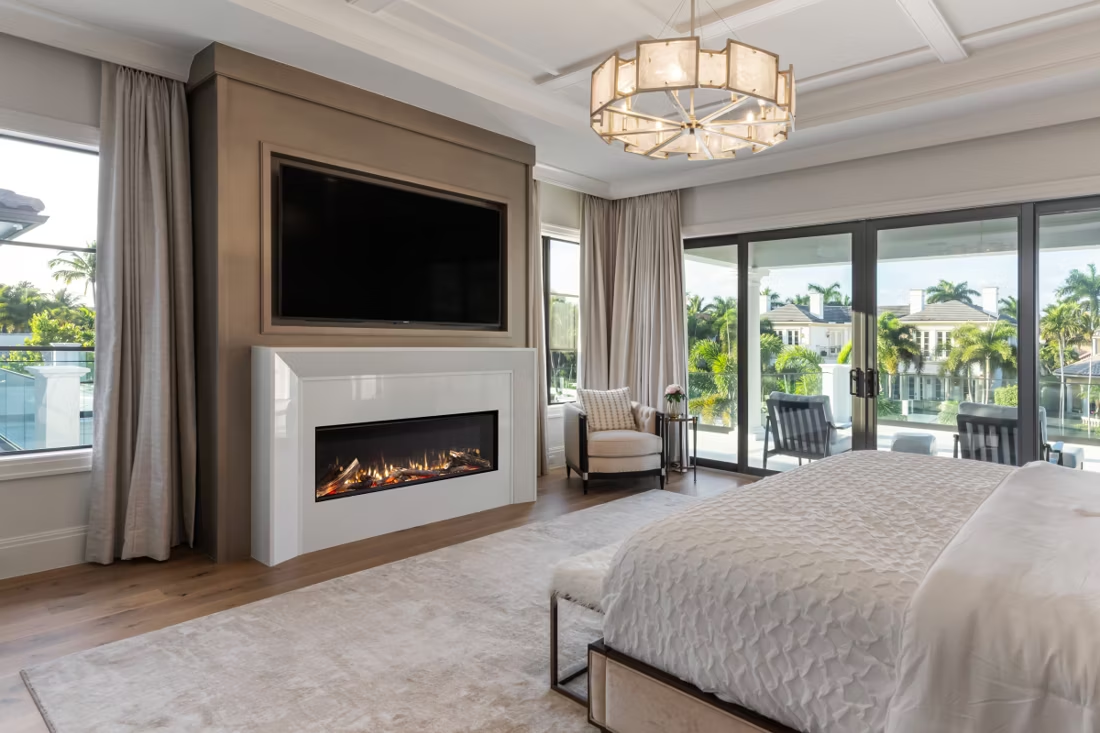
Yes—with an asterisk. Fireplaces are hot and TVs don't like heat. Either put a mantel between them to deflect rising warmth, or choose a fireplace with heat-management technology that creates a cool zone on the wall above—the wall stays around 125 degrees, barely warm, while the room still gets full heat. If you like clean lines and don't want a mantel, heat management is the answer.
Do electric fireplaces actually produce heat?
Yes—most put out around 4,800–5,000 BTUs from a standard outlet, which comfortably warms a bedroom, office, or den as a comfort-zone heater. What they won't do is carry a whole house the way wood, gas, or pellet can. Think of electric as ambiance-first with honest supplemental heat: flames on with no heat in July, flames plus warmth in January.
How much should I budget for a fireplace?
For an average home—covering the fireplace, the vent pipe, and basic installation—a budget between $3,900 and $5,500 gives you a lot of options across wood, gas, and pellet. By the time you add finish work, gas line, and electrical, the average complete installation lands between $5,000 and $12,000 all-in. In a remodel or new build, a good rule is to put about 2.5% of the total project cost toward the fireplace.
Can I install a fireplace myself?
If you're putting a fire in your house on purpose, it's best to work with an expert. Unless you're genuinely experienced in framing, gas line, vent pipe, and the national code on clearances to combustibles, have a professional do it—and ideally the same company that sells you the fireplace, so warranty, service, and liability all live under one roof.
Stove and Fireplace Dealers in Elbert County
Find your electric fireplace in Elbert County.
Tell us a bit about your home and we'll match you with the right electric fireplace, insert, or stove—plus a free Project Guide & Parts List with your recommended local Elbert County dealer.
Find Your Fireplace →