
The easiest fireplace upgrade for Dawson County homes and cabins.
No chimney, no gas line, no venting—just a real heat source that plugs in or wires into a dedicated circuit. Built for Dawsonville houses, Lake Lanier condos, and weekend cabins near Amicalola Falls alike.
Every Project Starts From One of These Five Situations
A mild foothills climate that plays to electric's strengths.
Dawson County sits in the North Georgia foothills, at the edge of the Blue Ridge escarpment near Amicalola Falls State Park and the upper arm of Lake Lanier. In climate zone 4A with an average winter low of 31°F and roughly 3,241 heating degree days, the county sees real cold snaps but nothing close to the sustained subzero stretches you'd get in a place like Burlington, VT or Bismarck, ND. That matters for fireplace selection: a 1,500-watt electric unit that would be laughably undersized in a mountain town further north can genuinely carry a room, or even a whole small cabin, through most Dawson County winters.
With only about 3,900 residents spread across a mix of lakefront homes, mountain cabins, and Dawsonville-area houses, a lot of the building stock here isn't set up for masonry chimneys or buried propane lines—especially newer construction near Lake Lanier and second homes tucked into the hills toward Amicalola Falls. Electric fireplaces sidestep all of that. Power comes from Amicalola EMC or Georgia Power depending on where you sit in the county, and a licensed electrician can typically get a built-in unit wired into a dedicated circuit in an afternoon. No flue, no chimney sweep, no propane tank to fill—just heat on demand, which is exactly what most homeowners here are actually after.
Three steps. No salesperson until you're ready.
Tell us about your project
Your zip code, your situation, and the fuel you're leaning toward—or let the answers point you to one.
See what's actually available
The brands dealers within 100 miles genuinely carry—real options, never a catalog mirage.
Get your dealer & Project Guide
A trusted local dealer, plus the free Project Guide & Parts List that names every component of the job.
Frequently Asked Questions
How much does an electric fireplace installation cost in Dawson County?
A plug-in electric insert or freestanding unit runs $400 to $1,200 installed, since most just need an existing outlet and a bit of carpentry to fit a mantel or surround. A built-in wall unit or a true electric insert replacing an old masonry firebox typically runs $1,500 to $4,000, mostly driven by whether an electrician needs to run a new dedicated 120V or 240V circuit—common in older Dawsonville-area homes that weren't wired with a hearth appliance in mind. Custom linear units with stone or tile surrounds for a Lake Lanier great room can push toward the higher end once finish carpentry is factored in.
What size electric fireplace do I need for my home?
Most standard electric fireplaces put out around 1,500 watts, roughly equivalent to 5,000 BTU, which is enough to noticeably warm a 400 to 600 square foot room in Dawson County's mild 4A climate—plenty for zone heating a den, bedroom, or open living area on the county's coldest nights. For a larger open-concept space, especially in a lake home with high ceilings and a lot of glass facing Lake Lanier, look at a larger linear unit or plan on more than one heat zone. Because winter lows here average around 31°F rather than the deep negatives you'd see in Duluth, MN, electric units are rarely asked to do the heavy lifting a wood stove or gas insert would in a harsher climate—most homeowners are supplementing a heat pump or central system, not replacing it entirely.
Can I convert my existing wood fireplace to electric in Dawson County?
Yes, and it's a common project for older farmhouses around Dawsonville with a masonry fireplace that's gone unused for years. An electric insert slides into the existing firebox opening, and because there's no combustion, the chimney doesn't need to be functional, swept, or even structurally sound—it just needs to look right from the room. This is usually the cheapest electric project available, often under $1,500, since the masonry surround and mantel are already in place and the work is mostly electrical rather than construction.
Do I need a permit to install an electric fireplace in Dawson County?
A plug-in freestanding electric fireplace generally doesn't require a permit since it's treated like any other appliance. A built-in unit that requires new electrical wiring or structural framing typically does need an electrical permit through the Dawson County Building Department, and any licensed electrician doing the circuit work should pull that permit as a matter of course. It's a much lighter lift than the building and gas-line permits required for wood or propane installations in the county.
Will my electric fireplace work during a power outage?
No—this is the one honest tradeoff worth knowing before you buy. Unlike a gas fireplace with battery-backup ignition, an electric fireplace goes dark the moment the power does, and ice storms do occasionally knock out Amicalola EMC and Georgia Power service in the county's higher, more exposed areas near Amicalola Falls. For most Dawson County homeowners this isn't a dealbreaker since electric units are typically chosen for convenience and zone heating rather than emergency backup—but if outage-proof heat matters to your household, that's a reason to pair an electric fireplace with a wood stove or generator rather than relying on electric alone.
What's the difference between an electric fireplace, insert, and stove?
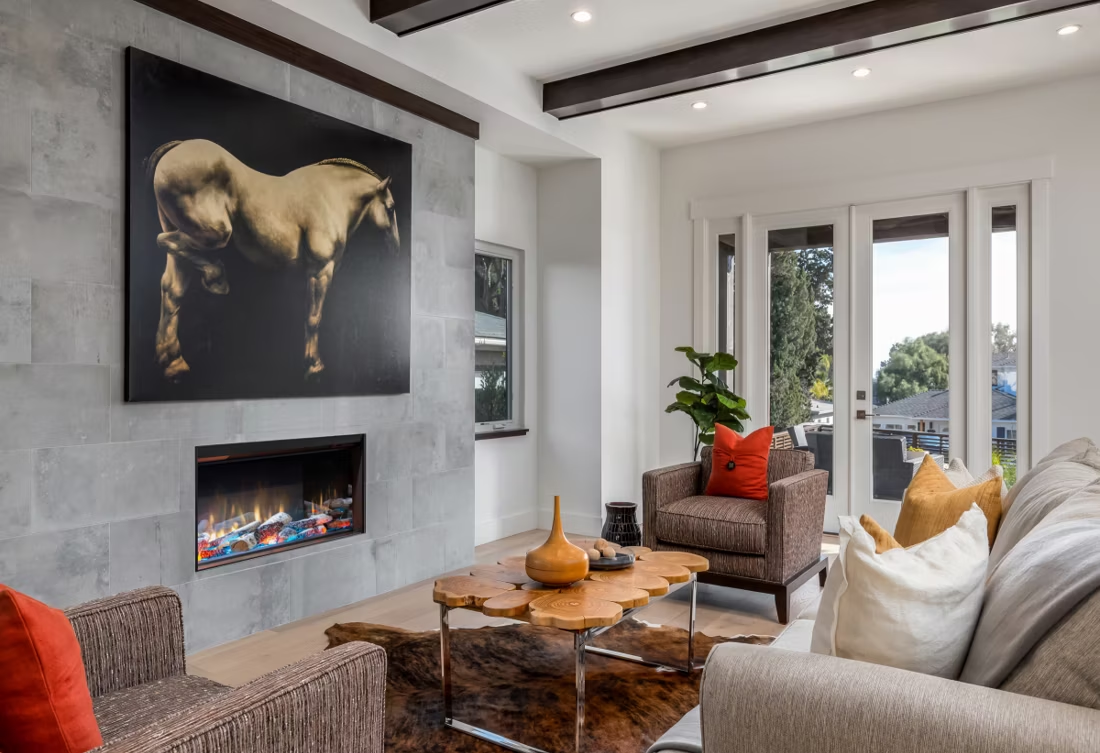
An electric fireplace is typically a built-in or wall-mounted unit designed to look like a framed hearth—common in new Lake Lanier-area builds and remodels. An electric insert is sized to slide into an existing masonry firebox, which is the more common choice for older Dawsonville homes with an unused wood fireplace. An electric stove is a freestanding cabinet-style unit that sits on the floor like a traditional wood stove but plugs in—a good fit for a cabin or bonus room where you want the look of a stove without any venting requirements at all. All three produce the same basic electric heat; the choice comes down to what opening or footprint you're working with.
What's the best electric fireplace for Dawson County's climate?
Because winters here are mild by national standards—average lows in the low 30s and just over 3,200 heating degree days—most homeowners do well with a mid-range linear or insert model from a brand like Dimplex, Napoleon, or Amantii, chosen more for room fit and flame realism than raw output. In a Lake Lanier home with big windows and higher heat loss, a slightly larger unit or a second zone unit in an adjoining room makes sense. In a tighter mountain cabin near Amicalola Falls, a single well-placed insert is often all that's needed. A local dealer can size the unit to your actual room rather than a generic square-footage chart.
What does it cost to run an electric fireplace in Dawson County?
A typical 1,500-watt electric fireplace run on the high setting for several hours costs somewhere in the range of a few cents to around 20 cents an hour depending on current Amicalola EMC or Georgia Power rates—modest compared to running a whole-house heat pump harder to compensate for a cold room. Most units also have a heat-off, flame-only mode that uses only a few watts, which is popular for ambiance during Dawson County's milder shoulder-season evenings when you want the look of a fire without any added heat.
Electric vs. wood—which is right for my Dawson County home?
Wood heat has deep roots here—oak, hickory, and pine are all locally abundant, and a Cherokee National Forest cutting permit runs about $20 per cord during the May-to-October season for those who want to cut their own. Wood also keeps working when the power doesn't, which matters during the occasional ice storm. Electric, on the other hand, wins on convenience: no hauling, no ash, no chimney to maintain, and an install that can be done in an afternoon rather than a full day of venting work. For a primary residence where backup heat matters, wood or a wood insert is worth considering. For a second home near Lake Lanier, a low-maintenance den upgrade, or a cabin used mostly on weekends, electric is usually the simpler and more practical choice.
Can I put a TV above my fireplace?
Yes—with an asterisk. Fireplaces are hot and TVs don't like heat. Either put a mantel between them to deflect rising warmth, or choose a fireplace with heat-management technology that creates a cool zone on the wall above—the wall stays around 125 degrees, barely warm, while the room still gets full heat. If you like clean lines and don't want a mantel, heat management is the answer.
What fireplace styles should I know before shopping?
Four cover most of the market: screen-front traditional (mesh front, open feel, fits craftsman homes), traditional door set (the classic look you grew up with), modern linear (wide, low, the statement piece for entertaining), and clean face contemporary (no trim—your tile or stone runs right to the fire's edge). Walk in knowing those four terms and you're ahead of most buyers.
What is an in-home preview and do I need one?
It's a visit where a hearth professional measures your space, confirms the model you picked actually works in your home, and walks the specs—framing, gas line, venting, finish work—before anything is ordered. Some details you just can't know until you see the house. Never make a down payment without one; it's the single most-skipped step that burns buyers.
Can a fireplace actually lower my heating bill?
Yes—by creating a comfort zone. A furnace heats every square foot of the house just to warm the one room you're in; a gas fireplace on low burns roughly a sixth of the gas a typical furnace does. Set the furnace around 55–60 degrees as a baseline, then heat the rooms your family actually uses. Families who heat this way commonly save $20–$60 a month.
Find your electric fireplace in Dawson County.
Tell us a bit about your home and we'll put together a free Project Guide & Parts List—the right unit, the exact parts, and a trusted local Dawson County dealer to install it.
Find Your Fireplace →