
Electric warmth that installs in an afternoon—no chimney required.
Mild winters and a lot of manufactured and older farmhouse-style homes make electric a practical fit across Chattooga County. Find the right unit and connect with a trusted local dealer near Summerville or Trion.
Every Project Starts From One of These Five Situations
A mild-winter county where electric earns its place.
Chattooga County sits in the Ridge and Valley country of far northwest Georgia, with roughly 7,800 residents spread across Summerville, Trion, Menlo, and a lot of unincorporated land in between. At climate zone 4A, with an average winter low around 29 degrees and a winter heating load a good deal lighter than places like International Falls or Duluth, this isn't hard-winter territory the way those northern towns are. Cold snaps do come through, but most homes here don't need a high-output primary heat source to survive January—they need something that takes the edge off a cold morning without turning into a project.
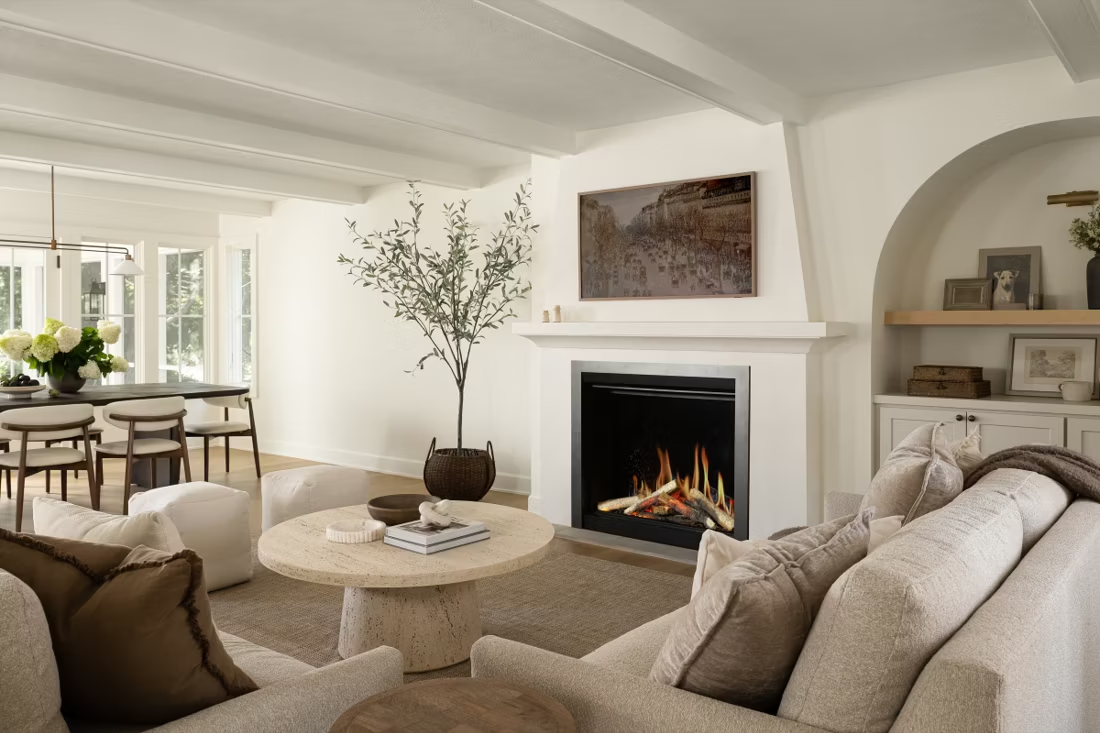
That's where electric fireplaces do their best work in this county. Chattooga has plenty of manufactured and mobile homes, older farmhouses without existing chimneys, and rental cabins where running gas line or building a masonry hearth doesn't make financial sense. An electric insert or wall-mounted unit plugs into a standard outlet, needs no venting, and adds real supplemental warmth to a den, bonus room, or bedroom. It won't replace the wood heat tradition that oak, pine, and hickory have supported here for generations—plenty of households still cut firewood locally, including through Cherokee National Forest permits—but for a lot of homes in this county, electric is simply the easiest, lowest-risk way to add heat and ambiance to a room.
Three steps. No salesperson until you're ready.
Tell us about your project
Your zip code, your situation, and the fuel you're leaning toward—or let the answers point you to one.
See what's actually available
The brands dealers within 100 miles genuinely carry—real options, never a catalog mirage.
Get your dealer & Project Guide
A trusted local dealer, plus the free Project Guide & Parts List that names every component of the job.
Frequently Asked Questions
How much does an electric fireplace installation cost in Chattooga County?
Plug-in electric fireplaces and inserts typically run $400 to $1,500 installed in Chattooga County, since most units need nothing more than an existing 120-volt outlet and a mounting bracket or a slide into an existing firebox opening. Built-in wall units that require a dedicated electrical circuit, recessed framing, or drywall finish work run higher, typically $1,500 to $2,500 including a licensed electrician's time. Because there's no venting, chimney, or gas line involved, electric installations in this county are consistently the least expensive and fastest of any fuel type—often a single day, start to finish.
Do I need a permit to install an electric fireplace in Chattooga County?
A plug-in electric fireplace or insert that uses an existing outlet generally doesn't require a permit. If your installer adds a new dedicated circuit or does any panel work—common with larger built-in units—that electrical work should be pulled through the Chattooga County Building Department and performed by a licensed electrician. It's a smaller lift than the building and gas permits required for wood or gas installs in this county, which is part of why electric is popular for quick upgrades in rental properties and manufactured homes.
Are electric fireplaces a good fit for manufactured and mobile homes?
Yes, and it's one of the more common installs in Chattooga County given how much manufactured housing is spread across the rural parts of the county. Electric units avoid the combustible-clearance requirements, roof penetrations, and structural bracing that wood stoves and gas inserts need—all things that can be difficult or impossible in a manufactured home. A wall-mounted or freestanding electric unit adds heat and a real fireplace look without touching the home's structure or venting.
Electric vs. wood—which makes more sense for my home?
Wood has deep roots in this part of Georgia—oak, pine, and hickory are all common locally, and Cherokee National Forest cutting permits run about $20 per cord during the May-to-October season for households that want to cut their own. Wood also keeps working during a power outage, which matters if ice storms take down lines in the county. Electric can't do that—it needs power to run—but it wins on convenience, cost, and safety: no chimney, no creosote, no ash, and instant on-off heat. For most Chattooga County homes, wood makes sense as a primary or backup heat source, while electric is the better fit for a supplemental unit in a bedroom, den, or room without an existing chimney.
Will an electric fireplace actually heat my room, or is it just for looks?
A typical electric fireplace insert draws around 1,500 watts on the heat setting, which is roughly equivalent to a good space heater—enough to noticeably warm a 300 to 600 square foot room, depending on insulation and ceiling height. Given Chattooga County's relatively mild winter lows (average around 29 degrees), that's usually plenty for supplemental heat in a single room, even on the coldest nights. It's not sized to replace central heat for a whole house, but for a den, bonus room, or bedroom it can genuinely reduce reliance on the furnace.
What's the difference between an electric insert, an electric stove, and a wall-mounted electric fireplace?
An electric insert is built to slide into an existing masonry or prefab firebox opening—a common upgrade for older Chattooga County homes with a fireplace that's no longer used for wood. An electric stove is a freestanding cabinet-style unit that sits on the floor and looks like a traditional wood stove, useful where there's no existing fireplace opening. A wall-mounted electric fireplace hangs flush or recessed into drywall, often chosen for new construction, remodels, or manufactured homes where there's no chimney at all. All three plug into standard household power and need no venting.
Will my electric fireplace still work if the power goes out?
No—this is the honest tradeoff with electric heat. Unlike a wood stove, an electric fireplace has no function without power, so it won't help during an ice storm outage, which does happen in this part of northwest Georgia. If backup heat during outages matters for your household, many Chattooga County homeowners pair an electric fireplace for everyday convenience with a wood stove or fireplace elsewhere in the house for the rare occasions the power is out.
What electrical setup do I need for an electric fireplace?
Most plug-in electric fireplaces and inserts run on a standard 120-volt, 15- or 20-amp household circuit—the same outlet you'd use for a space heater or window AC unit. Larger built-in units, especially wide linear models, sometimes call for a dedicated circuit to avoid tripping breakers when the heat element runs. A licensed electrician can confirm what your home's existing wiring supports; this is typically the only trade involved in an electric fireplace install, which keeps the whole project simple compared to wood or gas.
Where can I find a local dealer for electric fireplaces near Chattooga County?
Because electric fireplaces don't require the venting expertise that wood and gas installs do, homeowners are sometimes tempted to buy online or from a big-box store. The tradeoff is losing local sizing advice and installation support—especially important for built-in units that need electrical work done correctly. A trusted local dealer serving Chattooga County can help you pick the right size and style for your room, whether that's a manufactured home in Menlo or a farmhouse outside Summerville, and can coordinate any electrical work with a licensed electrician.
Can I put a TV above my fireplace?
Yes—with an asterisk. Fireplaces are hot and TVs don't like heat. Either put a mantel between them to deflect rising warmth, or choose a fireplace with heat-management technology that creates a cool zone on the wall above—the wall stays around 125 degrees, barely warm, while the room still gets full heat. If you like clean lines and don't want a mantel, heat management is the answer.
Do electric fireplaces actually produce heat?
Yes—most put out around 4,800–5,000 BTUs from a standard outlet, which comfortably warms a bedroom, office, or den as a comfort-zone heater. What they won't do is carry a whole house the way wood, gas, or pellet can. Think of electric as ambiance-first with honest supplemental heat: flames on with no heat in July, flames plus warmth in January.
Does a fireplace add value to my home?
On average, a fireplace adds back to the home about the same amount you spent installing it. Add the monthly savings from heating the rooms you actually use instead of the whole house—often hundreds of dollars a year—and the value case is strong before you even count what a fire does for how your family uses the room.
Can a fireplace actually lower my heating bill?
Yes—by creating a comfort zone. A furnace heats every square foot of the house just to warm the one room you're in; a gas fireplace on low burns roughly a sixth of the gas a typical furnace does. Set the furnace around 55–60 degrees as a baseline, then heat the rooms your family actually uses. Families who heat this way commonly save $20–$60 a month.
Find your electric fireplace in Chattooga County.
Tell us a bit about your home and we'll put together a free Project Guide & Parts List for your electric fireplace project—the right unit, the exact parts, and a trusted local dealer near you in Chattooga County.
Find Your Fireplace →