
Instant warmth, no chimney required, right here in Chattahoochee Hills.
With average winter lows around 31°F and only a light winter heating need overall, Chattahoochee Hills doesn't need a furnace-grade fire—it needs clean, flip-a-switch warmth for the handful of genuinely cold nights. Electric delivers that without a flue, a gas line, or a cord of wood.
Every Project Starts From One of These Five Situations
A Piedmont climate that rarely asks for more than a boost.
Chattahoochee Hills sits at about 875 feet in the Georgia Piedmont, in climate zone 3A, where winters are short and mild compared to genuinely cold-climate places like Bismarck, ND or Burlington, VT. With such a light winter heating need, this is a place where a heat pump handles most of the season and a fireplace is asked to do supplemental, occasional-use work—not carry the whole house through a Duluth-style winter. That reality shapes which fuel makes sense: wood stoves are essentially a non-factor here despite the oak, pine, and hickory that grow throughout Fulton County's rural southwest corner, and even gas requires propane delivery since there's no natural gas utility serving this stretch of unincorporated Chattahoothee Hills. Electric sidesteps both issues entirely.
Depending on which side of the community your parcel falls on, you're served by either Georgia Power Co. or GreyStone Power Corporation—a common split in this part of rural south Fulton County, where investor-owned and cooperative territories overlap. Georgia Power's residential rate runs about 15.5 cents per kWh, GreyStone's closer to 12.2 cents, which matters for anyone comparing the real cost of running a supplemental electric fireplace through the mild but occasionally sharp Piedmont cold snaps. Either way, an electric unit plugs into an existing outlet or a simple dedicated circuit, with no chimney, no combustion, and no venting to plan around—a good fit for both Serenbe-area modern builds and older farmhouses on the area's large agrarian lots.
Three steps. No salesperson until you're ready.
Tell us about your project
Your zip code, your situation, and the fuel you're leaning toward—or let the answers point you to one.
See what's actually available
The brands dealers within 100 miles genuinely carry—real options, never a catalog mirage.
Get your dealer & Project Guide
A trusted local dealer, plus the free Project Guide & Parts List that names every component of the job.
Frequently Asked Questions
How much does an electric fireplace installation cost in Chattahoochee Hills?
A freestanding or plug-in electric fireplace—the kind that slides into an existing mantel opening or sits in a media console—typically runs $300 to $1,200 installed, since it usually just needs an existing outlet. A built-in electric insert or a wall-mounted linear unit, which often calls for a dedicated 20-amp circuit run by a licensed electrician, generally lands between $1,200 and $3,500 depending on the wall framing and whether you're finishing around it with tile or millwork. Because there's no gas line and no chimney involved, electric installs in Chattahoochee Hills are consistently the fastest and least invasive of the fireplace fuel types.
Do I need a permit to install an electric fireplace here?
A simple plug-in unit that uses an existing outlet typically doesn't trigger a permit. If your installer needs to add a new dedicated circuit—common for larger built-in inserts or linear wall units—that electrical work generally does require a permit through the county building department, and it needs to be pulled by a licensed electrician regardless of size. Given how rural and low-density Chattahoochee Hills is, most local installers are used to coordinating this directly with Fulton County's permitting office as part of the job.
What does it actually cost to run an electric fireplace here?
Less than most homeowners expect, mainly because Chattahoochee Hills doesn't have many truly cold days. A typical 1,500-watt electric fireplace on its heat setting draws about 1.5 kWh per hour. Under Georgia Power's residential rate (about 15.5 cents/kWh), that's roughly 23 cents an hour; under GreyStone Power's cooperative rate (about 12.2 cents/kWh), closer to 18 cents an hour. Run a few hours on the handful of nights each winter that actually dip near freezing, and the annual cost is a rounding error compared to heating a whole rural home through a real winter.
What type of electric fireplace makes the most sense for a mild Piedmont winter?
For most Chattahoochee Hills homes, a mid-size electric insert or wall-mounted linear unit sized for supplemental, zone-based heat is the right call—you're not trying to replace central heat, you're covering the living room or primary bedroom on the coldest nights of a short season. Given the area's mix of newer agrihood-style builds around Serenbe and older farmhouses on larger lots, both a built-in insert into an existing mantel and a freestanding console unit tend to work well; the deciding factor is usually whether you already have a fireplace opening to fill or a blank wall to work with.
How do I know if Georgia Power or GreyStone Power serves my home?
Chattahoochee Hills sits along a territory boundary where both Georgia Power Co. and GreyStone Power Corporation—an electric cooperative—serve different parcels, sometimes on the same road. The quickest way to confirm is to check a recent utility bill or call either provider with your address; they can tell you immediately which one holds your service territory. This matters when budgeting fireplace operating costs, since GreyStone's cooperative rate runs meaningfully lower per kWh than Georgia Power's.
Electric vs. gas fireplace—which makes more sense in Chattahoochee Hills?
There's no natural gas utility serving this part of unincorporated Fulton County, so a gas fireplace here means a propane tank and regular propane delivery—workable, but it adds ongoing fuel logistics and upfront tank costs. Electric skips that entirely: no tank, no delivery schedule, no combustion byproducts to vent. Gas still has an edge if you want a fireplace that can run during a power outage or want a larger primary heat source; but for the kind of occasional, ambiance-plus-warmth use that fits this climate, electric is usually the simpler and cheaper path.
Why isn't wood a bigger option here, given all the oak and hickory around Chattahoochee Hills?
The wood is certainly local—oak, pine, and hickory are common across Fulton County's rural southwest corner—but with average winter lows only around 31°F and a notably light winter heating need overall, most homes simply don't need a wood-burning primary heat source the way a place like Bozeman, MT or Fargo, ND would. A wood stove is still an option for a homeowner who specifically wants that experience, but it's an uncommon install here compared to electric or propane, mainly because the mild climate doesn't create sustained demand for it.
Where in the home does an electric fireplace usually get installed?
In Serenbe-area homes and other newer builds, a linear wall-mounted unit or a built-in insert framed into new construction is common—it fits the clean architectural lines many of those homes are built around. In the area's older farmhouses on larger agrarian-zoned lots, an insert that slides into an existing masonry fireplace opening is often the more natural fit, since it reuses a feature that's already there without any venting changes. A local dealer can walk your specific space and tell you which approach fits your wall, framing, and electrical panel capacity.
Are there any utility rebates for installing an electric fireplace in Chattahoochee Hills?
Neither Georgia Power nor GreyStone Power currently offers a dedicated rebate specifically for decorative or supplemental electric fireplaces—rebate programs from both utilities tend to focus on heat pumps, insulation, and whole-home efficiency upgrades rather than zone-heating fixtures. That said, it's worth asking your installer or utility directly at the time of purchase, since program lists change year to year and an electrician pulling a new circuit may be able to bundle the work into a broader efficiency project that does qualify.
Can I put a TV above my fireplace?
Yes—with an asterisk. Fireplaces are hot and TVs don't like heat. Either put a mantel between them to deflect rising warmth, or choose a fireplace with heat-management technology that creates a cool zone on the wall above—the wall stays around 125 degrees, barely warm, while the room still gets full heat. If you like clean lines and don't want a mantel, heat management is the answer.
Does an electric fireplace need a vent or chimney?
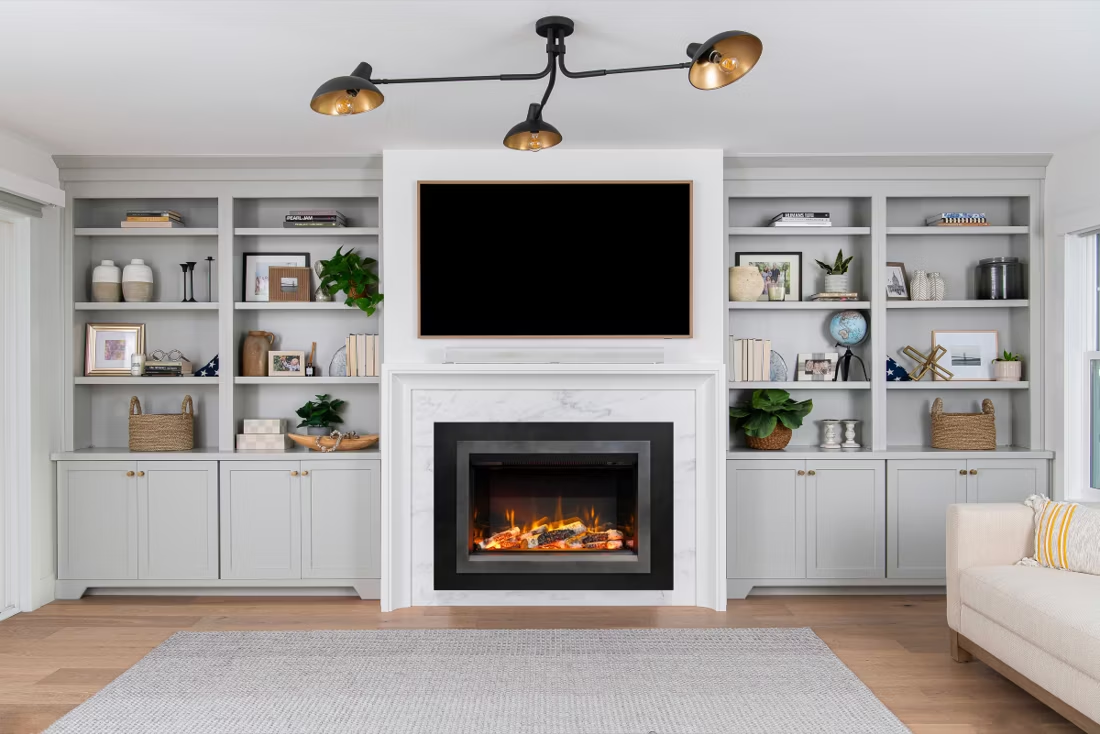
No—that's its superpower. An electric fireplace needs a wall and an outlet, period. No vent pipe, no gas line, no clearances to design around, which is why it works in bedrooms, offices, apartments, and walls where venting a gas or wood unit would be impractical or impossible. Installation is typically the simplest and least expensive of any fireplace type.
Does a fireplace add value to my home?
On average, a fireplace adds back to the home about the same amount you spent installing it. Add the monthly savings from heating the rooms you actually use instead of the whole house—often hundreds of dollars a year—and the value case is strong before you even count what a fire does for how your family uses the room.
Can I install a fireplace myself?
If you're putting a fire in your house on purpose, it's best to work with an expert. Unless you're genuinely experienced in framing, gas line, vent pipe, and the national code on clearances to combustibles, have a professional do it—and ideally the same company that sells you the fireplace, so warranty, service, and liability all live under one roof.
Nearby Dealers
Hearth shops serving Chattahoochee Hills and the surrounding area. Every listing shows whether it is a WhyFire partner, a dealer we have verified as authorized for the brands we recommend, or a local business carrying hearth products. No manufacturer pays for placement. How we verify dealers →
Blossman Gas And Appliance
L&W Insulation And Fireplaces
Cr Design Center - Westside
Authenteak
Atlanta Chimney Worx
Fireplace Depot
EarthCore Industries
The Mad Hatter
Electric Service in Chattahoochee Hills
An electric fireplace's heater draws about 1,500 watts—pennies per hour at local rates.
Georgia Power Co
Greystone Power Corporation
Find your electric fireplace in Chattahoochee Hills.
Tell us about your home and we'll put together a free Project Guide & Parts List—the right unit, the exact parts, and a trusted local dealer near Chattahoochee Hills who can install it correctly.
Find Your Fireplace →