
Steady warmth for a swamp-edge county that rarely sees a hard freeze.
Charlton County has one of the lightest winter heating needs anywhere in the state and an average winter low of 44°F, so a gas fireplace here is less about survival heat and more about instant comfort on the handful of genuinely cold nights. I'll match you with a trusted local dealer who knows what's actually available and installable around Folkston and the Okefenokee Swamp corridor.
Every Project Starts From One of These Five Situations
A short, mild heating season built around comfort, not survival.
Charlton County sits in Georgia's far southeastern corner, bordered by the Okefenokee Swamp and the St. Marys River, with Folkston as the county seat and a population under 6,000. Climate zone 2A means hot, humid summers and short, mild winters—with one of the shortest, lightest heating seasons anywhere in the state, and most years bring only a stretch of nights in the 30s and 40s rather than sustained cold. Wood heat has deep roots here, built on the county's oak, pine, and hickory, but for homeowners who want heat on demand without splitting or hauling fuel, gas has become the practical choice for a den, a screened porch conversion, or a main living area during the county's short cool season.
Because Charlton County is rural and sparsely populated, natural gas mains don't reach most of the county—propane, delivered and stored in a tank on the property, is the standard fuel for gas fireplaces and inserts here, including in and around Folkston. That works in the county's favor for a specific reason: south Georgia's hurricane season regularly brings tropical storm remnants and grid outages, and a properly configured direct-vent propane fireplace with battery-backed ignition keeps working when the power doesn't. A local dealer who already serves this corner of the state will know which venting path fits your home and how to size the appliance for occasional use rather than round-the-clock heating.
Three steps. No salesperson until you're ready.
Tell us about your project
Your zip code, your situation, and the fuel you're leaning toward—or let the answers point you to one.
See what's actually available
The brands dealers within 100 miles genuinely carry—real options, never a catalog mirage.
Get your dealer & Project Guide
A trusted local dealer, plus the free Project Guide & Parts List that names every component of the job.
Frequently Asked Questions
How much does a gas fireplace installation cost in Charlton County?
Most propane fireplace and insert installations in this part of southeast Georgia land somewhere between $3,000 and $8,000, with the lower end covering a direct-vent insert dropped into an existing masonry firebox and the upper end covering a new built-in unit with fresh gas line work from a propane tank. Because Charlton County is rural, expect the propane tank set (if you don't already have one) and the line run from tank to hearth to be a real line item on the quote, more so than in a natural-gas-served city. A local dealer will give you a firm number after seeing the room and your existing propane setup, if any.
Can I convert an old wood fireplace to gas in an older Folkston home?
Yes, and it's a common upgrade in the older homes around Folkston and the county's rural crossroads communities, many of which have a masonry fireplace originally built to burn the oak, pine, or hickory common to this part of the county. A gas insert fits into that existing firebox and vents through a liner run up the current chimney, so you keep the mantle and opening but gain a thermostat-controlled flame with no ash and no need to keep a woodpile dry through the humid summer months. Expect the conversion to run toward the lower half of the county's typical $3,000-$8,000 install range if the chimney is sound and just needs a liner rather than a rebuild.
Is natural gas available in Charlton County, or is it all propane?
Charlton County is rural and low-density enough that natural gas mains don't reach most properties, including much of Folkston. Propane is the standard fuel for gas fireplaces here, supplied by a local or regional bulk delivery company and stored in an above-ground tank on the property. Any gas fireplace or insert you're considering should be ordered or converted for propane rather than natural gas—your dealer will confirm the orifice and regulator setup match your fuel before installation, since the two aren't interchangeable without conversion parts.
Will a gas fireplace still work if a storm knocks out the power?
This is a real consideration in Charlton County, where tropical storm remnants and severe summer weather can take down power lines in a rural, heavily wooded county for a day or more at a time. Gas fireplaces with intermittent pilot ignition (IPI) run on a small battery backup that kicks in automatically when grid power drops, so the unit still lights and puts out heat during an outage. Units with a standing pilot and thermocouple-based ignition, like many Valor models, don't need batteries at all. Either way, a propane fireplace with a proper backup ignition system is one of the more reliable heat sources in the county during a multi-day outage, since it doesn't depend on the grid or a well pump for fuel delivery.
What's the difference between a gas fireplace, insert, and stove for a home like mine?
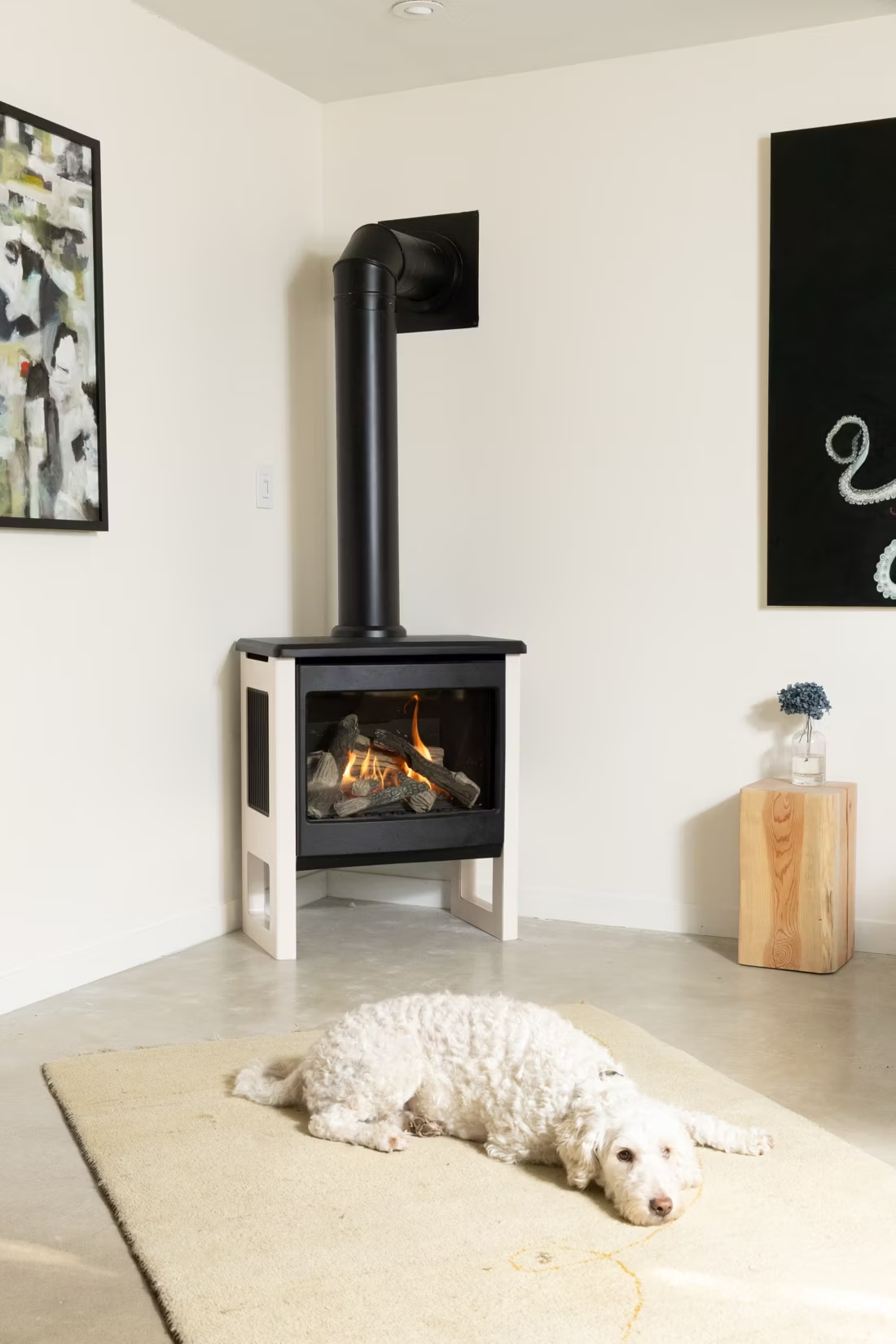
A gas fireplace is a fully built-in unit, framed into a wall during new construction or a remodel—a good fit if you're finishing out a room without an existing chimney. A gas insert slides into an existing masonry firebox and uses the existing chimney as its vent path, which is the more common project in Charlton County's older homes. A gas stove is a freestanding, cabinet-style unit that sits on the floor, which works well in a manufactured or modular home, common throughout the rural parts of the county, where there's no masonry fireplace to build from. A local dealer can walk your space and tell you which one actually fits your layout and existing structure.
Do I need a permit to install a gas fireplace in Charlton County?
Yes. New gas fireplace installations require a building permit through the county, and any new propane line run needs to be done by a licensed gas-fitter as part of that permit process. This is one reason to go through a full-service local hearth dealer rather than a handyman install—a licensed dealer coordinates the propane line work, venting, and inspection sign-off as one job, which matters in a rural county where scheduling separate trades can add weeks to a project.
Should I get a vented or vent-free gas fireplace given the humidity here?
Direct-vent (sealed combustion) units are generally the better call in Charlton County's climate. Vent-free fireplaces burn directly into the room and are legal in Georgia within room-size limits, but they release combustion moisture indoors—and this corner of the state already runs high ambient humidity for much of the year, which can aggravate condensation issues in a tightly sealed home. A direct-vent fireplace pulls combustion air from outside and exhausts it back outside, keeping both moisture and combustion byproducts out of the living space, which most local dealers recommend as the default here.
How often does a gas fireplace need to be serviced in a mild climate like this?
Even with a short heating season, plan on an annual inspection, ideally in early fall before the first cool nights arrive. A technician checks the burner, pilot or IPI assembly, propane line connections, and venting, and cleans the glass. Because Charlton County units often see lighter, intermittent use rather than daily winter operation, dust, insect nesting in vent terminations, and propane regulator wear are the more common issues a yearly check catches before they become a mid-winter problem.
Gas, wood, or pellet—what actually makes sense for a Charlton County home?
With such a light winter heating need and winter lows averaging in the 40s, few homes here need a primary heat source at all—the choice usually comes down to convenience and outage reliability. Gas (propane) delivers instant, thermostat-controlled heat and doubles as a dependable backup during hurricane-season power outages. Wood, burned as local oak, pine, or hickory, still has a following for its low cost and total independence from both the grid and a propane delivery truck. Pellet stoves, stocked regionally by brands like Lignetics, Hamer Pellet Fuel, and Greenway Renewable Energy, offer a cleaner middle ground but need electricity to run the auger, so they're not a fallback during an outage. For most Charlton County households, a propane gas insert or fireplace covers the handful of genuinely cold nights with the least hands-on maintenance.
Why is my open fireplace making my house colder?
Open fireplaces suck—literally. As the fire burns, it consumes air your furnace already paid to heat and pulls it out through the chimney, so the house is actually colder after the fire goes out than before you lit it. An insert fixes this: it seals the chimney, puts fixed glass across the front, and turns that hole in your house into a real heat source.
Is my gas fireplace wasting gas?
If it was installed more than 15 years ago, probably. Older gas fireplaces keep a standing pilot light burning all the time, and that little flame can cost a couple hundred dollars a year. Newer models use pilot-on-demand ignition—the pilot lights only when you use the fireplace and goes out when you turn it off.
Can I install a fireplace myself?
If you're putting a fire in your house on purpose, it's best to work with an expert. Unless you're genuinely experienced in framing, gas line, vent pipe, and the national code on clearances to combustibles, have a professional do it—and ideally the same company that sells you the fireplace, so warranty, service, and liability all live under one roof.
Does a fireplace add value to my home?
On average, a fireplace adds back to the home about the same amount you spent installing it. Add the monthly savings from heating the rooms you actually use instead of the whole house—often hundreds of dollars a year—and the value case is strong before you even count what a fire does for how your family uses the room.
Get your free Project Guide & Parts List for a gas fireplace in Charlton County.
Tell me about your home and how you plan to use the fireplace, and I'll match you with a trusted local dealer serving Charlton County and send over a free Project Guide & Parts List—the exact equipment, propane line and vent kit, and recommended installer for your project, no big-box guesswork.
Find Your Fireplace →