
Real ambiance for Bulloch County, minus the venting hassle.
With winters this mild around Statesboro, most Bulloch County homes don't need a full wood or gas heating system—just clean, instant electric warmth where you actually sit. Find the right unit and connect with a trusted local dealer.
Every Project Starts From One of These Five Situations
A short, mild heating season means electric makes sense here.
Bulloch County sits in climate zone 3A, with an average winter low around 38 degrees and a short, mild heating season—a fraction of what a place like Minneapolis, MN sees each winter. That's not a climate that demands a cast-iron wood stove holding an overnight burn at single digits. It's a climate where most heating need is short bursts on the coldest nights, and a lot of the appeal of a fireplace is the look and feel of it—the glow in the living room, the focal point over the mantel—rather than carrying the whole heating load.
That's exactly where electric fireplaces earn their keep. No chimney, no gas line, no combustion byproducts to vent—just plug it in or wire it to a dedicated circuit and it works. Georgia Power serves most of Statesboro, and rural parts of the county are covered by electric cooperatives like Excelsior EMC, so power access generally isn't the constraint—the real question is which unit, which mounting style, and how much supplemental heat you actually want out of it. With a large renter population tied to Georgia Southern University, electric units are also popular in apartments and rentals where landlords won't allow venting modifications but will allow a plug-in or recessed wall unit.
Three steps. No salesperson until you're ready.
Tell us about your project
Your zip code, your situation, and the fuel you're leaning toward—or let the answers point you to one.
See what's actually available
The brands dealers within 100 miles genuinely carry—real options, never a catalog mirage.
Get your dealer & Project Guide
A trusted local dealer, plus the free Project Guide & Parts List that names every component of the job.
Frequently Asked Questions
How much does an electric fireplace installation cost in Bulloch County?
Electric fireplaces are by far the least expensive fuel type to install, since there's no chimney, gas line, or exterior venting to run. A basic plug-in insert or freestanding unit can be set up in an afternoon for a few hundred dollars in labor, if any at all. A built-in wall unit or a linear electric fireplace set into a custom mantel surround—common in newer Statesboro-area builds—runs higher once framing, a dedicated electrical circuit, and finish carpentry are factored in, but it's still well below what a comparable wood or gas project costs in this county. A local dealer can give you a firm number once they know the model and whether new wiring is needed.
Will an electric fireplace actually heat a room, or is it just for looks?
Both, depending on the model. Most electric fireplaces include a built-in fan heater rated around 4,600–5,000 BTU, which is enough to noticeably warm a single room—plenty for the kind of cold snaps Bulloch County sees, where the average winter low sits around 38 degrees rather than the deep freezes of northern climates. They won't replace a central HVAC system or carry a whole house through a hard freeze, but for supplemental warmth in a living room, bedroom, or sunroom during the shorter heating season here, they do real work. If ambiance matters more than heat output, you can also run most units flame-only with the heater switched off—useful in shoulder-season months when it's cool enough to want the glow but too warm to want the heat.
Do I need a permit to install an electric fireplace in Bulloch County?
In most cases, no—a plug-in or freestanding electric unit doesn't trigger the building and gas permitting that wood or gas installations require, since there's no combustion, chimney, or gas line involved. If you're having a built-in unit wired into a dedicated circuit as part of a larger remodel, your electrician will typically pull the standard electrical permit for that circuit work, but that's a routine step most licensed electricians handle without you needing to coordinate it separately.
What's the difference between an electric insert, a wall-mount unit, and a built-in?
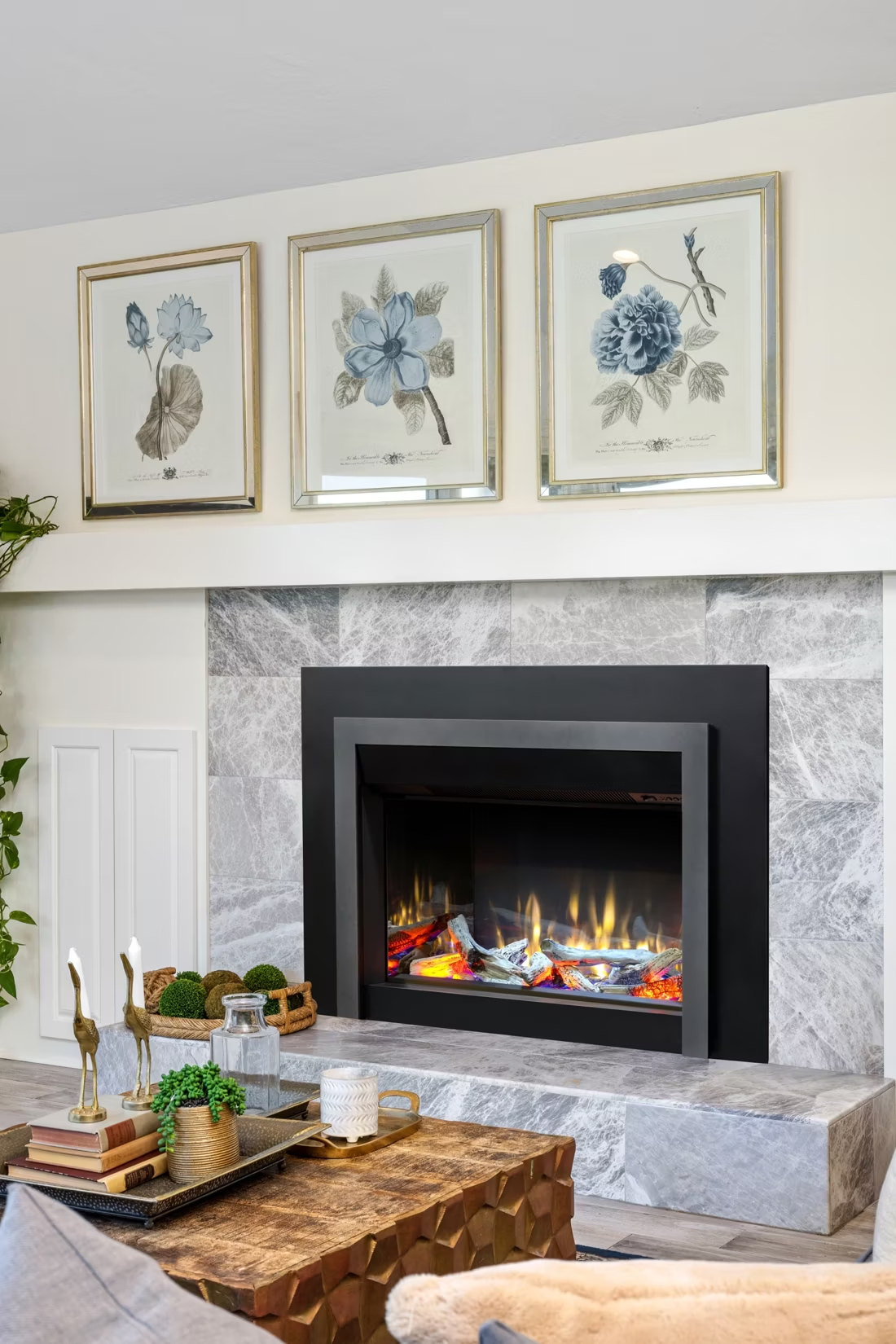
An electric insert is sized to slide into an existing masonry fireplace opening, which makes it a fast upgrade for older Statesboro-area homes with an unused wood fireplace—it plugs in or connects to a nearby outlet and instantly turns a cold firebox into usable heat and light. A wall-mount unit hangs directly on the wall like a flat-screen TV, popular in apartments and newer construction near Georgia Southern where there's no existing fireplace to work with. A built-in electric fireplace is framed into a wall or custom surround for a more finished, permanent look and is common in new-build living rooms. All three run on standard household power, and a local dealer can tell you which fits your existing opening and framing.
Will my electric fireplace work during a power outage?
No—and this is the one real tradeoff against wood or gas. Electric fireplaces need household power to run both the flame effect and the heater, so during an outage they simply won't operate. For most Bulloch County homes, that's an acceptable tradeoff since electric units are usually a secondary or ambiance feature rather than the primary heat source in a climate this mild. If backup heat during storm-related outages matters to you, that's worth weighing against a wood stove or a battery-backed gas insert instead—a few Bulloch County homes run both an electric unit for daily use and a wood-burning option in the same house for exactly that reason.
What size electric fireplace do I need for my room?
Sizing is more about visual fit and the room's layout than raw heat output, since even a compact electric unit can take the chill off a mild Bulloch County winter evening. As a rough guide, 30–40 inch units suit bedrooms and smaller living spaces, while 50–60+ inch linear units are common as a focal wall feature in open-concept living rooms and are increasingly popular in newer Statesboro homes. If the fireplace needs to double as real supplemental heat in a larger open room, look for a model with the higher end of the typical 4,600–5,000 BTU heater range rather than assuming a bigger visual unit automatically means more heat—the heater spec is usually the same across most sizes.
Are electric fireplaces a good fit for rental housing near Georgia Southern?
Yes—it's one of the more common uses in the county. With a large student and young-professional rental market clustered around Georgia Southern University, electric units are popular precisely because they don't require chimney work, gas lines, or landlord sign-off on venting modifications. A plug-in insert or a wall-mount unit can be installed and removed without altering the structure, which makes it one of the few fireplace upgrades a renter or a landlord doing a light unit turnover can reasonably take on. Local dealers can point you toward models built with this kind of flexibility in mind.
Electric vs. gas vs. wood—which makes sense in Bulloch County?
Given the mild climate here—an average winter low near 38 degrees and a short, mild heating season—none of the three fuels are competing to carry a brutal heating load, so the decision usually comes down to lifestyle rather than survival heat. Wood still has a following in the county, particularly with the local supply of oak, pine, and hickory, and there's no air quality restriction here to discourage it. Gas offers instant, more substantial heat if you want a stronger secondary heat source. Electric wins on install simplicity, upfront cost, and flexibility, especially in rentals or rooms without an existing chimney—it's the fastest way to add a real fireplace feature to a home in this climate without a construction project attached to it.
How long do electric fireplaces last, and what maintenance do they need?
Electric fireplaces are low-maintenance compared to wood or gas units—there's no chimney to sweep, no gas line to inspect, and no combustion byproducts to manage. Most quality units last 10-15 years with basic care: periodically dusting the heater vents so airflow isn't restricted, and eventually replacing the LED flame bulbs or light strip, which is usually a straightforward DIY swap or a quick job for a local dealer. Because there's no annual safety inspection requirement the way there is for a wood-burning or gas appliance, ongoing costs are minimal—mostly just the electricity to run it.
Does an electric fireplace need a vent or chimney?
No—that's its superpower. An electric fireplace needs a wall and an outlet, period. No vent pipe, no gas line, no clearances to design around, which is why it works in bedrooms, offices, apartments, and walls where venting a gas or wood unit would be impractical or impossible. Installation is typically the simplest and least expensive of any fireplace type.
Can I put a TV above my fireplace?
Yes—with an asterisk. Fireplaces are hot and TVs don't like heat. Either put a mantel between them to deflect rising warmth, or choose a fireplace with heat-management technology that creates a cool zone on the wall above—the wall stays around 125 degrees, barely warm, while the room still gets full heat. If you like clean lines and don't want a mantel, heat management is the answer.
Can I install a fireplace myself?
If you're putting a fire in your house on purpose, it's best to work with an expert. Unless you're genuinely experienced in framing, gas line, vent pipe, and the national code on clearances to combustibles, have a professional do it—and ideally the same company that sells you the fireplace, so warranty, service, and liability all live under one roof.
How much should I budget for a fireplace?
For an average home—covering the fireplace, the vent pipe, and basic installation—a budget between $3,900 and $5,500 gives you a lot of options across wood, gas, and pellet. By the time you add finish work, gas line, and electrical, the average complete installation lands between $5,000 and $12,000 all-in. In a remodel or new build, a good rule is to put about 2.5% of the total project cost toward the fireplace.
Stove and Fireplace Dealers in Bulloch County
Find your electric fireplace in Bulloch County.
Tell us a bit about your home and we'll match you with the right electric fireplace, insert, or wall-mount unit—and hand you a free Project Guide & Parts List with your recommended local dealer.
Find Your Fireplace →