
Electric heat built for Appling County's mild, short winters.
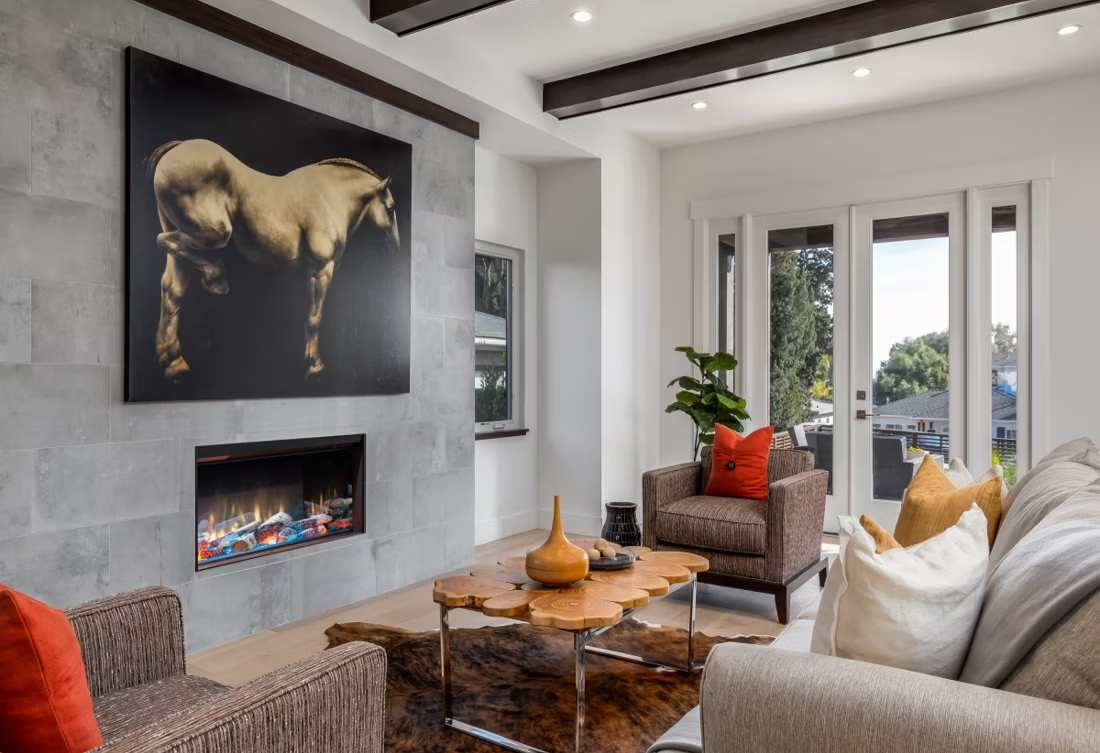
With only 1,940 heating degree days and winter lows averaging 37°F, Appling County doesn't need a dedicated heating appliance—it needs warmth and glow on the handful of genuinely cold nights each year. I'll match you with a trusted local dealer who can size the right electric unit for your Baxley-area home, no venting or gas line required.
Every Project Starts From One of These Five Situations
A climate built for supplemental heat, not survival heat.
Appling County sits in IECC climate zone 2A, the same hot-humid band that covers most of coastal and inland South Georgia, and it runs a heating season that's short by any standard—just 1,940 heating degree days a year, a fraction of what a home in Duluth, MN or Burlington, VT logs every winter. Winter lows here average 37°F, meaning most nights never approach freezing. Baxley, the county seat known locally as the Pine Straw Capital of the World for its timber and pine straw industry, and the surrounding farmland run primarily on heat pumps for whole-house heating, with electric fireplaces filling the gap on the genuinely cold mornings and giving a room the look and feel of a fire without adding a second heating system.
Wood is technically everywhere in this county—oak, pine, and hickory come off local timberland regularly—but wood stoves see little real demand here; the heating math just doesn't justify splitting and stacking cordwood for a season this short, so wood-burning appliances are the exception rather than the rule. Pellet stoves are rarer still, even though brands like Lignetics, Hamer Pellet Fuel, and Greenway Renewable Energy distribute through the wider Southeast—those pellets tend to move toward colder markets, not South Georgia living rooms. Gas fireplaces remain a standard, popular option for homeowners who want real flame, but electric wins for households in manufactured or site-built homes who want a simple, permit-light install with zero venting and a unit that can run at pure ambiance mode through the long stretches when Appling County just doesn't need the heat.
Three steps. No salesperson until you're ready.
Tell us about your project
Your zip code, your situation, and the fuel you're leaning toward—or let the answers point you to one.
See what's actually available
The brands dealers within 100 miles genuinely carry—real options, never a catalog mirage.
Get your dealer & Project Guide
A trusted local dealer, plus the free Project Guide & Parts List that names every component of the job.
Frequently Asked Questions
How much does an electric fireplace installation cost in Appling County?
A plug-in insert or mantel package that drops into an existing opening typically runs $400 to $1,200 installed, since there's no venting or gas line to add. A built-in electric fireplace framed into a new wall, with a dedicated 20-amp circuit run by an electrician, generally lands between $1,500 and $3,000 depending on the unit's size and whether drywall or trim work is involved. Given how many homes in the Baxley area and outlying county are manufactured or modular, most local dealers default to units designed for those wall assemblies rather than masonry retrofits.
Will an electric fireplace actually heat my room, or is it just for looks?
Most electric fireplaces put out roughly 4,000 to 5,000 BTU on the heat setting, which is enough to comfortably warm a single room in a mild climate like Appling County's—plenty for the handful of nights each winter when the temperature actually drops toward or below freezing. It's not meant to replace your heat pump as whole-house heat, and with only 1,940 heating degree days a year here, it doesn't need to. Think of it as zone heat for the room you're actually sitting in, with the flame running year-round for ambiance even when the heater's off.
Do I need a permit to install an electric fireplace in Appling County?
A simple plug-in insert or freestanding unit generally doesn't require a permit since it's just plugging into an existing outlet. A built-in electric fireplace that needs new wiring or a dedicated circuit is a different story—that electrical work should be pulled through Appling County's building and codes office (or the city of Baxley if you're inside city limits) and done by a licensed electrician. Most local dealers who handle built-in installs will coordinate that permit and inspection as part of the job rather than leaving it on you.
Electric or gas—which makes more sense for a home in Appling County?
Gas fireplaces give you a real flame and higher heat output, and they're a standard, well-supported option through local dealers here. But gas installation means running a gas line and, for most models, venting—real cost and real construction work for a climate that only needs supplemental heat a handful of weeks a year. Electric skips all of that: no gas line, no venting, and a unit that runs the flame effect independent of the heater, which a lot of Appling County homeowners like for year-round ambiance in a house that's otherwise heated by a heat pump. If you're not committed to real flame, electric is usually the lower-cost, lower-hassle choice locally.
Why don't more people in Appling County use wood stoves, with all this local timber?
It's a fair question given how much oak, pine, and hickory the county produces—Baxley's economy has deep roots in timber and pine straw. But wood stoves are built for climates that need sustained heat output for months, and Appling County's 1,940 heating degree days and 37°F average winter low just don't create that demand. A handful of rural properties still keep a wood stove for backup heat during ice storms or extended power outages, but for most homes here it's not worth the chimney, the clearances, or the maintenance when a heat pump and an electric fireplace cover the actual need.
What about pellet stoves—are those an option here?
Pellet stoves are even less common locally than wood stoves. Regional producers like Lignetics, Hamer Pellet Fuel, and Greenway Renewable Energy do supply bagged pellets across the Southeast, but that supply mostly serves colder markets north and west of here, not South Georgia's mild winters. Between the short heating season and the added equipment—auger, hopper, electric-dependent blower—pellet heat rarely pencils out for an Appling County home when an electric fireplace does the ambiance job with none of the fuel storage.
What brands of electric fireplaces do local dealers typically carry?
Dealers serving Appling County generally stock a mix of built-in and insert lines from manufacturers like Dimplex, Napoleon, and Real Flame, covering everything from simple plug-in mantel units to larger built-ins with more realistic flame technology. Availability shifts based on what a given dealer stocks and installs regularly, which is exactly why matching with a local pro matters more than shopping a catalog—they'll know what fits your wall opening and electrical setup without a special order.
How much maintenance does an electric fireplace actually need?
Very little, which is part of the appeal in a climate that doesn't burn a unit hard for months at a time. There's no chimney to sweep and no venting to inspect. Wipe down the glass occasionally, keep the vent openings on the unit free of dust, and check that the heater blower runs quietly—if it starts rattling or the flame effect dims unevenly, that's usually a sign the internal bulb or LED strip needs replacing, a straightforward fix rather than a service call.
I live in a manufactured home in Appling County—can I still install an electric fireplace?
Yes, and it's one of the more common installs local dealers handle in the county given how many manufactured and modular homes are out along the rural roads outside Baxley. Electric units are the easiest fireplace option for manufactured housing since there's no masonry, no roof penetration, and no gas line to route through a home built on different framing standards than site-built construction. A local dealer will confirm your wall cavity depth and electrical capacity before recommending a specific insert or built-in model.
Can I put a TV above my fireplace?
Yes—with an asterisk. Fireplaces are hot and TVs don't like heat. Either put a mantel between them to deflect rising warmth, or choose a fireplace with heat-management technology that creates a cool zone on the wall above—the wall stays around 125 degrees, barely warm, while the room still gets full heat. If you like clean lines and don't want a mantel, heat management is the answer.
Do electric fireplaces actually produce heat?
Yes—most put out around 4,800–5,000 BTUs from a standard outlet, which comfortably warms a bedroom, office, or den as a comfort-zone heater. What they won't do is carry a whole house the way wood, gas, or pellet can. Think of electric as ambiance-first with honest supplemental heat: flames on with no heat in July, flames plus warmth in January.
Can I install a fireplace myself?
If you're putting a fire in your house on purpose, it's best to work with an expert. Unless you're genuinely experienced in framing, gas line, vent pipe, and the national code on clearances to combustibles, have a professional do it—and ideally the same company that sells you the fireplace, so warranty, service, and liability all live under one roof.
Does a fireplace add value to my home?
On average, a fireplace adds back to the home about the same amount you spent installing it. Add the monthly savings from heating the rooms you actually use instead of the whole house—often hundreds of dollars a year—and the value case is strong before you even count what a fire does for how your family uses the room.
Stove and Fireplace Dealers in Appling County
Get your free Project Guide & Parts List for an electric fireplace in Appling County.
Tell me about your home—manufactured or site-built, existing opening or new wall—and I'll match you with a trusted local Appling County dealer and send over a free Project Guide & Parts List: the exact unit, electrical requirements, and recommended installer for your project, no big-box guesswork.
Find Your Fireplace →