
Comfort and Backup Heat for Southwest Georgia Winters.
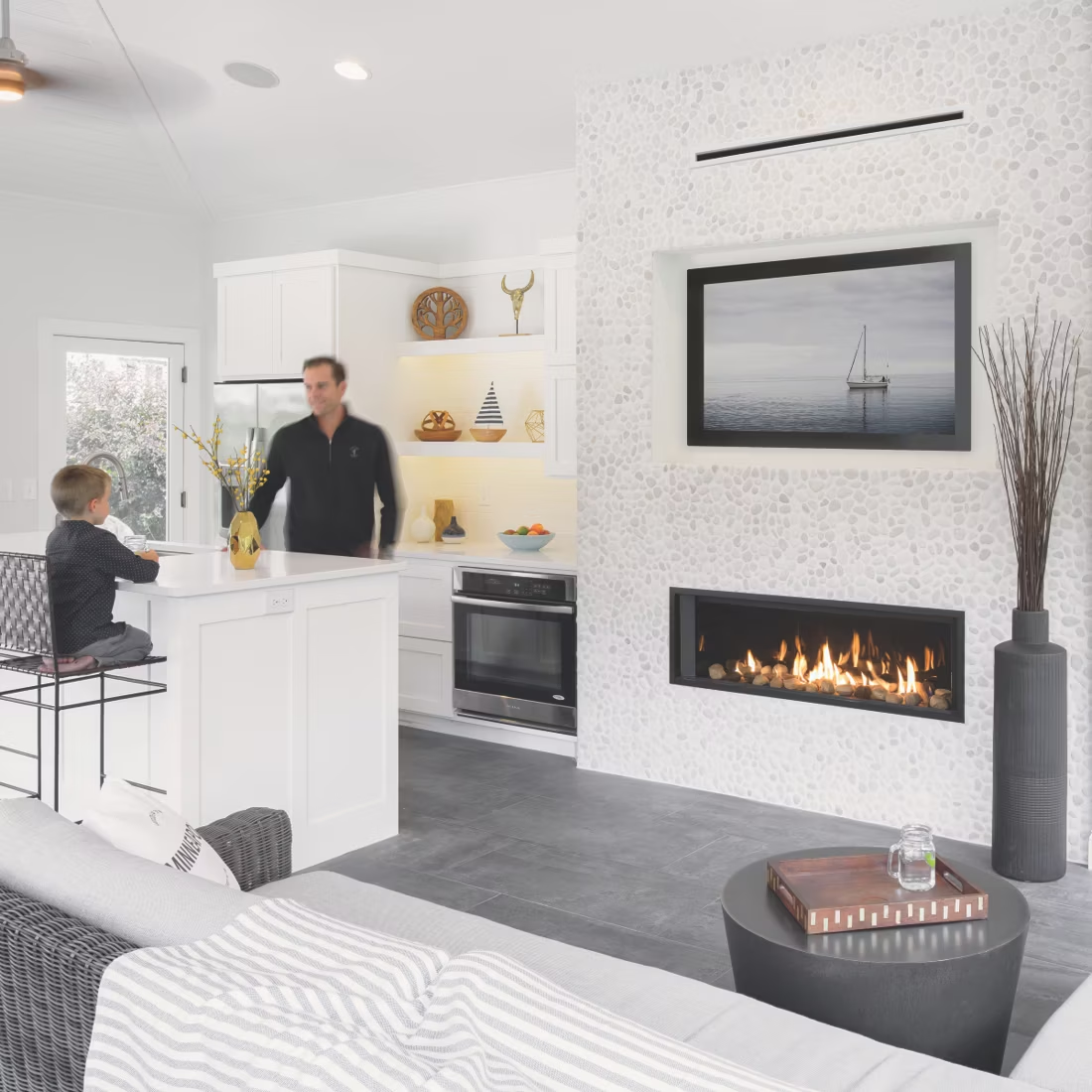
Albany doesn't need a furnace running all winter, but a gas fireplace still earns its keep—for ambiance most nights and real heat when an ice storm knocks out the grid. Find the right unit and connect with a trusted local dealer.
Every Project Starts From One of These Five Situations
Ambiance most days, real heat when it matters.
Albany sits low and flat along the Flint River at about 209 feet of elevation, in climate zone 3A, where winter lows average a mild 39°F and the city has a short, mild heating season—a fraction of what a place like International Falls, MN racks up in a single season. That's exactly why wood heat never took hold here the way it did further north: Dougherty County's oak, pine, and hickory get burned in fire pits and smokers, not furnaces. Gas, on the other hand, fits Albany's climate well.
Natural gas service reaches much of the city through Atlanta Gas Light's distribution network, while homes outside city limits in rural Dougherty and Lee counties more often run on propane. Either way, a gas fireplace or insert gives Albany homeowners something wood heat never offered locally: instant, clean warmth for the occasional 20-degree night, plus a real heat source that keeps working when southwest Georgia's periodic ice storms take down power lines for days at a time.
Three steps. No salesperson until you're ready.
Tell us about your project
Your zip code, your situation, and the fuel you're leaning toward—or let the answers point you to one.
See what's actually available
The brands dealers within 100 miles genuinely carry—real options, never a catalog mirage.
Get your dealer & Project Guide
A trusted local dealer, plus the free Project Guide & Parts List that names every component of the job.
Frequently Asked Questions
How much does a gas fireplace installation cost in Albany?
Most gas fireplace and insert installations in Albany run between roughly $4,000 and $9,000, with the low end covering a direct-vent insert dropped into an existing masonry fireplace that already has a gas line nearby, and the higher end covering new construction or remodels that need framing, venting, and a fresh gas run from the meter. Homes on Atlanta Gas Light service with an existing gas appliance nearby (a furnace or water heater) tend to land toward the lower end; homes relying on a new propane tank setup in rural Dougherty County run a bit higher. A local dealer will give you a firm number after seeing your fireplace opening and gas access in person.
Can I convert my existing wood-burning fireplace to gas?
Yes, and it's a common project in Albany's older neighborhoods, where many homes were built with a masonry fireplace that rarely if ever gets a real wood fire—Dougherty County's mild winters just don't call for it. A gas insert typically slides into that existing firebox, uses a stainless liner run up the current chimney for venting, and connects to either a natural gas line or a propane tank. It keeps the look of your original fireplace while giving you instant heat on demand instead of a wood-burning setup that mostly sits unused eight months of the year.
Should I go with natural gas or propane in Albany?
If you're inside city limits with Atlanta Gas Light service already running to your street, natural gas is usually the simpler and cheaper long-term choice—no tank, no delivery schedule, just a line tap for your installer. If you're further out in Dougherty or Lee County where gas mains don't reach, propane is the standard fallback, either from an existing tank if your home already has one for a range or water heater, or a new tank set by a local propane supplier. Nearly every gas fireplace on the market can be configured for either fuel, so the choice usually comes down to what's already at your address.
Will a gas fireplace keep working during a power outage?
This is a bigger deal in Albany than you might think—southwest Georgia gets hit by ice storms every few winters that can leave neighborhoods without power for days, even though snow itself is rare. Most gas fireplaces with intermittent pilot ignition run on AA battery backup that kicks in automatically when the power drops, so the fireplace still lights on demand. Valor units go a step further: their pilot's thermocouple generates its own electricity, so there's no battery to remember or replace, ever. For a home in Albany that might lose power for a few days after an ice event, that's a real practical advantage worth asking your local dealer about.
What's the difference between a gas fireplace, gas insert, and gas stove?
A gas fireplace is a fully framed-in, built-in unit used for new construction or a full remodel—common in Albany's newer subdivisions. A gas insert is built to slide into an existing masonry firebox, which fits a lot of the older homes around town that have a fireplace opening but no real wood-burning habit. A gas stove is a freestanding cabinet-style unit that sits out in the room rather than inside a fireplace opening, useful for a den or sunroom addition that doesn't have a chimney at all. Most Albany homeowners with an existing fireplace opening go the insert route.
Do I need a permit to install a gas fireplace in Albany?
Yes—the City of Albany's building inspection department (or Dougherty County's, if you're outside city limits) requires a permit for new gas fireplace installs, and the gas line connection itself has to be run or tied in by a licensed gas fitter. In practice, the hearth dealer handling your installation coordinates the permit, the gas line work, and the final inspection as one package, so you're not left managing separate trades or paperwork yourself.
Vented or vent-free—which makes more sense for a house in Albany?
Vented (direct-vent) gas fireplaces pull outside air for combustion and exhaust the byproducts back outside through a sealed vent—they're the safest option and the one most local dealers install by default. Vent-free units burn directly into the room without external venting and are legal in Georgia within room-size and ventilation limits, but they release some moisture and combustion byproducts indoors. Given how humid Albany already runs for most of the year, adding more moisture into a room from a vent-free unit is a real downside worth weighing—most homeowners here end up happier with a direct-vent model.
How often should a gas fireplace be serviced?
Plan on an annual inspection, ideally before the handful of cold weeks Albany typically sees each winter. A technician checks the burner, pilot assembly, venting, and gas connections, and cleans the glass and interior—a much lighter job than chimney sweeping for a wood stove, but still important for safe operation. Local gas appliance service providers typically charge in the $150–$250 range for this visit.
Would a wood-burning fireplace make more sense than gas here?
Honestly, not really. Albany's short, mild heating season mean the actual heating season is short and mild, which is why wood stoves and inserts barely register as an option locally—the region doesn't have the cutting permits, the firewood supply chains, or the cold-weather demand that make wood heat practical further north. Oak, pine, and hickory are plentiful around Dougherty County, but they mostly end up in fire pits and smokers rather than home heating systems. A gas fireplace or insert gives you the fire and warmth on the nights you actually want it, plus a genuine backup heat source during the ice storms that occasionally take out power here—without the upkeep a wood setup would demand for a heating season this short.
Why is a fireplace insert so efficient?
An insert does two things: it seals the chimney completely, so you stop losing air you already paid to heat, and it radiates warmth into the room through the firebox and glass. Most add a heat-exchange fan that pulls cool room air underneath, wraps it around the hot firebox, and pushes it back out warm. Your home is more efficient before you've even lit the first fire.
Why is my open fireplace making my house colder?
Open fireplaces suck—literally. As the fire burns, it consumes air your furnace already paid to heat and pulls it out through the chimney, so the house is actually colder after the fire goes out than before you lit it. An insert fixes this: it seals the chimney, puts fixed glass across the front, and turns that hole in your house into a real heat source.
Can a fireplace actually lower my heating bill?
Yes—by creating a comfort zone. A furnace heats every square foot of the house just to warm the one room you're in; a gas fireplace on low burns roughly a sixth of the gas a typical furnace does. Set the furnace around 55–60 degrees as a baseline, then heat the rooms your family actually uses. Families who heat this way commonly save $20–$60 a month.
How much should I budget for a fireplace?
For an average home—covering the fireplace, the vent pipe, and basic installation—a budget between $3,900 and $5,500 gives you a lot of options across wood, gas, and pellet. By the time you add finish work, gas line, and electrical, the average complete installation lands between $5,000 and $12,000 all-in. In a remodel or new build, a good rule is to put about 2.5% of the total project cost toward the fireplace.
Nearby Dealers
Hearth shops serving Albany and the surrounding area. Every listing shows whether it is a WhyFire partner, a dealer we have verified as authorized for the brands we recommend, or a local business carrying hearth products. No manufacturer pays for placement. How we verify dealers →
Ever-Glo Propane Propane Gas Service, Inc.
Conger Lp Gas Inc.
Driver Energies LLC
Find your gas fireplace in Albany.
Tell us a bit about your home and we'll put together a free Project Guide & Parts List—the right gas fireplace or insert, the vent kit it needs, and a trusted local Albany dealer who can install it correctly.
Find Your Fireplace →